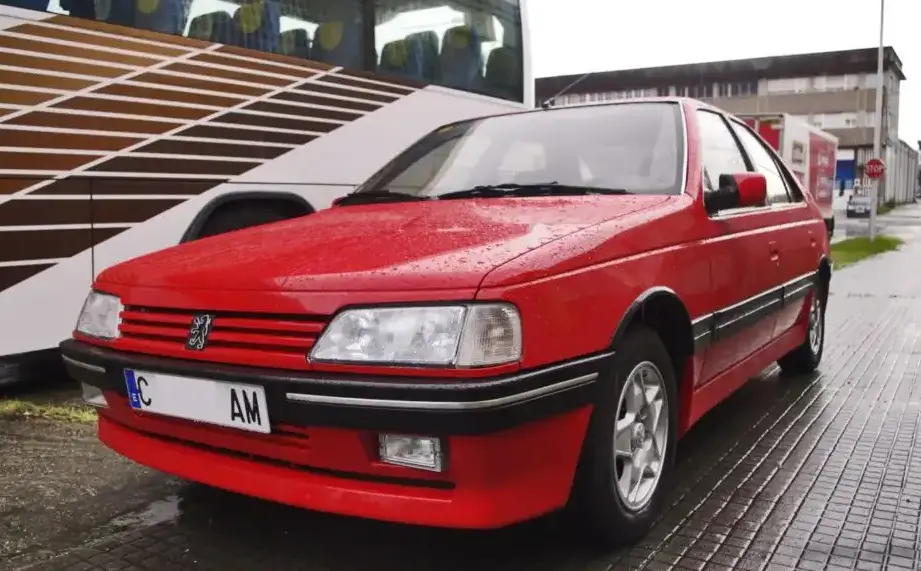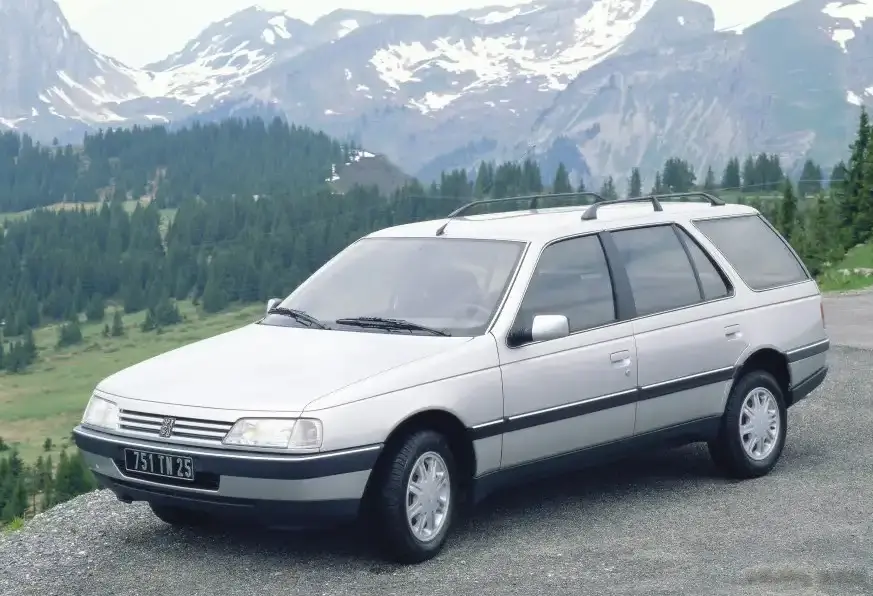
The Peugeot 405 Break 1.9 Automatic, produced between 1988 and 1992, represents a practical and comfortable variant within the broader 405 range. Positioned as a mid-range offering, it catered to buyers seeking the spaciousness of a station wagon (estate) combined with the convenience of an automatic transmission. The 405, internally designated as the 15E, was a significant model for Peugeot, building upon the success of the 505 while offering a more modern and accessible package. It was a key competitor in the European family car segment, offering a blend of practicality, comfort, and French styling. This particular configuration, with the XU9J1 engine and automatic gearbox, aimed for a balance between fuel efficiency and ease of driving, making it a popular choice for families and those covering long distances.
Technical Specifications
| Brand | Peugeot |
| Model | 405 |
| Generation | 405 I Break (15E) |
| Type (Engine) | 1.9 (105 Hp) Automatic |
| Start of production | 1988 |
| End of production | 1992 |
| Powertrain Architecture | Internal Combustion engine |
| Body type | Station wagon (estate) |
| Seats | 5 |
| Doors | 5 |
| Fuel consumption (extra urban) | 7.6 l/100 km (30.9 US mpg, 37.2 UK mpg, 13.2 km/l) |
| Fuel Type | Petrol (Gasoline) |
| Acceleration 0 – 100 km/h | 14.7 sec |
| Acceleration 0 – 62 mph | 14.7 sec |
| Acceleration 0 – 60 mph | 14 sec |
| Maximum speed | 176 km/h (109.36 mph) |
| Weight-to-power ratio | 10.3 kg/Hp, 97.2 Hp/tonne |
| Weight-to-torque ratio | 7.9 kg/Nm, 126.9 Nm/tonne |
| Power | 105 Hp @ 6000 rpm |
| Power per litre | 55.1 Hp/l |
| Torque | 137 Nm @ 3000 rpm (101.05 lb.-ft. @ 3000 rpm) |
| Engine layout | Rear, Transverse |
| Engine Model/Code | DFZ XU9J1 |
| Engine displacement | 1905 cm3 (116.25 cu. in.) |
| Number of cylinders | 4 |
| Engine configuration | Inline |
| Cylinder Bore | 83 mm (3.27 in.) |
| Piston Stroke | 88 mm (3.46 in.) |
| Compression ratio | 8.4:1 |
| Number of valves per cylinder | 2 |
| Fuel injection system | Multi-port manifold injection |
| Engine aspiration | Naturally aspirated engine |
| Valvetrain | OHC |
| Engine oil capacity | 5 l (5.28 US qt | 4.4 UK qt) |
| Coolant | 6.5 l (6.87 US qt | 5.72 UK qt) |
| Kerb Weight | 1080 kg (2380.99 lbs.) |
| Max. weight | 1610 kg (3549.44 lbs.) |
| Max load | 530 kg (1168.45 lbs.) |
| Trunk (boot) space – minimum | 814 l (28.75 cu. ft.) |
| Trunk (boot) space – maximum | 1640 l (57.92 cu. ft.) |
| Fuel tank capacity | 70 l (18.49 US gal | 15.4 UK gal) |
| Permitted trailer load with brakes (12%) | 1200 kg (2645.55 lbs.) |
| Length | 4398 mm (173.15 in.) |
| Width | 1714 mm (67.48 in.) |
| Height | 1445 mm (56.89 in.) |
| Wheelbase | 2669 mm (105.08 in.) |
| Front track | 1450 mm (57.09 in.) |
| Rear (Back) track | 1443 mm (56.81 in.) |
| Front overhang | 817 mm (32.17 in.) |
| Rear overhang | 912 mm (35.91 in.) |
| Minimum turning circle | 10.55 m (34.61 ft.) |
| Drivetrain Architecture | The Internal combustion engine (ICE) drives the front wheels of the vehicle. |
| Drive wheel | Front wheel drive |
| Number of gears and type of gearbox | 4 gears, automatic transmission |
| Front suspension | Independent, type McPherson with coil spring and anti-roll bar |
| Rear suspension | Torsion |
| Front brakes | Ventilated discs |
| Rear brakes | Disc |
| Assisting systems | ABS (Anti-lock braking system) |
| Steering type | Steering rack and pinion |
| Power steering | Hydraulic Steering |
| Tires size | 185/65 R14 |
| Wheel rims size | 14 |
Powertrain & Engine Architecture
The heart of the 405 Break 1.9 Automatic is the DFZ XU9J1 engine, a 1.9-liter inline-four cylinder gasoline engine. This engine is part of Peugeot’s XU series, known for its robustness and relatively simple design. The XU9J1 features a single overhead camshaft (OHC) operating two valves per cylinder. Fuel delivery is managed by a multi-port fuel injection system, providing a balance between efficiency and performance. The engine produces 105 horsepower at 6000 rpm and 137 Nm (101 lb-ft) of torque at 3000 rpm. Paired with this engine is a four-speed automatic transmission. This transmission, while providing convenience, was not known for its particularly quick shifts or sporty feel. It was selected for its reliability and suitability for everyday driving. The engine is transversely mounted, driving the front wheels.
Driving Characteristics
The 405 Break 1.9 Automatic offers a comfortable, if not particularly exhilarating, driving experience. Acceleration is modest, taking around 14.7 seconds to reach 62 mph. The automatic transmission contributes to a smooth ride, but it also diminishes the engine’s responsiveness. Compared to the five-speed manual version of the 1.9, the automatic feels noticeably slower, especially during overtaking maneuvers. The gear ratios are optimized for fuel economy and cruising comfort rather than outright performance. The suspension, featuring McPherson struts at the front and a torsion beam at the rear, provides a decent ride quality, absorbing bumps and imperfections in the road reasonably well. However, it’s not a particularly sporty setup, with noticeable body roll during cornering.
Equipment & Trim Levels
The 1.9 Automatic variant of the 405 Break typically came with a reasonable level of standard equipment. This included power steering, central locking, and electric front windows. Interior upholstery was typically cloth, with a relatively simple dashboard layout. Optional extras included a sunroof, upgraded audio systems, and air conditioning. The trim level generally fell in the mid-range of the 405 lineup, offering more comfort and convenience features than the base models but lacking the luxury appointments of the higher-spec versions.
Chassis & Braking
The 405 Break’s chassis is a monocoque construction, providing a good balance of strength and weight. The front suspension utilizes independent McPherson struts with coil springs and an anti-roll bar, while the rear suspension employs a torsion beam. Braking is handled by ventilated discs at the front and solid discs at the rear. An Anti-lock Braking System (ABS) was often included as standard equipment, enhancing safety. The steering is a rack and pinion system with hydraulic power assistance, providing relatively light and precise steering feel.
Market Reception & Comparison
The Peugeot 405 Break 1.9 Automatic was generally well-received by critics as a practical and comfortable family car. However, the automatic transmission was often criticized for its lack of responsiveness and its impact on fuel economy compared to the manual version. Compared to other station wagons in its class, such as the Ford Mondeo or the Vauxhall/Opel Vectra Estate, the 405 offered a distinctive French flair and a comfortable ride. Fuel economy was respectable for the time, but not class-leading. Reliability was generally good, although the automatic transmission could be prone to issues if not properly maintained.
Legacy
The Peugeot 405 Break 1.9 Automatic has become a popular choice among classic car enthusiasts. The XU9J1 engine is known for its durability and relative simplicity, making it relatively easy to maintain. While the automatic transmission may not be as desirable as the manual version, it still offers a comfortable and convenient driving experience. Today, well-maintained examples of the 405 Break 1.9 Automatic are becoming increasingly collectible, representing a piece of French automotive history. Parts availability is generally good, although some specific components may be difficult to find. The car’s enduring appeal lies in its blend of practicality, comfort, and distinctive styling.