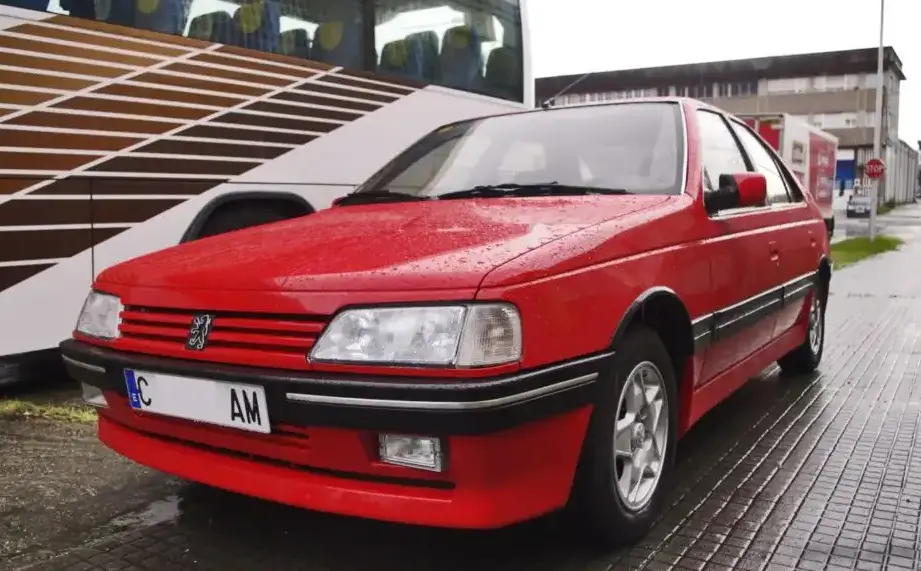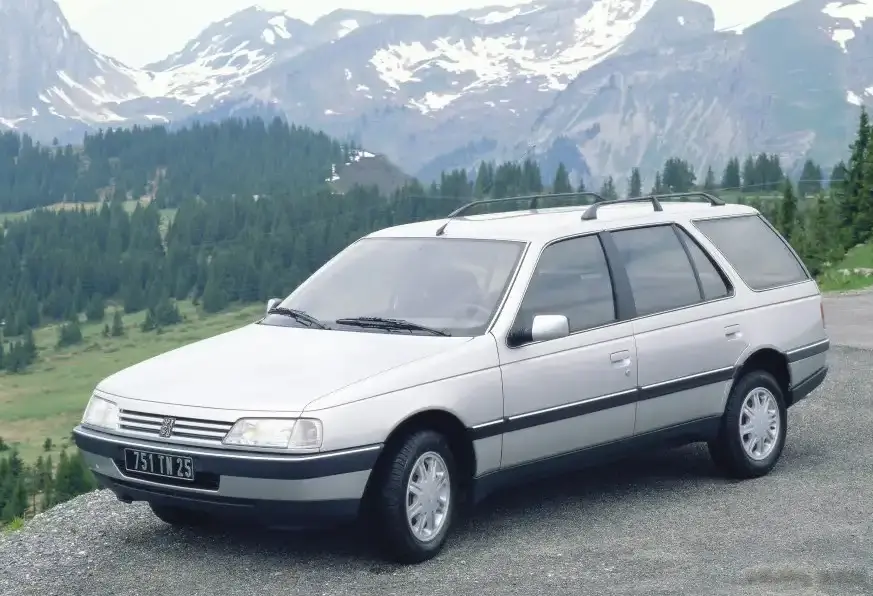
The Peugeot 405 Break 1.9, produced between 1988 and 1992, represents a practical and popular variant within the broader 405 range. As a station wagon (estate) version of the 405, it offered increased cargo capacity and versatility compared to the sedan and coupe models. This particular iteration, powered by the XU9M 1.9-liter engine producing 109 horsepower, was positioned as a mid-range offering, balancing affordability with reasonable performance and space. It was a key model for Peugeot in the European market, catering to families and those requiring a versatile vehicle for both daily commuting and leisure activities.
Technical Specifications
| Brand | Peugeot |
| Model | 405 |
| Generation | 405 I Break (15E) |
| Type (Engine) | 1.9 (109 Hp) |
| Start of production | 1988 |
| End of production | 1992 |
| Powertrain Architecture | Internal Combustion engine |
| Body type | Station wagon (estate) |
| Seats | 5 |
| Doors | 5 |
| Fuel consumption (extra urban) | 6.3 l/100 km (37.3 US mpg, 44.8 UK mpg, 15.9 km/l) |
| Fuel Type | Petrol (Gasoline) |
| Acceleration 0 – 100 km/h | 11 sec |
| Acceleration 0 – 62 mph | 11 sec |
| Acceleration 0 – 60 mph | 10.5 sec |
| Maximum speed | 185 km/h (114.95 mph) |
| Weight-to-power ratio | 9.9 kg/Hp, 100.9 Hp/tonne |
| Weight-to-torque ratio | 6.7 kg/Nm, 149.1 Nm/tonne |
| Power | 109 Hp @ 6000 rpm |
| Power per litre | 57.2 Hp/l |
| Torque | 161 Nm @ 3000 rpm (118.75 lb.-ft. @ 3000 rpm) |
| Engine layout | Front, Transverse |
| Engine Model/Code | DDZ XU9M |
| Engine displacement | 1905 cm3 (116.25 cu. in.) |
| Number of cylinders | 4 |
| Engine configuration | Inline |
| Cylinder Bore | 83 mm (3.27 in.) |
| Piston Stroke | 88 mm (3.46 in.) |
| Compression ratio | 9.18:1 |
| Number of valves per cylinder | 2 |
| Engine aspiration | Naturally aspirated engine |
| Valvetrain | OHC |
| Engine oil capacity | 5 l (5.28 US qt | 4.4 UK qt) |
| Coolant | 6.5 l (6.87 US qt | 5.72 UK qt) |
| Kerb Weight | 1080 kg (2380.99 lbs.) |
| Max. weight | 1580 kg (3483.3 lbs.) |
| Max load | 500 kg (1102.31 lbs.) |
| Trunk (boot) space – minimum | 814 l (28.75 cu. ft.) |
| Trunk (boot) space – maximum | 1640 l (57.92 cu. ft.) |
| Fuel tank capacity | 70 l (18.49 US gal | 15.4 UK gal) |
| Permitted trailer load with brakes (12%) | 1200 kg (2645.55 lbs.) |
| Length | 4398 mm (173.15 in.) |
| Width | 1714 mm (67.48 in.) |
| Height | 1445 mm (56.89 in.) |
| Wheelbase | 2669 mm (105.08 in.) |
| Front track | 1450 mm (57.09 in.) |
| Rear (Back) track | 1443 mm (56.81 in.) |
| Front overhang | 817 mm (32.17 in.) |
| Rear overhang | 912 mm (35.91 in.) |
| Minimum turning circle | 10.55 m (34.61 ft.) |
| Drivetrain Architecture | The Internal combustion engine (ICE) drives the front wheels of the vehicle. |
| Drive wheel | Front wheel drive |
| Number of gears and type of gearbox | 5 gears, manual transmission |
| Front suspension | Independent, type McPherson with coil spring and anti-roll bar |
| Front brakes | Ventilated discs |
| Rear brakes | Disc |
| Steering type | Steering rack and pinion |
| Tires size | 185/65 R14 |
| Wheel rims size | 14 |
Powertrain & Engine Architecture
The heart of the 405 Break 1.9 was the Peugeot-developed XU9M engine. This 1905cc inline-four cylinder engine featured a single overhead camshaft (OHC) design and two valves per cylinder. The ‘DDZ’ engine code specifically denotes a version tailored for the European market. Fuel delivery was managed by Bosch mechanical fuel injection, a common system for the era, providing a balance between efficiency and performance. The XU9M engine was known for its robustness and relatively simple design, contributing to its longevity. The 109 horsepower output was achieved at 6000 rpm, while peak torque of 161 Nm (118.75 lb-ft) arrived at 3000 rpm. This engine was paired with a five-speed manual transmission, offering a good spread of gears for both economy and acceleration. An automatic transmission was also available, though less common, and typically resulted in slightly reduced performance and fuel economy.
Driving Characteristics
The 405 Break 1.9 with the manual transmission provided a reasonably engaging driving experience. While not a sports car, the engine offered sufficient power for everyday driving and overtaking maneuvers. Acceleration to 60 mph took around 10.5 seconds, and a top speed of 115 mph was achievable. The five-speed gearbox allowed drivers to keep the engine in its optimal power band. The automatic transmission, while offering convenience, noticeably dulled performance, increasing the 0-60 mph time to around 11 seconds. The suspension, featuring McPherson struts at the front and a torsion beam rear axle, provided a comfortable ride, though it wasn’t particularly sporty. The steering was light and precise, making the car easy to maneuver in urban environments.
Equipment & Trim Levels
The 405 Break 1.9 typically came equipped with features considered standard for a mid-range family car of the late 1980s and early 1990s. This included central locking, power steering, and cloth upholstery. Higher trim levels, such as the GR or SR, added features like electric windows, a sunroof, and upgraded interior trim. Optional extras included air conditioning, alloy wheels, and a more sophisticated audio system. The interior design was functional and relatively spacious, with a focus on practicality. The Break’s defining feature, of course, was its large cargo area, accessible through a rear tailgate. Folding rear seats further increased the available space, making it ideal for carrying bulky items.
Chassis & Braking
The 405 Break utilized a front-wheel-drive layout. The front suspension employed independent McPherson struts with coil springs and an anti-roll bar, providing a good balance of comfort and handling. The rear suspension featured a torsion beam axle, a cost-effective and space-saving design. Braking was handled by ventilated discs at the front and discs at the rear, offering adequate stopping power for the vehicle’s weight and performance. The steering system was a rack-and-pinion setup, providing precise and responsive steering feel.
Market Reception & Comparison
The Peugeot 405 Break 1.9 was generally well-received by automotive critics. It was praised for its spacious interior, comfortable ride, and fuel efficiency. Compared to other station wagons in its class, such as the Ford Mondeo and Vauxhall/Opel Vectra Estate, the 405 offered a distinctive French flair and a reputation for reliability. The 1.9-liter engine provided a good compromise between performance and economy, making it a popular choice for families. However, some critics noted that the interior trim quality wasn’t quite as refined as some of its German competitors. The 1.6-liter version of the 405 was more affordable but lacked the 1.9’s power, while the more powerful 2.0-liter models offered greater performance but at a higher price point.
Legacy
The Peugeot 405 Break 1.9 has proven to be a durable and reliable vehicle. The XU9M engine is known for its longevity, and many examples are still on the road today. While finding parts can sometimes be a challenge, they are generally available through specialist suppliers. In the used car market, the 405 Break 1.9 is appreciated by enthusiasts for its classic styling, practicality, and relatively simple mechanicals. It represents a well-built and thoughtfully designed family car from a bygone era, offering a unique alternative to more modern vehicles.