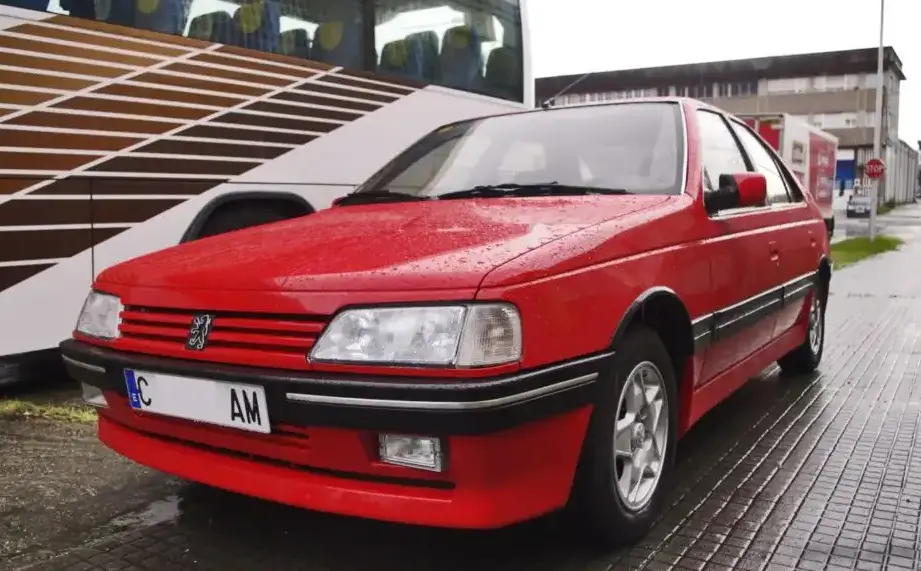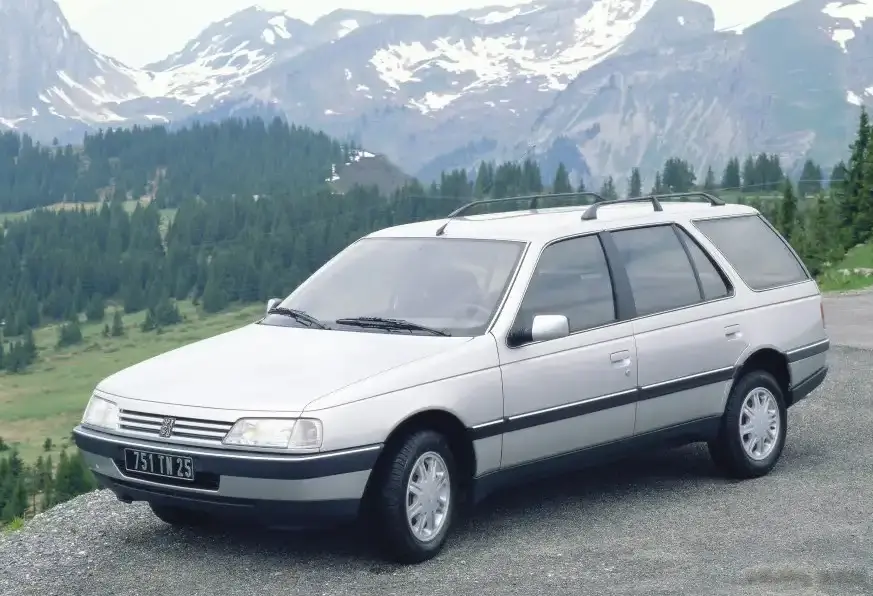
The Peugeot 405 Break 1.9, produced between 1988 and 1992, represents a significant offering within the first generation (Type 15E) of Peugeot’s popular mid-size family car. Positioned as a practical and relatively affordable option within the 405 range, the 1.9-liter engine paired with a five-speed manual transmission aimed to balance fuel economy with acceptable performance for everyday use. The Break, or station wagon, body style further enhanced the 405’s appeal to families and those requiring increased cargo capacity. It was a key model in Peugeot’s lineup during a period of increasing competition in the European family car market.
Technical Specifications
| Brand | Peugeot |
| Model | 405 |
| Generation | 405 I Break (15E) |
| Type (Engine) | 1.9 (122 Hp) |
| Start of production | 1988 |
| End of production | 1992 |
| Powertrain Architecture | Internal Combustion engine |
| Body type | Station wagon (estate) |
| Seats | 5 |
| Doors | 5 |
| Fuel consumption (extra urban) | 6.2 l/100 km (37.9 US mpg, 45.6 UK mpg, 16.1 km/l) |
| Fuel Type | Petrol (Gasoline) |
| Acceleration 0 – 100 km/h | 10.2 sec |
| Acceleration 0 – 62 mph | 10.2 sec |
| Acceleration 0 – 60 mph | 9.7 sec |
| Maximum speed | 195 km/h (121.17 mph) |
| Weight-to-power ratio | 8.7 kg/Hp, 114.7 Hp/tonne |
| Weight-to-torque ratio | 6.1 kg/Nm, 164.5 Nm/tonne |
| Power | 122 Hp @ 5500 rpm |
| Power per litre | 64 Hp/l |
| Torque | 175 Nm @ 4500 rpm (129.07 lb.-ft. @ 4500 rpm) |
| Engine layout | Front, Transverse |
| Engine Model/Code | XU9-J2 |
| Engine displacement | 1905 cm3 (116.25 cu. in.) |
| Number of cylinders | 4 |
| Engine configuration | Inline |
| Cylinder Bore | 83 mm (3.27 in.) |
| Piston Stroke | 88 mm (3.46 in.) |
| Compression ratio | 9.3:1 |
| Number of valves per cylinder | 2 |
| Fuel injection system | Multi-port manifold injection |
| Engine aspiration | Naturally aspirated engine |
| Valvetrain | OHC |
| Engine oil capacity | 4.8 l (5.07 US qt | 4.22 UK qt) |
| Kerb Weight | 1064 kg (2345.72 lbs.) |
| Max. weight | 1560 kg (3439.21 lbs.) |
| Max load | 496 kg (1093.49 lbs.) |
| Trunk (boot) space – minimum | 514 l (18.15 cu. ft.) |
| Trunk (boot) space – maximum | 1640 l (57.92 cu. ft.) |
| Fuel tank capacity | 70 l (18.49 US gal | 15.4 UK gal) |
| Permitted trailer load with brakes (12%) | 1200 kg (2645.55 lbs.) |
| Length | 4398 mm (173.15 in.) |
| Width | 1714 mm (67.48 in.) |
| Height | 1445 mm (56.89 in.) |
| Wheelbase | 2669 mm (105.08 in.) |
| Front track | 1450 mm (57.09 in.) |
| Rear (Back) track | 1443 mm (56.81 in.) |
| Front overhang | 817 mm (32.17 in.) |
| Rear overhang | 912 mm (35.91 in.) |
| Minimum turning circle | 12.55 m (41.17 ft.) |
| Drivetrain Architecture | The Internal combustion engine (ICE) drives the front wheels of the vehicle. |
| Drive wheel | Front wheel drive |
| Number of gears and type of gearbox | 5 gears, manual transmission |
| Front suspension | Independent, type McPherson with coil spring and anti-roll bar |
| Rear suspension | Torsion |
| Front brakes | Ventilated discs |
| Rear brakes | Disc |
| Assisting systems | ABS (Anti-lock braking system) |
| Steering type | Steering rack and pinion |
| Power steering | Hydraulic Steering |
| Tires size | 185/65 R14 |
| Wheel rims size | 14 |
Powertrain & Engine Architecture
The heart of the 405 Break 1.9 is the XU9J2 engine, a 1.9-liter inline-four cylinder gasoline engine. This engine is part of Peugeot-Renault’s XU series, known for its robustness and relatively simple design. The XU9J2 features a single overhead camshaft (OHC) operating two valves per cylinder. Fuel delivery is managed by a multi-port fuel injection system, providing a balance between efficiency and performance. The engine’s 9.3:1 compression ratio contributes to its respectable power output of 122 horsepower at 5500 rpm and 175 Nm (129 lb-ft) of torque at 4500 rpm. The engine is transversely mounted, driving the front wheels. The five-speed manual transmission, a Be4 type, was the standard offering, providing a good spread of gears for both urban driving and highway cruising. The gear ratios were tuned for fuel economy and drivability rather than outright performance.
Driving Characteristics
The 405 Break 1.9 offered a comfortable and predictable driving experience. While not a particularly sporty vehicle, the 1.9-liter engine provided sufficient power for most driving situations. Acceleration to 60 mph took around 9.7 seconds, and the top speed was approximately 121 mph. Compared to the more powerful 2.0-liter or V6 versions of the 405, the 1.9 felt noticeably less responsive, particularly during overtaking maneuvers. However, the manual transmission allowed drivers to make the most of the available power, and the relatively light weight of the vehicle helped to maintain decent performance. The suspension, featuring McPherson struts at the front and a torsion beam at the rear, provided a comfortable ride, absorbing bumps and imperfections in the road surface effectively. The steering was light and precise, making the car easy to maneuver in tight spaces.
Equipment & Trim Levels
The 405 Break 1.9 typically came with a reasonable level of standard equipment. Interior features included cloth upholstery, a basic dashboard layout with analog gauges, and manual windows and door locks. Power steering was generally standard. Optional extras included a sunroof, upgraded audio systems, and central locking. The trim level, while not extensively differentiated in the early 405 range, generally dictated the availability of these optional features. The Break body style itself was considered a practical upgrade, offering significantly more cargo space than the saloon (sedan) version. The rear seats could be folded down to further increase the load capacity.
Chassis & Braking
The 405 Break 1.9 utilized a front-wheel-drive chassis with independent suspension at the front and a torsion beam rear axle. The front suspension employed McPherson struts with coil springs and an anti-roll bar, providing good handling and stability. The rear torsion beam offered a compact and cost-effective solution for suspension. Braking was handled by ventilated discs at the front and solid discs at the rear. An Anti-lock Braking System (ABS) was available, and became increasingly common as standard equipment towards the end of the production run, enhancing safety and control during emergency braking situations.
Market Reception & Comparison
The Peugeot 405 Break 1.9 was generally well-received by critics as a practical and affordable family car. It was praised for its comfortable ride, spacious interior, and fuel efficiency. However, some reviewers noted that the 1.9-liter engine lacked the punch of the larger engines in the range. Compared to rivals such as the Ford Mondeo estate and the Vauxhall/Opel Vectra estate, the 405 Break 1.9 offered a competitive package in terms of price and practicality. The 1.9 engine offered better fuel economy than the 2.0L, but at the cost of performance. The diesel variants, while offering even better fuel economy, were significantly slower.
Legacy
The Peugeot 405, and particularly the Break estate version, has developed a loyal following among enthusiasts. The XU9J2 engine is known for its durability and relatively simple maintenance requirements. While not without its quirks, the engine is generally considered to be reliable if properly maintained. Today, well-maintained examples of the 405 Break 1.9 are becoming increasingly sought after by classic car collectors and enthusiasts. Parts availability can be a challenge, but a dedicated network of suppliers and enthusiasts helps to keep these cars on the road. The 405 Break represents a significant chapter in Peugeot’s history, showcasing the brand’s commitment to building practical, reliable, and stylish family cars.