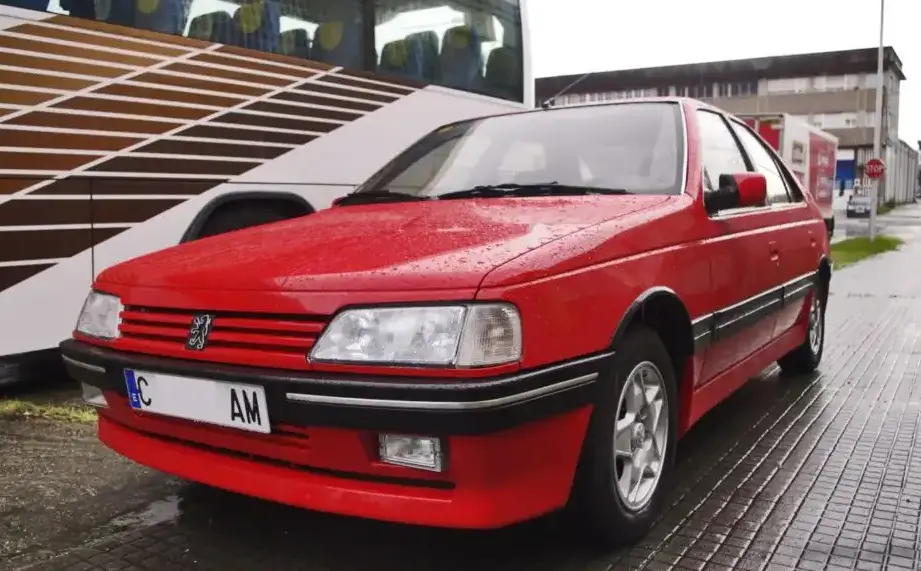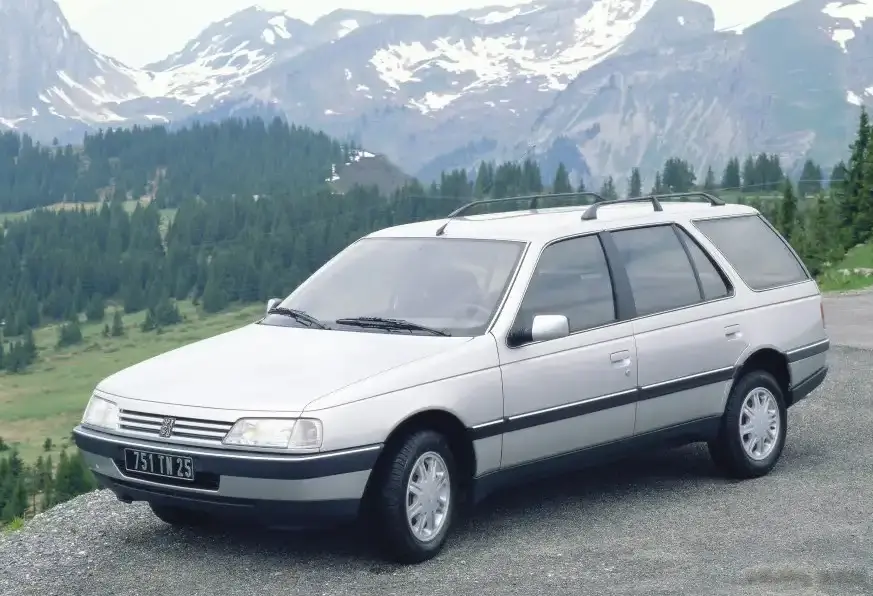
The Peugeot 405 I Break 1.9D, produced between 1988 and 1992, represents a practical and economical variant within the broader 405 range. As a station wagon (estate) version of the popular 405, the 1.9D Break aimed to provide family-oriented buyers with a spacious and fuel-efficient vehicle. It occupied the lower-mid range of the 405 lineup, positioned below the more powerful gasoline engines and above the base-level models. The 405 series, internally designated as the 15E, was a significant model for Peugeot, replacing the aging 505 and offering a more modern design and improved engineering. This particular diesel variant was especially popular in European markets where fuel economy and durability were highly valued.
Technical Specifications
| Brand | Peugeot |
| Model | 405 |
| Generation | 405 I Break (15E) |
| Type (Engine) | 1.9 D (69 Hp) |
| Start of production | 1988 |
| End of production | 1992 |
| Powertrain Architecture | Internal Combustion engine |
| Body type | Station wagon (estate) |
| Seats | 5 |
| Doors | 5 |
| Fuel consumption (extra urban) | 4.8 l/100 km (49 US mpg, 58.9 UK mpg, 20.8 km/l) |
| Fuel Type | Diesel |
| Acceleration 0 – 100 km/h | 16.7 sec |
| Acceleration 0 – 62 mph | 16.7 sec |
| Acceleration 0 – 60 mph | 15.9 sec |
| Maximum speed | 162 km/h (100.66 mph) |
| Weight-to-power ratio | 15.5 kg/Hp, 64.7 Hp/tonne |
| Weight-to-torque ratio | 8.9 kg/Nm, 112.5 Nm/tonne |
| Power | 69 Hp @ 4600 rpm |
| Power per litre | 36.2 Hp/l |
| Torque | 120 Nm @ 2000 rpm (88.51 lb.-ft. @ 2000 rpm) |
| Engine layout | Front, Transverse |
| Engine Model/Code | D9B XUD9A |
| Engine displacement | 1905 cm3 (116.25 cu. in.) |
| Number of cylinders | 4 |
| Engine configuration | Inline |
| Cylinder Bore | 83 mm (3.27 in.) |
| Piston Stroke | 88 mm (3.46 in.) |
| Compression ratio | 22.5:1 |
| Number of valves per cylinder | 2 |
| Fuel injection system | Precombustion chamber injection |
| Engine aspiration | Naturally aspirated engine |
| Valvetrain | OHC |
| Engine oil capacity | 4 l (4.23 US qt | 3.52 UK qt) |
| Coolant | 7.8 l (8.24 US qt | 6.86 UK qt) |
| Kerb Weight | 1067 kg (2352.33 lbs.) |
| Max. weight | 1620 kg (3571.49 lbs.) |
| Max load | 553 kg (1219.16 lbs.) |
| Trunk (boot) space – minimum | 814 l (28.75 cu. ft.) |
| Trunk (boot) space – maximum | 1640 l (57.92 cu. ft.) |
| Fuel tank capacity | 70 l (18.49 US gal | 15.4 UK gal) |
| Permitted trailer load with brakes (12%) | 1200 kg (2645.55 lbs.) |
| Length | 4398 mm (173.15 in.) |
| Width | 1714 mm (67.48 in.) |
| Height | 1445 mm (56.89 in.) |
| Wheelbase | 2669 mm (105.08 in.) |
| Front track | 1450 mm (57.09 in.) |
| Rear (Back) track | 1443 mm (56.81 in.) |
| Front overhang | 817 mm (32.17 in.) |
| Rear overhang | 912 mm (35.91 in.) |
| Minimum turning circle | 10.55 m (34.61 ft.) |
| Drivetrain Architecture | The Internal combustion engine (ICE) drives the front wheels of the vehicle. |
| Drive wheel | Front wheel drive |
| Number of gears and type of gearbox | 5 gears, manual transmission |
| Front suspension | Independent, type McPherson with coil spring and anti-roll bar |
| Rear suspension | Torsion |
| Front brakes | Disc |
| Rear brakes | Drum |
| Steering type | Steering rack and pinion |
| Tires size | 175/70 R14 |
| Wheel rims size | 14 |
Powertrain & Engine Architecture
The heart of the 405 I Break 1.9D is the D9B XUD9A engine, a 1.9-liter inline-four diesel. This engine is a representative of Peugeot’s XUD series, known for its robustness and fuel efficiency. The XUD9A utilizes precombustion chamber injection, a system common in diesel engines of the era. This system involves injecting fuel into a precombustion chamber connected to the main cylinder, promoting more complete combustion. The engine features a single overhead camshaft (OHC) operating two valves per cylinder. The 69 horsepower output is achieved at 4600 rpm, while peak torque of 120 Nm (88.51 lb-ft) is delivered at 2000 rpm. The engine is transversely mounted, driving the front wheels. The 405 1.9D was exclusively offered with a five-speed manual transmission, optimized for fuel economy rather than outright performance.
Driving Characteristics
The 405 1.9D Break, with its 69 horsepower and manual transmission, was not designed for sporty driving. Acceleration was leisurely, taking approximately 16.7 seconds to reach 62 mph (100 km/h). However, the engine’s torque characteristics made it reasonably capable for everyday driving, particularly when carrying loads. The five-speed gearbox allowed for efficient cruising on highways, while the relatively low weight of the vehicle (1067 kg / 2352.33 lbs) helped to mitigate the lack of power. Compared to the gasoline-powered 405 variants, the 1.9D offered significantly better fuel economy, but at the expense of performance. The manual transmission provided a more engaging driving experience than an automatic would have, allowing the driver to maximize the available power.
Equipment & Trim Levels
The 405 I Break 1.9D typically came with a fairly basic level of equipment, reflecting its position as a value-oriented model. Standard features generally included cloth upholstery, a simple dashboard layout, and manual windows and door locks. Power steering was often an optional extra. The interior was designed for practicality and durability rather than luxury. Optional extras could include a sunroof, upgraded audio systems, and more comfortable seating. The Break (estate) body style itself was a key feature, offering a generous 814-1640 liter (28.75-57.92 cu. ft.) of cargo space, making it ideal for families and those needing to transport larger items.
Chassis & Braking
The 405 I Break 1.9D utilized a McPherson strut front suspension with coil springs and an anti-roll bar, providing a reasonable level of comfort and handling. The rear suspension employed a torsion beam setup, which was cost-effective and space-efficient. The braking system consisted of disc brakes at the front and drum brakes at the rear. This configuration was typical for vehicles in this class during the late 1980s and early 1990s. The steering was a rack and pinion system, offering precise control. The 175/70 R14 tires provided adequate grip for everyday driving conditions.
Market Reception & Comparison
The Peugeot 405 I Break 1.9D was well-received in European markets, particularly by those seeking a practical, fuel-efficient, and reliable family car. Critics praised its spacious interior, comfortable ride, and robust engine. However, its lack of power was often noted. Compared to the gasoline-powered 405 models, the 1.9D offered significantly better fuel economy, but at the cost of performance. The 1.9D was also generally more affordable than the higher-specification gasoline variants. Against competitors like the Renault 19 Estate and the Citroën BX Break, the 405 1.9D offered a compelling combination of practicality, reliability, and value.
Legacy
The Peugeot 405 I Break 1.9D has proven to be a remarkably durable vehicle. Many examples are still on the road today, testament to the robustness of the XUD9A engine and the overall build quality of the 405. The engine is known for its longevity and relatively simple maintenance requirements. In the used car market, the 405 1.9D Break remains a popular choice for those seeking an affordable and reliable estate car. Its fuel efficiency and spacious interior continue to appeal to buyers, making it a classic example of a practical and well-engineered family vehicle.