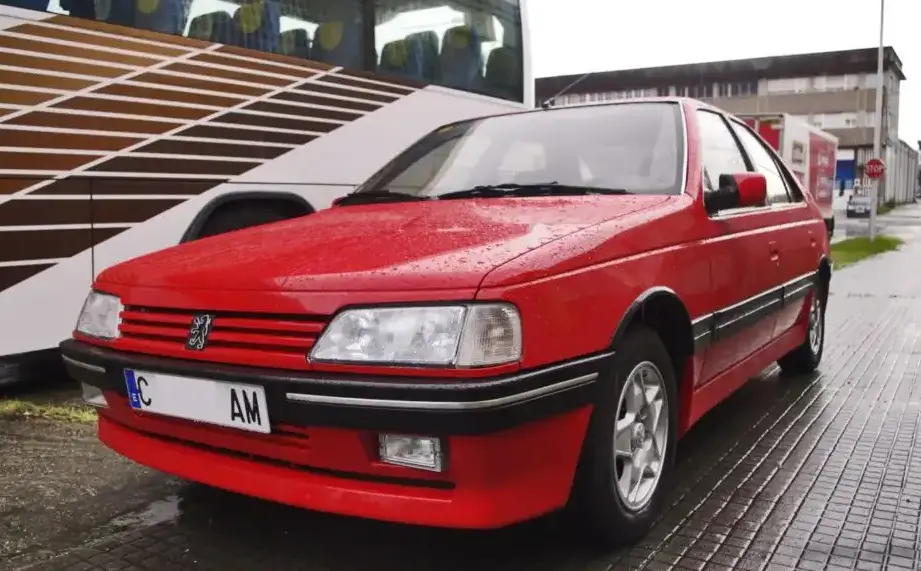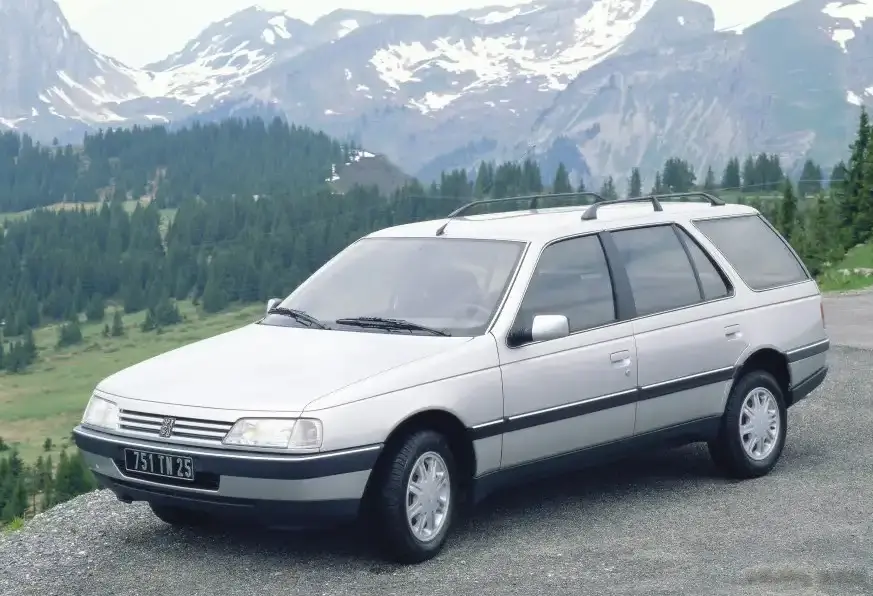
The Peugeot 405 Break 1.9D, produced between 1988 and 1992, represents a practical and economical variant within the broader 405 range. Positioned as an entry-level offering, particularly in European markets, this station wagon (estate) combined the 405’s renowned handling characteristics with the fuel efficiency of a diesel engine. The “Break” body style, Peugeot’s designation for its wagons, offered increased cargo capacity, making it a popular choice for families and those requiring versatile transportation. This specific 1.9D configuration, powered by the XUD9A engine, was a mainstay of Peugeot’s lineup during this period, known for its durability and relatively low running costs. It falls under the 15E designation, representing a specific iteration of the 405 Break.
Technical Specifications
| Brand | Peugeot |
| Model | 405 |
| Generation | 405 I Break (15E) |
| Type (Engine) | 1.9 D (70 Hp) |
| Start of production | 1988 |
| End of production | 1992 |
| Powertrain Architecture | Internal Combustion engine |
| Body type | Station wagon (estate) |
| Seats | 5 |
| Doors | 5 |
| Fuel consumption (extra urban) | 4.8 l/100 km (49 US mpg, 58.9 UK mpg, 20.8 km/l) |
| Fuel Type | Diesel |
| Acceleration 0 – 100 km/h | 16.7 sec |
| Acceleration 0 – 62 mph | 16.7 sec |
| Acceleration 0 – 60 mph | 15.9 sec |
| Maximum speed | 162 km/h (100.66 mph) |
| Weight-to-power ratio | 15.2 kg/Hp, 65.6 Hp/tonne |
| Weight-to-torque ratio | 9 kg/Nm, 111.5 Nm/tonne |
| Power | 70 Hp @ 4600 rpm |
| Power per litre | 36.7 Hp/l |
| Torque | 119 Nm @ 2000 rpm (87.77 lb.-ft. @ 2000 rpm) |
| Engine layout | Front, Transverse |
| Engine Model/Code | D9B XUD9A |
| Engine displacement | 1905 cm3 (116.25 cu. in.) |
| Number of cylinders | 4 |
| Engine configuration | Inline |
| Cylinder Bore | 83 mm (3.27 in.) |
| Piston Stroke | 88 mm (3.46 in.) |
| Compression ratio | 22.5:1 |
| Number of valves per cylinder | 2 |
| Fuel injection system | Precombustion chamber injection |
| Engine aspiration | Naturally aspirated engine |
| Valvetrain | OHC |
| Engine oil capacity | 4 l (4.23 US qt | 3.52 UK qt) |
| Coolant capacity | 7.8 l (8.24 US qt | 6.86 UK qt) |
| Kerb Weight | 1067 kg (2352.33 lbs.) |
| Max. weight | 1620 kg (3571.49 lbs.) |
| Max load | 553 kg (1219.16 lbs.) |
| Trunk (boot) space – minimum | 814 l (28.75 cu. ft.) |
| Trunk (boot) space – maximum | 1640 l (57.92 cu. ft.) |
| Fuel tank capacity | 70 l (18.49 US gal | 15.4 UK gal) |
| Length | 4398 mm (173.15 in.) |
| Width | 1714 mm (67.48 in.) |
| Height | 1445 mm (56.89 in.) |
| Wheelbase | 2669 mm (105.08 in.) |
| Front track | 1450 mm (57.09 in.) |
| Rear track | 1443 mm (56.81 in.) |
| Front overhang | 817 mm (32.17 in.) |
| Rear overhang | 912 mm (35.91 in.) |
| Minimum turning circle | 10.55 m (34.61 ft.) |
| Drivetrain Architecture | The Internal combustion engine (ICE) drives the front wheels of the vehicle. |
| Drive wheel | Front wheel drive |
| Number of gears and type of gearbox | 5 gears, manual transmission |
| Front suspension | Independent, type McPherson with coil spring and anti-roll bar |
| Rear suspension | Torsion |
| Front brakes | Disc |
| Rear brakes | Drum |
| Steering type | Steering rack and pinion |
| Tires size | 175/70 R14 |
| Wheel rims size | 14 |
Powertrain & Engine Architecture
The heart of the 405 Break 1.9D is the D9B variant of the XUD9A engine, a 1.9-liter inline-four diesel. This engine is a naturally aspirated, indirect injection diesel, utilizing a precombustion chamber design. This system, common in European diesels of the era, involved injecting fuel into a small precombustion chamber where it partially ignited, then using the resulting flame to ignite the main combustion chamber. The XUD9A is known for its robust construction and relatively simple design, contributing to its longevity. It features a single overhead camshaft (OHC) operating two valves per cylinder. The 70 horsepower output at 4600 rpm and 119 Nm (87.77 lb-ft) of torque at 2000 rpm were typical figures for a diesel engine of this displacement in the late 1980s and early 1990s. The engine is transversely mounted, driving the front wheels. The 405 Break 1.9D was exclusively offered with a five-speed manual transmission, chosen for its efficiency and cost-effectiveness.
Driving Characteristics
The 405 Break 1.9D offered a utilitarian driving experience. Acceleration was modest, with a 0-60 mph time of around 15.9 seconds. The engine’s torque, while not abundant, was available from low engine speeds, making it reasonably tractable for everyday driving. The five-speed manual transmission allowed drivers to keep the engine in its optimal power band, but required frequent shifting, especially when encountering hills or overtaking. Compared to the more powerful gasoline-powered 405 variants, such as those equipped with the 1.9 or 2.0-liter engines, the 1.9D lacked outright performance. However, it excelled in fuel economy, a key selling point for buyers prioritizing cost savings. The handling, typical of the 405, was well-balanced and predictable, offering a comfortable ride without being overly sporty.
Equipment & Trim Levels
The 405 Break 1.9D was generally equipped with basic, functional features. Standard equipment typically included cloth upholstery, a simple dashboard layout, and manual windows and door locks. Power steering was often an optional extra. The interior was designed with practicality in mind, offering durable materials and a focus on usability. Optional extras could include a sunroof, upgraded audio systems, and central locking. The trim level was generally considered entry-level, appealing to buyers seeking a no-frills, reliable estate car. The emphasis was on providing a spacious and versatile cargo area rather than luxurious appointments.
Chassis & Braking
The 405 Break utilized an independent McPherson strut front suspension with a coil spring and anti-roll bar, providing a comfortable and controlled ride. The rear suspension employed a torsion beam setup, a cost-effective and space-saving solution. Braking was accomplished via disc brakes on the front wheels and drum brakes on the rear. This configuration was common for vehicles in this class and price range during the period. The steering was a rack and pinion system, offering precise and responsive control. The 175/70 R14 tires provided adequate grip for everyday driving conditions.
Market Reception & Comparison
The Peugeot 405 Break 1.9D was well-received in European markets as a practical and economical family vehicle. Critics praised its fuel efficiency, spacious interior, and comfortable ride. However, its modest performance was often noted. Compared to other diesel-powered estate cars of the time, such as the Citroën BX Break 1.9D or the Renault 19 Estate 1.9D, the 405 Break offered a competitive combination of features and price. The 405’s reputation for reliability also contributed to its popularity. Within the 405 lineup, the 1.9D served as the entry point for buyers seeking the versatility of the Break body style without the higher cost of the gasoline engines.
Legacy
The Peugeot 405 Break 1.9D, and the XUD9A engine in particular, has earned a reputation for exceptional durability. Many examples remain on the road today, a testament to the engine’s robust construction and the overall reliability of the 405 platform. The XUD9A engine is known for its ability to withstand high mileage with proper maintenance. In the used car market, these vehicles are often sought after by enthusiasts and those seeking a simple, reliable, and economical classic car. While parts availability may be becoming more challenging, the engine’s simplicity makes it relatively easy to maintain and repair. The 405 Break 1.9D represents a significant chapter in Peugeot’s history, embodying the brand’s commitment to practicality, efficiency, and enduring quality.