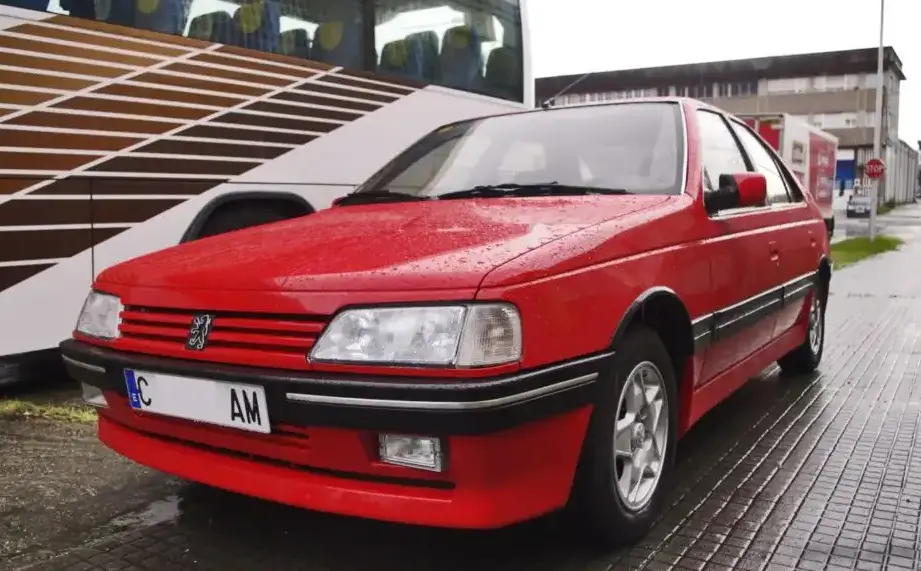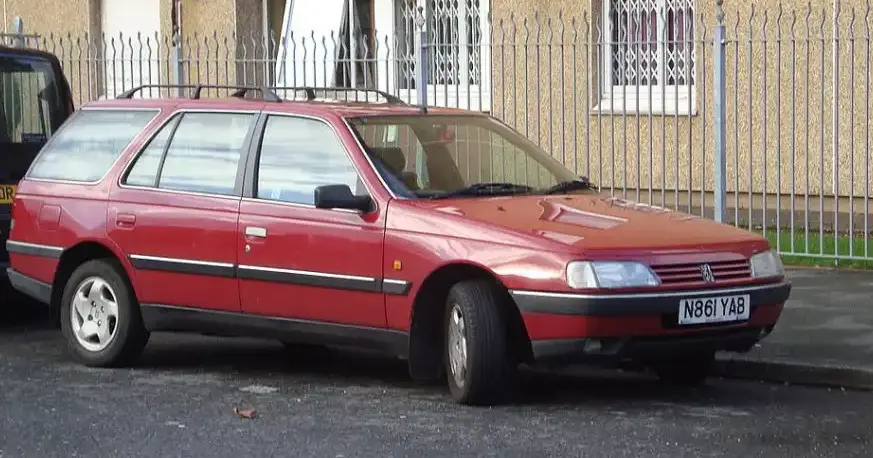
The Peugeot 405 I Break 1.8 (101 hp) represents a practical and popular variant of Peugeot’s successful mid-size family car, produced from 1992 to 1996. This model, part of the facelifted 15E series, offered a spacious station wagon (estate) body style combined with a fuel-efficient and reliable 1.8-liter engine. It occupied a mid-range position within the 405 Break lineup, appealing to families and individuals needing a versatile vehicle without the higher costs associated with the more powerful trims. The 405, in general, was a significant model for Peugeot, known for its comfortable ride, robust construction, and relatively modern styling for its time, and the Break version further enhanced its practicality.
Technical Specifications
| Brand | Peugeot |
| Model | 405 |
| Generation | 405 I Break (15E, facelift 1992) |
| Type (Engine) | 1.8 (101 Hp) |
| Start of production | 1992 |
| End of production | 1996 |
| Powertrain Architecture | Internal Combustion engine |
| Body type | Station wagon (estate) |
| Seats | 5 |
| Doors | 5 |
| Fuel consumption (extra urban) | 5.7 l/100 km (41.3 US mpg, 49.6 UK mpg, 17.5 km/l) |
| Fuel Type | Petrol (Gasoline) |
| Acceleration 0 – 100 km/h | 12.4 sec |
| Acceleration 0 – 62 mph | 12.4 sec |
| Acceleration 0 – 60 mph | 11.8 sec |
| Maximum speed | 181 km/h (112.47 mph) |
| Weight-to-power ratio | 11 kg/Hp, 91.3 Hp/tonne |
| Weight-to-torque ratio | 7.2 kg/Nm, 138.3 Nm/tonne |
| Power | 101 Hp @ 6000 rpm |
| Power per litre | 57.4 Hp/l |
| Torque | 153 Nm @ 3000 rpm (112.85 lb.-ft. @ 3000 rpm) |
| Engine layout | Front, Transverse |
| Engine Model/Code | LFZ XU7JP |
| Engine displacement | 1761 cm3 (107.46 cu. in.) |
| Number of cylinders | 4 |
| Engine configuration | Inline |
| Cylinder Bore | 83 mm (3.27 in.) |
| Piston Stroke | 81.4 mm (3.2 in.) |
| Compression ratio | 9.25:1 |
| Number of valves per cylinder | 2 |
| Fuel injection system | Multi-port manifold injection |
| Engine aspiration | Naturally aspirated engine |
| Valvetrain | OHC |
| Engine oil capacity | 4.8 l (5.07 US qt | 4.22 UK qt) |
| Coolant | 7 l (7.4 US qt | 6.16 UK qt) |
| Kerb Weight | 1106 kg (2438.31 lbs.) |
| Max. weight | 1640 kg (3615.58 lbs.) |
| Max load | 534 kg (1177.27 lbs.) |
| Trunk (boot) space – minimum | 814 l (28.75 cu. ft.) |
| Trunk (boot) space – maximum | 1640 l (57.92 cu. ft.) |
| Fuel tank capacity | 70 l (18.49 US gal | 15.4 UK gal) |
| Permitted trailer load with brakes (12%) | 1200 kg (2645.55 lbs.) |
| Length | 4398 mm (173.15 in.) |
| Width | 1714 mm (67.48 in.) |
| Height | 1445 mm (56.89 in.) |
| Wheelbase | 2669 mm (105.08 in.) |
| Front track | 1450 mm (57.09 in.) |
| Rear (Back) track | 1443 mm (56.81 in.) |
| Front overhang | 817 mm (32.17 in.) |
| Rear overhang | 912 mm (35.91 in.) |
| Minimum turning circle | 10.55 m (34.61 ft.) |
| Drivetrain Architecture | The Internal combustion engine (ICE) drives the front wheels of the vehicle. |
| Drive wheel | Front wheel drive |
| Number of gears and type of gearbox | 5 gears, manual transmission |
| Front suspension | Independent, type McPherson with coil spring and anti-roll bar |
| Rear suspension | Torsion |
| Front brakes | Disc |
| Rear brakes | Drum |
| Steering type | Steering rack and pinion |
| Power steering | Hydraulic Steering |
| Tires size | 175/70 R14 |
| Wheel rims size | 14 |
Powertrain & Engine Architecture
The 405 I Break 1.8 utilized the Peugeot-developed XU7JP engine, an inline four-cylinder petrol engine displacing 1761cc. This engine, often identified by the code LFZ, featured a single overhead camshaft (OHC) design and multi-port fuel injection. The XU7 engine family was known for its durability and relatively simple design, making it a popular choice for Peugeot and Citroën vehicles. The 101 hp output was achieved at 6000 rpm, while peak torque of 153 Nm (112.85 lb-ft) arrived at 3000 rpm. The engine’s 9.25:1 compression ratio contributed to its efficiency. The 405 Break 1.8 was typically paired with a five-speed manual transmission, providing a balance between fuel economy and drivability. While an automatic transmission was available in some markets, it was less common with this engine.
Driving Characteristics
The 1.8-liter engine in the 405 Break offered adequate performance for everyday driving. Acceleration from 0-60 mph took around 11.8 seconds, and top speed was approximately 112.47 mph. Compared to the more powerful 2.0-liter or V6 versions of the 405, the 1.8 felt less responsive, particularly when fully loaded or tackling steep inclines. However, the lower engine weight contributed to better handling balance. The five-speed manual transmission allowed drivers to keep the engine in its optimal power band, while the gear ratios were well-suited for both city and highway driving. The ride quality, a hallmark of the 405, remained comfortable even with the smaller engine, thanks to the McPherson strut front suspension and torsion beam rear suspension.
Equipment & Trim Levels
The 405 I Break 1.8 typically came with a reasonable level of standard equipment. This included central locking, power steering, and a basic stereo system. Interior upholstery was usually cloth, with a practical and durable finish. Higher trim levels, often denoted by additional letters in the model designation, offered upgrades such as electric windows, a sunroof, and upgraded interior trim. Optional extras included air conditioning, alloy wheels, and a more sophisticated audio system. The Break’s defining feature, of course, was its spacious estate body, offering a generous 814-1640 liter cargo capacity.
Chassis & Braking
The 405 Break featured a front-wheel-drive layout with independent McPherson strut suspension at the front and a torsion beam setup at the rear. This configuration provided a good balance of comfort and handling. The 1.8-liter models typically used disc brakes at the front and drum brakes at the rear. Hydraulic power steering was standard, making maneuvering easier, especially in urban environments. The suspension was tuned for comfort, but still offered reasonable body control. Stabilizer bars were fitted to both the front and rear axles to reduce body roll during cornering.
Market Reception & Comparison
The Peugeot 405 I Break 1.8 was well-received as a practical and affordable family car. Critics praised its spacious interior, comfortable ride, and fuel efficiency. Compared to the higher-powered 405 variants, the 1.8 offered a more economical option, appealing to buyers who prioritized fuel costs over outright performance. The 1.8 was also generally considered more reliable than some of the more complex engine options, such as the V6. Against competitors like the Ford Mondeo Estate and Vauxhall/Opel Vectra Estate, the 405 Break offered a distinctive French flair and a reputation for durability.
Legacy
The Peugeot 405 I Break 1.8 has proven to be a relatively reliable and long-lasting vehicle. The XU7JP engine is known for its robustness, and with regular maintenance, can cover high mileages. Today, the 405 Break is gaining recognition as a classic car, appreciated for its styling, practicality, and driving experience. While finding well-maintained examples can be challenging, the 1.8-liter models are often considered a good entry point into 405 ownership due to their relative simplicity and affordability. Parts availability is generally good, although some specific trim pieces may be difficult to source. The 405 Break remains a testament to Peugeot’s commitment to building practical, comfortable, and durable family cars.