
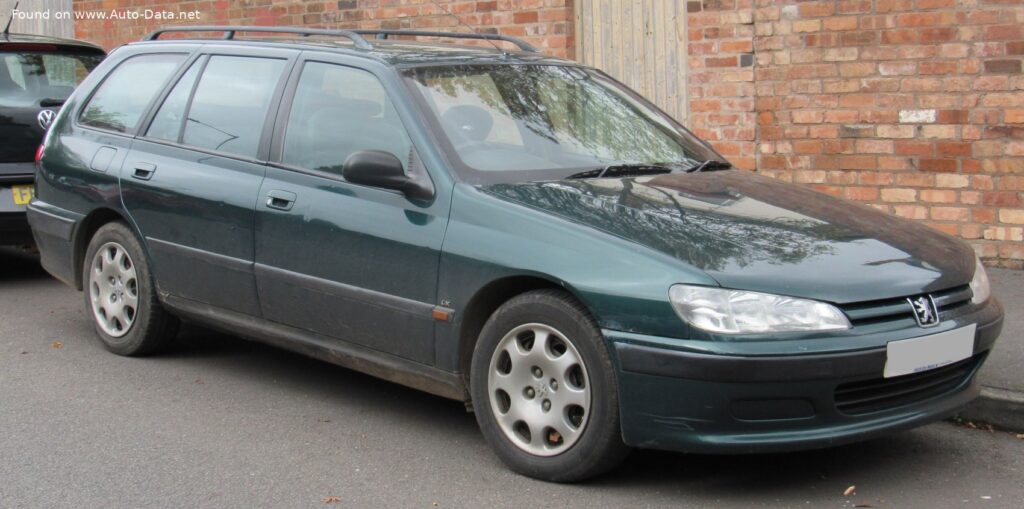
The Peugeot 406 Break (Phase I), produced from 1996 to 1999, represents a significant offering from the French automaker in the mid-size station wagon segment. As a derivative of the 406 sedan, the Break (estate) model prioritized practicality and cargo space without sacrificing the comfortable ride and stylish design that characterized the 406 range. While not officially sold in the United States, the 406 and its Break variant were popular in Europe, offering a compelling alternative to competitors like the Ford Mondeo Estate and Volkswagen Passat Variant. The 2.0 Turbo engine option, producing 147 horsepower, provided a balance of performance and fuel efficiency, making it a versatile choice for families and individuals alike.
Peugeot 406 Break: A Detailed Overview
The 406 Break Phase I was part of the broader 406 series, which replaced the Peugeot 405 in 1995. The Break model specifically catered to buyers needing increased cargo capacity and versatility. It distinguished itself with a longer roofline extending to the rear, creating a spacious and practical load area. The Phase I designation refers to the initial production run, characterized by specific styling cues and mechanical components. The 406, in general, was lauded for its comfortable ride, refined interior, and relatively affordable price point, establishing Peugeot as a strong contender in the European market.
Engine & Performance
The heart of the 406 Break 2.0 Turbo is a 1998 cc (121.93 cu. in.) inline-four cylinder engine, designated RGX XU10J2TE. This engine utilizes a turbocharger and multi-port fuel injection to deliver 147 horsepower at 5300 rpm and 235 Nm (173.33 lb.-ft.) of torque at 2500 rpm. This configuration provides a respectable power-to-weight ratio of 9.9 kg/Hp, translating to a 0-100 km/h (0-62 mph) acceleration time of 10.6 seconds. Top speed is rated at 205 km/h (127.38 mph). The engine’s transverse mounting and front-wheel-drive layout were typical for European vehicles of this era, optimizing space utilization and driveability. The 5-speed manual transmission allows for driver engagement and efficient power delivery. Fuel economy figures are rated at 14.2 l/100 km (16.6 US mpg) in urban conditions and 7.7 l/100 km (30.5 US mpg) on the open road.
Design & Features
The Peugeot 406 Break is a five-door, five-seat station wagon. Its design emphasizes flowing lines and a relatively understated elegance, typical of French automotive styling. The extended roofline of the Break model significantly increases cargo capacity compared to the sedan. With the rear seats in place, the trunk offers 525 liters (18.54 cu. ft.) of space, expanding to a substantial 1740 liters (61.45 cu. ft.) when the rear seats are folded down. Safety features for the time included ABS (Anti-lock Braking System) as standard equipment. The interior focused on providing a comfortable and functional environment, with a driver-centric layout and durable materials. Hydraulic power steering and a wishbone front suspension contribute to a comfortable and controlled driving experience. The rear suspension utilizes a multi-lever system designed to balance ride quality and handling. The vehicle rides on 205/60 R15 tires.
Technical Specifications
| Brand | Peugeot |
| Model | 406 |
| Generation | 406 Break (Phase I, 1996) |
| Type (Engine) | 2.0 Turbo (147 Hp) |
| Start of production | 1996 |
| End of production | 1999 |
| Powertrain Architecture | Internal Combustion engine |
| Body type | Station wagon (estate) |
| Seats | 5 |
| Doors | 5 |
| Fuel consumption (urban) | 14.2 l/100 km (16.6 US mpg, 19.9 UK mpg, 7 km/l) |
| Fuel consumption (extra urban) | 7.7 l/100 km (30.5 US mpg, 36.7 UK mpg, 13 km/l) |
| Fuel Type | Petrol (Gasoline) |
| Acceleration 0 – 100 km/h | 10.6 sec |
| Acceleration 0 – 62 mph | 10.6 sec |
| Acceleration 0 – 60 mph | 10.1 sec |
| Maximum speed | 205 km/h (127.38 mph) |
| Weight-to-power ratio | 9.9 kg/Hp |
| Weight-to-torque ratio | 6.2 kg/Nm |
| Power | 147 Hp @ 5300 rpm |
| Torque | 235 Nm @ 2500 rpm (173.33 lb.-ft. @ 2500 rpm) |
| Engine layout | Front, Transverse |
| Engine Model/Code | RGX XU10J2TE |
| Engine displacement | 1998 cm3 (121.93 cu. in.) |
| Number of cylinders | 4 |
| Engine configuration | Inline |
| Cylinder Bore | 86 mm (3.39 in.) |
| Piston Stroke | 86 mm (3.39 in.) |
| Compression ratio | 8.5:1 |
| Number of valves per cylinder | 2 |
| Fuel injection system | Multi-port manifold injection |
| Engine aspiration | Turbocharger |
| Valvetrain | OHC |
| Engine oil capacity | 4.5 l (4.76 US qt | 3.96 UK qt) |
| Coolant | 7.5 l (7.93 US qt | 6.6 UK qt) |
| Kerb Weight | 1460 kg (3218.75 lbs.) |
| Max. weight | 1930 kg (4254.92 lbs.) |
| Max load | 470 kg (1036.17 lbs.) |
| Trunk (boot) space – minimum | 525 l (18.54 cu. ft.) |
| Trunk (boot) space – maximum | 1740 l (61.45 cu. ft.) |
| Fuel tank capacity | 70 l (18.49 US gal | 15.4 UK gal) |
| Length | 4725 mm (186.02 in.) |
| Width | 1765 mm (69.49 in.) |
| Height | 1500 mm (59.06 in.) |
| Wheelbase | 2700 mm (106.3 in.) |
| Front track | 1500 mm (59.06 in.) |
| Rear track | 1480 mm (58.27 in.) |
| Drivetrain Architecture | Front wheel drive |
| Number of gears and type of gearbox | 5 gears, manual transmission |
| Front suspension | Wishbone |
| Rear suspension | Several levers and rods |
| Front brakes | Disc |
| Rear brakes | Disc |
| Assisting systems | ABS (Anti-lock braking system) |
| Steering type | Steering rack and pinion |
| Power steering | Hydraulic Steering |
| Tires size | 205/60 R15 |
The Peugeot 406 Break Phase I 2.0 Turbo offered a compelling package for buyers seeking a practical, comfortable, and reasonably powerful station wagon. While never officially available in the US market, it remains a well-regarded vehicle in Europe, appreciated for its blend of style, functionality, and driving dynamics.
