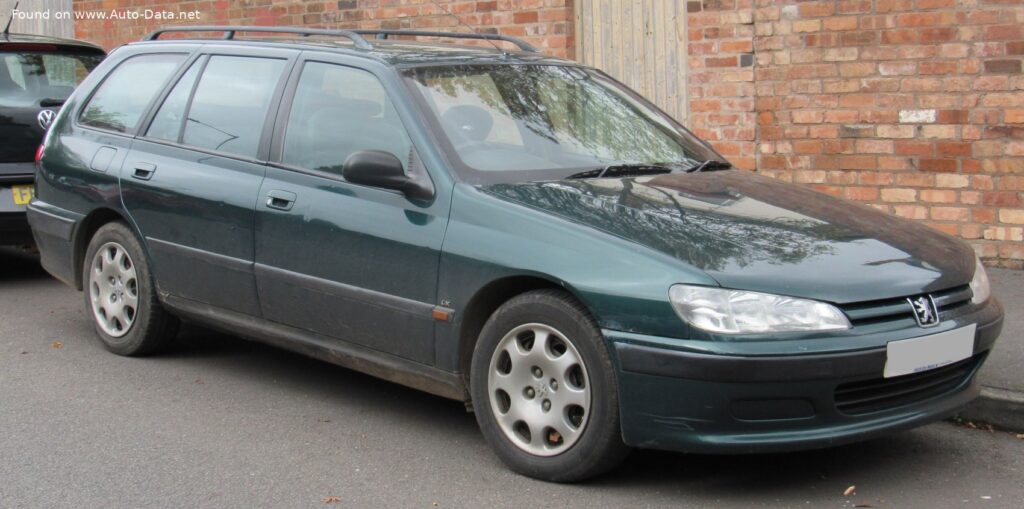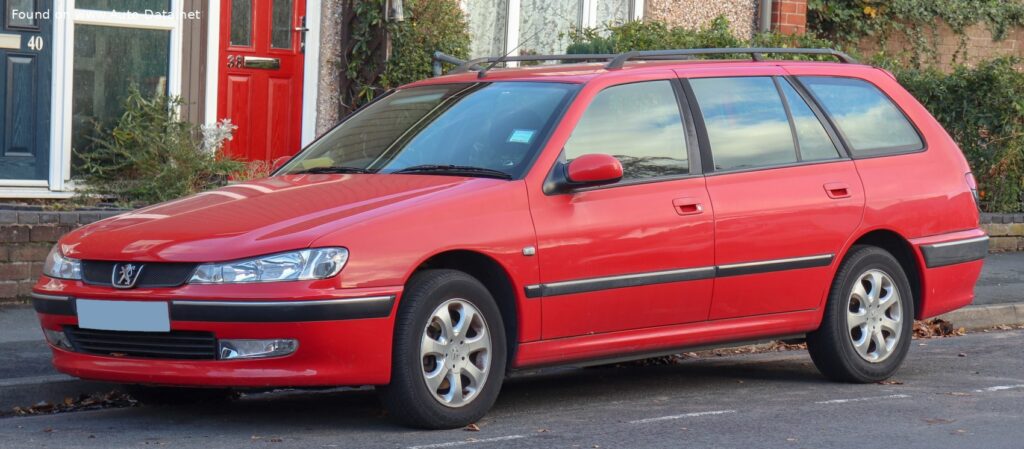
The Peugeot 406 Break, specifically the Phase II model produced from 1999 to 2004, represents a significant offering in the European mid-size station wagon segment. While not officially sold in the United States, the 406 held a prominent position as a practical and stylish family vehicle in Europe. The “Break” designation signifies the station wagon (estate) body style, offering increased cargo capacity and versatility compared to the sedan version. This iteration, powered by a 2.0-liter 16-valve engine producing 136 horsepower, aimed to balance performance with fuel efficiency, catering to the needs of European drivers.
Peugeot 406 Break: A European Family Hauler
The Peugeot 406, launched in 1995, was designed to replace the aging Peugeot 405. The Break version, introduced shortly after, quickly gained popularity for its spacious interior, comfortable ride, and attractive styling. The Phase II update in 1999 brought subtle cosmetic changes, improved safety features, and refinements to the engine range. The 2.0 16V model was a popular choice, offering a good compromise between performance and running costs. The 406 Break competed with other European station wagons like the Ford Mondeo Estate, Volkswagen Passat Variant, and Renault Laguna Estate.
Engine & Performance
The heart of the 1999 Peugeot 406 Break 2.0 16V is a naturally aspirated, inline-four cylinder gasoline engine displacing 1,997 cubic centimeters (121.86 cubic inches). This engine generates a peak power output of 136 horsepower at 6000 rpm and 190 Newton-meters (140.14 lb.-ft.) of torque at 4100 rpm. The engine features multi-port fuel injection and a double overhead camshaft (DOHC) valvetrain with four valves per cylinder, contributing to its relatively high specific output of 68.1 horsepower per liter. Power is delivered to the front wheels via a five-speed manual transmission. Acceleration from 0 to 100 km/h (0-62 mph) takes 10.9 seconds, while 0 to 60 mph is achieved in approximately 10.4 seconds. The vehicle boasts a maximum speed of 203 km/h (126.14 mph). The weight-to-power ratio of 10.4 kg/Hp and weight-to-torque ratio of 7.5 kg/Nm indicate a reasonably efficient powertrain for its time.
Design & Features
The Peugeot 406 Break is a five-door, five-seat station wagon characterized by its sleek and aerodynamic design. The Phase II models received minor styling updates, including revised headlights and taillights. The interior is designed with practicality in mind, offering comfortable seating and a well-laid-out dashboard. A key feature of the Break is its generous cargo capacity. With the rear seats up, the trunk offers 526 liters (18.58 cubic feet) of space, expanding to a substantial 1740 liters (61.45 cubic feet) when the rear seats are folded down. Safety features for this era included Anti-lock Braking System (ABS) as standard equipment. Hydraulic power steering provides ease of maneuverability. The vehicle’s suspension utilizes an independent McPherson strut setup at the front and an independent multi-link system at the rear, offering a comfortable and controlled ride.
Technical Specifications
| Brand | Peugeot |
| Model | 406 |
| Generation | 406 Break (Phase II, 1999) |
| Type (Engine) | 2.0 16V (136 Hp) |
| Start of production | 1999 |
| End of production | 2004 |
| Powertrain Architecture | Internal Combustion engine |
| Body type | Station wagon (estate) |
| Seats | 5 |
| Doors | 5 |
| Fuel consumption (urban) | 11.5 l/100 km (20.5 US mpg / 24.6 UK mpg) |
| Fuel consumption (extra urban) | 6.6 l/100 km (35.6 US mpg / 42.8 UK mpg) |
| Fuel Type | Petrol (Gasoline) |
| Acceleration 0 – 100 km/h | 10.9 sec |
| Acceleration 0 – 62 mph | 10.9 sec |
| Acceleration 0 – 60 mph | 10.4 sec |
| Maximum speed | 203 km/h (126.14 mph) |
| Weight-to-power ratio | 10.4 kg/Hp |
| Weight-to-torque ratio | 7.5 kg/Nm |
| Power | 136 Hp @ 6000 rpm |
| Torque | 190 Nm @ 4100 rpm (140.14 lb.-ft. @ 4100 rpm) |
| Engine layout | Front, Transverse |
| Engine Model/Code | RFR DEW10J4 |
| Engine displacement | 1997 cm3 (121.86 cu. in.) |
| Number of cylinders | 4 |
| Engine configuration | Inline |
| Cylinder Bore | 85 mm (3.35 in.) |
| Piston Stroke | 88 mm (3.46 in.) |
| Compression ratio | 10.8:1 |
| Number of valves per cylinder | 4 |
| Fuel injection system | Multi-port manifold injection |
| Engine aspiration | Naturally aspirated |
| Valvetrain | DOHC |
| Engine oil capacity | 4.25 l (4.49 US qt | 3.74 UK qt) |
| Coolant capacity | 7.5 l (7.93 US qt | 6.6 UK qt) |
| Kerb Weight | 1420 kg (3130.56 lbs.) |
| Max. weight | 2050 kg (4519.48 lbs.) |
| Max load | 630 kg (1388.91 lbs.) |
| Trunk (boot) space – minimum | 526 l (18.58 cu. ft.) |
| Trunk (boot) space – maximum | 1740 l (61.45 cu. ft.) |
| Fuel tank capacity | 70 l (18.49 US gal | 15.4 UK gal) |
| Length | 4736 mm (186.46 in.) |
| Width | 1760 mm (69.29 in.) |
| Height | 1502 mm (59.13 in.) |
| Wheelbase | 2700 mm (106.3 in.) |
| Front track | 1500 mm (59.06 in.) |
| Rear track | 1480 mm (58.27 in.) |
| Minimum turning circle | 11.95 m (39.21 ft.) |
| Drivetrain | Front wheel drive |
| Number of gears | 5 |
| Gearbox type | Manual transmission |
| Front suspension | Independent, McPherson with coil spring and anti-roll bar |
| Rear suspension | Independent multi-link with stabilizer |
| Front brakes | Ventilated discs |
| Rear brakes | Disc |
| Assisting systems | ABS (Anti-lock braking system) |
| Steering type | Steering rack and pinion |
| Power steering | Hydraulic |
| Tires size | 195/65 R15 |
| Wheel rims size | 15 |