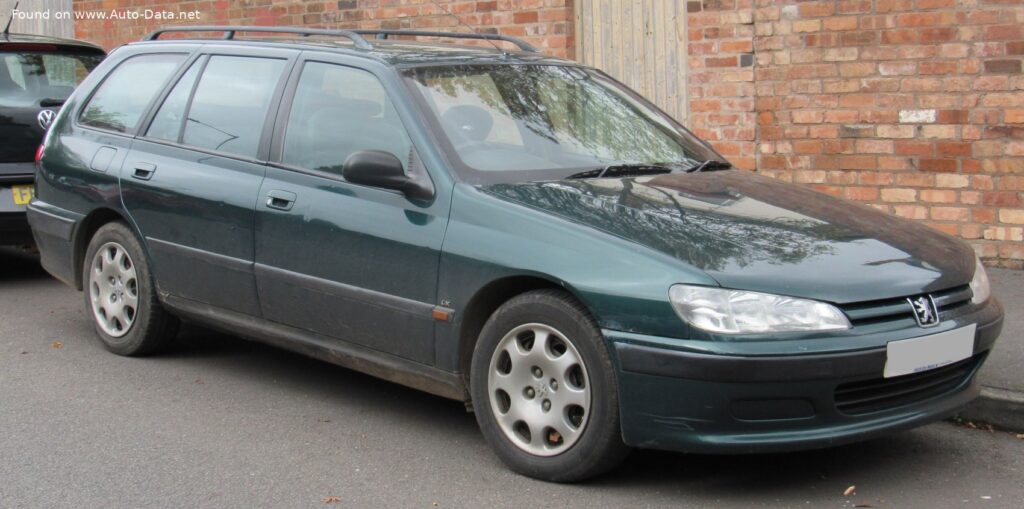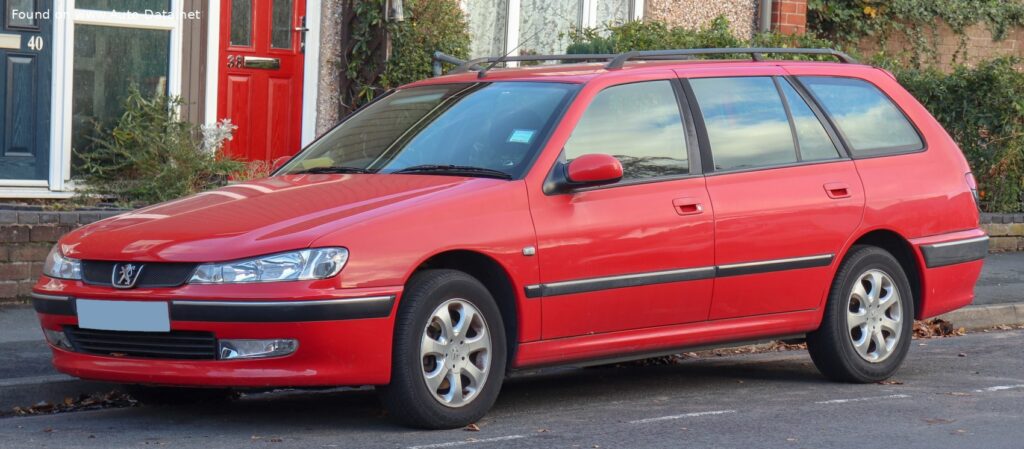
The Peugeot 406 Break, specifically the Phase II model produced from 1999 to 2004, represents a significant offering in the European mid-size station wagon segment. While not officially sold in the United States, the 406 held a prominent position as a practical and stylish family vehicle in Europe. The “Break” designation signifies the station wagon (estate) body style, offering increased cargo capacity and versatility compared to the sedan version. This iteration, powered by a 2.0 HDI 90 horsepower diesel engine, focused on fuel efficiency and reasonable performance, catering to the demands of European drivers prioritizing economy and practicality.
Peugeot 406 Break: A European Family Hauler
The Peugeot 406, launched in 1995, was designed to replace the aging Peugeot 405. The Break variant, introduced shortly after the sedan, quickly gained popularity for its spacious interior, comfortable ride, and attractive styling. The Phase II update in 1999 brought subtle cosmetic changes, improved safety features, and refinements to the engine lineup, including the 2.0 HDI diesel. This model aimed to provide a compelling alternative to rivals like the Ford Mondeo Estate, Vauxhall/Opel Vectra Estate, and Renault Laguna Estate, all popular choices in the European market.
Engine & Performance
The heart of the 1999 Peugeot 406 Break 2.0 HDI is a 1997cc (121.86 cubic inches) inline four-cylinder diesel engine, designated RHY DW10TD. This engine produces 90 horsepower at 4000 rpm and 205 Nm (151.2 lb-ft) of torque at 2000 rpm. Utilizing a turbocharger and a diesel common rail fuel injection system, the engine delivers a balance of efficiency and usable power. While not a performance-oriented vehicle, the 406 Break 2.0 HDI achieves a 0-100 km/h (0-62 mph) time of 12.8 seconds and a top speed of 175 km/h (108.74 mph). The engine’s relatively high compression ratio of 18:1 contributes to its fuel efficiency. Fuel economy figures are impressive, achieving 7.5 l/100 km (31.4 US mpg) in urban driving and 4.7 l/100 km (50 US mpg) on the open road. The front-wheel-drive configuration, coupled with a five-speed manual transmission, provides a conventional yet effective drivetrain setup.
Design & Features
The Peugeot 406 Break boasts a classic station wagon profile, characterized by its elongated roofline and generous cargo area. The Phase II models feature subtle styling updates, including revised headlights and taillights. Inside, the 406 Break offers comfortable seating for five passengers and a spacious cabin. The key selling point of the Break is its practicality. With the rear seats in place, the trunk offers a minimum of 526 liters (18.58 cubic feet) of space, expanding to a substantial 1740 liters (61.45 cubic feet) with the rear seats folded down. Safety features for the era included ABS (Anti-lock Braking System) as standard equipment. The vehicle utilizes an independent McPherson strut front suspension and an independent multi-link rear suspension, providing a comfortable and controlled ride. Hydraulic power steering ensures ease of maneuverability. The 195/65 R15 tires mounted on 15-inch wheels contribute to the vehicle’s ride quality and handling.
Technical Specifications
| Brand | Peugeot |
| Model | 406 |
| Generation | 406 Break (Phase II, 1999) |
| Type (Engine) | 2.0 HDI (90 Hp) |
| Start of production | 1999 |
| End of production | 2004 |
| Powertrain Architecture | Internal Combustion engine |
| Body type | Station wagon (estate) |
| Seats | 5 |
| Doors | 5 |
| Fuel consumption (urban) | 7.5 l/100 km (31.4 US mpg) |
| Fuel consumption (extra urban) | 4.7 l/100 km (50 US mpg) |
| Fuel Type | Diesel |
| Acceleration 0 – 100 km/h | 12.8 sec |
| Acceleration 0 – 62 mph | 12.8 sec |
| Acceleration 0 – 60 mph | 12.2 sec |
| Maximum speed | 175 km/h (108.74 mph) |
| Weight-to-power ratio | 16.2 kg/Hp |
| Weight-to-torque ratio | 7.1 kg/Nm |
| Power | 90 Hp @ 4000 rpm |
| Torque | 205 Nm @ 2000 rpm (151.2 lb.-ft. @ 2000 rpm) |
| Engine layout | Front, Transverse |
| Engine Model/Code | RHY DW10TD |
| Engine displacement | 1997 cm3 (121.86 cu. in.) |
| Number of cylinders | 4 |
| Engine configuration | Inline |
| Cylinder Bore | 85 mm (3.35 in.) |
| Piston Stroke | 88 mm (3.46 in.) |
| Compression ratio | 18:1 |
| Number of valves per cylinder | 2 |
| Fuel injection system | Diesel Commonrail |
| Engine aspiration | Turbocharger |
| Valvetrain | OHC |
| Engine oil capacity | 4.5 l (4.76 US qt | 3.96 UK qt) |
| Coolant | 9 l (9.51 US qt | 7.92 UK qt) |
| Kerb Weight | 1460 kg (3218.75 lbs.) |
| Max. weight | 2075 kg (4574.59 lbs.) |
| Max load | 615 kg (1355.84 lbs.) |
| Trunk (boot) space – minimum | 526 l (18.58 cu. ft.) |
| Trunk (boot) space – maximum | 1740 l (61.45 cu. ft.) |
| Fuel tank capacity | 70 l (18.49 US gal | 15.4 UK gal) |
| Length | 4736 mm (186.46 in.) |
| Width | 1760 mm (69.29 in.) |
| Height | 1460 mm (57.48 in.) |
| Wheelbase | 2700 mm (106.3 in.) |
| Front track | 1500 mm (59.06 in.) |
| Rear track | 1480 mm (58.27 in.) |
| Minimum turning circle | 11.95 m (39.21 ft.) |
| Drivetrain | Front wheel drive |
| Number of gears | 5 gears, manual transmission |
| Front suspension | Independent, type McPherson with coil spring and anti-roll bar |
| Rear suspension | Independent multi-link spring suspension with stabilizer |
| Front brakes | Disc |
| Rear brakes | Disc |
| Assisting systems | ABS (Anti-lock braking system) |
| Steering type | Steering rack and pinion |
| Power steering | Hydraulic Steering |
| Tires size | 195/65 R15 |
| Wheel rims size | 15 |
The Peugeot 406 Break 2.0 HDI, while not a high-performance vehicle, offered a compelling package of practicality, fuel efficiency, and comfort for European families. Its spacious interior, generous cargo capacity, and reliable diesel engine made it a popular choice in its segment. Though never officially available in the US market, the 406 Break remains a well-regarded example of European automotive engineering from the late 1990s and early 2000s.