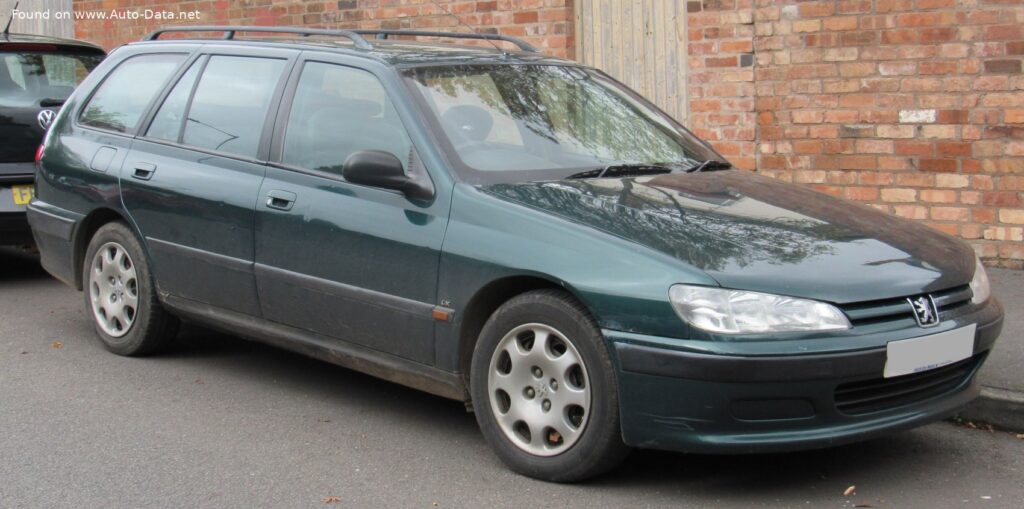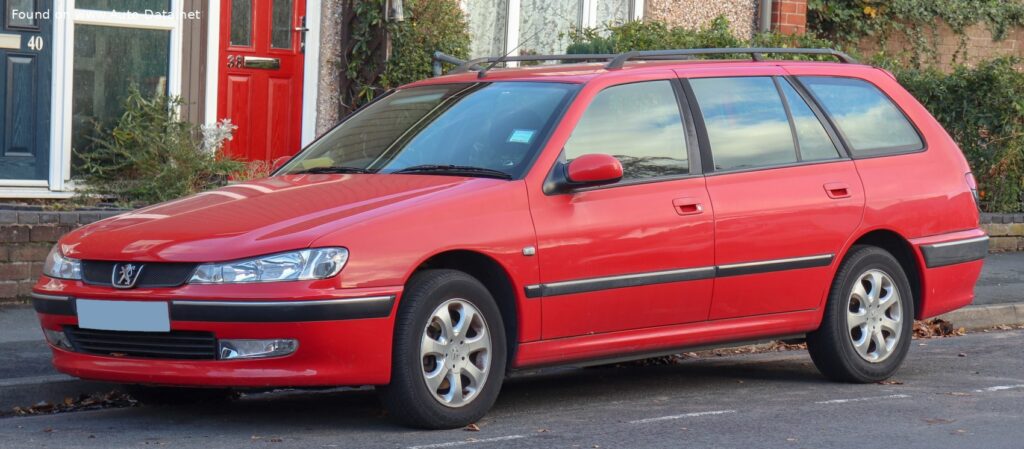
The Peugeot 406 Break (Phase II, 1999) 2.0 HDI FAP represents a significant evolution in the Peugeot 406 line, particularly noted for its adoption of direct injection diesel technology and a particulate filter – a relatively early implementation for a mainstream European vehicle. Introduced in 1995, the 406 was Peugeot’s large family car, positioned above the 306 and below the 605. The “Break” designation signifies the station wagon (estate) body style, offering increased practicality and cargo capacity. This Phase II update, produced from 2001 to 2004, refined the aesthetics and, crucially, introduced more efficient and environmentally conscious diesel engines, like the 2.0 HDI FAP, catering to the growing demand for fuel economy and reduced emissions in the European market.
Peugeot 406 Break: A Focus on Efficiency
The 406 Break, while never officially sold in the United States, was a popular choice in Europe for families and individuals needing a versatile and comfortable vehicle. It competed with models like the Ford Mondeo Estate, Vauxhall/Opel Vectra Estate, and Renault Laguna Estate. The Phase II models, particularly those equipped with the 2.0 HDI FAP engine, were designed to meet increasingly stringent European emission standards (Euro 3 in this case) while maintaining acceptable performance. The inclusion of a Diesel Particulate Filter (DPF) was a key feature, demonstrating Peugeot’s commitment to reducing harmful particulate matter emissions. This engine was a cornerstone of Peugeot’s diesel strategy during this period, offering a balance between power, economy, and environmental responsibility.
Engine & Performance
The heart of the 406 Break 2.0 HDI FAP is a 1,997 cc (121.86 cu. in.) inline four-cylinder diesel engine. This engine, designated RHS DW10ATED, produces 110 horsepower (Hp) at 4,000 rpm and 250 Newton-meters (184.39 lb.-ft.) of torque. The engine utilizes a turbocharger with an intercooler to enhance power output and efficiency. A common rail direct fuel injection system ensures precise fuel delivery, optimizing combustion and reducing emissions. The engine’s 18:1 compression ratio is typical for a direct injection diesel. Performance figures include a 0-100 km/h (0-62 mph) acceleration time of 11.4 seconds and a maximum speed of 186 km/h (115.58 mph). The weight-to-power ratio of 13.8 kg/Hp and weight-to-torque ratio of 6.1 kg/Nm indicate a reasonably efficient powertrain for its time. The engine is transversely mounted at the front of the vehicle, driving the front wheels through a five-speed manual transmission.
Design & Features
The 406 Break is a five-door, five-seat station wagon. Its design, penned by Pininfarina, is characterized by flowing lines and a relatively understated elegance. The Phase II updates included minor cosmetic revisions to the front and rear fascias. The primary appeal of the Break model lies in its practicality. The rear cargo area offers a minimum of 526 liters (18.58 cu. ft.) of space, expanding to a substantial 1,741 liters (61.48 cu. ft.) with the rear seats folded down. Safety features for the era included ABS (Anti-lock Braking System). The suspension system consists of an independent McPherson strut setup at the front and an independent multi-link arrangement at the rear, providing a comfortable ride and reasonable handling. Hydraulic power steering contributes to ease of maneuverability. The vehicle rides on 195/65 R15 tires mounted on 15-inch wheels.
Technical Specifications
| Brand | Peugeot |
| Model | 406 |
| Generation | 406 Break (Phase II, 1999) |
| Type (Engine) | 2.0 HDI FAP (110 Hp) |
| Start of production | 2001 |
| End of production | 2004 |
| Powertrain Architecture | Internal Combustion engine |
| Body type | Station wagon (estate) |
| Seats | 5 |
| Doors | 5 |
| Fuel consumption (combined) | 5.7 l/100 km |
| Fuel consumption (US mpg) | 41.3 US mpg |
| Fuel consumption (UK mpg) | 49.6 UK mpg |
| Fuel consumption (km/l) | 17.5 km/l |
| Fuel Type | Diesel |
| Acceleration 0 – 100 km/h | 11.4 sec |
| Acceleration 0 – 62 mph | 11.4 sec |
| Acceleration 0 – 60 mph | 10.8 sec |
| Maximum speed | 186 km/h (115.58 mph) |
| Emission standard | Euro 3 |
| Weight-to-power ratio | 13.8 kg/Hp |
| Weight-to-torque ratio | 6.1 kg/Nm |
| Power | 110 Hp @ 4000 rpm |
| Power per litre | 55.1 Hp/l |
| Torque | 250 Nm (184.39 lb.-ft.) |
| Engine layout | Front, Transverse |
| Engine Model/Code | RHS DW10ATED |
| Engine displacement | 1997 cm3 (121.86 cu. in.) |
| Number of cylinders | 4 |
| Engine configuration | Inline |
| Cylinder Bore | 85 mm (3.35 in.) |
| Piston Stroke | 88 mm (3.46 in.) |
| Compression ratio | 18:1 |
| Number of valves per cylinder | 2 |
| Fuel injection system | Diesel Commonrail |
| Engine aspiration | Turbocharger, Intercooler |
| Valvetrain | OHC |
| Engine oil capacity | 4.5 l (4.76 US qt | 3.96 UK qt) |
| Coolant | 9.4 l (9.93 US qt | 8.27 UK qt) |
| Kerb Weight | 1514 kg (3337.8 lbs.) |
| Max. weight | 2075 kg (4574.59 lbs.) |
| Max load | 561 kg (1236.79 lbs.) |
| Trunk (boot) space – minimum | 526 l (18.58 cu. ft.) |
| Trunk (boot) space – maximum | 1741 l (61.48 cu. ft.) |
| Fuel tank capacity | 70 l (18.49 US gal | 15.4 UK gal) |
| Length | 4736 mm (186.46 in.) |
| Width | 1760 mm (69.29 in.) |
| Height | 1455 mm (57.28 in.) |
| Wheelbase | 2700 mm (106.3 in.) |
| Minimum turning circle | 11.95 m (39.21 ft.) |
| Drivetrain Architecture | Front wheel drive |
| Number of gears | 5 gears, manual transmission |
| Front suspension | Independent, McPherson with coil spring and anti-roll bar |
| Rear suspension | Independent multi-link spring suspension with stabilizer |
| Front brakes | Ventilated discs |
| Rear brakes | Disc |
| Assisting systems | ABS (Anti-lock braking system) |
| Steering type | Steering rack and pinion |
| Power steering | Hydraulic Steering |
| Tires size | 195/65 R15 |
| Wheel rims size | 15 |
The Peugeot 406 Break 2.0 HDI FAP, while not a performance car, offered a compelling package of practicality, fuel efficiency, and reasonable comfort. Its early adoption of diesel particulate filter technology highlights Peugeot’s proactive approach to reducing emissions, making it a noteworthy vehicle in the evolution of modern diesel engines.