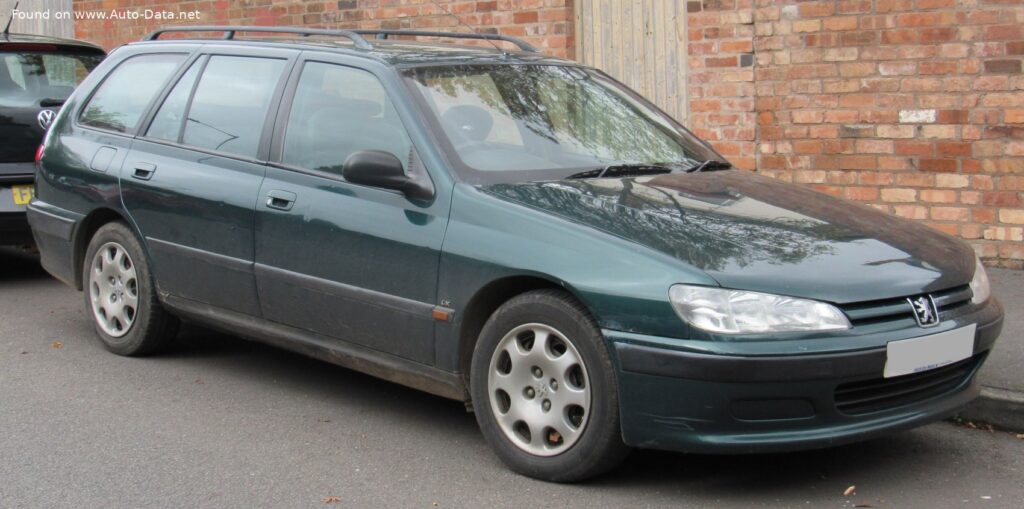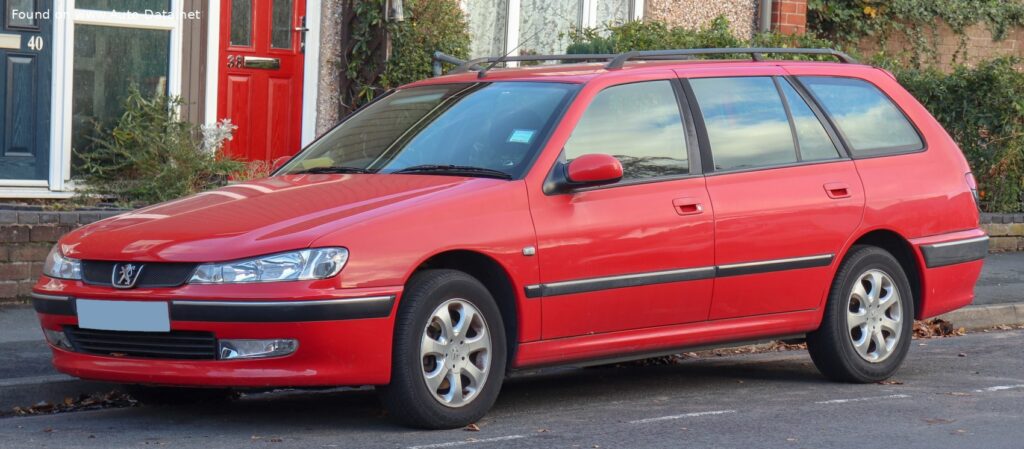
The Peugeot 406 Break (Phase II), produced from 2000 to 2004, represents a refined iteration of Peugeot’s popular mid-size offering. As a station wagon (estate) variant of the 406, it catered to buyers seeking practicality and space without sacrificing the comfort and style associated with the Peugeot brand. While not officially sold in the United States, the 406 held a significant position in the European market, competing with vehicles like the Ford Mondeo Estate, Volkswagen Passat Variant, and Renault Laguna Estate. The Phase II updates brought cosmetic and mechanical improvements, solidifying its appeal as a versatile family vehicle.
Peugeot 406 Break: A Detailed Overview
The 406 Break, particularly the 3.0 V6 Automatic version, was positioned as a premium offering within the range. It combined a powerful engine with the added utility of a spacious cargo area, making it a popular choice for families and those requiring substantial load-carrying capacity. The Phase II model benefited from enhancements to the interior, exterior styling, and safety features, further enhancing its market competitiveness.
Engine & Performance
The heart of the 406 Break 3.0 V6 is a naturally aspirated 2.9-liter V6 engine, designated XFX ES9J4S. This engine produces 207 horsepower at 6000 rpm and 285 Nm (210.21 lb.-ft.) of torque at 3750 rpm. The engine’s configuration – a 60-degree V-angle – contributes to its smooth operation and relatively compact size. Power is delivered to the front wheels via a four-speed automatic transmission. This powertrain combination allows for a 0-100 km/h (0-62 mph) acceleration time of 9.9 seconds, and a 0-60 mph time of 9.4 seconds, with a maximum speed of 226 km/h (140.43 mph). The engine’s power-to-weight ratio is 7.3 kg/Hp, and the torque-to-weight ratio is 5.3 kg/Nm, indicating a responsive and capable driving experience. Fuel consumption is rated at 14.5 l/100 km (16.2 US mpg) in urban conditions and 7.7 l/100 km (30.5 US mpg) on the extra-urban cycle.
Design & Features
The 406 Break is a five-door, five-seat station wagon characterized by its elegant and aerodynamic design. The Phase II updates included revised front and rear styling, with a more modern appearance. The interior was designed with practicality and comfort in mind, offering ample space for passengers and luggage. A key feature of the Break model is its expansive cargo area. With the rear seats in place, it offers 526 liters (18.58 cu. ft.) of storage space, which expands to a substantial 1740 liters (61.45 cu. ft.) when the rear seats are folded down. Safety features for the time included ABS (Anti-lock Braking System) and ventilated disc brakes on the front wheels, with disc brakes on the rear. The vehicle utilizes an independent McPherson strut suspension system at the front and an independent multi-link suspension at the rear, providing a comfortable ride and stable handling. Hydraulic power steering further enhances the driving experience.
Technical Specifications
| Brand | Peugeot |
| Model | 406 |
| Generation | 406 Break (Phase II, 1999) |
| Type (Engine) | 3.0 V6 (207 Hp) Automatic |
| Start of production | 2000 |
| End of production | 2004 |
| Powertrain Architecture | Internal Combustion engine |
| Body type | Station wagon (estate) |
| Seats | 5 |
| Doors | 5 |
| Fuel consumption (urban) | 14.5 l/100 km (16.2 US mpg, 19.5 UK mpg, 6.9 km/l) |
| Fuel consumption (extra urban) | 7.7 l/100 km (30.5 US mpg, 36.7 UK mpg, 13 km/l) |
| Fuel Type | Petrol (Gasoline) |
| Acceleration 0 – 100 km/h | 9.9 sec |
| Acceleration 0 – 62 mph | 9.9 sec |
| Acceleration 0 – 60 mph | 9.4 sec |
| Maximum speed | 226 km/h (140.43 mph) |
| Weight-to-power ratio | 7.3 kg/Hp |
| Weight-to-torque ratio | 5.3 kg/Nm |
| Power | 207 Hp @ 6000 rpm |
| Torque | 285 Nm @ 3750 rpm (210.21 lb.-ft. @ 3750 rpm) |
| Engine layout | Front, Transverse |
| Engine Model/Code | XFX ES9J4S |
| Engine displacement | 2946 cm3 (179.78 cu. in.) |
| Number of cylinders | 6 |
| Engine configuration | V-engine |
| Cylinder Bore | 87 mm (3.43 in.) |
| Piston Stroke | 82.6 mm (3.25 in.) |
| Compression ratio | 10.9:1 |
| Number of valves per cylinder | 4 |
| Fuel injection system | Multi-port manifold injection |
| Engine aspiration | Naturally aspirated engine |
| Valvetrain | DOHC |
| Engine oil capacity | 4.75 l (5.02 US qt | 4.18 UK qt) |
| Coolant capacity | 10.6 l (11.2 US qt | 9.33 UK qt) |
| Kerb Weight | 1505 kg (3317.96 lbs.) |
| Max. weight | 2155 kg (4750.96 lbs.) |
| Max load | 650 kg (1433 lbs.) |
| Trunk (boot) space – minimum | 526 l (18.58 cu. ft.) |
| Trunk (boot) space – maximum | 1740 l (61.45 cu. ft.) |
| Fuel tank capacity | 70 l (18.49 US gal | 15.4 UK gal) |
| Length | 4736 mm (186.46 in.) |
| Width | 1760 mm (69.29 in.) |
| Height | 1500 mm (59.06 in.) |
| Wheelbase | 2700 mm (106.3 in.) |
| Front track | 1500 mm (59.06 in.) |
| Rear track | 1480 mm (58.27 in.) |
| Minimum turning circle | 11.95 m (39.21 ft.) |
| Drivetrain Architecture | Front wheel drive |
| Number of gears | 4 |
| Gearbox type | Automatic transmission |
| Front suspension | Independent, McPherson with coil spring and anti-roll bar |
| Rear suspension | Independent multi-link spring suspension with stabilizer |
| Front brakes | Ventilated discs |
| Rear brakes | Disc |
| Assisting systems | ABS (Anti-lock braking system) |
| Steering type | Steering rack and pinion |
| Power steering | Hydraulic Steering |
| Tires size | 205/60 R15 |
| Wheel rims size | 15 |
The Peugeot 406 Break Phase II 3.0 V6 Automatic offered a compelling blend of performance, practicality, and style. While never officially available in the US market, it remains a well-regarded vehicle in Europe, appreciated for its comfortable ride, spacious interior, and refined engine.