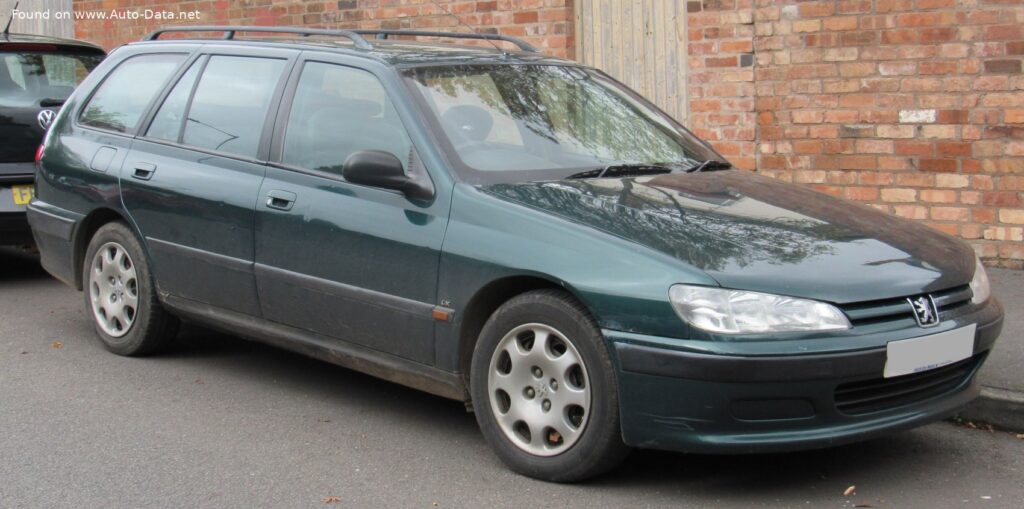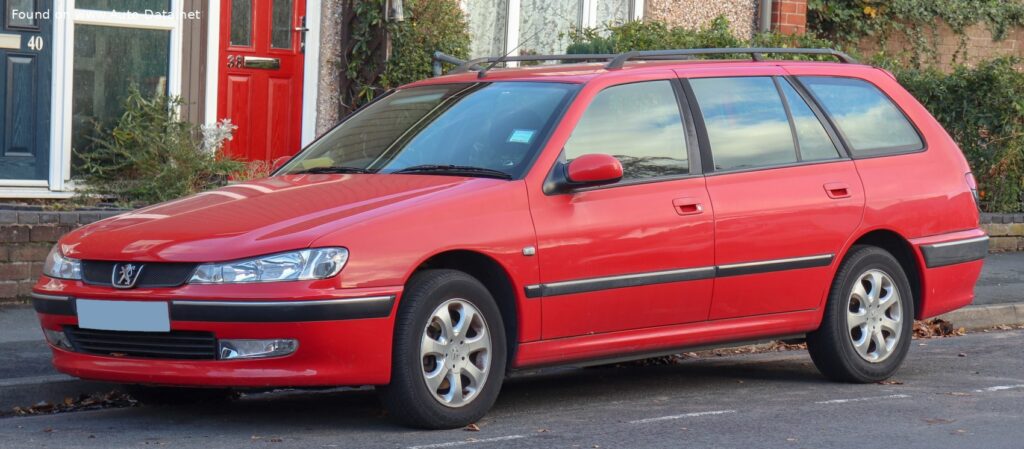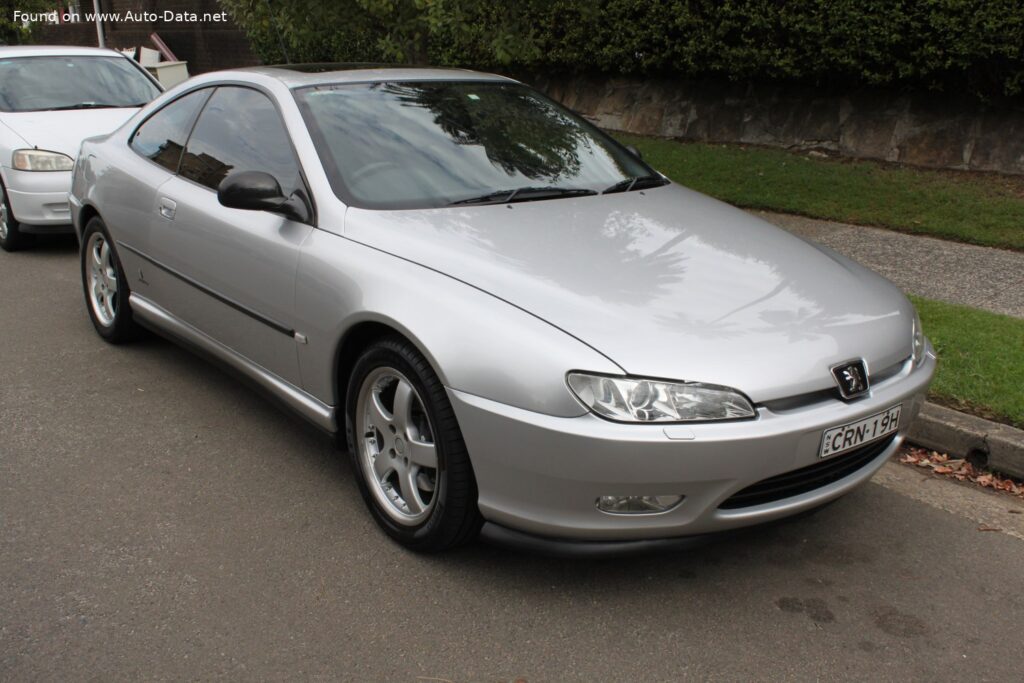
The Peugeot 406 Coupe, specifically the Phase I 2.0 16V model introduced in 1999, represents a distinctive chapter in Peugeot’s history. While not officially sold in the United States, the 406 Coupe was a popular grand tourer in Europe, offering a blend of style, performance, and comfort. Positioned in the mid-size coupe segment, it aimed to compete with vehicles like the Audi Coupe and the BMW 3 Series Coupe, offering a more affordable and uniquely styled alternative. The 406 Coupe distinguished itself with its Pininfarina-designed exterior and a focus on driver engagement.
Peugeot 406 Coupe: A European Grand Tourer
The 406 Coupe was a departure from the more practical 406 sedan and wagon. It was designed to be a stylish and sporty offering, appealing to buyers who prioritized aesthetics and driving pleasure. The Phase I models, produced from 1999 to 2003, established the core design and mechanical features that would define the 406 Coupe throughout its production run. The vehicle’s success lay in its ability to provide a sophisticated driving experience without the premium price tag of its German rivals.
Engine & Performance
The 2.0 16V engine powering the 406 Coupe is a naturally aspirated, inline-four cylinder gasoline engine. Displacing 1,997 cubic centimeters (121.86 cubic inches), it produces 135 horsepower at 6,000 rpm and 190 Newton-meters (140.14 lb.-ft.) of torque at 4,100 rpm. This translates to a power-to-liter ratio of 67.6 hp/l. The engine utilizes multi-port fuel injection and a double overhead camshaft (DOHC) valvetrain with four valves per cylinder. Power is delivered to the front wheels via a five-speed manual transmission. Performance figures include a 0-100 km/h (0-62 mph) acceleration time of 10.4 seconds and a 0-60 mph time of 9.9 seconds. The vehicle boasts a maximum speed of 208 km/h (129.25 mph). The weight-to-power ratio is 10.3 kg/Hp, and the weight-to-torque ratio is 7.3 kg/Nm.
Design & Features
The Peugeot 406 Coupe’s most striking feature is its exterior design, penned by the renowned Italian design house Pininfarina. The coupe boasts a sleek, flowing silhouette with a long hood, a sloping roofline, and a short rear deck. The Phase I models featured a distinctive front end with a prominent grille and teardrop-shaped headlights. The interior was designed to be comfortable and driver-focused, with supportive seats and a well-laid-out dashboard. Standard features included power steering, disc brakes on all four wheels, and an Anti-lock Braking System (ABS). The 406 Coupe offered a practical level of space for a coupe, with seating for four passengers and a trunk capacity of 390 liters (13.77 cubic feet). The vehicle’s curb weight is 1,385 kg (3,053.4 lbs), with a maximum weight of 1,785 kg (3,935.25 lbs) and a maximum load capacity of 400 kg (881.85 lbs).
Technical Specifications
| Brand | Peugeot |
| Model | 406 |
| Generation | 406 Coupe (Phase I, 1997) |
| Type (Engine) | 2.0 16V (135 Hp) |
| Start of production | 1999 |
| End of production | 2003 |
| Powertrain Architecture | Internal Combustion engine |
| Body type | Coupe |
| Seats | 4 |
| Doors | 2 |
| Fuel consumption (urban) | 11.6 l/100 km (20.3 US mpg / 24.4 UK mpg) |
| Fuel consumption (extra urban) | 6.6 l/100 km (35.6 US mpg / 42.8 UK mpg) |
| Fuel Type | Petrol (Gasoline) |
| Acceleration 0 – 100 km/h | 10.4 sec |
| Acceleration 0 – 62 mph | 10.4 sec |
| Acceleration 0 – 60 mph | 9.9 sec |
| Maximum speed | 208 km/h (129.25 mph) |
| Weight-to-power ratio | 10.3 kg/Hp |
| Weight-to-torque ratio | 7.3 kg/Nm |
| Power | 135 Hp @ 6000 rpm |
| Torque | 190 Nm @ 4100 rpm (140.14 lb.-ft. @ 4100 rpm) |
| Engine layout | Front, Transverse |
| Engine Model/Code | RFR DEW10J4 |
| Engine displacement | 1997 cm3 (121.86 cu. in.) |
| Number of cylinders | 4 |
| Engine configuration | Inline |
| Cylinder Bore | 85 mm (3.35 in.) |
| Piston Stroke | 88 mm (3.46 in.) |
| Compression ratio | 10.8:1 |
| Number of valves per cylinder | 4 |
| Fuel injection system | Multi-port manifold injection |
| Engine aspiration | Naturally aspirated |
| Valvetrain | DOHC |
| Engine oil capacity | 4.25 l (4.49 US qt | 3.74 UK qt) |
| Coolant capacity | 7.5 l (7.93 US qt | 6.6 UK qt) |
| Kerb Weight | 1385 kg (3053.4 lbs) |
| Max. weight | 1785 kg (3935.25 lbs) |
| Max load | 400 kg (881.85 lbs) |
| Trunk (boot) space – minimum | 390 l (13.77 cu. ft.) |
| Fuel tank capacity | 70 l (18.49 US gal | 15.4 UK gal) |
| Length | 4615 mm (181.69 in.) |
| Width | 1780 mm (70.08 in.) |
| Height | 1352 mm (53.23 in.) |
| Wheelbase | 2700 mm (106.3 in.) |
| Front track | 1511 mm (59.49 in.) |
| Rear track | 1525 mm (60.04 in.) |
| Drivetrain Architecture | Front wheel drive |
| Number of gears | 5 gears, manual transmission |
| Front suspension | Wishbone |
| Rear suspension | Several levers and rods |
| Front brakes | Disc |
| Rear brakes | Disc |
| Assisting systems | ABS (Anti-lock braking system) |
| Steering type | Steering rack and pinion |
| Power steering | Hydraulic |
| Tires size | 205/60R15 |
The Peugeot 406 Coupe, particularly the Phase I 2.0 16V, remains a sought-after vehicle among enthusiasts. Its combination of striking design, respectable performance, and relative affordability has ensured its place as a memorable and stylish grand tourer of the late 1990s and early 2000s. While never officially available in the US market, its European popularity cemented its status as a desirable and well-regarded vehicle.