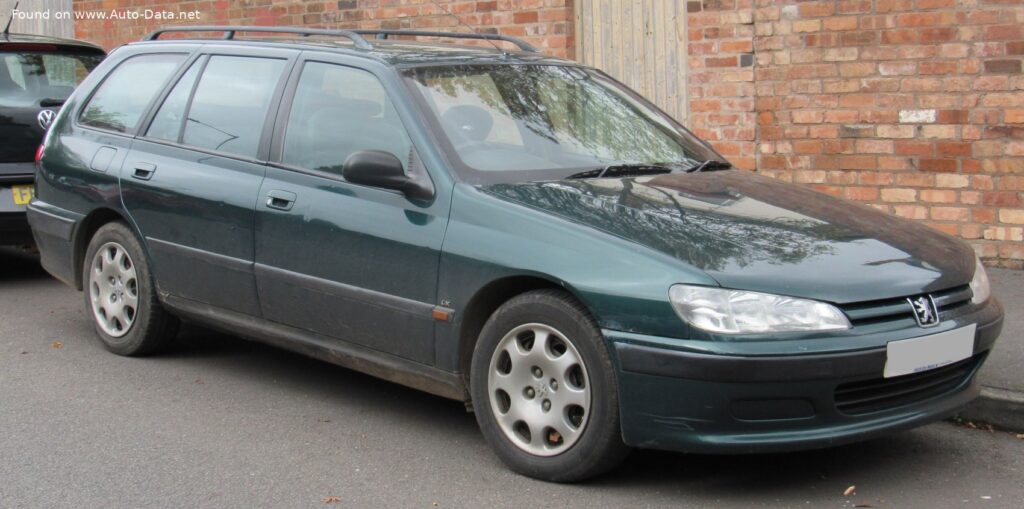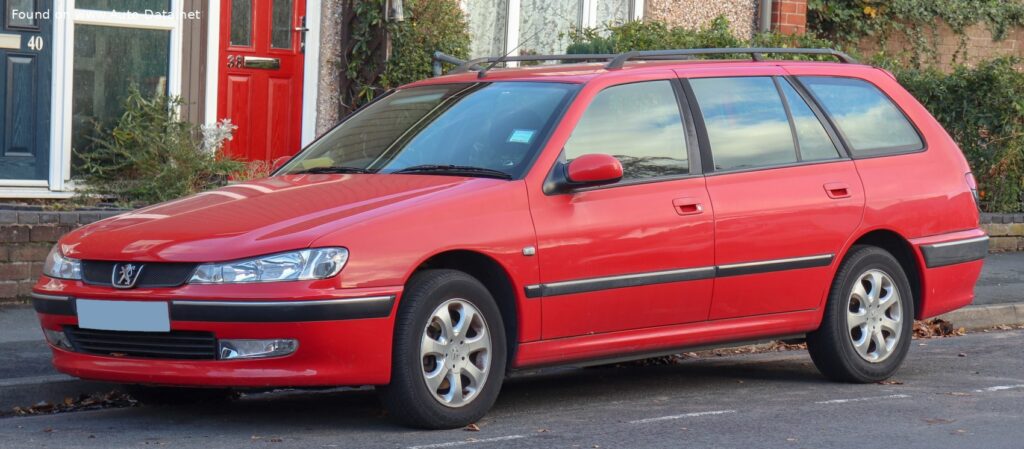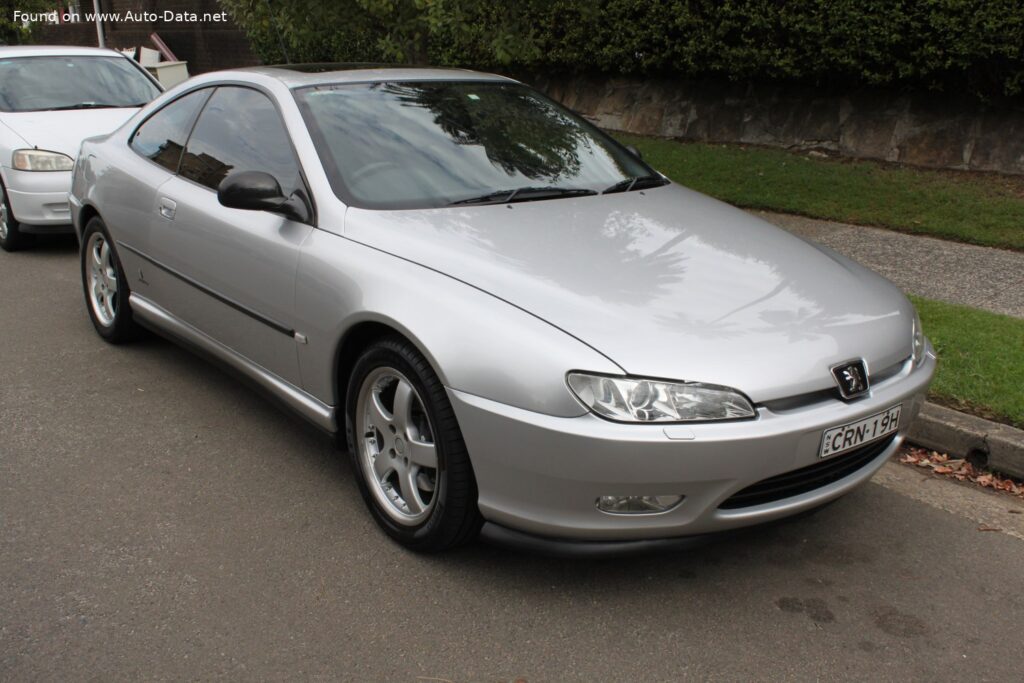
The Peugeot 406 Coupe, particularly the Phase I model introduced in 1997, represents a distinctive era of French automotive design. While not officially sold in the United States, the 406 Coupe gained significant popularity in Europe as a stylish and capable grand tourer. Positioned in the mid-size coupe segment, it offered a compelling alternative to more mainstream offerings, emphasizing elegant aesthetics and a comfortable driving experience. The 3.0 V6 variant, producing 207 horsepower, was a flagship model, appealing to drivers seeking a blend of performance and refinement.
Peugeot 406 Coupe: A Design Icon
The 406 Coupe was a departure from Peugeot’s more utilitarian designs of the past. Pininfarina, the renowned Italian design house, played a crucial role in shaping its exterior. The result was a sleek, flowing silhouette characterized by a long hood, a gently sloping roofline, and a short rear deck. This design language, uncommon for a mass-market vehicle at the time, gave the 406 Coupe a sophisticated and almost exotic appearance. The Phase I models, produced from 2000 to 2003, retained the original design elements, establishing a strong visual identity. The coupe body style, with its two doors and four seats, prioritized style over practicality, catering to buyers who valued aesthetics and a sporty driving experience.
Engine & Performance
The heart of the 406 Coupe 3.0 V6 is its naturally aspirated 2.9-liter V6 engine, designated XFX ES9J4S. This engine produced 207 horsepower at 6000 rpm and 285 Nm (210.21 lb.-ft.) of torque at 3750 rpm. The engine’s configuration – a 60-degree V-angle – contributed to its smooth operation and relatively compact size. Power is delivered to the front wheels via a five-speed manual transmission, providing drivers with a direct and engaging driving experience. Acceleration from 0 to 100 km/h (0-62 mph) takes 7.8 seconds, while 0-60 mph is achieved in a calculated 7.4 seconds. The top speed is electronically limited to 240 km/h (149.13 mph). The engine’s power-to-weight ratio of 7.3 kg/Hp and torque-to-weight ratio of 5.3 kg/Nm contribute to its responsive performance. Fuel economy is rated at 14.1 l/100 km (16.7 US mpg) in urban driving and 7.6 l/100 km (30.9 US mpg) on the open road.
Design & Features
Beyond its striking exterior, the 406 Coupe offered a well-appointed interior. The cabin was designed with comfort and style in mind, featuring supportive seats and a driver-focused layout. While specific features varied depending on trim level and market, standard equipment typically included power windows, central locking, and an audio system. Safety features, for the era, included ABS (Anti-lock Braking System) and front disc brakes. The suspension system, utilizing wishbones at the front and several levers and rods at the rear, was tuned to provide a balance between comfort and handling. The 406 Coupe’s trunk offered a usable 390 liters (13.77 cu. ft.) of space, sufficient for weekend luggage. The vehicle’s dimensions – 4615 mm (181.69 in.) in length, 1780 mm (70.08 in.) in width, and 1352 mm (53.23 in.) in height – positioned it as a relatively compact coupe, enhancing its agility and maneuverability.
Technical Specifications
| Brand | Peugeot |
| Model | 406 |
| Generation | 406 Coupe (Phase I, 1997) |
| Type (Engine) | 3.0 V6 (207 Hp) |
| Start of production | 2000 |
| End of production | 2003 |
| Powertrain Architecture | Internal Combustion engine |
| Body type | Coupe |
| Seats | 4 |
| Doors | 2 |
| Fuel consumption (urban) | 14.1 l/100 km (16.7 US mpg, 20 UK mpg, 7.1 km/l) |
| Fuel consumption (extra urban) | 7.6 l/100 km (30.9 US mpg, 37.2 UK mpg, 13.2 km/l) |
| Fuel Type | Petrol (Gasoline) |
| Acceleration 0 – 100 km/h | 7.8 sec |
| Acceleration 0 – 62 mph | 7.8 sec |
| Acceleration 0 – 60 mph | 7.4 sec |
| Maximum speed | 240 km/h (149.13 mph) |
| Weight-to-power ratio | 7.3 kg/Hp |
| Weight-to-torque ratio | 5.3 kg/Nm |
| Power | 207 Hp @ 6000 rpm |
| Torque | 285 Nm @ 3750 rpm (210.21 lb.-ft. @ 3750 rpm) |
| Engine layout | Front, Transverse |
| Engine Model/Code | XFX ES9J4S |
| Engine displacement | 2946 cm3 (179.78 cu. in.) |
| Number of cylinders | 6 |
| Engine configuration | V-engine |
| Cylinder Bore | 87 mm (3.43 in.) |
| Piston Stroke | 82.6 mm (3.25 in.) |
| Compression ratio | 10.9:1 |
| Number of valves per cylinder | 4 |
| Fuel injection system | Multi-port manifold injection |
| Engine aspiration | Naturally aspirated engine |
| Valvetrain | DOHC |
| Engine oil capacity | 4.75 l (5.02 US qt | 4.18 UK qt) |
| Coolant | 9.6 l (10.14 US qt | 8.45 UK qt) |
| Kerb Weight | 1505 kg (3317.96 lbs.) |
| Max. weight | 1935 kg (4265.94 lbs.) |
| Max load | 430 kg (947.99 lbs.) |
| Trunk (boot) space – minimum | 390 l (13.77 cu. ft.) |
| Fuel tank capacity | 70 l (18.49 US gal | 15.4 UK gal) |
| Length | 4615 mm (181.69 in.) |
| Width | 1780 mm (70.08 in.) |
| Height | 1352 mm (53.23 in.) |
| Wheelbase | 2700 mm (106.3 in.) |
| Front track | 1511 mm (59.49 in.) |
| Rear (Back) track | 1525 mm (60.04 in.) |
| Drivetrain Architecture | Front wheel drive |
| Number of gears and type of gearbox | 5 gears, manual transmission |
| Front suspension | Wishbone |
| Rear suspension | Several levers and rods |
| Front brakes | Disc |
| Rear brakes | Disc |
| Assisting systems | ABS (Anti-lock braking system) |
| Steering type | Steering rack and pinion |
| Power steering | Hydraulic Steering |
| Tires size | 215/55 R16 |
The Peugeot 406 Coupe, particularly the 3.0 V6 variant, remains a sought-after vehicle among enthusiasts. Its combination of elegant design, capable performance, and comfortable driving experience has cemented its place as a classic of the late 1990s and early 2000s. While never officially available in the US market, its European success demonstrates Peugeot’s ability to create stylish and desirable automobiles.