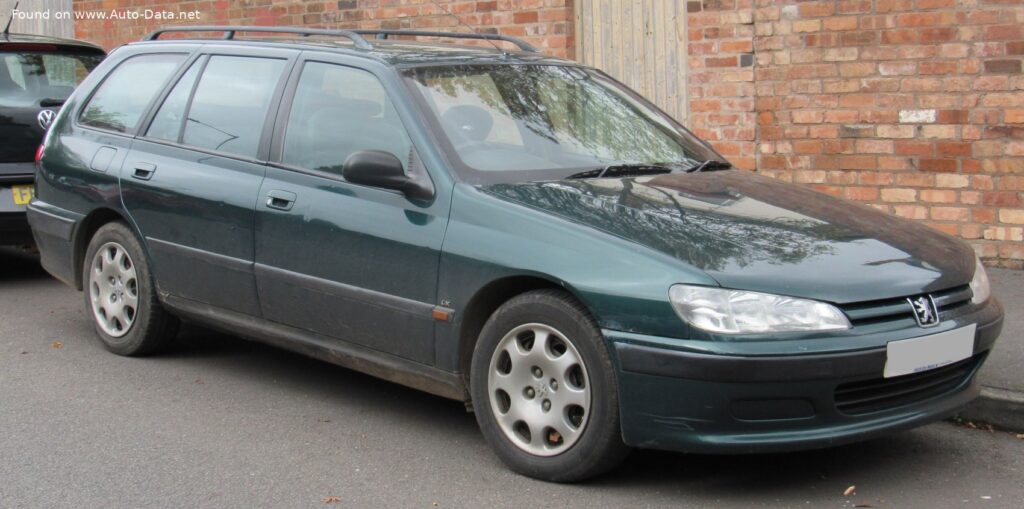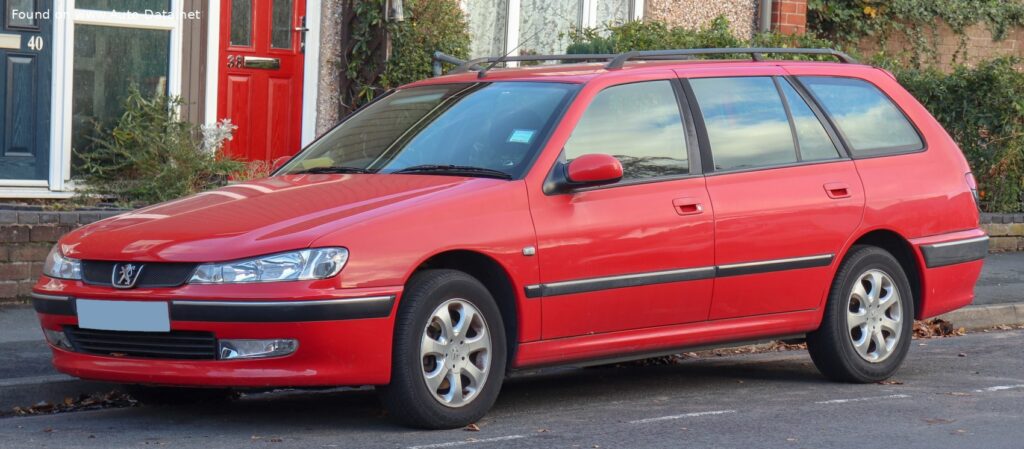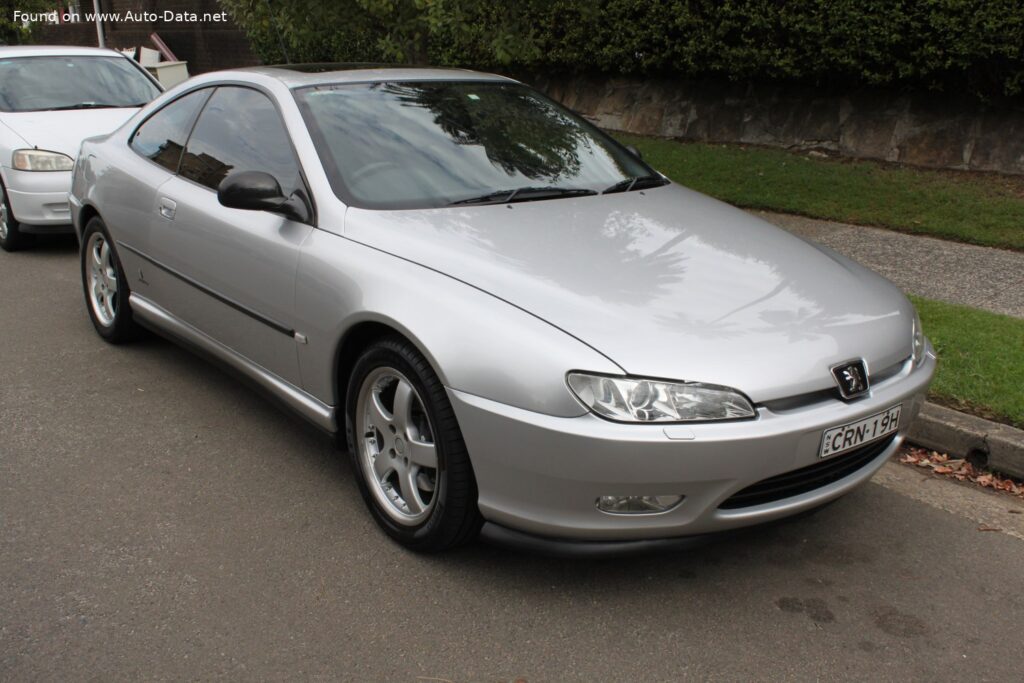
The Peugeot 406 Coupe, specifically the Phase I model produced from 2000 to 2003, represents a distinctive era for the French automaker. Positioned as a stylish and relatively affordable grand tourer, the 406 Coupe aimed to offer a blend of performance, comfort, and striking design. While not officially sold in the United States, the 406 Coupe was a popular choice in Europe and other international markets, competing with vehicles like the Audi A4 Coupe and the Ford Cougar. This article details the technical specifications and characteristics of the 3.0 V6 automatic variant, a flagship model within the 406 Coupe range.
Peugeot 406 Coupe: A Design Statement
The 406 Coupe distinguished itself from the more practical 406 sedan and wagon with its dramatically sloping roofline and elegant silhouette. Pininfarina, the renowned Italian design house, played a significant role in shaping the Coupe’s aesthetics, resulting in a vehicle that was widely praised for its visual appeal. The Phase I models, produced between 2000 and 2003, featured subtle design cues that would be refined in later iterations. The Coupe’s two-door configuration and four-seat layout emphasized its focus on driver and passenger experience, prioritizing style over outright practicality.
Engine & Performance
The 3.0 V6 engine was the top-of-the-line powertrain option for the 406 Coupe. This naturally aspirated 2,946 cc (179.78 cu. in.) V6 produced 207 horsepower at 6000 rpm and 285 Nm (210.21 lb.-ft.) of torque at 3750 rpm. The engine, designated XFX ES9J4S, featured multi-port fuel injection and a double overhead camshaft (DOHC) valvetrain with four valves per cylinder. This configuration delivered a relatively high power output for its displacement, achieving 70.3 horsepower per liter. Power was delivered to the front wheels via a four-speed automatic transmission. Performance figures included a 0-100 km/h (0-62 mph) acceleration time of 9.5 seconds and a maximum speed of 232 km/h (144.16 mph). The weight-to-power ratio of 7.3 kg/Hp and a weight-to-torque ratio of 5.3 kg/Nm contributed to a responsive driving experience.
Design & Features
As a coupe, the 406 prioritized a sleek and sporty appearance. The vehicle’s dimensions – 4615 mm (181.69 in.) in length, 1780 mm (70.08 in.) in width, and 1352 mm (53.23 in.) in height – created a visually balanced profile. The 2700 mm (106.3 in.) wheelbase provided a stable platform for handling. Inside, the 406 Coupe offered a comfortable cabin with seating for four passengers, although rear seat space was somewhat limited due to the sloping roofline. Standard features included power steering (hydraulic), disc brakes on all four wheels, and an Anti-lock Braking System (ABS) for enhanced safety. The trunk offered a minimum capacity of 390 liters (13.77 cu. ft.), providing adequate space for luggage. The vehicle rode on 215/55 R16 tires mounted on 16-inch wheel rims.
Technical Specifications
| Brand | Peugeot |
| Model | 406 |
| Generation | 406 Coupe (Phase I, 1997) |
| Type (Engine) | 3.0 V6 (207 Hp) Automatic |
| Start of production | 2000 |
| End of production | 2003 |
| Powertrain Architecture | Internal Combustion engine |
| Body type | Coupe |
| Seats | 4 |
| Doors | 2 |
| Fuel consumption (urban) | 14.7 l/100 km (16 US mpg / 19.2 UK mpg / 6.8 km/l) |
| Fuel consumption (extra urban) | 7.8 l/100 km (30.2 US mpg / 36.2 UK mpg / 12.8 km/l) |
| Fuel Type | Petrol (Gasoline) |
| Acceleration 0 – 100 km/h | 9.5 sec |
| Acceleration 0 – 62 mph | 9.5 sec |
| Acceleration 0 – 60 mph | 9 sec |
| Maximum speed | 232 km/h (144.16 mph) |
| Weight-to-power ratio | 7.3 kg/Hp |
| Weight-to-torque ratio | 5.3 kg/Nm |
| Power | 207 Hp @ 6000 rpm |
| Power per litre | 70.3 Hp/l |
| Torque | 285 Nm @ 3750 rpm (210.21 lb.-ft. @ 3750 rpm) |
| Engine layout | Front, Transverse |
| Engine Model/Code | XFX ES9J4S |
| Engine displacement | 2946 cm3 (179.78 cu. in.) |
| Number of cylinders | 6 |
| Engine configuration | V-engine |
| Cylinder Bore | 87 mm (3.43 in.) |
| Piston Stroke | 82.6 mm (3.25 in.) |
| Compression ratio | 10.9:1 |
| Number of valves per cylinder | 4 |
| Fuel injection system | Multi-port manifold injection |
| Engine aspiration | Naturally aspirated engine |
| Valvetrain | DOHC |
| Engine oil capacity | 4.75 l (5.02 US qt | 4.18 UK qt) |
| Coolant | 10.6 l (11.2 US qt | 9.33 UK qt) |
| Kerb Weight | 1505 kg (3317.96 lbs.) |
| Max. weight | 1935 kg (4265.94 lbs.) |
| Max load | 430 kg (947.99 lbs.) |
| Trunk (boot) space – minimum | 390 l (13.77 cu. ft.) |
| Fuel tank capacity | 70 l (18.49 US gal | 15.4 UK gal) |
| Length | 4615 mm (181.69 in.) |
| Width | 1780 mm (70.08 in.) |
| Height | 1352 mm (53.23 in.) |
| Wheelbase | 2700 mm (106.3 in.) |
| Front track | 1511 mm (59.49 in.) |
| Rear (Back) track | 1525 mm (60.04 in.) |
| Drivetrain Architecture | Front wheel drive |
| Number of gears and type of gearbox | 4 gears, automatic transmission |
| Front suspension | Wishbone |
| Rear suspension | Several levers and rods |
| Front brakes | Disc |
| Rear brakes | Disc |
| Assisting systems | ABS (Anti-lock braking system) |
| Steering type | Steering rack and pinion |
| Power steering | Hydraulic Steering |
| Tires size | 215/55 R16 |
| Wheel rims size | 16 |
The Peugeot 406 Coupe, particularly the 3.0 V6 automatic variant, remains a sought-after vehicle among enthusiasts. Its combination of elegant design, respectable performance, and relative affordability has cemented its place as a stylish and memorable grand tourer of its era.