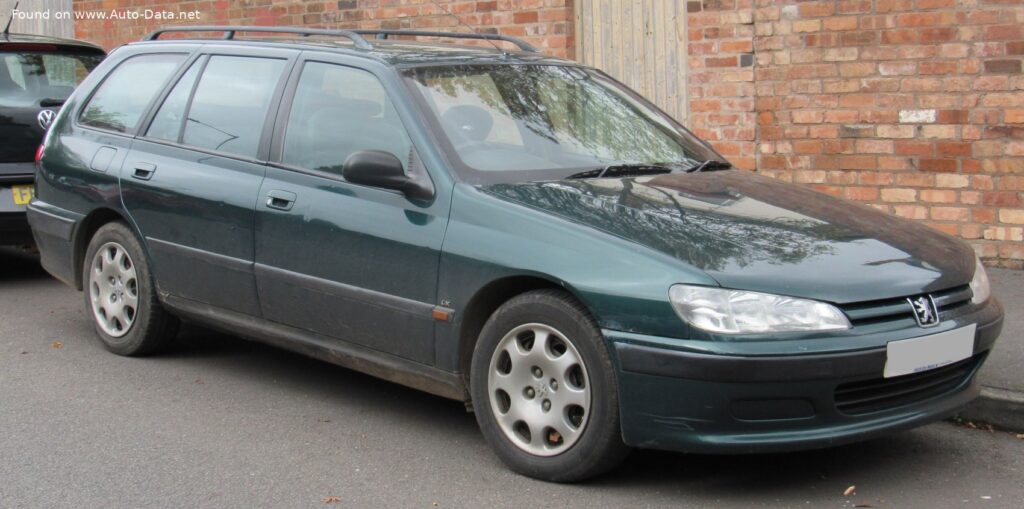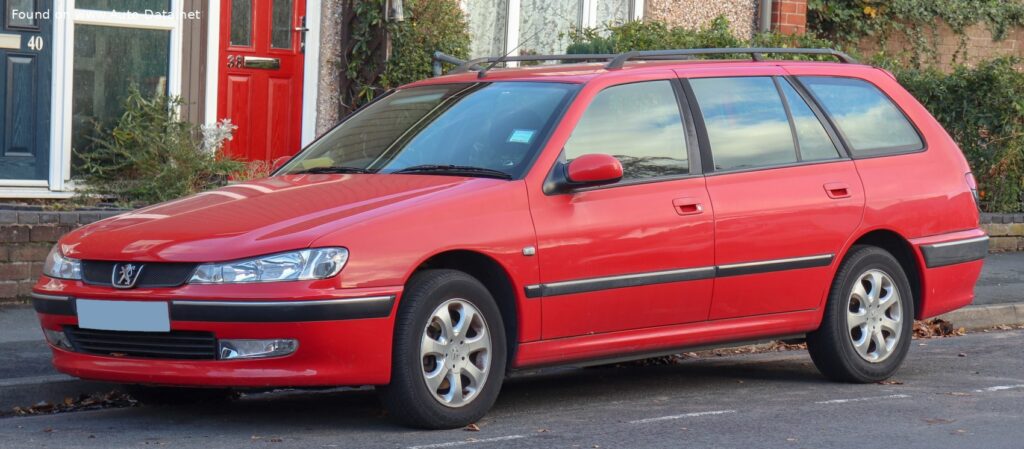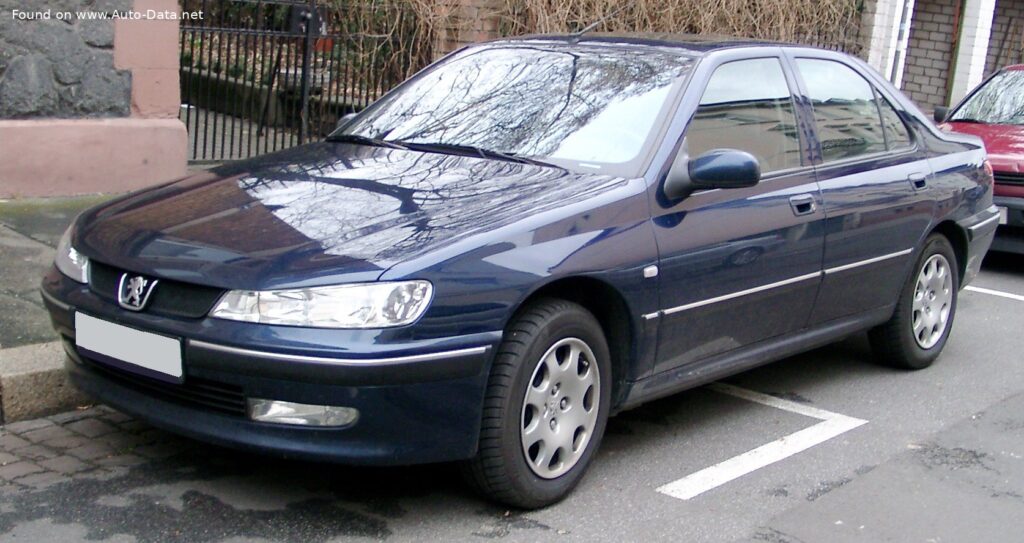
The Peugeot 406, produced between 1995 and 2004, was a large family car designed and manufactured by the French automaker Peugeot. Representing a significant step forward for the brand, the 406 aimed to compete with established rivals like the Ford Mondeo and Vauxhall/Opel Vectra. The Phase II update, introduced in 1999, brought styling revisions, improved safety features, and refinements to the engine lineup. This article focuses on the 1.8 i 16V variant of the Phase II 406, a popular choice in European markets for its balance of fuel efficiency and performance. While not officially sold in the United States, the 406 provides a compelling example of late-1990s European automotive engineering.
Peugeot 406 Phase II: A Detailed Overview
The 406 Phase II represented a mid-cycle refresh for Peugeot’s D-segment offering. The Phase II models received subtle but noticeable changes to the exterior, including revised headlights, taillights, and front grille. Interior improvements focused on enhancing comfort and ergonomics. The 1.8 i 16V engine, a mainstay of the 406 range, was further refined to meet increasingly stringent emissions standards. The 406 was primarily marketed in Europe, where it gained a reputation for its comfortable ride, stylish design (penned by Pininfarina), and relatively affordable price point.
Engine & Performance
The heart of the 1999 Peugeot 406 1.8 i 16V is a 1.8-liter (1749 cc) inline-four cylinder gasoline engine. This naturally aspirated engine, designated 6FZ EW7J4, produces 116 horsepower at 5500 rpm and 160 Nm (118.01 lb.-ft.) of torque at 4000 rpm. The engine features multi-port fuel injection and a double overhead camshaft (DOHC) valvetrain with four valves per cylinder. This configuration contributes to a respectable power-to-liter ratio of 66.3 hp/l. Power is delivered to the front wheels via a five-speed manual transmission. Acceleration from 0 to 100 km/h (0-62 mph) takes 11.3 seconds, while 0 to 60 mph is achieved in approximately 10.7 seconds. The vehicle has a maximum speed of 197 km/h (122.41 mph). The engine’s design prioritized fuel efficiency, achieving combined fuel consumption of 7.7 l/100 km (30.5 US mpg or 36.7 UK mpg).
Design & Features
The Peugeot 406 Phase II is a four-door sedan with a classic three-box design. Its Pininfarina-designed body offers a sleek and aerodynamic profile. The interior comfortably accommodates five passengers. Safety features for the 1999 model year included an Anti-lock Braking System (ABS), which was becoming increasingly standard in this class of vehicle. The 406’s suspension utilizes an independent McPherson strut setup at the front and an independent multi-link system at the rear, providing a comfortable and controlled ride. The steering is rack and pinion with hydraulic power assistance. Standard features typically included power windows, central locking, and a basic audio system. Trunk space is a practical 430 liters (15.19 cu. ft.). The vehicle’s dimensions are 4600 mm (181.1 in) in length, 1765 mm (69.49 in) in width, and 1415 mm (55.71 in) in height. The 406’s design emphasized practicality and comfort, making it a popular choice for families and commuters.
Technical Specifications
| Brand | Peugeot |
| Model | 406 |
| Generation | 406 (Phase II, 1999) |
| Type (Engine) | 1.8 i 16V (116 Hp) |
| Start of production | 1999 |
| End of production | 2004 |
| Powertrain Architecture | Internal Combustion engine |
| Body type | Sedan |
| Seats | 5 |
| Doors | 4 |
| Fuel consumption (urban) | 10.6 l/100 km (22.2 US mpg, 26.6 UK mpg, 9.4 km/l) |
| Fuel consumption (extra urban) | 6 l/100 km (39.2 US mpg, 47.1 UK mpg, 16.7 km/l) |
| Fuel consumption (combined) | 7.7 l/100 km (30.5 US mpg, 36.7 UK mpg, 13 km/l) |
| CO2 emissions | 182 g/km |
| Fuel Type | Petrol (Gasoline) |
| Acceleration 0 – 100 km/h | 11.3 sec |
| Acceleration 0 – 62 mph | 11.3 sec |
| Acceleration 0 – 60 mph | 10.7 sec |
| Maximum speed | 197 km/h (122.41 mph) |
| Emission standard | Euro 3 |
| Weight-to-power ratio | 11.3 kg/Hp, 88.2 Hp/tonne |
| Weight-to-torque ratio | 8.2 kg/Nm, 121.7 Nm/tonne |
| Power | 116 Hp @ 5500 rpm |
| Power per litre | 66.3 Hp/l |
| Torque | 160 Nm @ 4000 rpm (118.01 lb.-ft. @ 4000 rpm) |
| Engine layout | Front, Transverse |
| Engine Model/Code | 6FZ EW7J4 |
| Engine displacement | 1749 cm3 (106.73 cu. in.) |
| Number of cylinders | 4 |
| Engine configuration | Inline |
| Cylinder Bore | 82.7 mm (3.26 in.) |
| Piston Stroke | 81.4 mm (3.2 in.) |
| Compression ratio | 10.8:1 |
| Number of valves per cylinder | 4 |
| Fuel injection system | Multi-port manifold injection |
| Engine aspiration | Naturally aspirated engine |
| Valvetrain | DOHC |
| Engine oil capacity | 4.25 l (4.49 US qt | 3.74 UK qt) |
| Coolant | 7.5 l (7.93 US qt | 6.6 UK qt) |
| Kerb Weight | 1315 kg (2899.08 lbs.) |
| Max. weight | 1855 kg (4089.57 lbs.) |
| Max load | 540 kg (1190.5 lbs.) |
| Trunk (boot) space – minimum | 430 l (15.19 cu. ft.) |
| Fuel tank capacity | 70 l (18.49 US gal | 15.4 UK gal) |
| Length | 4600 mm (181.1 in.) |
| Width | 1765 mm (69.49 in.) |
| Height | 1415 mm (55.71 in.) |
| Wheelbase | 2700 mm (106.3 in.) |
| Front track | 1505 mm (59.25 in.) |
| Rear (Back) track | 1475 mm (58.07 in.) |
| Front overhang | 937 mm (36.89 in.) |
| Rear overhang | 963 mm (37.91 in.) |
| Minimum turning circle (turning diameter) | 11.67 m (38.29 ft.) |
| Drivetrain Architecture | Front wheel drive |
| Number of gears and type of gearbox | 5 gears, manual transmission |
| Front suspension | Independent, type McPherson with coil spring and anti-roll bar |
| Rear suspension | Independent multi-link spring suspension with stabilizer |
| Front brakes | Ventilated discs |
| Rear brakes | Drum |
| Assisting systems | ABS (Anti-lock braking system) |
| Steering type | Steering rack and pinion |
| Power steering | Hydraulic Steering |
| Tires size | 195/65 R15 |
| Wheel rims size | 15 |