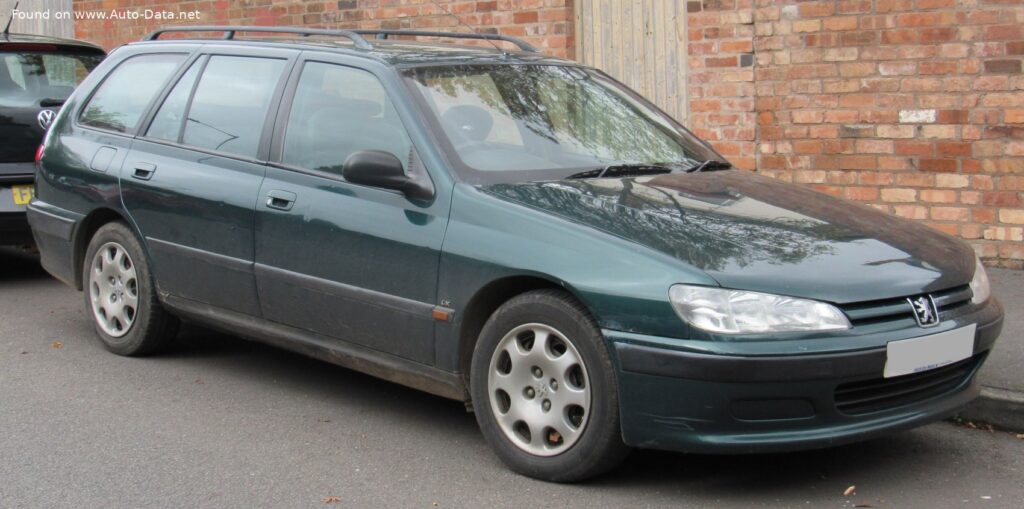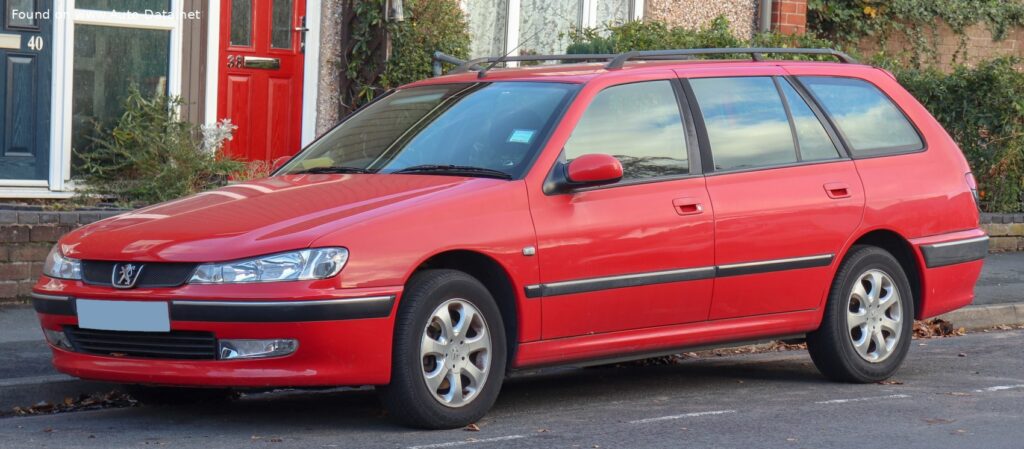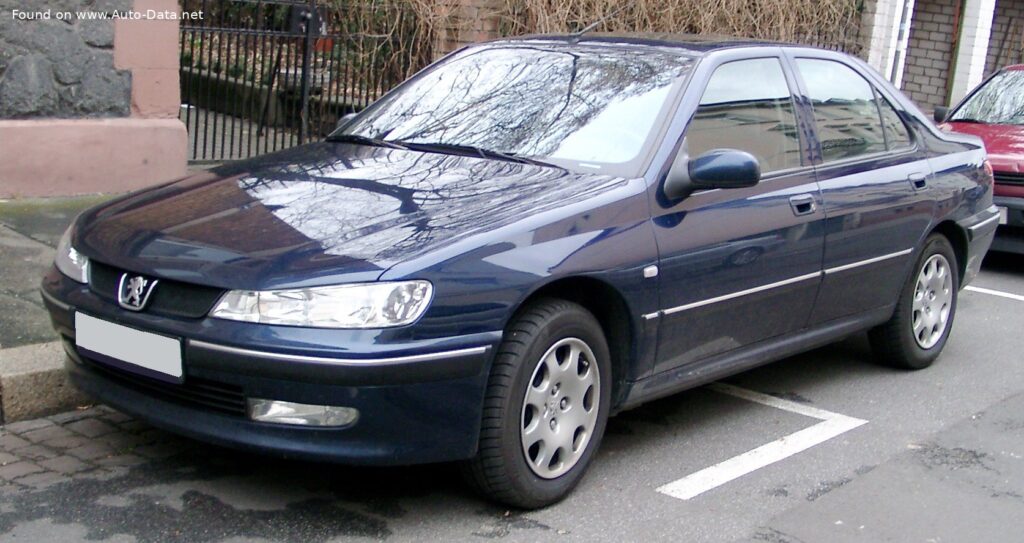
The Peugeot 406, particularly the Phase II iteration introduced in 1999, represents a significant vehicle in Peugeot’s history, embodying the brand’s commitment to comfortable and stylish mid-size transportation. While not officially sold in the United States, the 406 was a popular choice in Europe and other international markets from 1995 to 2004. The Phase II models, produced from 2001-2004, benefited from refinements in styling, safety, and engine technology. This article focuses on the 2.0 HDI (110 horsepower) version, a diesel-powered variant that prioritized fuel efficiency and torque, making it a practical choice for long-distance driving.
Peugeot 406: A European Sedan
The Peugeot 406 occupied the mid-size sedan segment, competing with vehicles like the Ford Mondeo, Volkswagen Passat, and Renault Laguna. It was designed to offer a blend of comfort, practicality, and a touch of French flair. The Phase II update brought subtle but noticeable changes to the exterior, including revised headlights and grille, and improvements to the interior trim and equipment levels. The 2.0 HDI engine was a key component of Peugeot’s strategy to offer more fuel-efficient options, responding to growing demand for diesel power in Europe.
Engine & Performance
The heart of the 406 2.0 HDI is a 1,997 cc (121.86 cubic inches) inline-four cylinder diesel engine, designated RHS DW10ATED. This engine utilizes a turbocharger with an intercooler and a diesel common rail fuel injection system to deliver a balance of power and economy. It produces 110 horsepower at 4,000 rpm and a substantial 250 Nm (184.39 lb-ft) of torque. This torque output, available from relatively low engine speeds, provides strong acceleration and effortless cruising. The engine’s power-to-liter ratio is 55.1 hp/l. Acceleration from 0 to 100 km/h (0-62 mph) takes 12.5 seconds, while 0 to 60 mph is achieved in approximately 11.9 seconds. The top speed is rated at 190 km/h (118.06 mph). The engine’s 18:1 compression ratio is typical for a diesel engine, contributing to its efficiency. The drivetrain is front-wheel drive, coupled with a five-speed manual transmission.
Design & Features
The Peugeot 406 Phase II is a four-door sedan with a classic three-box design. Its styling is characterized by clean lines and a relatively understated elegance. The interior is designed to be comfortable and functional, offering seating for five passengers. Key features of the 406 included hydraulic power steering, ventilated front disc brakes, and disc brakes on the rear axle. Safety features, while not as comprehensive as modern vehicles, included an Anti-lock Braking System (ABS). The McPherson strut front suspension and independent multi-link rear suspension contribute to a comfortable ride and stable handling. The trunk (boot) offers a minimum capacity of 430 liters (15.19 cubic feet), providing ample space for luggage. The vehicle’s dimensions are: length 4,600 mm (181.1 in), width 1,765 mm (69.49 in), and height 1,415 mm (55.71 in). The wheelbase measures 2,700 mm (106.3 in).
Technical Specifications
| Brand | Peugeot |
| Model | 406 |
| Generation | 406 (Phase II, 1999) |
| Type (Engine) | 2.0 HDI (110 Hp) |
| Start of production | 2001 |
| End of production | 2004 |
| Powertrain Architecture | Internal Combustion engine |
| Body type | Sedan |
| Seats | 5 |
| Doors | 4 |
| Fuel consumption (extra urban) | 4.2 l/100 km (56 US mpg, 67.3 UK mpg, 23.8 km/l) |
| Fuel consumption (combined) | 5.5 l/100 km (42.8 US mpg, 51.4 UK mpg, 18.2 km/l) |
| Fuel Type | Diesel |
| Acceleration 0 – 100 km/h | 12.5 sec |
| Acceleration 0 – 62 mph | 12.5 sec |
| Acceleration 0 – 60 mph | 11.9 sec |
| Maximum speed | 190 km/h (118.06 mph) |
| Weight-to-power ratio | 12.8 kg/Hp, 78 Hp/tonne |
| Weight-to-torque ratio | 5.6 kg/Nm, 177.3 Nm/tonne |
| Power | 110 Hp @ 4000 rpm |
| Power per litre | 55.1 Hp/l |
| Torque | 250 Nm (184.39 lb.-ft.) |
| Engine layout | Front, Transverse |
| Engine Model/Code | RHS DW10ATED |
| Engine displacement | 1997 cm3 (121.86 cu. in.) |
| Number of cylinders | 4 |
| Engine configuration | Inline |
| Cylinder Bore | 85 mm (3.35 in.) |
| Piston Stroke | 88 mm (3.46 in.) |
| Compression ratio | 18:1 |
| Number of valves per cylinder | 2 |
| Fuel injection system | Diesel Commonrail |
| Engine aspiration | Turbocharger, Intercooler |
| Valvetrain | OHC |
| Engine oil capacity | 4.5 l (4.76 US qt | 3.96 UK qt) |
| Coolant | 9.4 l (9.93 US qt | 8.27 UK qt) |
| Kerb Weight | 1410 kg (3108.52 lbs.) |
| Max. weight | 1950 kg (4299.01 lbs.) |
| Max load | 540 kg (1190.5 lbs.) |
| Trunk (boot) space – minimum | 430 l (15.19 cu. ft.) |
| Fuel tank capacity | 70 l (18.49 US gal | 15.4 UK gal) |
| Length | 4600 mm (181.1 in.) |
| Width | 1765 mm (69.49 in.) |
| Height | 1415 mm (55.71 in.) |
| Wheelbase | 2700 mm (106.3 in.) |
| Front track | 1505 mm (59.25 in.) |
| Rear (Back) track | 1475 mm (58.07 in.) |
| Front overhang | 937 mm (36.89 in.) |
| Rear overhang | 963 mm (37.91 in.) |
| Minimum turning circle | 11.95 m (39.21 ft.) |
| Drivetrain Architecture | Front wheel drive |
| Number of gears and type of gearbox | 5 gears, manual transmission |
| Front suspension | Independent, type McPherson with coil spring and anti-roll bar |
| Rear suspension | Independent multi-link spring suspension with stabilizer |
| Front brakes | Ventilated discs |
| Rear brakes | Disc |
| Assisting systems | ABS (Anti-lock braking system) |
| Steering type | Steering rack and pinion |
| Power steering | Hydraulic Steering |
| Tires size | 195/65 R15 |
| Wheel rims size | 15 |
The Peugeot 406 2.0 HDI, while never officially available in the US market, remains a well-regarded vehicle in Europe, known for its comfortable ride, fuel efficiency, and stylish design. It represents a significant step in Peugeot’s development of diesel technology and its commitment to providing practical and appealing vehicles to a wide range of customers.