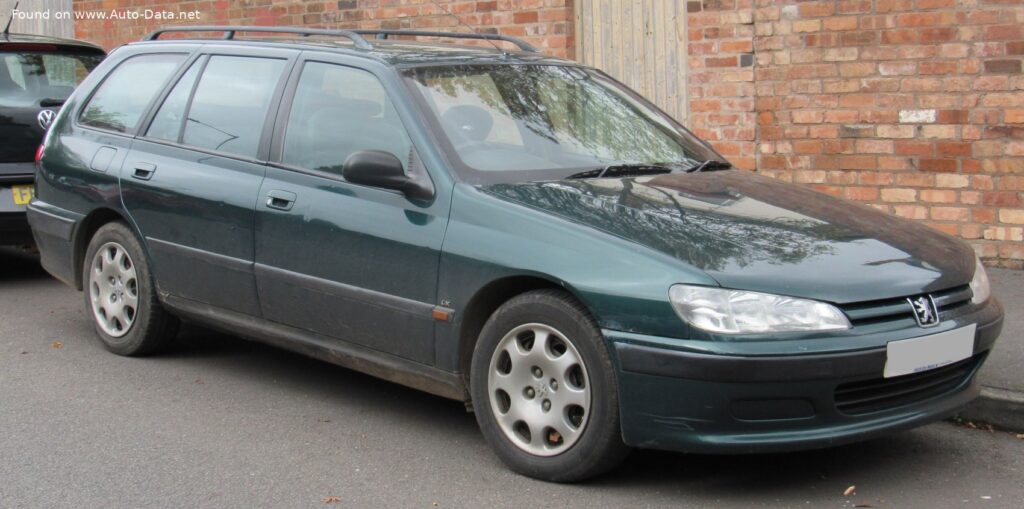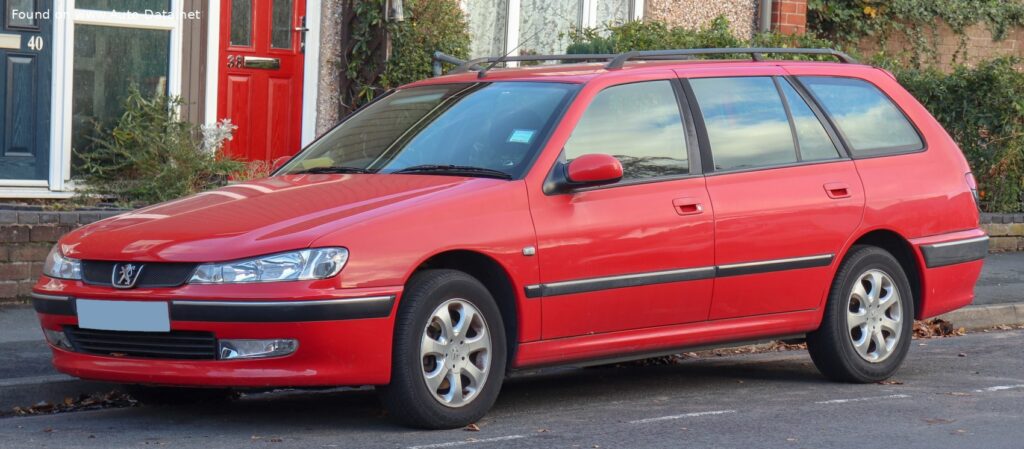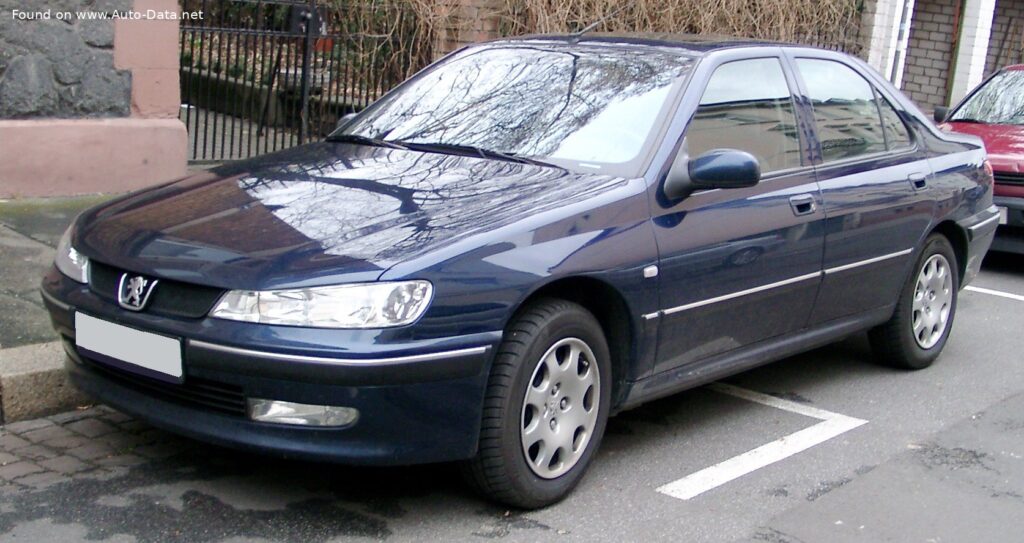
The Peugeot 406, particularly the Phase II iteration introduced in 1999, represents a significant evolution in the French manufacturer’s mid-size offerings. Positioned as a competitor to vehicles like the Ford Mondeo and Volkswagen Passat, the 406 aimed to deliver a blend of comfort, style, and performance. While never officially sold in the United States, the 406 was a popular choice in Europe and other international markets, known for its refined driving experience and distinctive Pininfarina-designed aesthetics. The 2.2 16V model, producing 158 horsepower, was a key variant, offering a balance between fuel economy and spirited performance.
Peugeot 406: A Detailed Overview
The 406 was produced from 1995 to 2004, with the Phase II update in 1999 bringing notable cosmetic and mechanical refinements. This included revised front and rear styling, updated interior materials, and improvements to the engine range. The Phase II models are generally considered more refined and reliable than their predecessors. The 406’s success stemmed from Peugeot’s commitment to providing a vehicle that appealed to drivers seeking a more sophisticated alternative to mainstream competitors.
Engine & Performance
The heart of the 406 2.2 16V is a 2.2-liter inline four-cylinder gasoline engine, designated the 3FZ EW12J4. This engine produces 158 horsepower at 5650 rpm and 217 Nm (160.05 lb-ft) of torque at 3900 rpm. The engine utilizes multi-port fuel injection and a double overhead camshaft (DOHC) valvetrain with four valves per cylinder, contributing to its responsive nature. Power delivery is smooth and linear, making it well-suited for both city driving and longer highway journeys. Acceleration from 0 to 100 km/h (0-62 mph) takes approximately 10 seconds, while the 0-60 mph sprint is achieved in around 9.5 seconds. The 406 2.2 16V boasts a top speed of 218 km/h (135.46 mph). The engine’s power-to-weight ratio of 8.7 kg/Hp and torque-to-weight ratio of 6.3 kg/Nm contribute to its respectable performance. Fuel economy figures are rated at 8.9 l/100 km (26.4 US mpg, 31.7 UK mpg) on a combined cycle, with 12.8 l/100 km (18.4 US mpg, 22.1 UK mpg) in urban conditions and 6.7 l/100 km (35.1 US mpg, 42.2 UK mpg) on the extra-urban cycle.
Design & Features
The Peugeot 406 Phase II is a four-door sedan with a sleek and aerodynamic profile, largely thanks to the design work of Pininfarina. The exterior styling is characterized by its flowing lines, sculpted body panels, and distinctive headlights. The interior is designed with driver comfort in mind, offering supportive seats and a well-laid-out dashboard. The 406 provides seating for five passengers and offers a trunk capacity of 430 liters (15.19 cu. ft.).
Safety features for the time included an Anti-lock Braking System (ABS) as standard equipment. The 406’s suspension system consists of an independent McPherson strut setup at the front and an independent multi-link arrangement at the rear, providing a comfortable ride and good handling characteristics. Steering is rack and pinion with hydraulic power assistance. The vehicle rides on 195/65 R15 tires mounted on 15-inch wheels. The 406’s overall dimensions are 4600 mm (181.1 in) in length, 1765 mm (69.49 in) in width, and 1400 mm (55.12 in) in height, with a wheelbase of 2700 mm (106.3 in).
Technical Specifications
| Brand | Peugeot |
| Model | 406 |
| Generation | 406 (Phase II, 1999) |
| Type (Engine) | 2.2 16V (158 Hp) |
| Start of production | 2000 year |
| End of production | 2004 year |
| Powertrain Architecture | Internal Combustion engine |
| Body type | Sedan |
| Seats | 5 |
| Doors | 4 |
| Fuel consumption (urban) | 12.8 l/100 km (18.4 US mpg, 22.1 UK mpg) |
| Fuel consumption (extra urban) | 6.7 l/100 km (35.1 US mpg, 42.2 UK mpg) |
| Fuel consumption (combined) | 8.9 l/100 km (26.4 US mpg, 31.7 UK mpg) |
| Fuel Type | Petrol (Gasoline) |
| Acceleration 0 – 100 km/h | 10 sec |
| Acceleration 0 – 62 mph | 10 sec |
| Acceleration 0 – 60 mph | 9.5 sec |
| Maximum speed | 218 km/h (135.46 mph) |
| Weight-to-power ratio | 8.7 kg/Hp |
| Weight-to-torque ratio | 6.3 kg/Nm |
| Power | 158 Hp @ 5650 rpm |
| Torque | 217 Nm @ 3900 rpm (160.05 lb.-ft. @ 3900 rpm) |
| Engine layout | Front, Transverse |
| Engine Model/Code | 3FZ EW12J4 |
| Engine displacement | 2231 cm3 (136.14 cu. in.) |
| Number of cylinders | 4 |
| Engine configuration | Inline |
| Cylinder Bore | 86 mm (3.39 in.) |
| Piston Stroke | 96 mm (3.78 in.) |
| Compression ratio | 10.8:1 |
| Number of valves per cylinder | 4 |
| Fuel injection system | Multi-port manifold injection |
| Engine aspiration | Naturally aspirated |
| Valvetrain | DOHC |
| Engine oil capacity | 4.25 l (4.49 US qt | 3.74 UK qt) |
| Coolant capacity | 7.5 l (7.93 US qt | 6.6 UK qt) |
| Kerb Weight | 1370 kg (3020.33 lbs.) |
| Max. weight | 1910 kg (4210.83 lbs.) |
| Max load | 540 kg (1190.5 lbs.) |
| Trunk (boot) space – minimum | 430 l (15.19 cu. ft.) |
| Fuel tank capacity | 70 l (18.49 US gal | 15.4 UK gal) |
| Length | 4600 mm (181.1 in.) |
| Width | 1765 mm (69.49 in.) |
| Height | 1400 mm (55.12 in.) |
| Wheelbase | 2700 mm (106.3 in.) |
| Front track | 1500 mm (59.06 in.) |
| Rear track | 1480 mm (58.27 in.) |
| Minimum turning circle | 11.95 m (39.21 ft.) |
| Drivetrain | Front wheel drive |
| Number of gears | 5 gears, manual transmission |
The Peugeot 406 Phase II 2.2 16V remains a well-regarded vehicle, appreciated for its blend of style, comfort, and performance. While not available in the US market, it represents a compelling example of European automotive engineering from the late 1990s and early 2000s.