
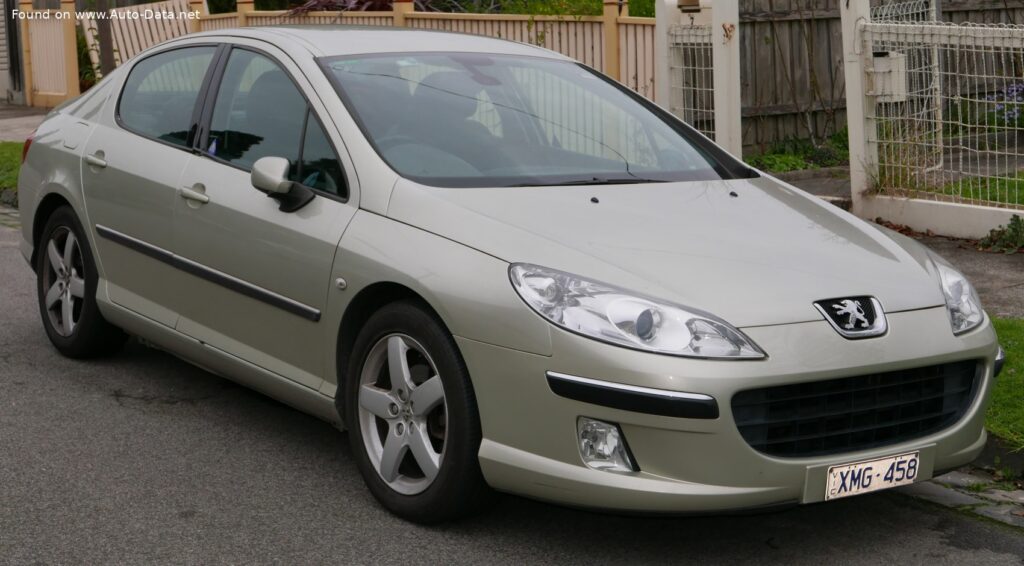
The Peugeot 407, produced between 2004 and 2005, represents a significant step forward for the French automaker, aiming to compete directly with established mid-size offerings from manufacturers like Ford, Vauxhall/Opel, and Volkswagen. Positioned as a stylish and comfortable sedan, the 407 was intended to replace the aging 406, offering a more modern design, improved safety features, and a range of efficient engine options. While not officially sold in the United States, the 407 was a popular choice in Europe and other international markets, known for its blend of practicality and French flair. This article focuses on the 1.8 i 16V variant, a gasoline-powered model producing 116 horsepower.
Peugeot 407 1.8 i 16V: Overview and Market Position
The Peugeot 407 was a crucial model for Peugeot, representing a shift towards more contemporary design and engineering. It was designed to appeal to buyers seeking a comfortable, well-equipped, and reasonably priced family car. The 1.8 i 16V engine option was positioned as the entry-level powertrain, prioritizing fuel economy and affordability over outright performance. In Europe, where fuel costs are typically higher, this engine proved popular with drivers seeking a balance between cost and usability. The 407’s design, penned by Pininfarina, was a departure from previous Peugeot models, adopting a more flowing and dynamic aesthetic. It was available in sedan, coupe, and station wagon body styles, with the sedan being the most common.
Engine & Performance
The heart of the Peugeot 407 1.8 i 16V is a 1.8-liter inline four-cylinder gasoline engine, designated the 6FZ EW7J4. This naturally aspirated engine produces 116 horsepower at 5500 rpm and 163 Nm (120.22 lb.-ft.) of torque at 4500 rpm. While not a powerhouse, the engine provides adequate performance for everyday driving. Acceleration from 0 to 100 km/h (0-62 mph) takes 12.9 seconds, and 0 to 60 mph is achieved in approximately 12.3 seconds. The car has a top speed of 200 km/h (124.27 mph). The engine features multi-port fuel injection and a double overhead camshaft (DOHC) valvetrain, contributing to its relatively efficient operation. The engine’s power-to-weight ratio is 12.1 kg/Hp, and the torque-to-weight ratio is 8.6 kg/Nm. The 407 1.8 i 16V is equipped with a five-speed manual transmission, delivering power to the front wheels.
Design & Features
The Peugeot 407 sedan is a four-door, five-seater vehicle characterized by its sleek and modern design. Its dimensions are 4675 mm (184.06 in) in length, 1811 mm (71.3 in) in width, and 1447 mm (56.97 in) in height. The wheelbase measures 2725 mm (107.28 in). The car’s interior is designed with comfort and practicality in mind, offering ample space for passengers and luggage. Trunk space is a respectable 407 liters (14.37 cu. ft.). Safety features, while considered standard for the time, included an Anti-lock Braking System (ABS). The 407’s suspension utilizes spring struts on both the front and rear axles, providing a comfortable ride. The steering system is a rack and pinion type, offering precise control. The vehicle rides on 205/60 R16 tires mounted on 6.5 x 16 inch wheel rims.
Technical Specifications
| Brand | Peugeot |
| Model | 407 |
| Generation | 407 |
| Type (Engine) | 1.8 i 16V (116 Hp) |
| Start of production | April, 2004 |
| End of production | August, 2005 |
| Powertrain Architecture | Internal Combustion engine |
| Body type | Sedan |
| Seats | 5 |
| Doors | 4 |
| Fuel consumption (urban) | 11.3 l/100 km (20.8 US mpg, 25 UK mpg, 8.8 km/l) |
| Fuel consumption (extra urban) | 6 l/100 km (39.2 US mpg, 47.1 UK mpg, 16.7 km/l) |
| Fuel consumption (combined) | 7.9 l/100 km (29.8 US mpg, 35.8 UK mpg, 12.7 km/l) |
| Fuel Type | Petrol (Gasoline) |
| Acceleration 0 – 100 km/h | 12.9 sec |
| Acceleration 0 – 62 mph | 12.9 sec |
| Acceleration 0 – 60 mph | 12.3 sec |
| Maximum speed | 200 km/h (124.27 mph) |
| Weight-to-power ratio | 12.1 kg/Hp |
| Weight-to-torque ratio | 8.6 kg/Nm |
| Power | 116 Hp @ 5500 rpm |
| Torque | 163 Nm @ 4500 rpm (120.22 lb.-ft. @ 4500 rpm) |
| Engine layout | Front, Transverse |
| Engine Model/Code | 6FZ EW7J4 |
| Engine displacement | 1749 cm3 (106.73 cu. in.) |
| Number of cylinders | 4 |
| Engine configuration | Inline |
| Cylinder Bore | 82.7 mm (3.26 in.) |
| Piston Stroke | 81.4 mm (3.2 in.) |
| Compression ratio | 10.8:1 |
| Number of valves per cylinder | 4 |
| Fuel injection system | Multi-port manifold injection |
| Engine aspiration | Naturally aspirated engine |
| Valvetrain | DOHC |
| Engine oil capacity | 4.25 l (4.49 US qt | 3.74 UK qt) |
| Coolant capacity | 7.5 l (7.93 US qt | 6.6 UK qt) |
| Kerb Weight | 1400 kg (3086.47 lbs.) |
| Max. weight | 1980 kg (4365.15 lbs.) |
| Max load | 580 kg (1278.68 lbs.) |
| Trunk (boot) space – minimum | 407 l (14.37 cu. ft.) |
| Fuel tank capacity | 66 l (17.44 US gal | 14.52 UK gal) |
| Length | 4675 mm (184.06 in.) |
| Width | 1811 mm (71.3 in.) |
| Height | 1447 mm (56.97 in.) |
| Wheelbase | 2725 mm (107.28 in.) |
| Front track | 1552 mm (61.1 in.) |
| Rear track | 1518 mm (59.76 in.) |
| Drivetrain Architecture | Front wheel drive |
| Number of gears and type of gearbox | 5 gears, manual transmission |
| Front suspension | Spring Strut |
| Rear suspension | Spring Strut |
| Front brakes | Ventilated discs |
| Rear brakes | Disc |
| Assisting systems | ABS (Anti-lock braking system) |
| Steering type | Steering rack and pinion |
| Tires size | 205/60 R16 |
| Wheel rims size | 6.5 X 16 |
The Peugeot 407 1.8 i 16V, while not a performance icon, offered a compelling package for buyers seeking a comfortable, stylish, and economical mid-size sedan. Its blend of French design, practical features, and reasonable running costs made it a popular choice in its target markets.
