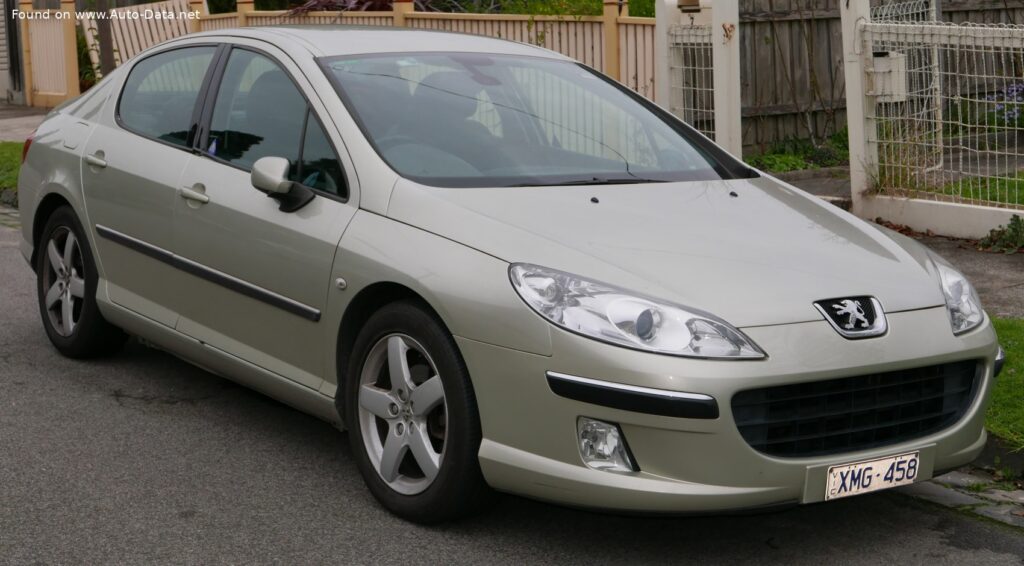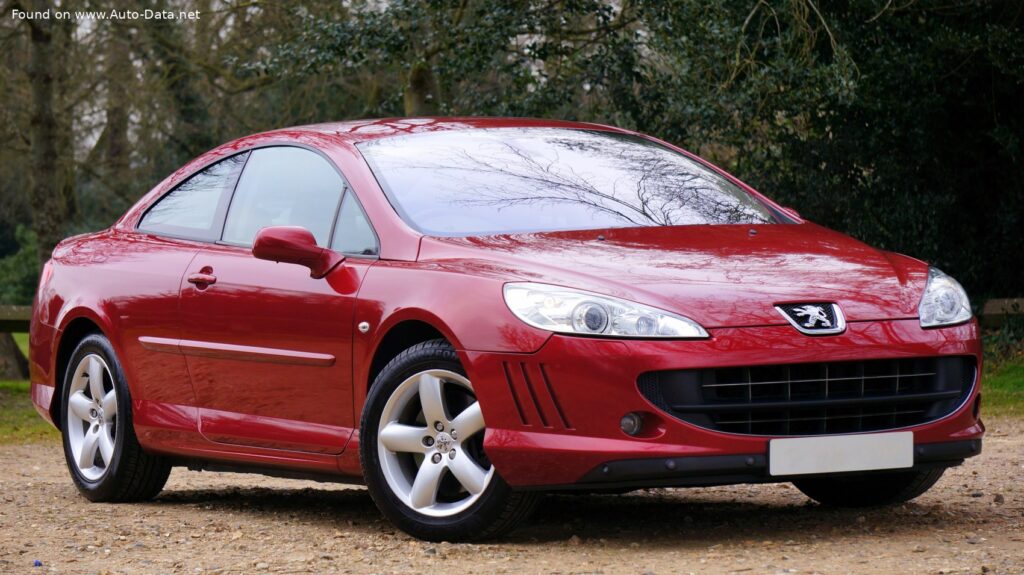
The Peugeot 407 Coupe 2.2 i 16V, produced from 2005 to 2008, represents a stylish and somewhat niche offering from the French automaker. Positioned within the mid-size coupe segment, the 407 Coupe aimed to provide a more emotive and driver-focused alternative to more conventional saloons and hatchbacks. While not a high-volume seller, particularly outside of Europe, it showcased Peugeot’s design flair and engineering capabilities. This model was never officially sold in the United States, but it provides an interesting example of European automotive design and technology of the mid-2000s.
Peugeot 407 Coupe: Design and Market Positioning
The 407 Coupe was designed to appeal to buyers seeking a blend of practicality and sporting aesthetics. It distinguished itself from the 407 saloon with its dramatically sloping roofline, frameless doors, and more aggressive styling cues. In Europe, it competed with vehicles like the Audi A5 Coupe and the BMW 3 Series Coupe, offering a more affordable and arguably more distinctive alternative. The coupe body style, with its two doors and five-seat configuration, offered a compromise between the practicality of a family car and the sporty appeal of a dedicated coupe.
Engine & Performance
The 2.2 i 16V engine powering the Peugeot 407 Coupe is a naturally aspirated, inline-four cylinder petrol (gasoline) engine. Displacing 2.2 liters (2230 cm3 or 136.08 cu. in.), it produces 160 horsepower (Hp) at 5650 rpm and 217 Newton-meters (160.05 lb.-ft.) of torque at 3900 rpm. This engine, identified by the code 3FY EW12J4, features multi-port fuel injection and a double overhead camshaft (DOHC) valvetrain with four valves per cylinder. The power output translates to a 0-100 km/h (0-62 mph) acceleration time of 9.2 seconds, and a 0-60 mph time of approximately 8.7 seconds. The top speed is rated at 222 km/h (137.94 mph). The engine’s weight-to-power ratio is 10 kg/Hp, and its weight-to-torque ratio is 7.4 kg/Nm. Fuel economy is rated at 7.6 l/100 km (30.9 US mpg or 37.2 UK mpg) on a combined cycle, with 10.9 l/100 km (21.6 US mpg) in urban conditions and 5.8 l/100 km (40.6 US mpg) on the extra-urban cycle.
Design & Features
The 407 Coupe’s design was a key selling point. The sleek silhouette, frameless windows, and sculpted bodywork gave it a modern and sophisticated appearance. Inside, the cabin was designed to be comfortable and well-equipped, although material quality varied depending on the trim level. Standard features typically included air conditioning, power windows, central locking, and an audio system. Safety features, increasingly important in the mid-2000s, included Anti-lock Braking System (ABS) and front and rear ventilated disc brakes. The coupe’s suspension utilized a spring strut setup for both the front and rear axles, providing a balance between ride comfort and handling. The vehicle offers 400 liters (14.13 cu. ft.) of trunk space. The 407 Coupe utilized a front-wheel-drive configuration, coupled with a six-speed manual transmission.
Technical Specifications
| Brand | Peugeot |
| Model | 407 |
| Generation | 407 Coupe |
| Type (Engine) | 2.2 i 16V (160 Hp) |
| Start of production | 2005 |
| End of production | 2008 |
| Powertrain Architecture | Internal Combustion engine |
| Body type | Coupe |
| Seats | 5 |
| Doors | 2 |
| Fuel consumption (urban) | 10.9 l/100 km (21.6 US mpg) |
| Fuel consumption (extra urban) | 5.8 l/100 km (40.6 US mpg) |
| Fuel consumption (combined) | 7.6 l/100 km (30.9 US mpg) |
| Fuel Type | Petrol (Gasoline) |
| Acceleration 0 – 100 km/h | 9.2 sec |
| Acceleration 0 – 62 mph | 9.2 sec |
| Acceleration 0 – 60 mph | 8.7 sec |
| Maximum speed | 222 km/h (137.94 mph) |
| Weight-to-power ratio | 10 kg/Hp |
| Weight-to-torque ratio | 7.4 kg/Nm |
| Power | 160 Hp @ 5650 rpm |
| Torque | 217 Nm @ 3900 rpm (160.05 lb.-ft.) |
| Engine layout | Front, Transverse |
| Engine Model/Code | 3FY EW12J4 |
| Engine displacement | 2230 cm3 (136.08 cu. in.) |
| Number of cylinders | 4 |
| Engine configuration | Inline |
| Cylinder Bore | 86 mm (3.39 in.) |
| Piston Stroke | 96 mm (3.78 in.) |
| Compression ratio | 10.8:1 |
| Number of valves per cylinder | 4 |
| Fuel injection system | Multi-port manifold injection |
| Engine aspiration | Naturally aspirated |
| Valvetrain | DOHC |
| Engine oil capacity | 4.25 l (4.49 US qt | 3.74 UK qt) |
| Coolant capacity | 7.9 l (8.35 US qt | 6.95 UK qt) |
| Kerb Weight | 1600 kg (3527.4 lbs.) |
| Max. weight | 1940 kg (4276.97 lbs.) |
| Max load | 340 kg (749.57 lbs.) |
| Trunk (boot) space (minimum) | 400 l (14.13 cu. ft.) |
| Fuel tank capacity | 67 l (17.7 US gal | 14.74 UK gal) |
| Length | 4815 mm (189.57 in.) |
| Width | 1868 mm (73.54 in.) |
| Height | 1399 mm (55.08 in.) |
| Wheelbase | 2725 mm (107.28 in.) |
| Front track | 1579 mm (62.17 in.) |
| Rear track | 1575 mm (62.01 in.) |
| Drivetrain Architecture | Front wheel drive |
| Number of gears | 6 |
| Gearbox type | Manual transmission |
| Front suspension | Spring Strut |
| Rear suspension | Spring Strut |
| Front brakes | Ventilated discs |
| Rear brakes | Disc |
| Assisting systems | ABS (Anti-lock braking system) |
| Steering type | Steering rack and pinion |
| Tires size | 215/55 R17 |
The Peugeot 407 Coupe, while not a mainstream success in all markets, remains a visually appealing and reasonably practical coupe. Its combination of French styling, a capable engine, and a focus on driver enjoyment make it a noteworthy vehicle from the mid-2000s.