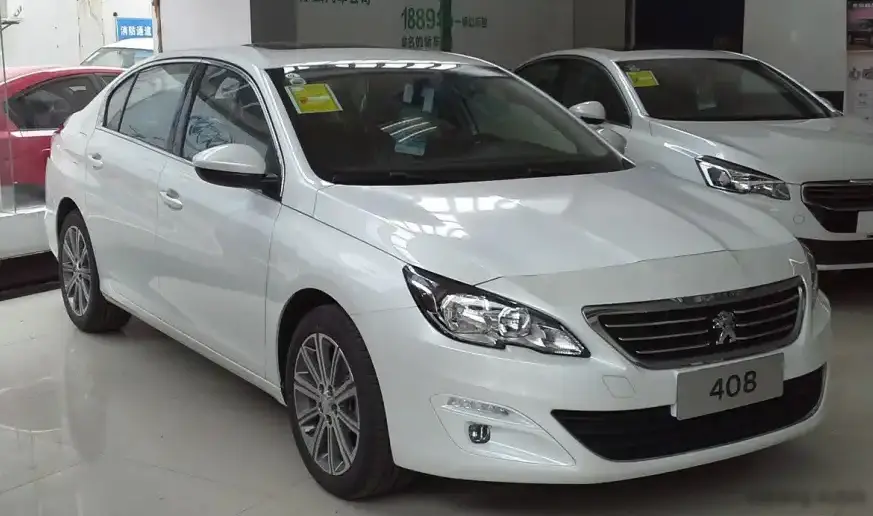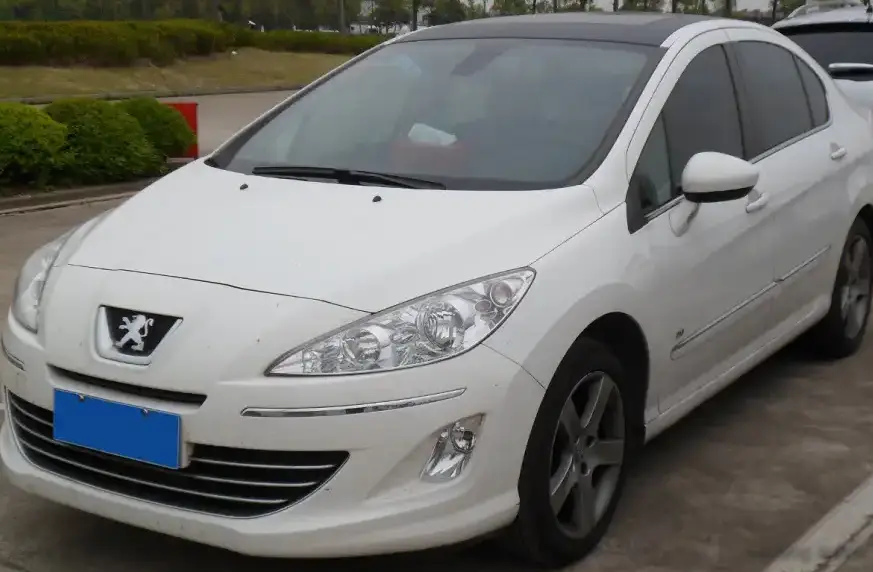
The Peugeot 408, launched in 2010, represented Peugeot’s entry into the mid-size sedan segment, primarily aimed at markets outside of Europe where saloons remained popular. The 1.6-liter (117 hp) automatic variant, produced from 2010 to 2014, served as a key volume seller, offering a balance of affordability and practicality. This model, designated within Peugeot’s internal nomenclature as part of the first generation 408 (T12), was positioned as the entry-level automatic option, appealing to buyers prioritizing comfort and ease of use over outright performance. It competed with vehicles like the Renault Fluence, Citroën C4 Sedan, and various offerings from Asian manufacturers.
Technical Specifications
| Brand | Peugeot |
| Model | 408 |
| Generation | 408 I |
| Type (Engine) | 1.6 (117 Hp) Automatic |
| Start of production | 2010 year |
| End of production | 2014 year |
| Powertrain Architecture | Internal Combustion engine |
| Body type | Sedan |
| Seats | 5 |
| Doors | 4 |
| Fuel Type | Petrol (Gasoline) |
| Maximum speed | 186 km/h (115.58 mph) |
| Weight-to-power ratio | 12.1 kg/Hp, 82.5 Hp/tonne |
| Weight-to-torque ratio | 9.5 kg/Nm, 105.8 Nm/tonne |
| Power | 117 Hp @ 6000 rpm |
| Power per litre | 73.7 Hp/l |
| Torque | 150 Nm @ 4000 rpm (110.63 lb.-ft. @ 4000 rpm) |
| Engine layout | Front, Transverse |
| Engine Model/Code | EC5F |
| Engine displacement | 1587 cm3 (96.84 cu. in.) |
| Number of cylinders | 4 |
| Engine configuration | Inline |
| Cylinder Bore | 78.5 mm (3.09 in.) |
| Piston Stroke | 82 mm (3.23 in.) |
| Compression ratio | 11:1 |
| Number of valves per cylinder | 4 |
| Fuel injection system | Multi-port manifold injection |
| Engine aspiration | Naturally aspirated engine |
| Valvetrain | DOHC |
| Engine oil capacity | 3.3 l (3.49 US qt | 2.9 UK qt) |
| Kerb Weight | 1418 kg (3126.15 lbs.) |
| Fuel tank capacity | 60 l (15.85 US gal | 13.2 UK gal) |
| Length | 4688 mm (184.57 in.) |
| Width | 1815 mm (71.46 in.) |
| Height | 1525 mm (60.04 in.) |
| Wheelbase | 2710 mm (106.69 in.) |
| Front track | 1522 mm (59.92 in.) |
| Rear (Back) track | 1503 mm (59.17 in.) |
| Drag coefficient (Cd) | 0.30 |
| Drivetrain Architecture | The Internal combustion engine (ICE) drives the front wheels of the vehicle. |
| Drive wheel | Front wheel drive |
| Number of gears and type of gearbox | 4 gears, automatic transmission |
| Front brakes | Ventilated discs |
| Rear brakes | Disc |
| Assisting systems | ABS (Anti-lock braking system) |
| Tires size | 215/55 R16 |
| Wheel rims size | 16 |
Powertrain & Engine Architecture
The heart of the 408 1.6 Automatic is the EC5F engine, a 1.6-liter inline-four cylinder petrol engine. This engine utilizes a multi-point fuel injection system, delivering fuel directly into the intake ports. The engine features a double overhead camshaft (DOHC) valvetrain, optimizing airflow for improved efficiency and power output. The 117 horsepower peak is achieved at 6000 rpm, while the 150 Nm (110.63 lb-ft) of torque is available at 4000 rpm. Paired with this engine is a four-speed automatic transmission. This transmission, while providing convenience, was a relatively older design compared to the continuously variable transmissions (CVTs) or six-speed automatics becoming more common at the time. It prioritized smooth shifts over maximizing fuel efficiency or providing rapid acceleration.
Driving Characteristics
The 408 1.6 Automatic offered a comfortable, if not particularly sporty, driving experience. The four-speed automatic transmission, while smooth, resulted in noticeable gear changes and a lack of the seamless acceleration found in more modern transmissions. Acceleration was adequate for everyday driving, but overtaking maneuvers required careful planning. The relatively high kerb weight of 1418 kg (3126.15 lbs) contributed to a feeling of being somewhat underpowered, especially when fully loaded. Compared to the more powerful 2.0-liter variants, the 1.6 Automatic felt significantly slower. However, it offered a more relaxed driving experience, particularly in urban environments, where the automatic transmission simplified traffic navigation.
Equipment & Trim Levels
The 1.6-liter automatic version of the 408 typically came with a reasonable level of standard equipment. This included air conditioning, power windows, central locking, and an audio system with MP3 compatibility. Safety features such as ABS (Anti-lock Braking System) were standard. Higher trim levels, available as options, added features like alloy wheels, a trip computer, rear parking sensors, and upgraded interior upholstery. Interior materials were generally durable but not luxurious, reflecting the car’s positioning as a value-oriented offering. The dashboard layout was functional and straightforward, prioritizing ease of use over aesthetic flair.
Chassis & Braking
The 408’s chassis comprised a MacPherson strut front suspension and a torsion beam rear suspension. This setup provided a comfortable ride quality, absorbing bumps and imperfections in the road surface effectively. The front brakes were ventilated discs, offering good stopping power, while the rear brakes were solid discs. The 215/55 R16 tires provided adequate grip in most conditions. The steering was hydraulically assisted, offering a reasonable level of feedback. Stabilizer bars were fitted to both the front and rear axles to reduce body roll during cornering, though the car was not designed for aggressive driving.
Market Reception & Comparison
The Peugeot 408 1.6 Automatic was generally well-received as a practical and affordable family sedan. Critics praised its comfortable ride, spacious interior, and reasonable fuel economy. However, the four-speed automatic transmission was often criticized for its dated design and lack of responsiveness. Compared to the higher-powered variants, the 1.6 Automatic offered significantly lower performance, but it also consumed less fuel. Fuel economy figures typically ranged around 7.5-8.5 liters per 100 kilometers (approximately 31-33 mpg) in mixed driving conditions. The 1.6L engine was also generally considered more reliable and cheaper to maintain than the more complex engines offered in higher trim levels.
Legacy
The Peugeot 408 1.6 Automatic has proven to be a relatively reliable vehicle in the used car market. The EC5F engine is known for its durability, and the four-speed automatic transmission, while not the most sophisticated, is generally robust. Common issues include wear and tear on suspension components and occasional problems with the electrical system. Today, these vehicles are often found as affordable transportation options, particularly in regions where fuel efficiency and practicality are highly valued. While not a collector’s item, the 408 1.6 Automatic remains a viable and economical choice for budget-conscious buyers seeking a comfortable and dependable sedan.