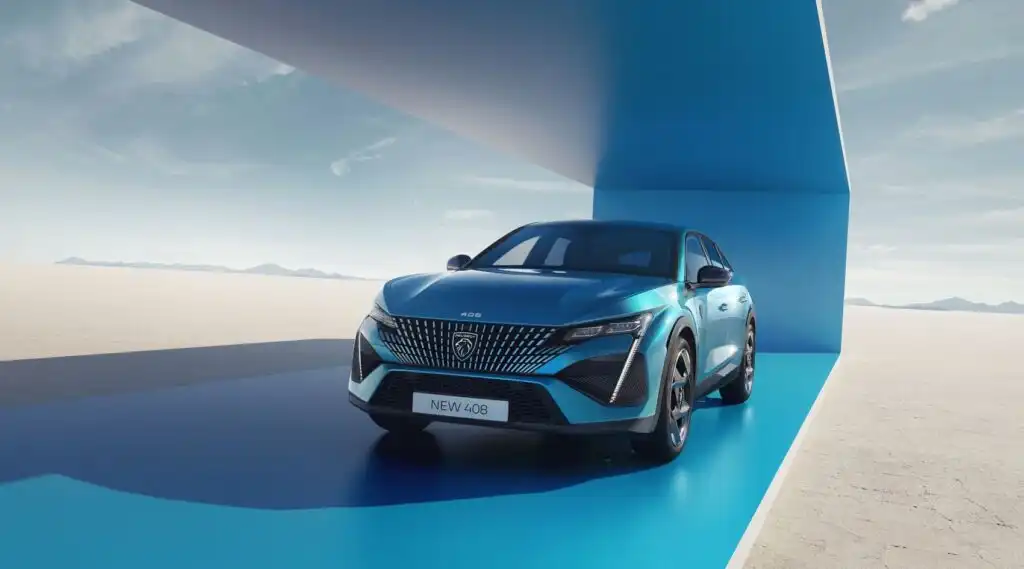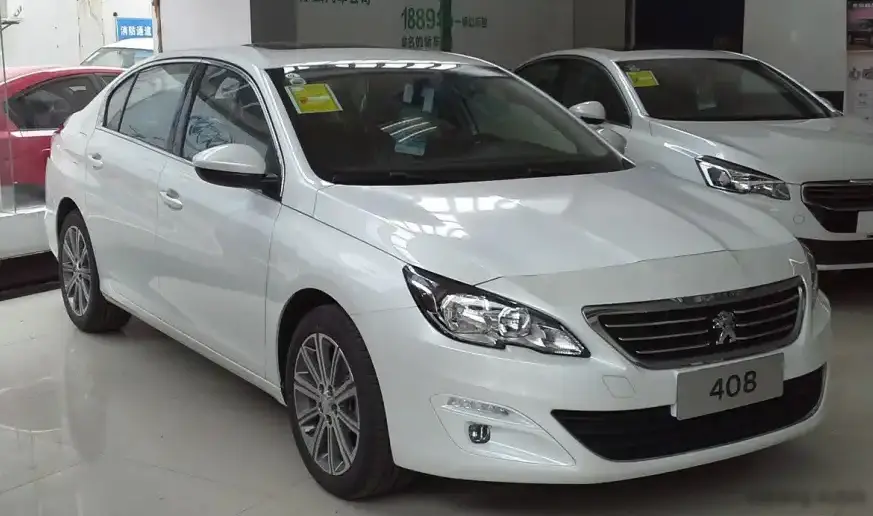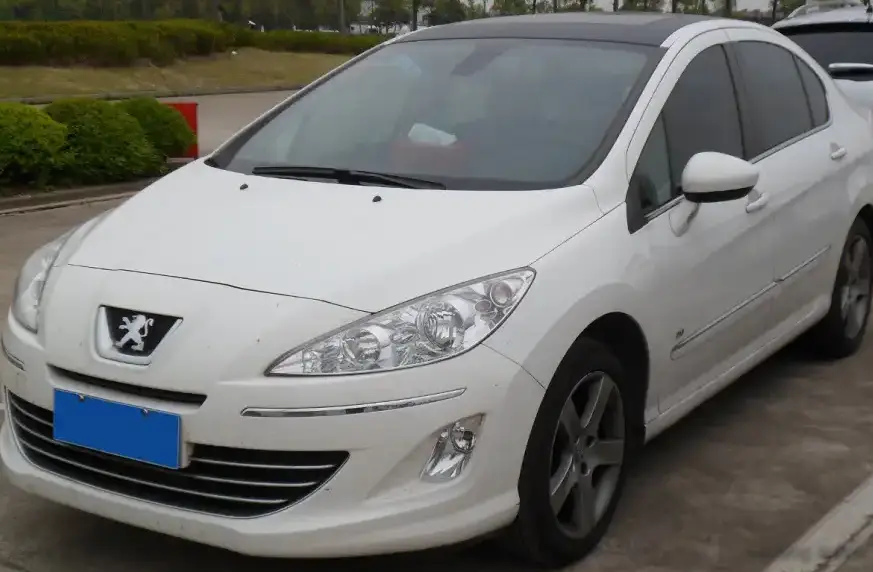
The Peugeot 408, launched in 2010, represented Peugeot’s entry into the mid-size sedan segment, primarily aimed at markets outside of Europe where saloons remained popular. Produced through 2014, the 408 was essentially a rebadged version of the Peugeot 308 sedan, tailored for regions like China and South America. The 2.0-liter (147 hp) variant occupied a mid-range position within the 408 lineup, offering a balance between performance and affordability. It served as a step up from the base 1.6-liter engine, while remaining more accessible than the flagship models. This particular configuration was primarily offered with a 5-speed manual transmission, though automatic options were available in some markets.
Technical Specifications
| Brand | Peugeot |
| Model | 408 |
| Generation | 408 I |
| Type (Engine) | 2.0 (147 Hp) |
| Start of production | 2010 year |
| End of production | 2014 year |
| Powertrain Architecture | Internal Combustion engine |
| Body type | Sedan |
| Seats | 5 |
| Doors | 4 |
| Fuel Type | Petrol (Gasoline) |
| Maximum speed | 201 km/h (124.9 mph) |
| Weight-to-power ratio | 9.5 kg/Hp, 104.9 Hp/tonne |
| Weight-to-torque ratio | 7 kg/Nm, 142.7 Nm/tonne |
| Power | 147 Hp @ 6000 rpm |
| Power per litre | 73.6 Hp/l |
| Torque | 200 Nm @ 4000 rpm (147.51 lb.-ft. @ 4000 rpm) |
| Engine layout | Front, Transverse |
| Engine Model/Code | EW10A |
| Engine displacement | 1997 cm3 (121.86 cu. in.) |
| Number of cylinders | 4 |
| Engine configuration | Inline |
| Cylinder Bore | 85 mm (3.35 in.) |
| Piston Stroke | 88 mm (3.46 in.) |
| Compression ratio | 11:1 |
| Number of valves per cylinder | 4 |
| Fuel injection system | Multi-port manifold injection |
| Engine aspiration | Naturally aspirated engine |
| Valvetrain | DOHC |
| Engine oil capacity | 5 l (5.28 US qt | 4.4 UK qt) |
| Kerb Weight | 1402 kg (3090.88 lbs.) |
| Fuel tank capacity | 60 l (15.85 US gal | 13.2 UK gal) |
| Length | 4688 mm (184.57 in.) |
| Width | 1815 mm (71.46 in.) |
| Height | 1525 mm (60.04 in.) |
| Wheelbase | 2710 mm (106.69 in.) |
| Front track | 1522 mm (59.92 in.) |
| Rear (Back) track | 1503 mm (59.17 in.) |
| Drag coefficient (Cd) | 0.30 |
| Drivetrain Architecture | The Internal combustion engine (ICE) drives the front wheels of the vehicle. |
| Drive wheel | Front wheel drive |
| Number of gears and type of gearbox | 5 gears, manual transmission |
| Front brakes | Ventilated discs |
| Rear brakes | Disc |
| Assisting systems | ABS (Anti-lock braking system) |
| Tires size | 215/55 R16 |
| Wheel rims size | 16 |
Powertrain & Engine Architecture
The heart of the 408 2.0 was the EW10A engine, a naturally aspirated 1.997-liter inline-four cylinder. This engine was a staple in Peugeot and Citroën vehicles for many years, known for its relative simplicity and durability. It featured a double overhead camshaft (DOHC) valvetrain with four valves per cylinder, contributing to its respectable power output for its displacement. Fuel delivery was handled by a multi-port fuel injection system. The EW10A engine produced 147 horsepower at 6000 rpm and 200 Nm (147.51 lb-ft) of torque at 4000 rpm. The 5-speed manual transmission was the most common pairing, offering a fairly conventional gear ratio spread. While an automatic transmission was available in some markets, it was typically a four-speed unit, which impacted acceleration and fuel economy compared to the manual.
Driving Characteristics
The 2.0-liter 408 offered a reasonably comfortable and composed driving experience. With 147 hp, acceleration was adequate for everyday driving, but it wasn’t particularly sporty. The 0-60 mph time was estimated to be around 9.5-10.5 seconds. The manual transmission allowed for more driver control and a slightly more engaging experience, while the automatic, though convenient, felt somewhat sluggish due to its limited number of gears. The engine delivered its peak torque at 4000 rpm, meaning that most of the usable power was available in the mid-range, making it suitable for overtaking and highway cruising. Compared to the base 1.6-liter engine, the 2.0-liter provided noticeably more power and torque, resulting in improved responsiveness. However, it didn’t offer the same level of performance as the higher-end engine options available in some markets.
Equipment & Trim Levels
The 408 2.0 typically came with a decent level of standard equipment. Base models included air conditioning, power windows, central locking, and an audio system with USB connectivity. Higher trim levels added features such as alloy wheels, fog lights, a multi-function steering wheel, and upgraded interior upholstery. Optional extras included a sunroof, leather seats, and a more advanced infotainment system. Interior materials were generally of good quality for the price point, with a focus on practicality and durability. The dashboard layout was functional and user-friendly, though it lacked the more modern design elements found in some competitors.
Chassis & Braking
The 408 utilized a MacPherson strut front suspension and a torsion beam rear suspension. This setup provided a good balance between ride comfort and handling. The front brakes were ventilated discs, offering adequate stopping power, while the rear brakes were solid discs. Anti-lock Braking System (ABS) was standard. The 408’s suspension was tuned for comfort rather than outright sportiness, resulting in a smooth ride over most road surfaces. The standard tire size was 215/55 R16, providing a good compromise between grip and fuel efficiency.
Market Reception & Comparison
The Peugeot 408 2.0 received generally positive reviews, with critics praising its comfortable ride, spacious interior, and reasonable price. However, some reviewers noted that the engine lacked refinement compared to some of its competitors, and the automatic transmission felt dated. Compared to the 1.6-liter version, the 2.0-liter offered a significant performance upgrade, but at the cost of slightly lower fuel economy. In terms of reliability, the EW10A engine was generally considered to be robust, but regular maintenance was essential to prevent issues. The 408 competed with other mid-size sedans such as the Toyota Corolla, Honda Civic, and Ford Focus, offering a more European driving experience and styling.
Legacy
The Peugeot 408, particularly the 2.0-liter variant, has established a reputation as a reliable and affordable used car. The EW10A engine is known for its longevity, and parts availability is generally good. While it may not offer the latest technology or the most exciting driving experience, the 408 2.0 remains a practical and comfortable choice for those seeking a mid-size sedan. In the used car market, these models typically command reasonable prices, making them an attractive option for budget-conscious buyers. The 408’s success in markets outside of Europe demonstrated Peugeot’s ability to adapt its products to different consumer preferences.