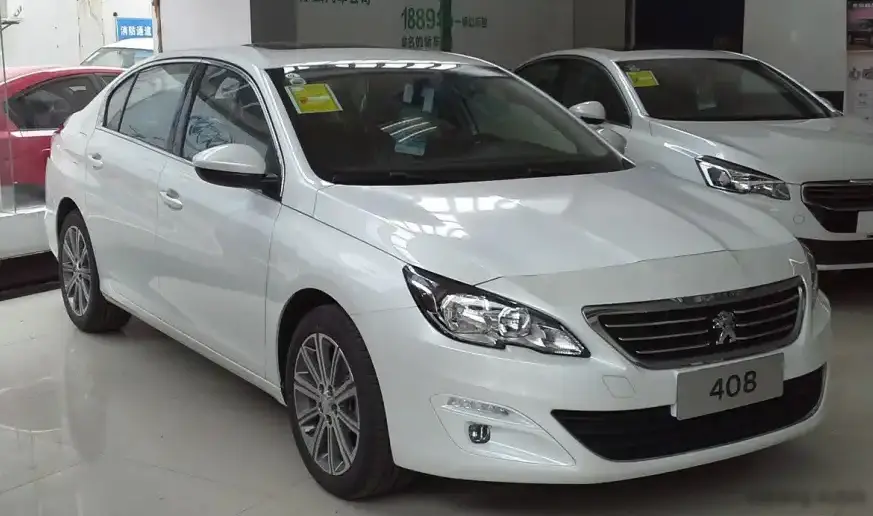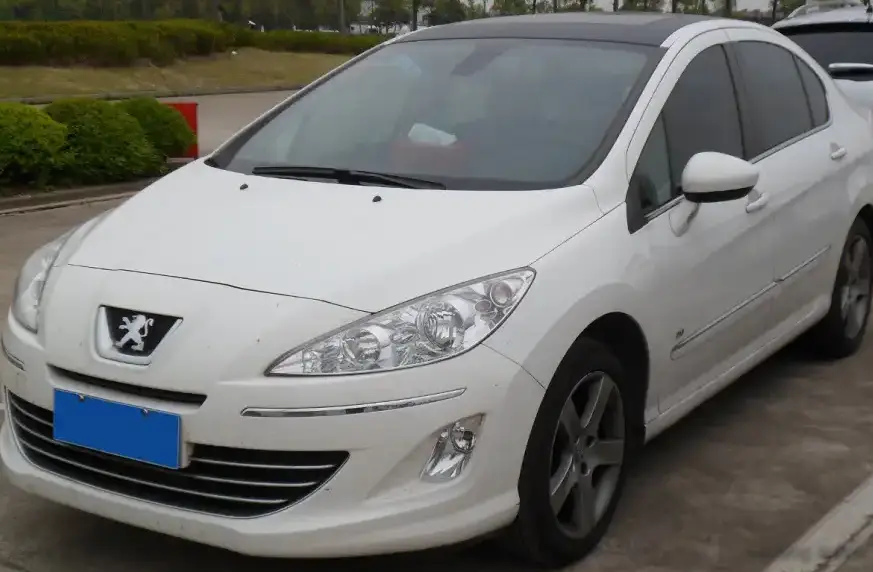
The Peugeot 408, launched in 2010, represented Peugeot’s entry into the mid-size sedan segment, primarily aimed at markets outside of Europe where saloons remained popular. Produced through 2014, the 408 was essentially a rebadged version of the Mitsubishi Galant, developed as part of a strategic partnership between the two manufacturers. The 2.0-liter (147 hp) automatic variant occupied a middle ground in the 408 lineup, offering a balance between performance and affordability. It was positioned above the base 1.6-liter engine and below the more powerful 2.2-liter options, targeting buyers seeking a comfortable and reasonably equipped family sedan.
Technical Specifications
| Brand | Peugeot |
| Model | 408 |
| Generation | 408 I |
| Type (Engine) | 2.0 (147 Hp) Automatic |
| Start of production | 2010 |
| End of production | 2014 |
| Powertrain Architecture | Internal Combustion engine |
| Body type | Sedan |
| Seats | 5 |
| Doors | 4 |
| Fuel Type | Petrol (Gasoline) |
| Maximum speed | 199 km/h (123.65 mph) |
| Weight-to-power ratio | 9.9 kg/Hp, 101.4 Hp/tonne |
| Weight-to-torque ratio | 7.3 kg/Nm, 137.9 Nm/tonne |
| Power | 147 Hp @ 6000 rpm |
| Power per litre | 73.6 Hp/l |
| Torque | 200 Nm @ 4000 rpm (147.51 lb.-ft. @ 4000 rpm) |
| Engine layout | Front, Transverse |
| Engine Model/Code | EW10A |
| Engine displacement | 1997 cm3 (121.86 cu. in.) |
| Number of cylinders | 4 |
| Engine configuration | Inline |
| Cylinder Bore | 85 mm (3.35 in.) |
| Piston Stroke | 88 mm (3.46 in.) |
| Compression ratio | 11:1 |
| Number of valves per cylinder | 4 |
| Fuel injection system | Multi-port manifold injection |
| Engine aspiration | Naturally aspirated engine |
| Valvetrain | DOHC |
| Engine oil capacity | 5 l (5.28 US qt | 4.4 UK qt) |
| Kerb Weight | 1450 kg (3196.7 lbs.) |
| Fuel tank capacity | 60 l (15.85 US gal | 13.2 UK gal) |
| Length | 4688 mm (184.57 in.) |
| Width | 1815 mm (71.46 in.) |
| Height | 1525 mm (60.04 in.) |
| Wheelbase | 2710 mm (106.69 in.) |
| Front track | 1522 mm (59.92 in.) |
| Rear (Back) track | 1503 mm (59.17 in.) |
| Drag coefficient (Cd) | 0.30 |
| Drivetrain Architecture | The Internal combustion engine (ICE) drives the front wheels of the vehicle. |
| Drive wheel | Front wheel drive |
| Number of gears and type of gearbox | 6 gears, automatic transmission |
| Front brakes | Ventilated discs |
| Rear brakes | Disc |
| Assisting systems | ABS (Anti-lock braking system) |
| Tires size | 215/55 R16 |
| Wheel rims size | 16 |
Powertrain & Engine Architecture
The heart of the 408 2.0 Automatic is the EW10A engine, a 1.997-liter inline-four cylinder gasoline engine. This engine, a product of Peugeot’s engineering, features a double overhead camshaft (DOHC) valvetrain with four valves per cylinder. It utilizes a multi-point fuel injection system, delivering fuel directly into the intake ports. The EW10A is a naturally aspirated engine, meaning it doesn’t rely on turbocharging or supercharging for increased power. The engine produces 147 horsepower at 6000 rpm and 200 Nm (147.51 lb-ft) of torque at 4000 rpm. Paired with this engine is a six-speed automatic transmission, designed to provide smooth and convenient shifting. This transmission was chosen for its balance of efficiency and drivability, catering to a broader audience than a manual gearbox.
Driving Characteristics
The 2.0-liter automatic 408 delivers a comfortable, if not particularly sporty, driving experience. The automatic transmission, while smooth, isn’t known for its rapid shifts. Acceleration is adequate for everyday driving, but it won’t provide the same briskness as the higher-output 2.2-liter versions or those equipped with a manual transmission. The gear ratios are tuned for fuel efficiency and relaxed cruising, rather than aggressive performance. The engine feels most responsive in the mid-range, providing sufficient power for overtaking maneuvers. Compared to the manual transmission variants, the automatic sacrifices some responsiveness and fuel economy, but gains in ease of use, especially in urban traffic.
Equipment & Trim Levels
The 408 2.0 Automatic typically came equipped with a reasonable level of standard features. These generally included air conditioning, power windows and locks, a basic audio system with CD player, and ABS brakes. Higher trim levels, often denoted by specific package names, added features such as alloy wheels, a more advanced audio system with Bluetooth connectivity, cruise control, and automatic climate control. Interior upholstery was typically cloth, with leather options available on higher trims. Optional extras could include a sunroof, navigation system, and parking sensors.
Chassis & Braking
The 408 utilizes a front-wheel-drive layout with a MacPherson strut suspension in the front and a multi-link suspension in the rear. This suspension setup aims to provide a comfortable ride while maintaining reasonable handling characteristics. Braking duties are handled by ventilated discs on the front wheels and solid discs on the rear. ABS (Anti-lock Braking System) is standard, enhancing safety during emergency braking situations. The 16-inch wheels, typically fitted with 215/55 R16 tires, contribute to the car’s ride comfort and handling balance.
Market Reception & Comparison
The Peugeot 408 2.0 Automatic received mixed reviews. Critics generally praised its comfortable ride, spacious interior, and reasonable fuel economy. However, the engine was often described as being somewhat underpowered, especially when paired with the automatic transmission. Compared to the 1.6-liter version, the 2.0-liter offered a noticeable improvement in performance, but at a higher price point. The 2.2-liter models provided significantly more power, but were considerably more expensive and less fuel-efficient. In terms of reliability, the EW10A engine is generally considered to be a robust unit, but like any vehicle, regular maintenance is crucial to prevent issues.
Legacy
The Peugeot 408, while not a massive sales success in all markets, established Peugeot as a contender in the mid-size sedan segment. The 2.0-liter automatic variant remains a relatively common sight on the used car market. The EW10A engine, in particular, has proven to be a durable and reliable powertrain when properly maintained. Today, these vehicles offer an affordable and comfortable option for buyers seeking a practical family sedan, though potential buyers should be aware of the age-related maintenance that may be required. The 408’s legacy lies in its attempt to bridge the gap between European design sensibilities and the demands of markets that favored traditional saloon cars.