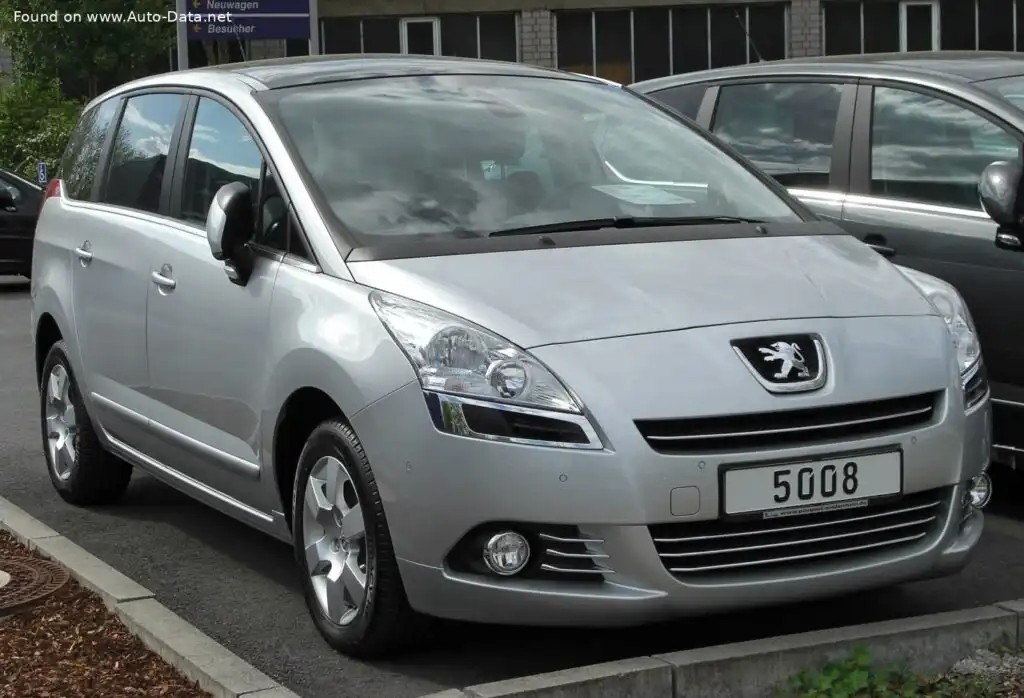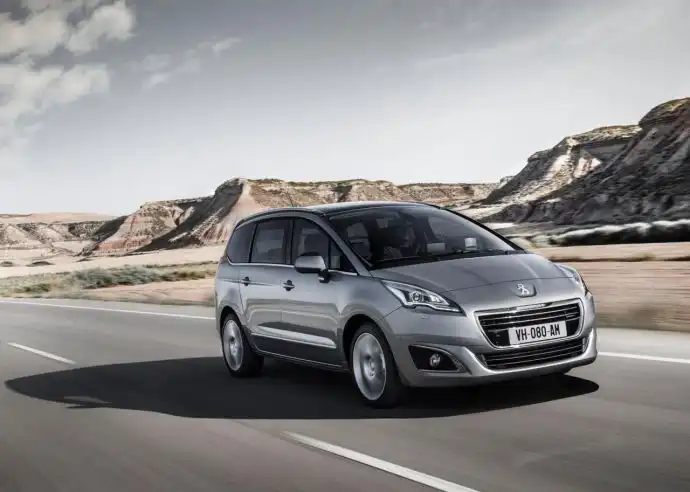
The Peugeot 5008 I (Phase II), specifically the 1.6 HDi 115 horsepower variant with a Diesel Particulate Filter (FAP), was a popular choice in the European market from 2013 to 2015. This model represented a mid-life refresh of the original 5008, a compact Multi-Purpose Vehicle (MPV) designed to appeal to families seeking practicality and versatility. Positioned as a mid-range offering within the 5008 lineup, it slotted between the lower-powered diesel options and the more expensive petrol variants. The Phase II update brought styling revisions and improvements to the interior, enhancing the vehicle’s overall appeal.
Technical Specifications
| Brand | Peugeot |
| Model | 5008 |
| Generation | 5008 I (Phase II, 2013) |
| Type (Engine) | 1.6 HDi (115 Hp) FAP |
| Start of production | 2013 |
| End of production | 2015 |
| Powertrain Architecture | Internal Combustion engine |
| Body type | MPV |
| Seats | 5 |
| Doors | 5 |
| Fuel consumption (urban) | 5.7-6.2 l/100 km (41.3 – 37.9 US mpg, 49.6 – 45.6 UK mpg, 17.5 – 16.1 km/l) |
| Fuel consumption (extra urban) | 4.2-4.6 l/100 km (56 – 51.1 US mpg, 67.3 – 61.4 UK mpg, 23.8 – 21.7 km/l) |
| Fuel consumption (combined) | 4.7-5.2 l/100 km (50 – 45.2 US mpg, 60.1 – 54.3 UK mpg, 21.3 – 19.2 km/l) |
| CO2 emissions | 124-135 g/km |
| Fuel Type | Diesel |
| Acceleration 0 – 100 km/h | 12.3 sec |
| Acceleration 0 – 62 mph | 12.3 sec |
| Acceleration 0 – 60 mph | 11.7 sec |
| Maximum speed | 183 km/h (113.71 mph) |
| Emission standard | Euro 5 |
| Weight-to-power ratio | 12.8 kg/Hp, 78.1 Hp/tonne |
| Weight-to-torque ratio | 5.5 kg/Nm, 183.4 Nm/tonne |
| Power | 115 Hp @ 3600 rpm |
| Power per litre | 73.7 Hp/l |
| Torque | 270 Nm @ 1750 rpm (199.14 lb.-ft. @ 1750 rpm) |
| Engine layout | Front, Transverse |
| Engine Model/Code | 9HD DV6C |
| Engine displacement | 1560 cm3 (95.2 cu. in.) |
| Number of cylinders | 4 |
| Engine configuration | Inline |
| Number of valves per cylinder | 2 |
| Fuel injection system | Diesel Commonrail |
| Engine aspiration | Turbocharger, Intercooler |
| Engine oil capacity | 3.75 l (3.96 US qt | 3.3 UK qt) |
| Kerb Weight | 1472 kg (3245.2 lbs.) |
| Max. weight | 2070 kg (4563.57 lbs.) |
| Max load | 598 kg (1318.36 lbs.) |
| Trunk (boot) space – minimum | 679 l (23.98 cu. ft.) |
| Trunk (boot) space – maximum | 1754 l (61.94 cu. ft.) |
| Fuel tank capacity | 60 l (15.85 US gal | 13.2 UK gal) |
| Length | 4529 mm (178.31 in.) |
| Width with mirrors folded | 1888 mm (74.33 in.) |
| Width including mirrors | 2118 mm (83.39 in.) |
| Height | 1647 mm (64.84 in.) |
| Wheelbase | 2727 mm (107.36 in.) |
| Front overhang | 934 mm (36.77 in.) |
| Rear overhang | 868 mm (34.17 in.) |
| Ride height (ground clearance) | 115-137 mm (4.53 – 5.39 in.) |
| Minimum turning circle | 11.1 m (36.42 ft.) |
| Drivetrain Architecture | Front wheel drive |
| Number of gears and type of gearbox | 6 gears, manual transmission |
| Front suspension | Independent type McPherson |
| Rear suspension | Semi-independent, coil spring |
| Front brakes | Ventilated discs |
| Rear brakes | Disc |
| Assisting systems | ABS (Anti-lock braking system) |
| Steering type | Steering rack and pinion |
| Tires size | 215/55 R16; 215/50 R17; 215/45 R18 |
| Wheel rims size | 16; 17; 18 |
Powertrain & Engine Architecture
The heart of this 5008 variant is the 9HD DV6C engine, a 1.6-liter inline-four cylinder diesel. This engine is part of the PSA Group’s DV6 family, known for its relatively compact size and fuel efficiency. It utilizes a common rail direct injection system, delivering fuel at high pressure for optimized combustion. A turbocharger with an intercooler is employed to boost power output and improve torque across the rev range. The engine features two valves per cylinder and is known for its robust construction. The FAP (Filtre à Particules) or Diesel Particulate Filter, is a crucial component of the exhaust system, designed to trap soot particles and reduce harmful emissions, meeting Euro 5 standards. This engine was paired with a 6-speed manual transmission, delivering power to the front wheels.
Driving Characteristics
The 115 horsepower output, coupled with 270 Nm (199 lb-ft) of torque, provided adequate performance for everyday driving. Acceleration from 0-60 mph took around 11.7 seconds, and top speed was approximately 113.7 mph. While not particularly sporty, the engine offered sufficient power for overtaking and cruising on highways. The manual transmission allowed for driver control, but the gear ratios were tuned for fuel economy rather than outright performance. Compared to the more powerful 2.0-liter HDi variants, this 1.6L engine felt less responsive, especially when fully loaded. However, it offered a smoother and more refined driving experience than the lower-powered 1.6L non-turbocharged options.
Equipment & Trim Levels
The 1.6 HDi 115 FAP typically came with a reasonable level of standard equipment. This included air conditioning, electric front windows, a CD player with auxiliary input, and ABS brakes. Higher trim levels, such as ‘Allure’ or ‘Sport’, added features like alloy wheels, rear parking sensors, cruise control, and a more sophisticated infotainment system. Interior upholstery was typically cloth, with options for leather upgrades. The dashboard layout was functional and user-friendly, with a focus on practicality. Optional extras included a panoramic sunroof, navigation system, and a rear entertainment system.
Chassis & Braking
The 5008 utilized a McPherson strut front suspension and a semi-independent coil spring rear suspension. This setup provided a comfortable ride quality, suitable for long journeys. The front brakes were ventilated discs, while the rear brakes were solid discs. ABS (Anti-lock Braking System) was standard, enhancing safety and stability during braking. The steering was a rack and pinion system, offering reasonable precision and feedback. The suspension was tuned to prioritize comfort over sporty handling, resulting in a slight degree of body roll during cornering.
Market Reception & Comparison
The 1.6 HDi 115 FAP variant of the Peugeot 5008 was well-received by critics and consumers alike. It was praised for its fuel efficiency, practicality, and comfortable ride. Compared to the more powerful diesel options, it offered a lower purchase price and reduced running costs. However, some reviewers noted that the engine could feel strained when carrying a full load or tackling steep hills. In terms of reliability, the DV6 engine family generally proved to be durable, although the FAP system could require occasional maintenance. Fuel economy was a key selling point, with combined figures ranging from 4.7 to 5.2 liters per 100 kilometers.
Legacy
The 1.6 HDi engine became a mainstay in the PSA Group’s lineup, powering numerous models across the Peugeot and Citroën brands. While the 5008 has since been replaced by a newer generation, the original model remains a popular choice in the used car market. The 1.6 HDi 115 FAP variant is particularly sought after for its balance of fuel efficiency, practicality, and affordability. However, potential buyers should be aware of the potential maintenance costs associated with the FAP system and ensure that the vehicle has been properly serviced. Overall, this variant represents a solid and reliable option for families seeking a versatile and economical MPV.