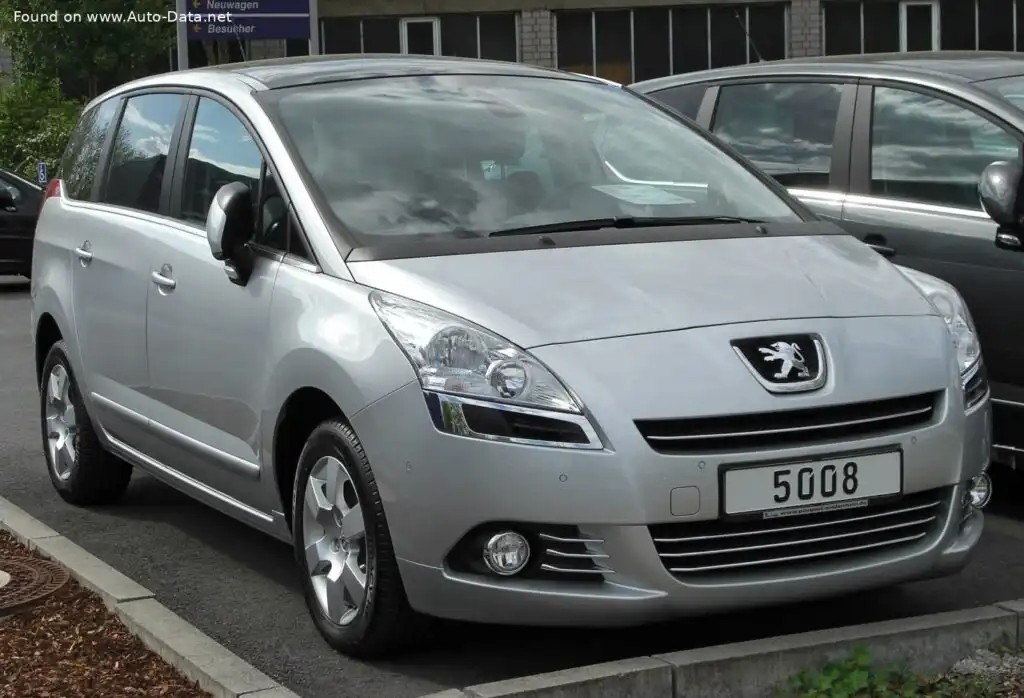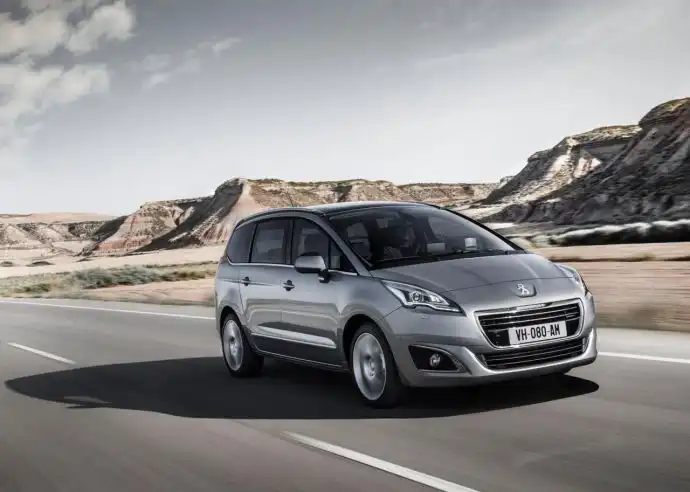
The Peugeot 5008 I (Phase II), specifically the 1.6 VTi 120 horsepower, 7-seat variant, was produced from 2013 to 2015. This model represents a mid-life refresh of the first-generation 5008 (introduced in 2009), falling within the broader context of Peugeot’s MPV (Multi-Purpose Vehicle) offerings aimed at families. Positioned as an entry-to-mid-range trim, it provided a more affordable access point to the 5008’s spaciousness and practicality compared to higher-spec diesel or more powerful gasoline options. The Phase II update brought styling revisions, improved interior materials, and enhanced equipment levels, solidifying the 5008’s appeal in the European market.
Technical Specifications
| Brand | Peugeot |
| Model | 5008 |
| Generation | 5008 I (Phase II, 2013) |
| Type (Engine) | 1.6 VTi (120 Hp) 7 Seat |
| Start of production | 2013 |
| End of production | 2015 |
| Powertrain Architecture | Internal Combustion engine |
| Body type | MPV |
| Seats | 7 |
| Doors | 5 |
| Fuel consumption (urban) | 9.4 l/100 km (25 US mpg, 30.1 UK mpg, 10.6 km/l) |
| Fuel consumption (extra urban) | 5.5 l/100 km (42.8 US mpg, 51.4 UK mpg, 18.2 km/l) |
| Fuel consumption (combined) | 6.9 l/100 km (34.1 US mpg, 40.9 UK mpg, 14.5 km/l) |
| CO2 emissions | 159 g/km |
| Fuel Type | Petrol (Gasoline) |
| Acceleration 0 – 100 km/h | 12.3 sec |
| Acceleration 0 – 62 mph | 12.3 sec |
| Acceleration 0 – 60 mph | 11.7 sec |
| Maximum speed | 187 km/h (116.2 mph) |
| Emission standard | Euro 5 |
| Weight-to-power ratio | 11.9 kg/Hp, 83.9 Hp/tonne |
| Weight-to-torque ratio | 8.9 kg/Nm, 111.9 Nm/tonne |
| Power | 120 Hp @ 6000 rpm |
| Power per litre | 75.1 Hp/l |
| Torque | 160 Nm @ 4250 rpm (118.01 lb.-ft. @ 4250 rpm) |
| Engine layout | Front, Transverse |
| Engine Model/Code | EP6C |
| Engine displacement | 1598 cm3 (97.52 cu. in.) |
| Number of cylinders | 4 |
| Engine configuration | Inline |
| Number of valves per cylinder | 4 |
| Fuel injection system | Multi-port manifold injection |
| Engine aspiration | Naturally aspirated engine |
| Engine oil capacity | 4.25 l (4.49 US qt | 3.74 UK qt) |
| Coolant capacity | 6 l (6.34 US qt | 5.28 UK qt) |
| Kerb Weight | 1430 kg (3152.61 lbs.) |
| Max. weight | 2190 kg (4828.12 lbs.) |
| Max load | 760 kg (1675.51 lbs.) |
| Trunk (boot) space – minimum | 194 l (6.85 cu. ft.) |
| Trunk (boot) space – maximum | 1754 l (61.94 cu. ft.) |
| Fuel tank capacity | 60 l (15.85 US gal | 13.2 UK gal) |
| Permitted trailer load with brakes (12%) | 1400 kg (3086.47 lbs.) |
| Length | 4529 mm (178.31 in.) |
| Width with mirrors folded | 1888 mm (74.33 in.) |
| Width including mirrors | 2118 mm (83.39 in.) |
| Height | 1622 mm (63.86 in.) |
| Wheelbase | 2727 mm (107.36 in.) |
| Front overhang | 934 mm (36.77 in.) |
| Rear overhang | 868 mm (34.17 in.) |
| Minimum turning circle | 11.1 m (36.42 ft.) |
| Drivetrain Architecture | Front wheel drive |
| Number of gears | 5 |
| Gearbox type | Manual transmission |
| Front suspension | Independent type McPherson |
| Rear suspension | Semi-independent, coil spring |
| Front brakes | Ventilated discs |
| Rear brakes | Disc |
| Assisting systems | ABS (Anti-lock braking system) |
| Steering type | Steering rack and pinion |
| Tires size | 215/55 R16 |
| Wheel rims size | 16 |
Powertrain & Engine Architecture
The heart of this 5008 variant is the Peugeot-Citroën EP6C engine, a 1.6-liter naturally aspirated inline-four cylinder gasoline engine. This engine, part of the Prince engine family developed in collaboration with BMW, utilizes multi-point fuel injection and a dual overhead camshaft (DOHC) valvetrain with four valves per cylinder. The EP6C produces 120 horsepower at 6000 rpm and 160 Nm (118 lb-ft) of torque at 4250 rpm. It’s a relatively simple engine design, prioritizing reliability and fuel efficiency over outright performance. The engine is transversely mounted at the front of the vehicle. Paired with this engine is a five-speed manual transmission, delivering power to the front wheels. This combination was chosen for its balance of cost-effectiveness and usability.
Driving Characteristics
The 1.6 VTi engine, coupled with the five-speed manual gearbox, provides adequate, but not exhilarating, performance. Acceleration from 0 to 60 mph takes around 11.7 seconds, and top speed is approximately 116 mph. The engine feels somewhat strained when fully loaded with passengers and luggage, particularly on inclines. The gear ratios are tuned for fuel economy rather than sporty driving, meaning frequent downshifts are necessary to maintain momentum. Compared to the 2.0-liter HDi diesel variants, this 1.6 VTi offers significantly less torque, resulting in a less effortless driving experience. However, it provides a smoother and quieter ride than the diesel, and its lighter weight contributes to slightly more agile handling.
Equipment & Trim Levels
The 1.6 VTi 7-seat trim typically included standard features such as air conditioning, electric front windows, a CD/radio stereo, and ABS brakes. Safety features included driver and passenger airbags, and stability control. Higher trim levels offered options like rear parking sensors, alloy wheels, a panoramic sunroof, and a more advanced infotainment system. Interior upholstery was typically cloth, with a functional, if not luxurious, dashboard layout. The seven-seat configuration offered flexibility for families, although the rearmost seats were best suited for children or short journeys.
Chassis & Braking
The 5008 utilizes a McPherson strut front suspension and a semi-independent coil spring rear suspension. This setup provides a comfortable ride quality, absorbing bumps and imperfections in the road reasonably well. Front brakes are ventilated discs, while rear brakes are solid discs. The steering is a rack and pinion system, offering reasonable precision. The 16-inch wheels were typically fitted with 215/55 R16 tires, providing a good balance of grip and comfort. The suspension was tuned for comfort and practicality, rather than sporty handling.
Market Reception & Comparison
The 1.6 VTi 7-seat variant of the 5008 was generally well-received as a practical and affordable family vehicle. Critics praised its spacious interior, versatile seating configuration, and reasonable fuel economy. However, the engine’s lack of power was a common criticism, particularly when the vehicle was fully loaded. Compared to the more popular diesel variants, the 1.6 VTi offered lower running costs in terms of fuel price, but higher overall maintenance costs due to the gasoline engine’s inherent complexity. The diesel models provided superior fuel economy and torque, making them a more popular choice for long-distance drivers.
Legacy
The EP6C engine, while not known for being particularly groundbreaking, proved to be a relatively reliable unit when properly maintained. Common issues include occasional oil leaks and potential problems with the timing chain on higher-mileage examples. The 5008 I (Phase II) 1.6 VTi remains a relatively affordable option on the used car market, appealing to buyers seeking a spacious and practical MPV. Its simplicity and relatively low running costs (excluding potential repairs) make it a viable choice for families on a budget. However, potential buyers should be aware of the engine’s limitations in terms of performance and ensure a thorough inspection before purchase.