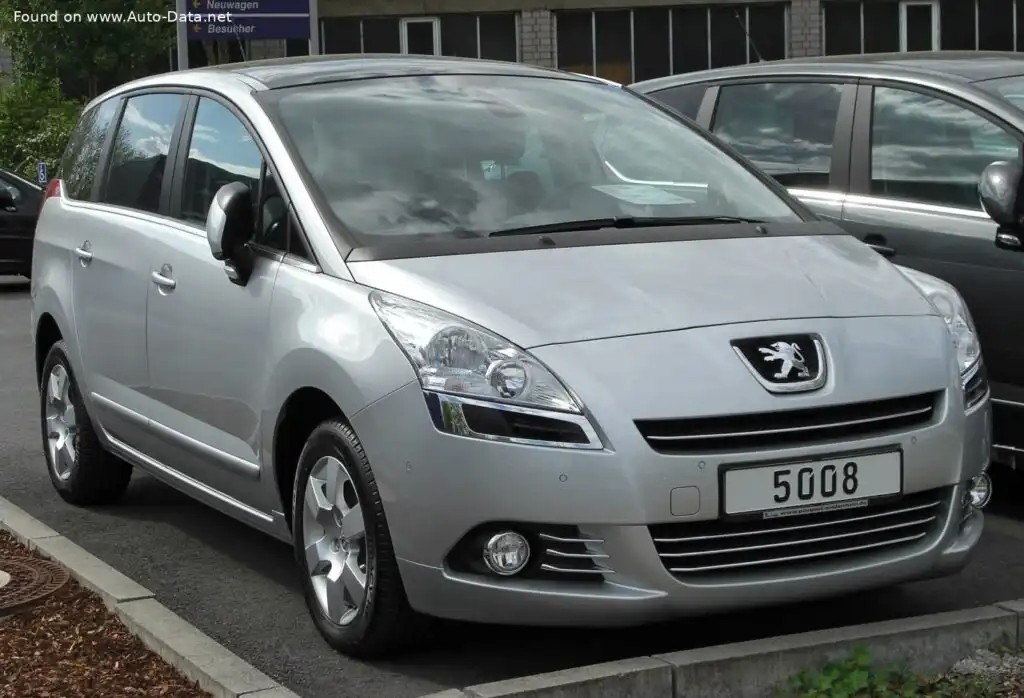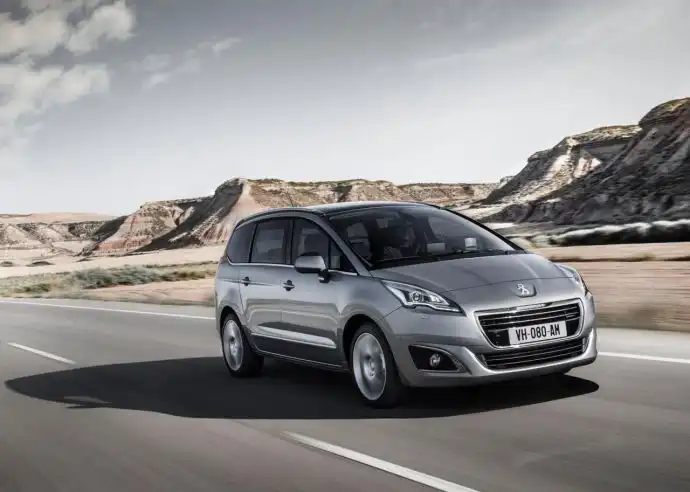
The Peugeot 5008 I (Phase II), specifically the 2.0 HDi 163 horsepower variant with an automatic transmission and seven-seat configuration, was produced from 2013 to 2015. This model represents a mid-life refresh of the first-generation 5008 (introduced in 2009), aiming to enhance its appeal in the competitive European MPV (Multi-Purpose Vehicle) segment. Positioned as a mid-range offering within the 5008 lineup, it provided a balance between fuel efficiency, practicality, and comfort, targeting families seeking a versatile vehicle for both daily commutes and longer journeys. The Phase II updates included cosmetic changes, improved interior materials, and enhancements to the vehicle’s technology.
Technical Specifications
| Brand | Peugeot |
| Model | 5008 |
| Generation | 5008 I (Phase II, 2013) |
| Type | 2.0 HDi (163 Hp) FAP Automatic 7 Seat |
| Start of production | 2013 |
| End of production | 2015 |
| Powertrain Architecture | Internal Combustion engine |
| Body type | MPV |
| Seats | 7 |
| Doors | 5 |
| Fuel consumption (urban) | 7.8 l/100 km (30.2 US mpg, 36.2 UK mpg, 12.8 km/l) |
| Fuel consumption (extra urban) | 5.5 l/100 km (42.8 US mpg, 51.4 UK mpg, 18.2 km/l) |
| Fuel consumption (combined) | 6.3 l/100 km (37.3 US mpg, 44.8 UK mpg, 15.9 km/l) |
| CO2 emissions | 164 g/km |
| Fuel Type | Diesel |
| Acceleration 0 – 100 km/h | 10.5 sec |
| Acceleration 0 – 62 mph | 10.5 sec |
| Acceleration 0 – 60 mph | 10 sec (Calculated) |
| Maximum speed | 190 km/h (118.06 mph) |
| Emission standard | Euro 5 |
| Weight-to-power ratio | 9.9 kg/Hp, 100.7 Hp/tonne |
| Weight-to-torque ratio | 4.8 kg/Nm, 210 Nm/tonne |
| Power | 163 Hp @ 3750 rpm |
| Power per litre | 81.6 Hp/l |
| Torque | 340 Nm @ 2000 rpm (250.77 lb.-ft. @ 2000 rpm) |
| Engine layout | Front, Transverse |
| Engine Model/Code | RHH DW10CTED4 |
| Engine displacement | 1997 cm3 (121.86 cu. in.) |
| Number of cylinders | 4 |
| Engine configuration | Inline |
| Number of valves per cylinder | 4 |
| Fuel injection system | Diesel Commonrail |
| Engine aspiration | Turbocharger, Intercooler |
| Engine oil capacity | 5 l (5.28 US qt | 4.4 UK qt) |
| Coolant capacity | 8.6 l (9.09 US qt | 7.57 UK qt) |
| Kerb Weight | 1619 kg (3569.28 lbs.) |
| Max. weight | 2330 kg (5136.77 lbs.) |
| Max load | 711 kg (1567.49 lbs.) |
| Trunk (boot) space – minimum | 194 l (6.85 cu. ft.) |
| Trunk (boot) space – maximum | 1754 l (61.94 cu. ft.) |
| Fuel tank capacity | 60 l (15.85 US gal | 13.2 UK gal) |
| Length | 4529 mm (178.31 in.) |
| Width with mirrors folded | 1888 mm (74.33 in.) |
| Width including mirrors | 2118 mm (83.39 in.) |
| Height | 1622 mm (63.86 in.) |
| Wheelbase | 2727 mm (107.36 in.) |
| Front overhang | 934 mm (36.77 in.) |
| Rear overhang | 868 mm (34.17 in.) |
| Ride height (ground clearance) | 108-112 mm (4.25 – 4.41 in.) |
| Minimum turning circle | 11.9 m (39.04 ft.) |
| Drivetrain Architecture | Front wheel drive |
| Number of gears | 6 |
| Gearbox type | Automatic transmission |
| Front suspension | Independent type McPherson |
| Rear suspension | Semi-independent, coil spring |
| Front brakes | Ventilated discs |
| Rear brakes | Disc |
| Assisting systems | ABS (Anti-lock braking system) |
| Steering type | Steering rack and pinion |
| Tires size | 215/50 R17 |
| Wheel rims size | 17 |
Powertrain & Engine Architecture
The heart of this 5008 variant is the DW10CTED4 engine, a 2.0-liter four-cylinder diesel engine. This engine is part of Peugeot/Citroën’s HDi (High-Pressure Diesel Injection) family. The ‘RHH’ engine code specifically denotes a version compliant with Euro 5 emissions standards. The engine utilizes a common rail direct injection system, delivering fuel at extremely high pressure for optimized combustion. A turbocharger with an intercooler is employed to boost power and torque, providing 163 horsepower at 3750 rpm and a substantial 340 Nm (250.77 lb.-ft.) of torque at 2000 rpm. The automatic transmission is a six-speed unit, designed to provide smooth gear changes and contribute to fuel efficiency. While not a dual-clutch transmission, it offered a convenient alternative to the standard manual gearbox.
Driving Characteristics
The 2.0 HDi automatic 5008 offered a comfortable and relaxed driving experience. The automatic transmission, while not particularly sporty, provided smooth shifts and made navigating urban traffic less demanding. Acceleration from 0-100 km/h (0-62 mph) took around 10.5 seconds, which was adequate for everyday driving but noticeably slower than the more powerful petrol or higher-output diesel versions. The engine’s strong low-end torque made it well-suited for carrying a full load of passengers and luggage. The gear ratios were tuned for fuel economy rather than outright performance, resulting in a slightly less responsive feel compared to the manual transmission models. However, the automatic transmission did contribute to a more refined and less fatiguing driving experience, especially on long journeys.
Equipment & Trim Levels
The 2.0 HDi Automatic 7 Seat trim typically included features such as air conditioning, a CD/radio stereo system, electric front and rear windows, and central locking. Safety features included ABS, electronic brakeforce distribution, and multiple airbags. Higher trim levels, often available as optional packages, added features like alloy wheels, rear parking sensors, a panoramic sunroof, and a more advanced infotainment system with navigation. Interior upholstery was generally cloth, with options for leather upgrades. The seven-seat configuration offered flexibility for families, with the rear seats folding flat to maximize cargo space.
Chassis & Braking
The 5008 utilized a McPherson strut front suspension and a semi-independent coil spring rear suspension. This setup provided a good balance between ride comfort and handling. The front brakes were ventilated discs, while the rear brakes were solid discs. ABS (Anti-lock Braking System) was standard, enhancing braking performance and stability. The suspension was tuned to prioritize comfort, resulting in a slightly softer ride compared to more performance-oriented vehicles. Stabilizer bars were fitted to both the front and rear axles to reduce body roll during cornering.
Market Reception & Comparison
The Peugeot 5008 2.0 HDi Automatic was generally well-received by critics as a practical and comfortable family vehicle. It was praised for its spacious interior, versatile seating arrangement, and fuel efficiency. However, some reviewers noted that the automatic transmission could feel a bit sluggish at times, and the overall driving experience wasn’t as engaging as some of its rivals. Compared to the 1.6 HDi versions, the 2.0 HDi offered significantly more power and torque, making it a better choice for those who frequently carried passengers or towed trailers. Compared to the petrol versions, the 2.0 HDi provided superior fuel economy. Reliability was generally good, although some owners reported issues with the diesel particulate filter (DPF) system, a common concern with modern diesel engines.
Legacy
The Peugeot 5008 I (Phase II) 2.0 HDi Automatic has become a popular choice in the used car market, particularly for families seeking a spacious and economical vehicle. The DW10CTED4 engine is known for its durability, although regular maintenance, including DPF regeneration, is crucial. The automatic transmission, while not the most advanced, has proven to be relatively reliable. Today, these vehicles represent a good value proposition, offering a lot of practicality and comfort for a reasonable price. However, potential buyers should be aware of the potential for DPF-related issues and ensure that the vehicle has been properly maintained.