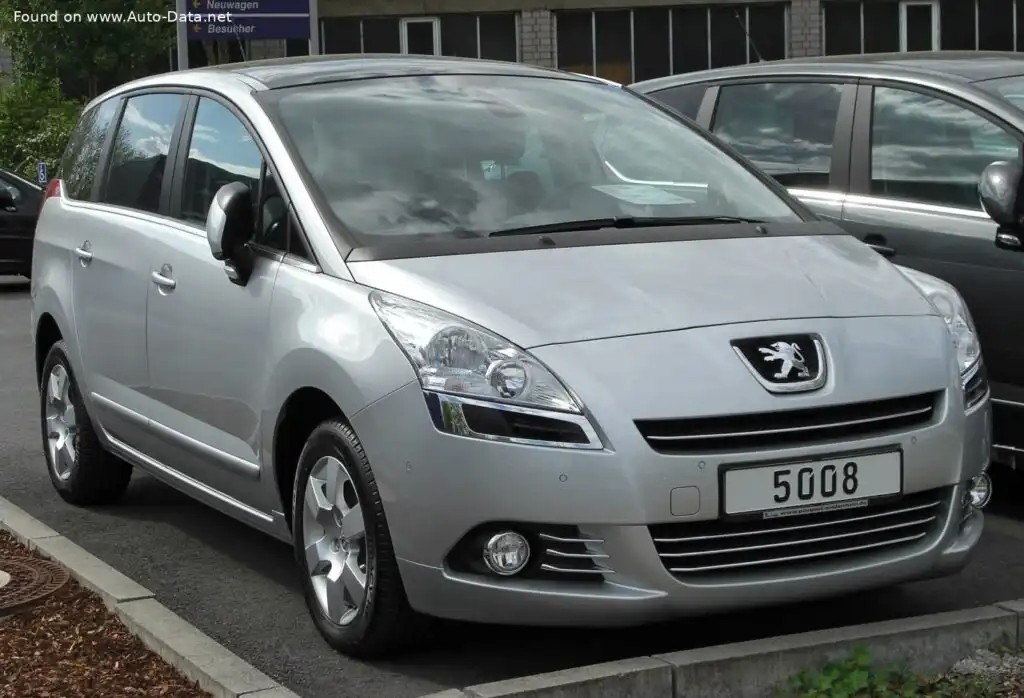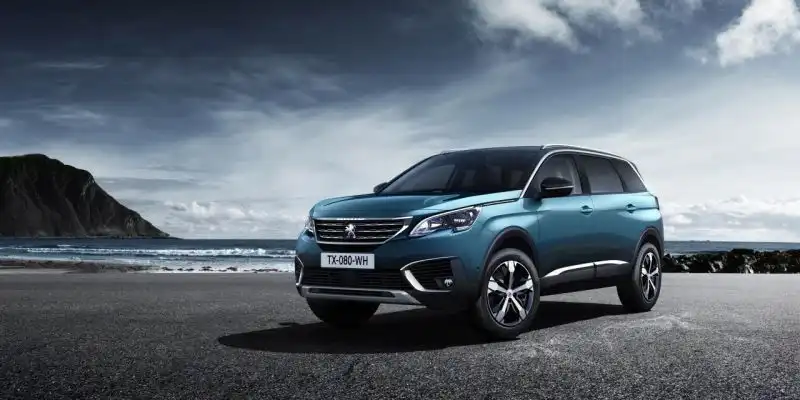
The Peugeot 5008 II, launched in 2016 as a Phase I model, represented a significant shift for the 5008 line. Moving away from the MPV (Multi-Purpose Vehicle) roots of the first generation, the second 5008 adopted a more conventional SUV (Sport Utility Vehicle) body style, aiming for broader market appeal. The 1.2 PureTech 130 horsepower automatic variant, produced from 2016 to 2018, served as a key entry point into the 5008 range, offering a balance of fuel efficiency, practicality, and affordability. It was positioned as a family-oriented vehicle, competing with other compact SUVs like the Nissan Qashqai and Hyundai Tucson in the European market.
Technical Specifications
| Brand | Peugeot |
| Model | 5008 |
| Generation | 5008 II (Phase I, 2017) |
| Type (Engine) | 1.2 PureTech (130 Hp) Automatic |
| Start of production | 2016 |
| End of production | 2018 |
| Powertrain Architecture | Internal Combustion engine |
| Body type | SUV |
| Seats | 7 |
| Doors | 5 |
| Fuel consumption (urban) | 6.3-6.4 l/100 km (37.3 – 36.8 US mpg, 44.8 – 44.1 UK mpg, 15.9 – 15.6 km/l) |
| Fuel consumption (extra urban) | 4.7-4.9 l/100 km (50 – 48 US mpg, 60.1 – 57.6 UK mpg, 21.3 – 20.4 km/l) |
| Fuel consumption (combined) | 5.2-5.5 l/100 km (45.2 – 42.8 US mpg, 54.3 – 51.4 UK mpg, 19.2 – 18.2 km/l) |
| CO2 emissions | 120-127 g/km |
| Fuel Type | Petrol (Gasoline) |
| Acceleration 0 – 100 km/h | 10.4-11.9 sec |
| Acceleration 0 – 62 mph | 10.4-11.9 sec |
| Acceleration 0 – 60 mph | 9.9 sec |
| Maximum speed | 188 km/h (116.82 mph) |
| Emission standard | Euro 6 |
| Weight-to-power ratio | 10.1 kg/Hp, 98.7 Hp/tonne |
| Weight-to-torque ratio | 5.7 kg/Nm, 174.6 Nm/tonne |
| Power | 130 Hp @ 5500 rpm |
| Power per litre | 108.4 Hp/l |
| Torque | 230 Nm @ 1750 rpm (169.64 lb.-ft. @ 1750 rpm) |
| Engine layout | Front, Transverse |
| Engine Model/Code | HNY EB2DTS |
| Engine displacement | 1199 cm3 (73.17 cu. in.) |
| Number of cylinders | 3 |
| Engine configuration | Inline |
| Cylinder Bore | 75 mm (2.95 in.) |
| Piston Stroke | 90.5 mm (3.56 in.) |
| Number of valves per cylinder | 4 |
| Fuel injection system | Direct injection |
| Engine aspiration | Turbocharger, Intercooler |
| Engine oil capacity | 3.5 l (3.7 US qt | 3.08 UK qt) |
| Kerb Weight | 1317 kg (2903.49 lbs.) |
| Max. weight | 2130 kg (4695.85 lbs.) |
| Max load | 813 kg (1792.36 lbs.) |
| Trunk (boot) space – minimum | 780 l (27.55 cu. ft.) |
| Trunk (boot) space – maximum | 1940 l (68.51 cu. ft.) |
| Fuel tank capacity | 56 l (14.79 US gal | 12.32 UK gal) |
| Max. roof load | 80 kg (176.37 lbs.) |
| Permitted trailer load with brakes (12%) | 1000 kg (2204.62 lbs.) |
| Permitted trailer load without brakes | 690 kg (1521.19 lbs.) |
| Permitted towbar download | 72 kg (158.73 lbs.) |
| Length | 4641 mm (182.72 in.) |
| Width | 1844 mm (72.6 in.) |
| Width with mirrors folded | 1906 mm (75.04 in.) |
| Width including mirrors | 2098 mm (82.6 in.) |
| Height | 1646 mm (64.8 in.) |
| Wheelbase | 2840 mm (111.81 in.) |
| Front track | 1593-1601 mm (62.72 – 63.03 in.) |
| Rear (Back) track | 1587-1610 mm (62.48 – 63.39 in.) |
| Front overhang | 926 mm (36.46 in.) |
| Rear overhang | 875 mm (34.45 in.) |
| Ride height (ground clearance) | 236 mm (9.29 in.) |
| Minimum turning circle (turning diameter) | 11.2 m (36.75 ft.) |
| Approach angle | 19° |
| Departure angle | 28° |
| Drivetrain Architecture | The Internal combustion engine (ICE) drives the front wheels of the vehicle. |
| Drive wheel | Front wheel drive |
| Number of gears and type of gearbox | 6 gears, automatic transmission |
| Front suspension | Independent type McPherson |
| Rear suspension | Semi-independent, coil spring |
| Front brakes | Ventilated discs |
| Rear brakes | Disc |
| Assisting systems | ABS (Anti-lock braking system) |
| Steering type | Steering rack and pinion |
| Power steering | Electric Steering |
| Tires size | 215/65 R17; 225/55 R18 |
| Wheel rims size | 17; 18 |
Powertrain & Engine Architecture
The heart of this 5008 variant is the 1.2-liter PureTech engine, specifically the HNY EB2DTS code. This is a three-cylinder, turbocharged gasoline engine, part of Peugeot’s PureTech family known for its efficiency and responsiveness. The engine utilizes direct fuel injection, a technology that improves combustion efficiency and power output. A single twin-scroll turbocharger with an intercooler is employed to mitigate turbo lag and enhance torque across a wider RPM range. The engine’s valvetrain features four valves per cylinder, contributing to its breathing efficiency. Paired with this engine is a six-speed automatic transmission (typically an Aisin-sourced unit), chosen for its smooth operation and contribution to overall fuel economy. This transmission isn’t known for particularly sporty shifts, but prioritizes comfort and ease of use.
Driving Characteristics
The 1.2 PureTech 130 hp automatic 5008 delivers adequate performance for everyday driving. Acceleration from 0-60 mph takes around 9.9 seconds, which is respectable for a seven-seat SUV, but noticeably slower than versions equipped with more powerful engines. The automatic transmission is tuned for fuel efficiency, meaning it will upshift quickly to maintain lower engine speeds. This can sometimes result in the engine feeling strained when overtaking or climbing hills. The turbocharger does provide a useful boost of power, but the engine lacks the outright punch of larger displacement units. The gear ratios are optimized for cruising, making it a comfortable long-distance vehicle. However, drivers seeking a more engaging driving experience might find the powertrain somewhat underwhelming.
Equipment & Trim Levels
The 1.2 PureTech 130 Automatic typically came with a reasonable level of standard equipment. This included air conditioning, a touchscreen infotainment system with Bluetooth connectivity, alloy wheels, and rear parking sensors. Higher trim levels, such as Allure or GT Line, added features like automatic climate control, a panoramic sunroof, navigation system, and advanced driver-assistance systems (ADAS) like lane departure warning and automatic emergency braking. Interior upholstery was generally cloth, with leather options available on higher trims. The dashboard layout was modern and driver-focused, with a compact steering wheel and a raised center console.
Chassis & Braking
The 5008 II utilizes a McPherson strut front suspension and a semi-independent coil spring rear suspension. This setup provides a comfortable ride quality, absorbing bumps and imperfections in the road surface effectively. Stabilizer bars are fitted to both axles to reduce body roll during cornering. Braking duties are handled by ventilated discs at the front and solid discs at the rear. ABS (Anti-lock Braking System) is standard, providing enhanced braking performance in emergency situations. The steering is electrically assisted, offering a light and precise feel.
Market Reception & Comparison
The 1.2 PureTech 130 Automatic variant of the 5008 was generally well-received by critics as a practical and economical choice. It was praised for its fuel efficiency, spacious interior, and comfortable ride. However, some reviewers noted the engine’s lack of outright power, particularly when fully loaded with passengers and luggage. Compared to the 1.6 BlueHDi diesel variants, the 1.2 PureTech offered lower running costs in terms of fuel, but potentially higher maintenance costs due to the complexity of the turbocharger system. Against the petrol-powered competition, it offered a good balance of performance and economy.
Legacy
The 1.2 PureTech engine, while generally reliable, has been subject to some reports of timing chain issues in later years. Regular oil changes and adherence to the manufacturer’s service schedule are crucial for maintaining the longevity of this powertrain. The six-speed automatic transmission has proven to be relatively robust. On the used car market, the 1.2 PureTech 130 Automatic 5008 represents a good value proposition for families seeking a spacious and economical SUV. Its popularity has ensured a good supply of parts and qualified mechanics, making maintenance relatively straightforward. However, potential buyers should carefully inspect the vehicle’s service history and be aware of the potential timing chain concerns.