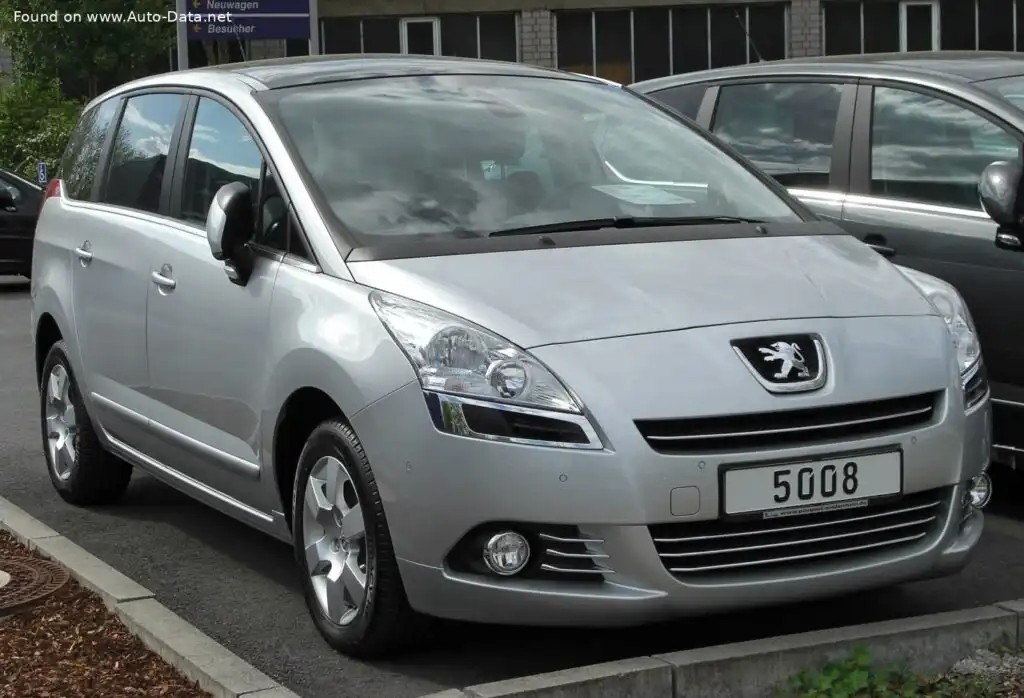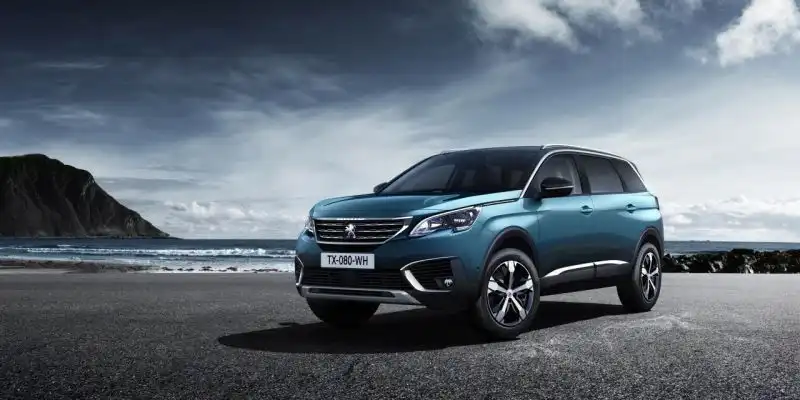
The Peugeot 5008 II, launched in 2016 as a Phase I model, represented a significant shift for the 5008 line. Moving away from the MPV (Multi-Purpose Vehicle) roots of the first generation, the second 5008 adopted a more conventional SUV (Sport Utility Vehicle) body style, targeting a broader market. The 1.2 PureTech 130 hp variant, equipped with a six-speed manual transmission, served as a key entry point into the 5008 range in Europe, offering a balance of fuel efficiency and practicality for families. Production of this specific configuration ran from 2016 to 2018, coinciding with the initial phase of the second-generation 5008.
Technical Specifications
| Brand | Peugeot |
| Model | 5008 |
| Generation | 5008 II (Phase I, 2017) |
| Type (Engine) | 1.2 PureTech (130 Hp) |
| Start of production | 2016 |
| End of production | 2018 |
| Powertrain Architecture | Internal Combustion engine |
| Body type | SUV |
| Seats | 7 |
| Doors | 5 |
| Fuel consumption (urban) | 6.2 l/100 km (37.9 US mpg, 45.6 UK mpg, 16.1 km/l) |
| Fuel consumption (extra urban) | 4.3 l/100 km (54.7 US mpg, 65.7 UK mpg, 23.3 km/l) |
| Fuel consumption (combined) | 5 l/100 km (47 US mpg, 56.5 UK mpg, 20 km/l) |
| CO2 emissions | 115 g/km |
| Fuel Type | Petrol (Gasoline) |
| Acceleration 0 – 100 km/h | 10.7-12.3 sec |
| Acceleration 0 – 62 mph | 10.7-12.3 sec |
| Acceleration 0 – 60 mph | 10.2 sec |
| Maximum speed | 188 km/h (116.82 mph) |
| Emission standard | Euro 6 |
| Weight-to-power ratio | 10.1 kg/Hp, 98.9 Hp/tonne |
| Weight-to-torque ratio | 5.7 kg/Nm, 174.9 Nm/tonne |
| Power | 130 Hp @ 5500 rpm |
| Power per litre | 108.4 Hp/l |
| Torque | 230 Nm @ 1750 rpm (169.64 lb.-ft. @ 1750 rpm) |
| Engine layout | Front, Transverse |
| Engine Model/Code | EB2DTS |
| Engine displacement | 1199 cm3 (73.17 cu. in.) |
| Number of cylinders | 3 |
| Engine configuration | Inline |
| Cylinder Bore | 75 mm (2.95 in.) |
| Piston Stroke | 90.5 mm (3.56 in.) |
| Number of valves per cylinder | 4 |
| Fuel injection system | Direct injection |
| Engine aspiration | Turbocharger, Intercooler |
| Engine oil capacity | 3.5 l (3.7 US qt | 3.08 UK qt) |
| Kerb Weight | 1315 kg (2899.08 lbs.) |
| Trunk (boot) space – minimum | 780 l (27.55 cu. ft.) |
| Trunk (boot) space – maximum | 1940 l (68.51 cu. ft.) |
| Fuel tank capacity | 53 l (14 US gal | 11.66 UK gal) |
| Length | 4641 mm (182.72 in.) |
| Width | 1844 mm (72.6 in.) |
| Width with mirrors folded | 1906 mm (75.04 in.) |
| Width including mirrors | 2098 mm (82.6 in.) |
| Height | 1646 mm (64.8 in.) |
| Wheelbase | 2840 mm (111.81 in.) |
| Front track | 1593-1601 mm (62.72 – 63.03 in.) |
| Rear (Back) track | 1587-1610 mm (62.48 – 63.39 in.) |
| Front overhang | 926 mm (36.46 in.) |
| Rear overhang | 875 mm (34.45 in.) |
| Ride height (ground clearance) | 236 mm (9.29 in.) |
| Minimum turning circle | 11.20 m (36.75 ft.) |
| Front suspension | Independent type McPherson |
| Rear suspension | Semi-independent, coil spring |
| Front brakes | Ventilated discs |
| Rear brakes | Disc |
| Drive wheel | Front wheel drive |
| Number of gears | 6 |
| Type of gearbox | manual transmission |
| Tires size | 215/65 R17; 205/55 R19 |
| Wheel rims size | 17; 19 |
Powertrain & Engine Architecture
The heart of this 5008 variant is the EB2DTS, a 1.2-liter turbocharged three-cylinder petrol engine belonging to Peugeot’s PureTech family. This engine utilizes direct fuel injection, a technology that improves combustion efficiency and power output. The engine’s turbocharger, coupled with an intercooler, helps to mitigate turbo lag and maintain consistent power delivery. The EB2DTS engine features a timing belt, a component requiring periodic replacement as part of scheduled maintenance. The six-speed manual transmission paired with this engine was a common configuration in Europe, offering drivers a greater degree of control over gear selection. The transmission’s gear ratios were tuned to prioritize fuel economy while still providing adequate acceleration for everyday driving.
Driving Characteristics
The 1.2 PureTech 130 hp engine, while adequate for the 5008’s size, wasn’t designed for outright performance. Acceleration from 0-60 mph took around 10.2 seconds, making it a relatively leisurely experience. However, the engine’s 230 Nm (169.64 lb-ft) of torque, available from a low 1750 rpm, provided sufficient pulling power for overtaking maneuvers and navigating hilly terrain. Compared to the more powerful 1.6 THP variants, the 1.2 PureTech offered a smoother, more refined driving experience, albeit with less urgency. The manual transmission allowed for precise gear changes, enhancing driver engagement. The 5008’s relatively lightweight construction (1315 kg / 2899.08 lbs) helped to offset the engine’s modest power output.
Equipment & Trim Levels
The 1.2 PureTech 130 hp variant typically occupied a mid-range position within the 5008 lineup. Standard equipment generally included air conditioning, a touchscreen infotainment system with Bluetooth connectivity, and a suite of safety features such as ABS, ESP (Electronic Stability Program), and multiple airbags. Higher trim levels offered upgrades such as automatic climate control, a panoramic sunroof, leather upholstery, and advanced driver-assistance systems like lane departure warning and automatic emergency braking. Interior upholstery was typically cloth, with options for partial leather trim on higher-spec models. The dashboard layout was modern and functional, with a focus on ergonomics.
Chassis & Braking
The 5008 II utilized a McPherson strut front suspension and a semi-independent coil spring rear suspension. This setup provided a comfortable ride quality, absorbing bumps and imperfections in the road surface effectively. Front brakes were ventilated discs, offering good stopping power, while rear brakes were solid discs. The steering system was an electric power-assisted rack and pinion, providing light and precise steering feel. The 5008’s suspension was tuned to prioritize comfort and stability over sporty handling.
Market Reception & Comparison
The 1.2 PureTech 130 hp variant of the 5008 was generally well-received by critics for its fuel efficiency and practicality. It offered a compelling alternative to larger, more expensive SUVs. Fuel economy figures of around 5 l/100 km (47 US mpg) were competitive within its class. Compared to the more powerful 1.6 THP variants, the 1.2 PureTech was considered a more sensible choice for drivers prioritizing economy over performance. However, some critics noted that the engine could feel strained when fully loaded or driving uphill. Reliability reports suggest that the EB2DTS engine is generally reliable, although issues with the timing belt and turbocharger have been reported in some cases.
Legacy
The Peugeot 5008 II, particularly the 1.2 PureTech 130 hp variant, played a significant role in establishing Peugeot as a major player in the European SUV market. The engine’s fuel efficiency and practicality made it a popular choice for families. On the used car market today, these models represent a good value proposition, offering a spacious and well-equipped SUV at an affordable price. However, potential buyers should be aware of the need to replace the timing belt at the manufacturer’s recommended intervals and to inspect the turbocharger for any signs of wear or damage. The 1.2 PureTech engine, despite its relatively small displacement, proved to be a capable and reliable powerplant, contributing to the 5008’s overall success.