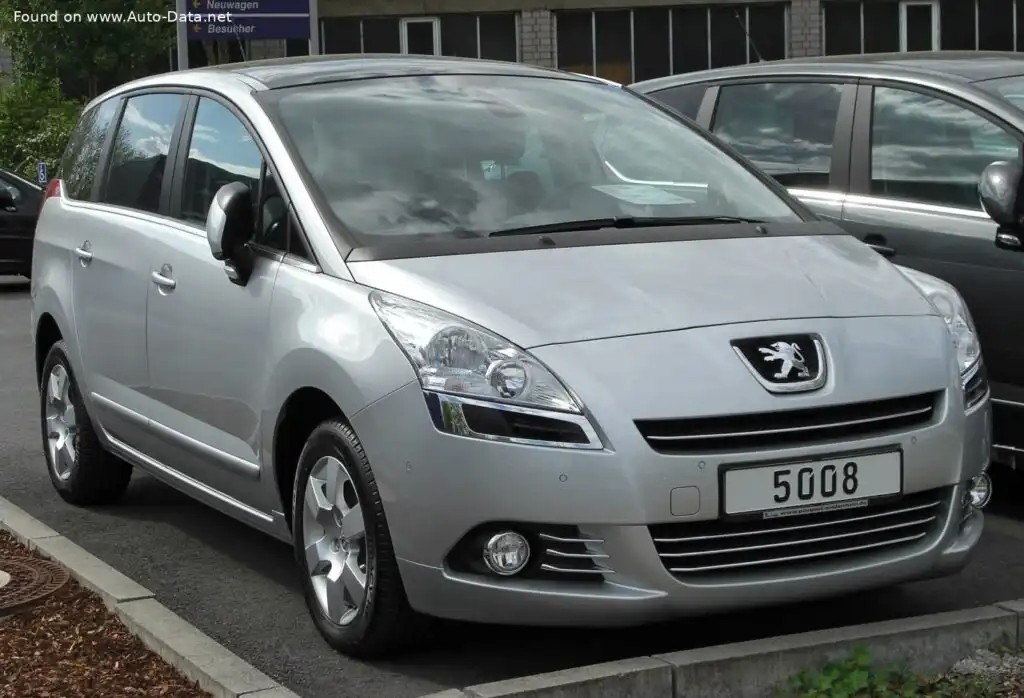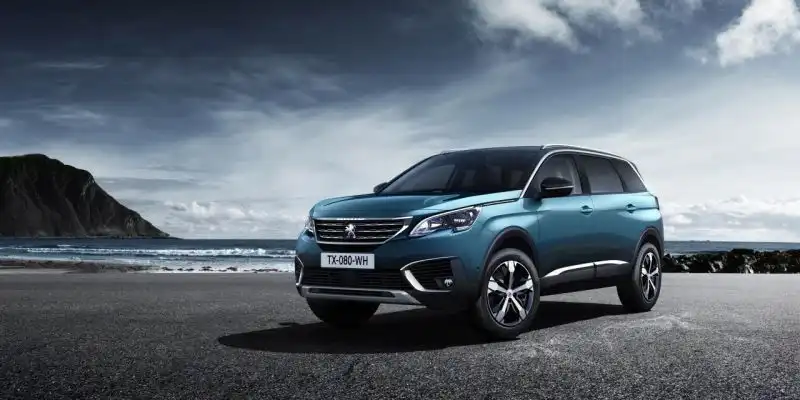
The Peugeot 5008 II, launched in 2017, represented a significant departure from its predecessor, moving from a minivan-like MPV to a more contemporary and stylish SUV. The 2.0 BlueHDi 177 Automatic variant, produced between 2017 and 2020, occupied a mid-range position within the 5008 lineup, offering a balance between fuel efficiency, performance, and practicality. This model was primarily aimed at European markets, where diesel engines remained popular due to their fuel economy and torque characteristics. It was a key offering in Peugeot’s strategy to compete in the increasingly crowded compact SUV segment.
Technical Specifications
| Brand | Peugeot |
| Model | 5008 |
| Generation | 5008 II (Phase I, 2017) |
| Type (Engine) | 2.0 BlueHDi (177 Hp) Automatic |
| Start of production | 2017 |
| End of production | 2020 |
| Powertrain Architecture | Internal Combustion engine |
| Body type | SUV |
| Seats | 7 |
| Doors | 5 |
| Fuel consumption (economy) – urban (NEDC) | 5.3 l/100 km (44.4 US mpg, 53.3 UK mpg, 18.9 km/l) |
| Fuel consumption (economy) – extra urban (NEDC) | 4.7 l/100 km (50 US mpg, 60.1 UK mpg, 21.3 km/l) |
| Fuel consumption (economy) – combined (NEDC) | 4.9 l/100 km (48 US mpg, 57.6 UK mpg, 20.4 km/l) |
| CO2 emissions (NEDC) | 129 g/km |
| Fuel Type | Diesel |
| Acceleration 0 – 100 km/h | 9.2 sec |
| Acceleration 0 – 62 mph | 9.2 sec |
| Acceleration 0 – 60 mph | 8.7 sec |
| Maximum speed | 208 km/h (129.25 mph) |
| Emission standard | Euro 6 d |
| Weight-to-power ratio | 8.7 kg/Hp, 114.9 Hp/tonne |
| Weight-to-torque ratio | 3.9 kg/Nm, 259.7 Nm/tonne |
| Power | 177 Hp @ 3750 rpm |
| Power per litre | 88.6 Hp/l |
| Torque | 400 Nm @ 2000 rpm (295.02 lb.-ft. @ 2000 rpm) |
| Engine layout | Front, Transverse |
| Engine Model/Code | EHZ DW10FC |
| Engine displacement | 1997 cm3 (121.86 cu. in.) |
| Number of cylinders | 4 |
| Engine configuration | Inline |
| Cylinder Bore | 85 mm (3.35 in.) |
| Piston Stroke | 88 mm (3.46 in.) |
| Compression ratio | 16.7:1 |
| Number of valves per cylinder | 4 |
| Fuel injection system | Diesel Commonrail |
| Engine aspiration | Turbocharger, Intercooler |
| Engine oil capacity | 5 l (5.28 US qt | 4.4 UK qt) |
| Kerb Weight | 1540 kg (3395.12 lbs.) |
| Max. weight | 2280 kg (5026.54 lbs.) |
| Max load | 740 kg (1631.42 lbs.) |
| Trunk (boot) space – minimum | 780 l (27.55 cu. ft.) |
| Trunk (boot) space – maximum | 1940 l (68.51 cu. ft.) |
| Fuel tank capacity | 56 l (14.79 US gal | 12.32 UK gal) |
| Max. roof load | 80 kg (176.37 lbs.) |
| Permitted trailer load with brakes (12%) | 1800 kg (3968.32 lbs.) |
| Permitted trailer load without brakes | 750 kg (1653.47 lbs.) |
| Permitted towbar download | 72 kg (158.73 lbs.) |
| Length | 4641 mm (182.72 in.) |
| Width | 1844 mm (72.6 in.) |
| Width with mirrors folded | 1906 mm (75.04 in.) |
| Width including mirrors | 2098 mm (82.6 in.) |
| Height | 1646 mm (64.8 in.) |
| Wheelbase | 2840 mm (111.81 in.) |
| Front track | 1593-1601 mm (62.72 – 63.03 in.) |
| Rear (Back) track | 1587-1610 mm (62.48 – 63.39 in.) |
| Front overhang | 926 mm (36.46 in.) |
| Rear overhang | 875 mm (34.45 in.) |
| Ride height (ground clearance) | 236 mm (9.29 in.) |
| Minimum turning circle (turning diameter) | 11.2 m (36.75 ft.) |
| Drivetrain Architecture | The Internal combustion engine (ICE) drives the front wheels of the vehicle. |
| Drive wheel | Front wheel drive |
| Number of gears and type of gearbox | 8 gears, automatic transmission |
| Front suspension | Coil spring, Independent type McPherson |
| Rear suspension | Semi-independent, coil spring |
| Front brakes | Ventilated discs |
| Rear brakes | Disc |
| Assisting systems | ABS (Anti-lock braking system) |
| Steering type | Steering rack and pinion |
| Power steering | Electric Steering |
| Tires size | 225 / 55 R18 91 V; 235/50 R19 91 V |
| Wheel rims size | 18; 19 |
Powertrain & Engine Architecture
The heart of the 5008 II 2.0 BlueHDi 177 Automatic is the DW10FC engine, a four-cylinder, inline diesel engine displacing 1997cc. This engine, often identified by the EHZ engine code, is a member of Peugeot-Citroën’s (PSA Group) BlueHDi family, known for its focus on reducing NOx emissions. It features a common-rail direct injection system, delivering fuel at extremely high pressure for optimized combustion. The engine utilizes a variable geometry turbocharger with an intercooler to enhance power and torque across a wider rev range. The 16.7:1 compression ratio is typical for diesel engines, contributing to their efficiency. The eight-speed automatic transmission, sourced from Aisin, was chosen for its smooth shifting and efficiency. This transmission offered a good balance between responsiveness and fuel economy, crucial for a family SUV.
Driving Characteristics
The 177 horsepower and 400 Nm (295 lb-ft) of torque provided by the 2.0 BlueHDi engine delivered adequate performance for everyday driving and long-distance journeys. Acceleration from 0 to 100 km/h (0-62 mph) took around 9.2 seconds. While not particularly sporty, the engine offered strong low-end torque, making it easy to overtake and navigate traffic. The eight-speed automatic transmission contributed to a relaxed driving experience, with well-spaced gear ratios. Compared to the lower-powered 1.6 BlueHDi variants, the 2.0 offered noticeably more punch, especially when fully loaded with passengers and luggage. However, it didn’t match the performance of the more expensive petrol-powered GT Line models. The front-wheel-drive configuration provided predictable handling, but lacked the all-weather capability of four-wheel-drive systems.
Equipment & Trim Levels
The 2.0 BlueHDi 177 Automatic typically came equipped with a generous level of standard features. These included automatic climate control, a touchscreen infotainment system with Apple CarPlay and Android Auto compatibility, rear parking sensors, and cruise control. Higher trim levels added features such as a panoramic sunroof, leather upholstery, and advanced driver-assistance systems like adaptive cruise control and lane-keeping assist. Interior upholstery was typically a mix of cloth and synthetic leather, with options for full leather available. The dashboard layout was modern and driver-focused, with a compact steering wheel and a digital instrument cluster.
Chassis & Braking
The 5008 II utilized a McPherson strut front suspension and a semi-independent coil spring rear suspension. This setup provided a comfortable ride quality, absorbing bumps and imperfections in the road effectively. The front brakes were ventilated discs, while the rear brakes were solid discs. ABS (Anti-lock Braking System) was standard, ensuring safe and controlled braking in emergency situations. The electric power steering offered light and precise steering feel. Stabilizer bars were fitted to both the front and rear axles to reduce body roll during cornering.
Market Reception & Comparison
The Peugeot 5008 II 2.0 BlueHDi 177 Automatic was generally well-received by automotive critics. It was praised for its spacious interior, comfortable ride, and fuel efficiency. The diesel engine was considered a good compromise between performance and economy. However, some critics noted that the interior design, while modern, could feel a bit cluttered. Compared to rivals like the Nissan Qashqai and Kia Sportage, the 5008 offered a more distinctive and stylish design, but its diesel engine was becoming less popular as emissions regulations tightened. Fuel economy was a strong point, averaging around 4.9 l/100 km (48 US mpg), making it an attractive option for high-mileage drivers.
Legacy
The DW10FC engine, while generally reliable, is known to require regular maintenance, particularly regarding the diesel particulate filter (DPF) and exhaust gas recirculation (EGR) system. Proper servicing and the use of high-quality diesel fuel are crucial to prevent issues. The Aisin eight-speed automatic transmission has proven to be durable and reliable. In the used car market, the 5008 II 2.0 BlueHDi 177 Automatic remains a popular choice for families seeking a spacious, comfortable, and fuel-efficient SUV. Its distinctive styling and well-equipped interior continue to appeal to buyers looking for something different from the mainstream competition. However, potential buyers should be aware of the potential maintenance costs associated with the diesel engine and its emissions control systems.