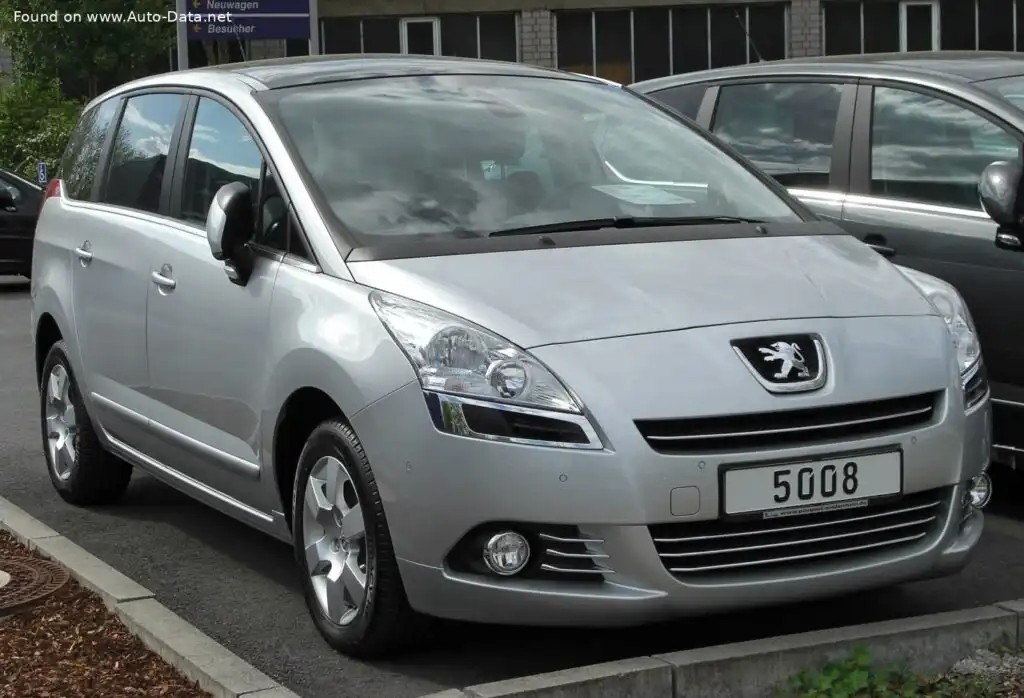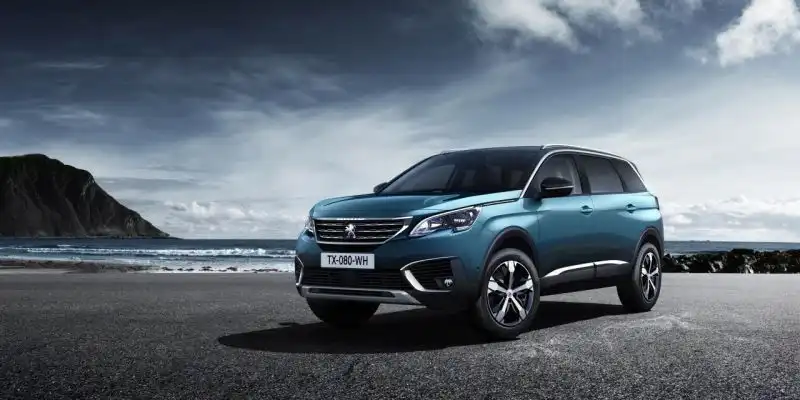
The Peugeot 5008 II, launched in 2016, represented a significant departure from its predecessor, moving from a minivan-like MPV to a more contemporary and stylish SUV. The 2.0 BlueHDi 180 Automatic variant, produced primarily during the Phase I run from 2016 to 2017, occupied a mid-to-upper position within the 5008 II lineup. It offered a compelling blend of performance, fuel efficiency, and practicality, aimed at families and drivers seeking a comfortable and capable seven-seater. This model was particularly important in European markets where diesel engines and SUVs were highly favored.
Technical Specifications
| Brand | Peugeot |
| Model | 5008 |
| Generation | 5008 II (Phase I, 2017) |
| Type (Engine) | 2.0 BlueHDi (180 Hp) Automatic |
| Start of production | 2016 |
| End of production | 2017 |
| Powertrain Architecture | Internal Combustion engine |
| Body type | SUV |
| Seats | 7 |
| Doors | 5 |
| Fuel consumption (urban) | 5.5 l/100 km (42.8 US mpg, 51.4 UK mpg, 18.2 km/l) |
| Fuel consumption (extra urban) | 4.4 l/100 km (53.5 US mpg, 64.2 UK mpg, 22.7 km/l) |
| Fuel consumption (combined) | 4.8 l/100 km (49 US mpg, 58.9 UK mpg, 20.8 km/l) |
| CO2 emissions | 124 g/km |
| Fuel Type | Diesel |
| Acceleration 0 – 100 km/h | 9.1 – 10.2 sec |
| Acceleration 0 – 62 mph | 9.1 – 10.2 sec |
| Acceleration 0 – 60 mph | 8.6 sec |
| Maximum speed | 208 km/h (129.25 mph) |
| Emission standard | Euro 6 |
| Weight-to-power ratio | 8.5 kg/Hp, 117.6 Hp/tonne |
| Weight-to-torque ratio | 3.8 kg/Nm, 261.4 Nm/tonne |
| Power | 180 Hp @ 3750 rpm |
| Power per litre | 90.1 Hp/l |
| Torque | 400 Nm @ 2000 rpm (295.02 lb.-ft. @ 2000 rpm) |
| Maximum engine speed | 5000 rpm |
| Engine layout | Front, Transverse |
| Engine Model/Code | AHW DW10FC |
| Engine displacement | 1997 cm3 (121.86 cu. in.) |
| Number of cylinders | 4 |
| Engine configuration | Inline |
| Cylinder Bore | 85 mm (3.35 in.) |
| Piston Stroke | 88 mm (3.46 in.) |
| Compression ratio | 16.7:1 |
| Number of valves per cylinder | 4 |
| Fuel injection system | Diesel Commonrail |
| Engine aspiration | Turbocharger, Intercooler |
| Engine oil capacity | 5 l (5.28 US qt | 4.4 UK qt) |
| Kerb Weight | 1530 kg (3373.07 lbs.) |
| Max. weight | 2280 kg (5026.54 lbs.) |
| Max load | 750 kg (1653.47 lbs.) |
| Trunk (boot) space – minimum | 780 l (27.55 cu. ft.) |
| Trunk (boot) space – maximum | 1940 l (68.51 cu. ft.) |
| Fuel tank capacity | 53 l (14 US gal | 11.66 UK gal) |
| Max. roof load | 80 kg (176.37 lbs.) |
| Permitted trailer load with brakes (12%) | 1500 kg (3306.93 lbs.) |
| Permitted trailer load without brakes | 750 kg (1653.47 lbs.) |
| Permitted towbar download | 72 kg (158.73 lbs.) |
| Length | 4641 mm (182.72 in.) |
| Width | 1844 mm (72.6 in.) |
| Width with mirrors folded | 1906 mm (75.04 in.) |
| Width including mirrors | 2098 mm (82.6 in.) |
| Height | 1646 mm (64.8 in.) |
| Wheelbase | 2840 mm (111.81 in.) |
| Front track | 1593-1601 mm (62.72 – 63.03 in.) |
| Rear (Back) track | 1587-1610 mm (62.48 – 63.39 in.) |
| Front overhang | 926 mm (36.46 in.) |
| Rear overhang | 875 mm (34.45 in.) |
| Ride height (ground clearance) | 236 mm (9.29 in.) |
| Minimum turning circle (turning diameter) | 11.2 m (36.75 ft.) |
| Approach angle | 19° |
| Departure angle | 28° |
| Drivetrain Architecture | The Internal combustion engine (ICE) drives the front wheels of the vehicle. |
| Drive wheel | Front wheel drive |
| Number of gears and type of gearbox | 6 gears, automatic transmission |
| Front suspension | Coil spring, Independent type McPherson |
| Rear suspension | Semi-independent, coil spring |
| Front brakes | Ventilated discs |
| Rear brakes | Disc |
| Assisting systems | ABS (Anti-lock braking system) |
| Steering type | Steering rack and pinion |
| Power steering | Electric Steering |
| Tires size | 235/50 R19 |
| Wheel rims size | 19 |
INTRODUCTION
The Peugeot 5008 II 2.0 BlueHDi 180 Automatic, introduced in 2016 as part of the second-generation 5008 range, marked a significant shift for the model. Moving away from the first generation’s MPV format, the 5008 II embraced the growing SUV market. This variant, powered by Peugeot’s DW10FC engine, was positioned as a strong contender for families needing space and practicality, combined with reasonable performance and fuel economy. It was a key model in Peugeot’s lineup, particularly in Europe, where diesel engines remained popular and the seven-seat configuration was highly valued. The Phase I models, produced until 2017, established the foundation for the 5008 II’s success.
Powertrain & Engine Architecture
At the heart of the 5008 II 2.0 BlueHDi 180 Automatic lies Peugeot’s DW10FC engine, specifically the AHW variant. This is a 1997cc, four-cylinder diesel engine featuring common-rail direct injection and a turbocharger with an intercooler. The engine benefits from advanced technologies like a particulate filter and, in many cases, a Start & Stop system to improve emissions and fuel efficiency. The DW10FC engine is known for its robust construction and relatively straightforward maintenance. The 180 horsepower output is achieved at 3750 rpm, while the impressive 400 Nm (295 lb-ft) of torque is available from just 2000 rpm, providing strong pulling power. Paired with this engine is an Aisin-sourced six-speed automatic transmission. This transmission is known for its smoothness and reliability, offering a comfortable driving experience. It’s not a particularly sporty transmission, prioritizing efficiency and ease of use over rapid gear changes.
Driving Characteristics
The 5008 II 2.0 BlueHDi 180 Automatic delivers a composed and comfortable driving experience. The engine’s strong low-end torque makes it well-suited for everyday driving and overtaking maneuvers. While not exceptionally quick – acceleration from 0-60 mph takes around 8.6 seconds – it feels adequately powered for a seven-seater SUV. The automatic transmission contributes to a relaxed driving style, smoothly shifting through the gears. Compared to the 1.6 BlueHDi variants, the 2.0-liter engine offers noticeably more power and refinement, especially when fully loaded. It also feels less strained on inclines. Compared to manual transmission versions of the same engine, the automatic sacrifices a small amount of fuel economy but gains in convenience. The gear ratios are tuned for efficiency, prioritizing fuel economy over outright performance.
Equipment & Trim Levels
The 2.0 BlueHDi 180 Automatic typically came with a generous level of standard equipment. Depending on the specific trim level (Active, Allure, GT Line, etc.), features included automatic climate control, a touchscreen infotainment system with navigation, Bluetooth connectivity, rear parking sensors, and cruise control. Higher trim levels added features like leather upholstery, panoramic sunroof, advanced driver-assistance systems (ADAS) such as automatic emergency braking and lane departure warning, and a more sophisticated infotainment system. Interior upholstery was typically cloth on lower trims, with leather options available on higher-spec models. The dashboard layout was modern and driver-focused, with a compact steering wheel and a raised center console.
Chassis & Braking
The 5008 II utilizes a McPherson strut front suspension and a semi-independent coil spring rear suspension. This setup provides a good balance between ride comfort and handling. The suspension is tuned to prioritize comfort, absorbing bumps and imperfections in the road effectively. The 5008 II 2.0 BlueHDi 180 Automatic features ventilated disc brakes at the front and solid discs at the rear. ABS (Anti-lock Braking System) is standard. The steering is electric power-assisted, providing a light and easy steering feel. Stabilizer bars are fitted to both the front and rear axles to reduce body roll during cornering.
Market Reception & Comparison
The Peugeot 5008 II 2.0 BlueHDi 180 Automatic was generally well-received by automotive critics. It was praised for its spacious interior, comfortable ride, and fuel efficiency. The 2.0-liter engine was considered a good compromise between performance and economy, offering more power than the smaller 1.6-liter BlueHDi engines. However, some critics noted that the automatic transmission could feel a little sluggish at times. Compared to rivals like the Nissan X-Trail and Kia Sorento, the 5008 II offered a more stylish design and a more engaging driving experience. Fuel economy figures of around 49 mpg (combined) were competitive for the segment. Reliability reports suggest that the DW10FC engine is generally reliable, although regular maintenance is essential.
Legacy
The Peugeot 5008 II 2.0 BlueHDi 180 Automatic remains a popular choice in the used car market. The DW10FC engine has proven to be durable and relatively easy to maintain, making it a sensible option for buyers seeking a reliable and practical seven-seater SUV. While diesel engines have faced increased scrutiny in recent years, the 5008 II’s fuel efficiency and comfortable driving experience continue to appeal to many buyers. The availability of parts and servicing is generally good, ensuring that these vehicles can be kept on the road for many years to come. The 5008 II, and particularly this variant, helped solidify Peugeot’s position as a major player in the European SUV market.