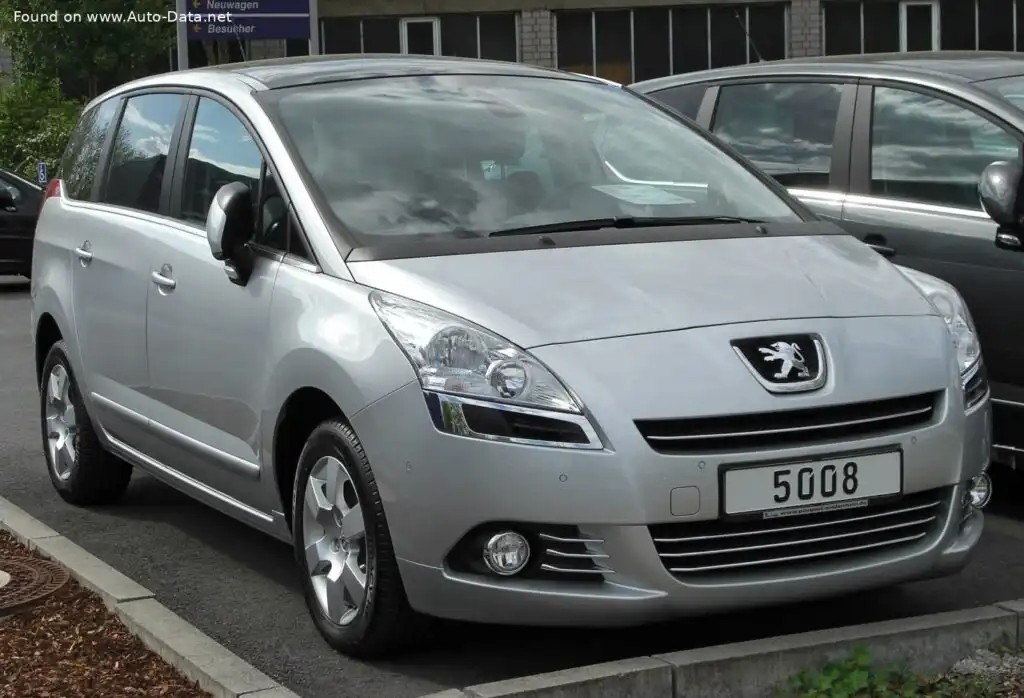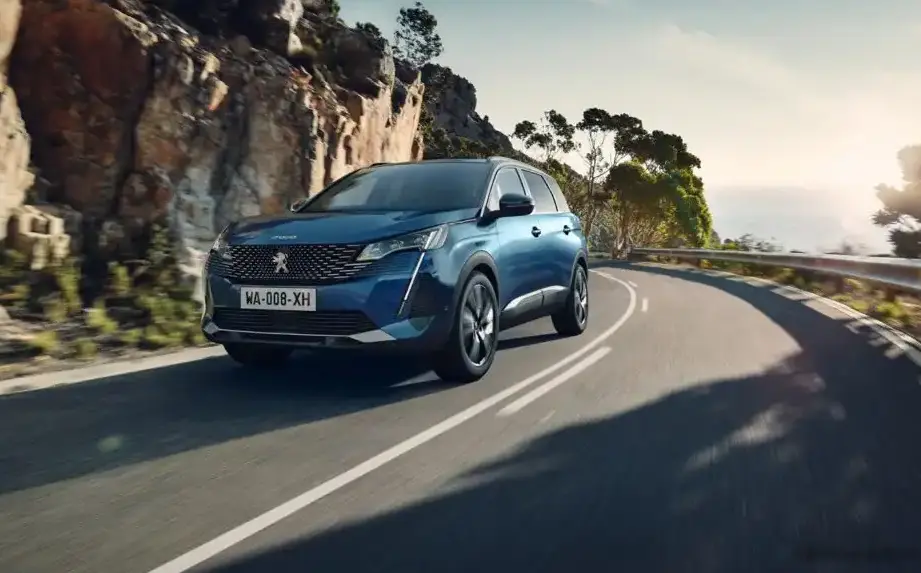
The Peugeot 5008 II Phase II, specifically the 1.6 PureTech 180 hp Automatic variant, represents a significant offering in the compact SUV segment. Introduced in September 2020 and continuing through May 2022, this version of the 5008 aimed to balance fuel efficiency with respectable performance, catering to families and drivers seeking a versatile seven-seater. It falls within the second generation of the 5008 (introduced in 2016), which moved away from the MPV-like styling of the first generation towards a more conventional SUV profile, sharing its platform with the Peugeot 3008 and other vehicles within the Stellantis group. This particular trim level occupied a mid-to-upper position in the 5008 lineup, offering a step up in power and refinement compared to the lower-spec engine options.
Technical Specifications
| Brand | Peugeot |
| Model | 5008 |
| Generation | 5008 II (Phase II, 2020) |
| Type (Engine) | 1.6 PureTech (180 Hp) Automatic |
| Start of production | September, 2020 |
| End of production | May, 2022 |
| Powertrain Architecture | Internal Combustion engine |
| Body type | SUV |
| Seats | 7 |
| Doors | 5 |
| Fuel consumption at Low speed (WLTP) | 8.4-9.9 l/100 km (28 – 23.8 US mpg, 33.6 – 28.5 UK mpg, 11.9 – 10.1 km/l) |
| Fuel consumption at Medium speed (WLTP) | 6.4-7.6 l/100 km (36.8 – 30.9 US mpg, 44.1 – 37.2 UK mpg, 15.6 – 13.2 km/l) |
| Fuel consumption at high speed (WLTP) | 5.6-6.7 l/100 km (42 – 35.1 US mpg, 50.4 – 42.2 UK mpg, 17.9 – 14.9 km/l) |
| Fuel consumption at very high speed (WLTP) | 6.6-8.2 l/100 km (35.6 – 28.7 US mpg, 42.8 – 34.4 UK mpg, 15.2 – 12.2 km/l) |
| Combined fuel consumption (WLTP) | 6.5-7.8 l/100 km (36.2 – 30.2 US mpg, 43.5 – 36.2 UK mpg, 15.4 – 12.8 km/l) |
| CO2 emissions (WLTP) | 148 – 177 g/km |
| Fuel Type | Petrol (Gasoline) |
| Acceleration 0 – 100 km/h | 8.3 sec |
| Acceleration 0 – 62 mph | 8.3 sec |
| Acceleration 0 – 60 mph | 7.9 sec |
| Maximum speed | 219 km/h (136.08 mph) |
| Emission standard | Euro 6 |
| Weight-to-power ratio | 8.5 kg/Hp, 118.3 Hp/tonne |
| Weight-to-torque ratio | 6.1 kg/Nm, 164.4 Nm/tonne |
| Power | 180 Hp @ 5500 rpm |
| Power per litre | 112.6 Hp/l |
| Torque | 250 Nm @ 1750 rpm (184.39 lb.-ft. @ 1750 rpm) |
| Engine layout | Front, Transverse |
| Engine Model/Code | 5GF EP6FADTXD |
| Engine displacement | 1598 cm3 (97.52 cu. in.) |
| Number of cylinders | 4 |
| Engine configuration | Inline |
| Number of valves per cylinder | 4 |
| Fuel injection system | Direct injection |
| Engine aspiration | Turbocharger, Intercooler |
| Engine oil capacity | 4.25 l (4.49 US qt | 3.74 UK qt) |
| Kerb Weight | 1521 kg (3353.23 lbs.) |
| Max. weight | 2190 kg (4828.12 lbs.) |
| Max load | 669 kg (1474.89 lbs.) |
| Trunk (boot) space – minimum | 702 l (24.79 cu. ft.) |
| Trunk (boot) space – maximum | 2150 l (75.93 cu. ft.) |
| Fuel tank capacity | 56 l (14.79 US gal | 12.32 UK gal) |
| Permitted trailer load with brakes (12%) | 1300 kg (2866.01 lbs.) |
| Permitted towbar download | 70 kg (154.32 lbs.) |
| Length | 4641 mm (182.72 in.) |
| Width | 1844 mm (72.6 in.) |
| Height | 1646 mm (64.8 in.) |
| Wheelbase | 2840 mm (111.81 in.) |
| Front track | 1601 mm (63.03 in.) |
| Rear (Back) track | 1610 mm (63.39 in.) |
| Front overhang | 926 mm (36.46 in.) |
| Rear overhang | 875 mm (34.45 in.) |
| Ride height (ground clearance) | 236 mm (9.29 in.) |
| Minimum turning circle (turning diameter) | 11.20 m (36.75 ft.) |
| Drivetrain Architecture | The Internal combustion engine (ICE) drives the front wheels of the vehicle. |
| Drive wheel | Front wheel drive |
| Number of gears and type of gearbox | 8 gears, automatic transmission |
| Front suspension | Coil spring, Independent type McPherson |
| Rear suspension | Semi-independent, coil spring |
| Front brakes | Ventilated discs |
| Rear brakes | Disc |
| Assisting systems | ABS (Anti-lock braking system) |
| Steering type | Steering rack and pinion |
| Power steering | Electric Steering |
| Tires size | 215/65 R17; 225/55 R18; 205/55 R19 |
| Wheel rims size | 17; 18; 19 |
Powertrain & Engine Architecture
At the heart of the 5008 1.6 PureTech 180 Automatic lies the EP6FADTXD engine, a 1.6-liter turbocharged inline-four cylinder petrol engine. This engine is part of Peugeot’s “PureTech” family, known for its direct fuel injection and focus on efficiency. The engine utilizes a single-scroll turbocharger with an intercooler to boost power output. The direct injection system, coupled with variable valve timing on both intake and exhaust valves, optimizes combustion for improved performance and reduced emissions. The engine’s code, 5GF, further identifies specific calibration and component variations. The engine is transversely mounted in the front of the vehicle. The automatic transmission is an Aisin-sourced 8-speed automatic, chosen for its smooth shifting and efficiency. This transmission features a torque converter and offers a ‘Sport’ mode for more aggressive shifting.
Driving Characteristics
The 180 hp output, combined with the 250 Nm (184 lb-ft) of torque available from 1750 rpm, provides adequate performance for everyday driving and even overtaking maneuvers. The 0-62 mph (0-100 km/h) acceleration time of 8.3 seconds is respectable for a seven-seater SUV. The 8-speed automatic transmission contributes to a comfortable driving experience, with well-spaced gear ratios. Compared to the lower-powered 1.2 PureTech variants, the 1.6 offers noticeably more punch, especially when fully loaded with passengers and luggage. However, it doesn’t deliver the same level of outright performance as the diesel options, which offered higher torque figures at lower engine speeds. The automatic transmission, while smooth, can sometimes feel hesitant during quick downshifts.
Equipment & Trim Levels
The 1.6 PureTech 180 Automatic typically came equipped with a generous level of standard features. These included a touchscreen infotainment system with Apple CarPlay and Android Auto compatibility, automatic climate control, rear parking sensors, and a suite of safety features such as automatic emergency braking and lane departure warning. Higher trim levels added features like a panoramic sunroof, leather upholstery, adaptive cruise control, and a more advanced infotainment system with navigation. Interior upholstery was typically a mix of cloth and synthetic leather, with options for full leather available. The dashboard layout featured a distinctive i-Cockpit design, with a smaller steering wheel and a raised instrument cluster.
Chassis & Braking
The 5008 utilizes a McPherson strut front suspension and a semi-independent coil spring rear suspension. This setup provides a good balance between ride comfort and handling. The front brakes are ventilated discs, while the rear brakes are solid discs. ABS (Anti-lock Braking System) is standard, along with Electronic Stability Control (ESC). The steering is electric power-assisted, offering a light and precise feel. The suspension tuning is geared towards comfort, but the 5008 still feels relatively stable and composed in corners. Stabilizer bars are fitted to both the front and rear axles to reduce body roll.
Market Reception & Comparison
The Peugeot 5008 1.6 PureTech 180 Automatic was generally well-received by automotive critics. It was praised for its stylish design, spacious interior, and comfortable ride. The engine was considered a good compromise between performance and fuel economy. However, some reviewers noted that the automatic transmission could be occasionally sluggish. Compared to the 1.2 PureTech, the 1.6 offered a significant performance upgrade, making it a more suitable choice for those who frequently carry passengers or travel long distances. The diesel variants offered even better fuel economy and torque, but at a higher initial cost and with potential concerns about diesel emissions.
Legacy
The 1.6 PureTech engine, in various iterations, has become a mainstay in the Stellantis lineup. While generally reliable, some early versions of the engine were prone to issues with the timing chain, requiring preventative maintenance or replacement. The Aisin 8-speed automatic transmission has proven to be a durable and dependable unit. Today, the 5008 1.6 PureTech 180 Automatic represents a good value proposition on the used car market, offering a practical and stylish SUV with a reasonable level of performance and refinement. Regular maintenance and adherence to recommended service intervals are crucial to ensure the long-term reliability of this powertrain.