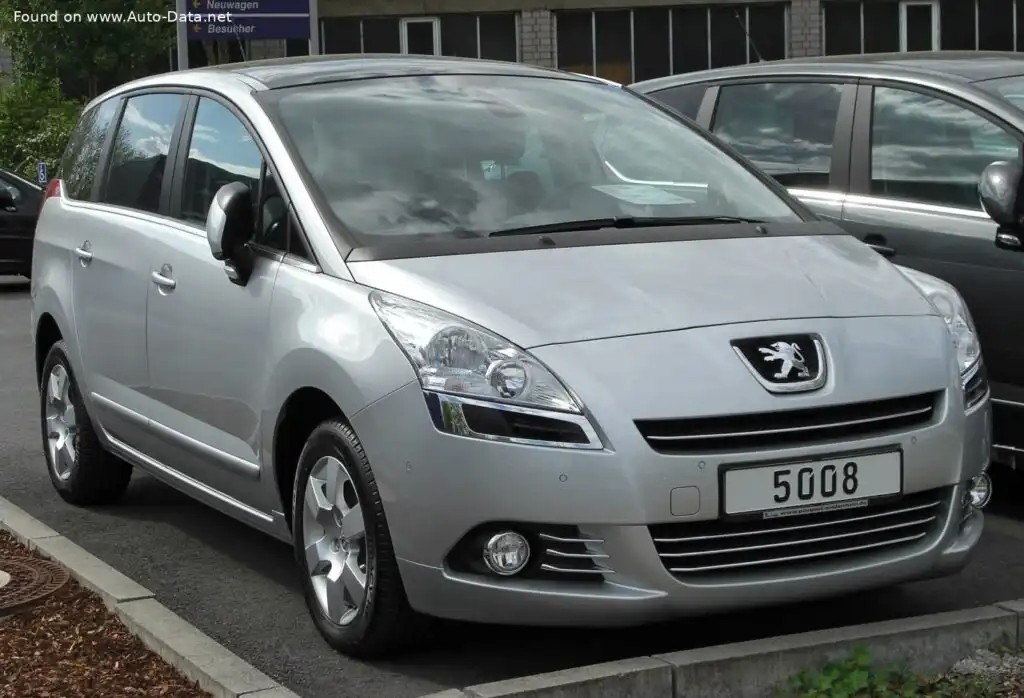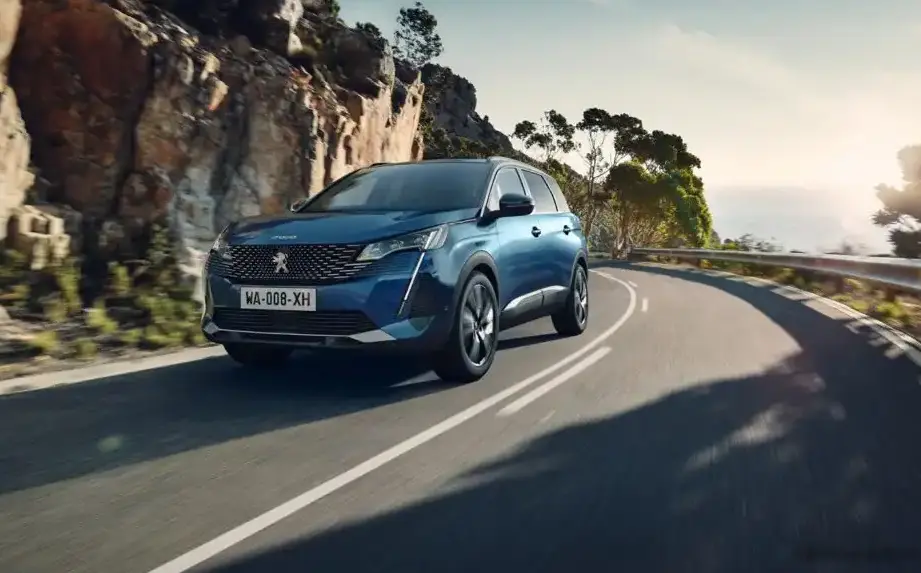
The Peugeot 5008 II Phase II, specifically the 2.0 BlueHDi 180 horsepower automatic variant, represents a significant offering in the European mid-size SUV segment. Introduced in September 2020 and continuing through May 2022, this version of the 5008 built upon the success of the second-generation model (launched in 2016), offering a blend of practicality, efficiency, and technology. Positioned as a mid-to-upper trim level within the 5008 range, it catered to buyers seeking a more powerful and refined driving experience than the lower-powered diesel options, while remaining more accessible than potential future performance-oriented trims. The 5008 II Phase II benefited from styling updates and technological enhancements compared to the original 5008 II, further solidifying its appeal in a competitive market.
Technical Specifications
| Brand | Peugeot |
| Model | 5008 |
| Generation | 5008 II (Phase II, 2020) |
| Type (Engine) | 2.0 BlueHDi (180 Hp) Automatic |
| Start of production | September, 2020 |
| End of production | May, 2022 |
| Powertrain Architecture | Internal Combustion engine |
| Body type | SUV |
| Seats | 7 |
| Doors | 5 |
| Fuel consumption at Low speed (WLTP) | 6.5-7.4 l/100 km (36.2 – 31.8 US mpg, 43.5 – 38.2 UK mpg, 15.4 – 13.5 km/l) |
| Fuel consumption at Medium speed (WLTP) | 5.6-6.3 l/100 km (42 – 37.3 US mpg, 50.4 – 44.8 UK mpg, 17.9 – 15.9 km/l) |
| Fuel consumption at high speed (WLTP) | 4.9-5.6 l/100 km (48 – 42 US mpg, 57.6 – 50.4 UK mpg, 20.4 – 17.9 km/l) |
| Fuel consumption at very high speed (WLTP) | 5.7-6.8 l/100 km (41.3 – 34.6 US mpg, 49.6 – 41.5 UK mpg, 17.5 – 14.7 km/l) |
| Combined fuel consumption (WLTP) | 5.5-6.4 l/100 km (42.8 – 36.8 US mpg, 51.4 – 44.1 UK mpg, 18.2 – 15.6 km/l) |
| CO2 emissions (WLTP) | 145 – 168 g/km |
| Fuel Type | Diesel |
| Acceleration 0 – 100 km/h | 9.2 sec |
| Acceleration 0 – 62 mph | 9.2 sec |
| Acceleration 0 – 60 mph | 8.7 sec |
| Maximum speed | 216 km/h (134.22 mph) |
| Emission standard | Euro 6 |
| Weight-to-power ratio | 8.9 kg/Hp, 112 Hp/tonne |
| Weight-to-torque ratio | 4 kg/Nm, 248.9 Nm/tonne |
| Power | 180 Hp @ 3750 rpm |
| Power per litre | 90.1 Hp/l |
| Torque | 400 Nm @ 2000 rpm (295.02 lb.-ft. @ 2000 rpm) |
| Engine layout | Front, Transverse |
| Engine Model/Code | AHW DW10FC |
| Engine displacement | 1997 cm3 (121.86 cu. in.) |
| Number of cylinders | 4 |
| Engine configuration | Inline |
| Number of valves per cylinder | 4 |
| Fuel injection system | Diesel Commonrail |
| Engine aspiration | Turbocharger, Intercooler |
| Engine oil capacity | 5 l (5.28 US qt | 4.4 UK qt) |
| Kerb Weight | 1607 kg (3542.83 lbs.) |
| Max. weight | 2280 kg (5026.54 lbs.) |
| Max load | 673 kg (1483.71 lbs.) |
| Trunk (boot) space – minimum | 702 l (24.79 cu. ft.) |
| Trunk (boot) space – maximum | 2150 l (75.93 cu. ft.) |
| Fuel tank capacity | 56 l (14.79 US gal | 12.32 UK gal) |
| AdBlue tank | 17 l (4.49 US gal | 3.74 UK gal) |
| Permitted trailer load with brakes (12%) | 1750 kg (3858.09 lbs.) |
| Permitted towbar download | 70 kg (154.32 lbs.) |
| Length | 4641 mm (182.72 in.) |
| Width | 1844 mm (72.6 in.) |
| Height | 1646 mm (64.8 in.) |
| Wheelbase | 2840 mm (111.81 in.) |
| Front track | 1601 mm (63.03 in.) |
| Rear (Back) track | 1610 mm (63.39 in.) |
| Front overhang | 926 mm (36.46 in.) |
| Rear overhang | 875 mm (34.45 in.) |
| Ride height (ground clearance) | 236 mm (9.29 in.) |
| Minimum turning circle (turning diameter) | 11.2 m (36.75 ft.) |
| Drivetrain Architecture | The Internal combustion engine (ICE) drives the front wheels of the vehicle. |
| Drive wheel | Front wheel drive |
| Number of gears and type of gearbox | 8 gears, automatic transmission |
| Front suspension | Coil spring, Independent type McPherson |
| Rear suspension | Semi-independent, coil spring |
| Front brakes | Ventilated discs |
| Rear brakes | Disc |
| Assisting systems | ABS (Anti-lock braking system) |
| Steering type | Steering rack and pinion |
| Power steering | Electric Steering |
| Tires size | 215/65 R17 V; 225/55 R18 V; 205/55 R19 V |
| Wheel rims size | 17; 18; 19 |
Powertrain & Engine Architecture
At the heart of the 5008 II 2.0 BlueHDi 180 lies the DW10FC engine, a four-cylinder, 2.0-liter diesel engine. This engine, identified by the code AHW, is a staple in the PSA Group (Peugeot-Citroën) lineup. It features a common-rail direct injection system, delivering fuel at extremely high pressure for optimized combustion. The engine is turbocharged and intercooled, enhancing power output and efficiency. The intercooler cools the compressed air from the turbocharger, increasing its density and allowing more oxygen to enter the cylinders. The engine utilizes four valves per cylinder, contributing to improved breathing and overall performance. The eight-speed automatic transmission, sourced from Aisin, was a key component of this variant. It provides smooth and efficient gear changes, contributing to both fuel economy and drivability. This transmission replaced the older six-speed automatic found in earlier 5008 models.
Driving Characteristics
The 180 horsepower and 400 Nm (295 lb-ft) of torque delivered by the 2.0 BlueHDi engine, coupled with the eight-speed automatic, provided a comfortable and capable driving experience. Acceleration from 0 to 100 km/h (0-62 mph) took approximately 9.2 seconds, making it adequately quick for everyday driving and overtaking maneuvers. The automatic transmission was well-tuned, offering responsive shifts and minimizing any noticeable lag. Compared to the lower-powered 1.5 BlueHDi variants, the 2.0 BlueHDi offered significantly more punch, particularly when fully loaded or tackling inclines. While not a sporty SUV, the 5008 2.0 BlueHDi provided ample power for confident highway cruising and relaxed long-distance journeys. The gear ratios were optimized for both fuel efficiency and performance, allowing the engine to operate within its optimal torque band for most driving situations.
Equipment & Trim Levels
The 2.0 BlueHDi 180 Automatic trim typically included a generous level of standard equipment. This often encompassed features such as a touchscreen infotainment system with Apple CarPlay and Android Auto compatibility, a digital instrument cluster, automatic climate control, rear parking sensors, and a suite of safety technologies including automatic emergency braking, lane departure warning, and speed limit recognition. Higher trim levels within the 2.0 BlueHDi range offered additional luxuries like leather upholstery, a panoramic sunroof, a premium sound system, and adaptive cruise control. Interior upholstery was typically a combination of cloth and synthetic leather, with options for full leather available. The dashboard layout was modern and driver-focused, with a clean and intuitive design.
Chassis & Braking
The 5008 II utilized a McPherson strut front suspension and a semi-independent coil spring rear suspension. This setup provided a good balance between ride comfort and handling. The front brakes were ventilated discs, offering strong stopping power, while the rear brakes were solid discs. ABS (Anti-lock Braking System) was standard, enhancing safety during emergency braking situations. The electric power steering provided a light and precise steering feel. Stabilizer bars were fitted to both the front and rear axles to reduce body roll during cornering.
Market Reception & Comparison
The Peugeot 5008 II, and particularly the 2.0 BlueHDi 180 Automatic variant, received generally positive reviews from automotive critics. It was praised for its spacious interior, comfortable ride, and efficient engine. The 2.0 BlueHDi engine was considered a good compromise between performance and fuel economy. Compared to the 1.5 BlueHDi models, the 2.0 BlueHDi offered a noticeable performance upgrade, making it a more suitable choice for drivers who frequently carry passengers or travel long distances. Fuel economy figures were competitive within the segment, averaging around 5.5-6.4 l/100 km (42.8-36.8 US mpg). Reliability reports suggested that the DW10FC engine was generally robust, although regular maintenance was essential to ensure longevity.
Legacy
The Peugeot 5008 II 2.0 BlueHDi 180 Automatic has established itself as a reliable and practical family SUV in the used car market. The DW10FC engine, while requiring regular servicing (including DPF maintenance), is known for its durability. The eight-speed automatic transmission has also proven to be relatively trouble-free. As a result, well-maintained examples of this variant continue to hold their value reasonably well. The 5008 II, in general, represents a significant step forward for Peugeot in terms of design, technology, and overall quality, and the 2.0 BlueHDi 180 Automatic remains a compelling option for buyers seeking a spacious, efficient, and well-equipped SUV.