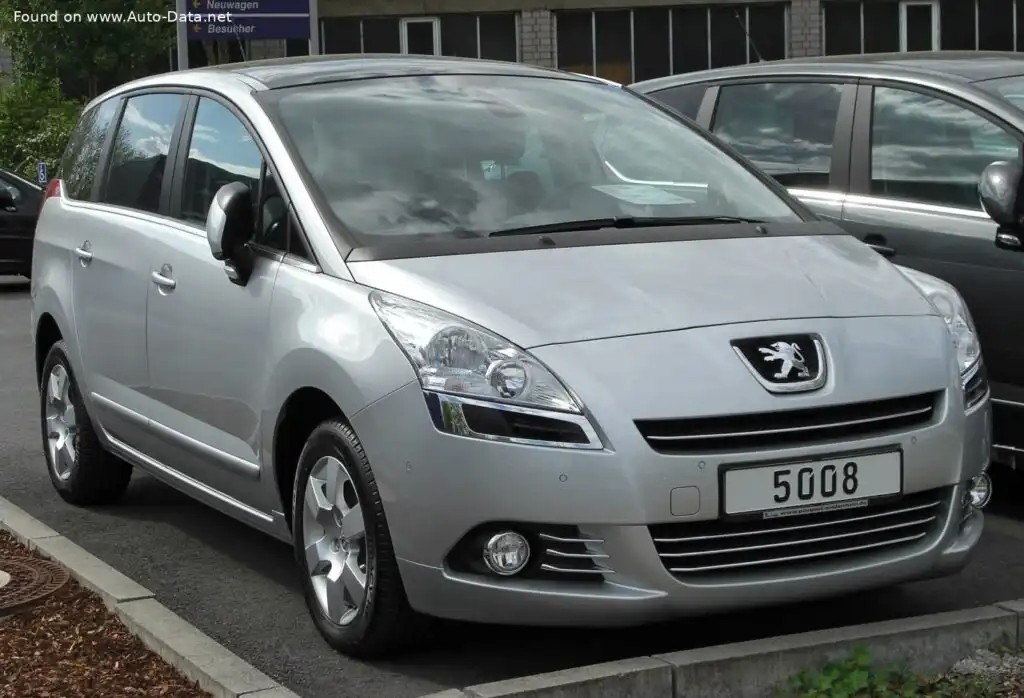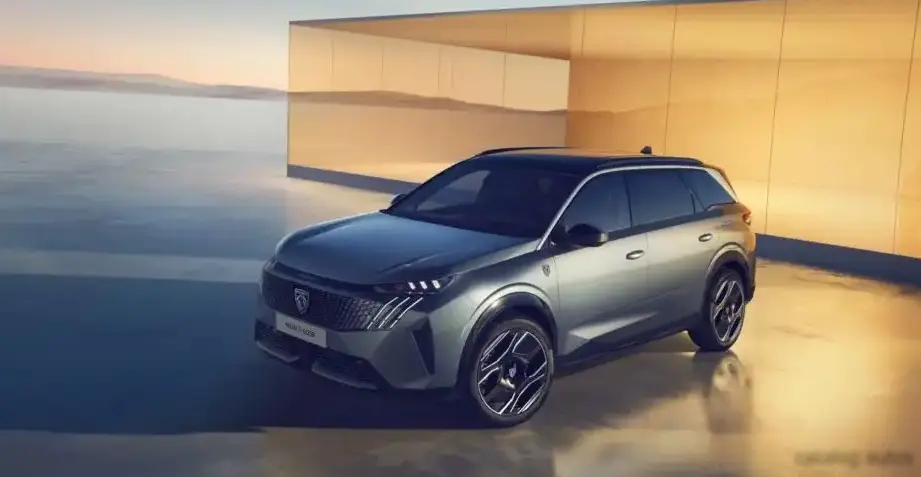
The Peugeot 5008 III, launched in March 2024, represents the third generation of Peugeot’s mid-size SUV. This iteration, designated as Phase I, builds upon the success of its predecessors, offering a more refined and technologically advanced package. Among the powertrain options available, the 1.6-liter (196 hp) Plug-in Hybrid e-DCS variant occupies a significant position, blending fuel efficiency with respectable performance. It’s positioned as a premium offering within the 5008 lineup, appealing to buyers seeking a balance between practicality, environmental consciousness, and driving enjoyment. The 5008 competes directly with vehicles like the Hyundai Santa Fe, Kia Sorento, and Nissan X-Trail in the European market, and aims to offer a more stylish and sophisticated alternative.
Technical Specifications
| Brand | Peugeot |
| Model | 5008 |
| Generation | 5008 III (Phase I, 2024) |
| Type (Engine) | 1.6 (196 Hp) Plug-in Hybrid e-DCS |
| Start of production | March, 2024 |
| Powertrain Architecture | PHEV (Plug-in Hybrid Electric Vehicle) |
| Body type | SUV |
| Seats | 7 |
| Doors | 5 |
| CO2 emissions (WLTP) | 23 g/km |
| Fuel Type | Petrol / electricity |
| Acceleration 0 – 100 km/h | 8.3 sec |
| Acceleration 0 – 62 mph | 8.3 sec |
| Acceleration 0 – 60 mph | 7.9 sec |
| Maximum speed | 215 km/h (133.59 mph) |
| Weight-to-power ratio | 10.4 kg/Hp, 95.7 Hp/tonne |
| Weight-to-torque ratio | 6.8 kg/Nm, 146.5 Nm/tonne |
| Net (usable) battery capacity | 17.9 kWh |
| Battery voltage | 360 V |
| Battery technology | Lithium nickel manganese cobalt oxides (Li-NMC) |
| Battery weight | 160 kg (352.74 lbs) |
| Battery location | Below the floor, under the rear seats |
| All-electric range (WLTP) | 82 km (50.95 mi) |
| Electric motor power | 125 Hp |
| Electric motor Torque | 115 Nm (84.82 lb.-ft.) |
| Electric motor location | Between the combustion engine and the transmission |
| System power | 196 Hp @ 6000 rpm |
| Power | 150 Hp @ 6000 rpm |
| Power per litre | 93.9 Hp/l |
| Torque | 300 Nm @ 2500 rpm (221.27 lb.-ft. @ 2500 rpm) |
| Engine layout | Front, Transverse |
| Engine displacement | 1598 cm3 (97.52 cu. in.) |
| Number of cylinders | 4 |
| Engine configuration | Inline |
| Number of valves per cylinder | 4 |
| Fuel injection system | Direct injection |
| Engine aspiration | Turbocharger, Intercooler |
| Engine systems | Start & Stop System, Particulate filter |
| Kerb Weight | 2048 kg (4515.07 lbs) |
| Max. weight | 2700 kg (5952.48 lbs) |
| Max load | 652 kg (1437.41 lbs) |
| Trunk (boot) space – minimum | 259 l (9.15 cu. ft.) |
| Trunk (boot) space – maximum | 1815 l (64.1 cu. ft.) |
| Permitted trailer load with brakes (12%) | 1300 kg (2866.01 lbs) |
| Length | 4791 mm (188.62 in.) |
| Width | 1895 mm (74.61 in.) |
| Height | 1694 mm (66.69 in.) |
| Wheelbase | 2901 mm (114.21 in.) |
| Front track | 1630 mm (64.17 in.) |
| Rear (Back) track | 1636 mm (64.41 in.) |
| Front overhang | 940 mm (37.01 in.) |
| Rear overhang | 950 mm (37.4 in.) |
| Ride height (ground clearance) | 209 mm (8.23 in.) |
| Minimum turning circle (turning diameter) | 11.2 m (36.75 ft.) |
| Drivetrain Architecture | The Internal combustion engine (ICE) and electric motor drive the front wheels of the car with the ability to work in full electric or mixed mode. |
| Drive wheel | Front wheel drive |
| Number of gears and type of gearbox | 7 gears, automatic transmission e-DCS |
| Front suspension | Independent type McPherson |
| Rear suspension | Independent multi-link suspension |
| Front brakes | Ventilated discs, 365×37 mm |
| Rear brakes | Ventilated discs, 356×26 mm |
| Assisting systems | ABS (Anti-lock braking system) |
| Steering type | Steering rack and pinion |
| Power steering | Electric Steering |
| Tires size | 225/55 R19; 235/50 R20 |
| Wheel rims size | 19; 20 |
INTRODUCTION
The Peugeot 5008 III Phase I, introduced in 2024, represents a significant evolution of Peugeot’s popular seven-seater SUV. Built on the EMP2 platform, shared with other Stellantis vehicles like the Peugeot 3008 and Opel Grandland, the 5008 aims to provide a compelling blend of practicality, comfort, and modern technology. The 1.6-liter Plug-in Hybrid e-DCS variant is a key component of Peugeot’s electrification strategy, offering a balance between internal combustion engine range and zero-emission electric driving. This powertrain option is positioned as a mid-to-high trim level, appealing to environmentally conscious families and individuals who require the versatility of a seven-seater SUV.
Powertrain & Engine Architecture
At the heart of the 5008 1.6 PHEV lies the PureTech 1.6-liter turbocharged four-cylinder gasoline engine, designated as the EP6 CDT. This engine produces 150 horsepower and 300 Nm (221 lb-ft) of torque. It utilizes direct fuel injection and a twin-scroll turbocharger for improved responsiveness and efficiency. The engine is paired with an 80-kW (109 hp) electric motor integrated between the engine and the e-DCS (electric Dual Clutch System) 7-speed automatic transmission. The e-DCS transmission is a key feature, allowing for smooth and efficient power delivery in both electric and hybrid modes. The 17.9 kWh lithium-ion battery pack, utilizing Li-NMC chemistry, is located under the floor, minimizing intrusion into the passenger and cargo space. The hybrid system intelligently manages the power flow between the engine and electric motor, optimizing fuel economy and reducing emissions. The engine also incorporates a particulate filter to further reduce harmful emissions.
Driving Characteristics
The 1.6-liter Plug-in Hybrid powertrain delivers a combined system output of 196 horsepower. In electric mode, the 5008 can travel up to 82 km (51 miles) on the WLTP cycle, making it suitable for daily commutes and shorter journeys. The e-DCS transmission provides quick and seamless gear changes, enhancing the driving experience. Compared to the standard gasoline-powered 5008 variants, the PHEV offers noticeably stronger acceleration, particularly at lower speeds where the electric motor provides instant torque. While the added weight of the battery pack (approximately 160 kg / 353 lbs) does slightly impact handling, the well-tuned suspension and precise steering contribute to a comfortable and confident driving experience. Compared to higher-powered gasoline engines, the 1.6 PHEV prioritizes efficiency over outright performance, making it a more relaxed and refined driving experience.
Equipment & Trim Levels
The 1.6 Plug-in Hybrid e-DCS variant of the 5008 typically comes with a high level of standard equipment. This includes Peugeot’s i-Cockpit interior design, featuring a compact multi-function steering wheel and a 10-inch touchscreen infotainment system. Standard features often include automatic climate control, keyless entry, a rearview camera, and a suite of advanced driver-assistance systems (ADAS) such as lane-keeping assist, automatic emergency braking, and adaptive cruise control. Interior upholstery is typically a combination of cloth and synthetic leather, with options for full leather upholstery available as an upgrade. Optional extras may include a panoramic sunroof, premium audio system, and a hands-free power tailgate.
Chassis & Braking
The 5008 utilizes an independent McPherson strut suspension at the front and an independent multi-link suspension at the rear, providing a comfortable and controlled ride. The suspension is tuned to balance ride comfort with handling stability, considering the added weight of the hybrid powertrain. Braking duties are handled by ventilated discs on all four wheels, providing ample stopping power. The electronic stability control (ESC) system and anti-lock braking system (ABS) are standard features, enhancing safety and control. The steering system is an electric power-assisted rack and pinion system, offering precise and responsive steering feel.
Market Reception & Comparison
The Peugeot 5008 1.6 Plug-in Hybrid has been generally well-received by automotive critics. Reviewers have praised its fuel efficiency, comfortable ride, and spacious interior. The electric range of 82 km (51 miles) is considered competitive within its segment. Compared to the gasoline-powered 5008 variants, the PHEV offers significantly lower running costs, particularly for drivers who frequently commute in urban areas. However, some critics have noted that the added weight of the battery pack can slightly impact handling and that the cargo space is slightly reduced compared to the non-hybrid models. Compared to diesel-powered variants, the PHEV offers a quieter and more refined driving experience, with lower emissions.
Legacy
The Peugeot 5008 1.6 Plug-in Hybrid e-DCS represents a significant step forward in Peugeot’s electrification strategy. The powertrain is expected to be reliable, benefiting from Peugeot’s extensive experience in developing and manufacturing internal combustion engines and hybrid systems. The long-term reliability of the battery pack will be a key factor in determining the vehicle’s overall ownership costs. As the demand for electric and hybrid vehicles continues to grow, the 5008 1.6 PHEV is likely to remain a popular choice in the used car market, offering a compelling combination of practicality, efficiency, and technology.