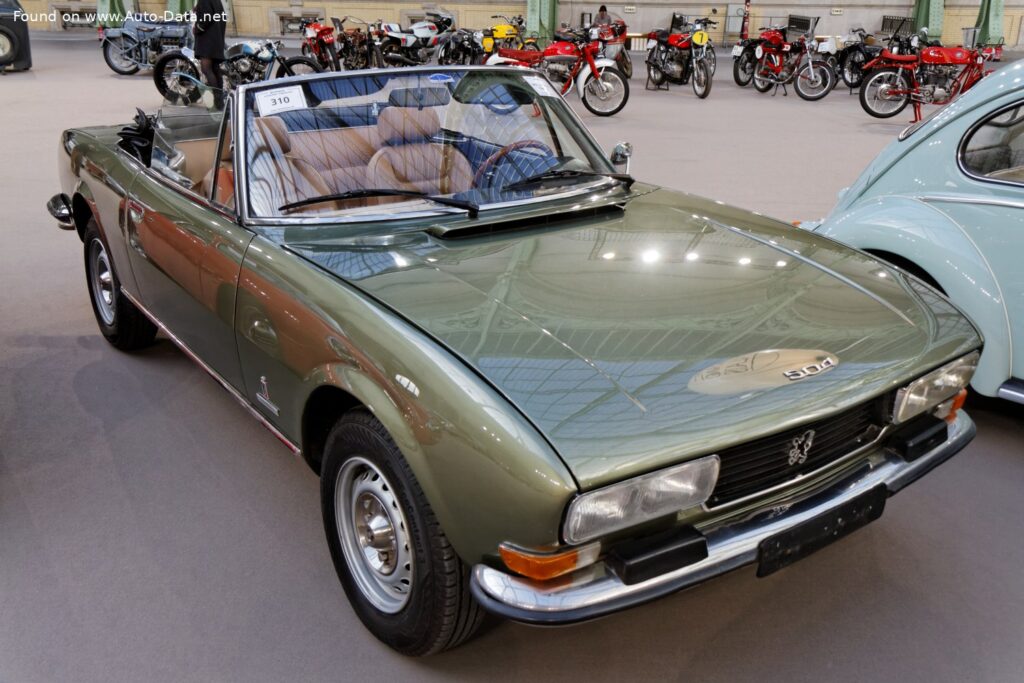
The Peugeot 504 Cabriolet, particularly the 2.0-liter variant producing 102 horsepower, represents a significant chapter in French automotive history. Introduced in 1974 and continuing production through 1982, this stylish convertible was more than just a recreational vehicle; it was a statement of attainable luxury and sophisticated design. While the Peugeot brand had a limited official presence in the United States during this period, the 504, and especially the Cabriolet, gained a cult following among enthusiasts who appreciated its European flair and robust engineering. It occupied a niche market segment, competing with other premium European convertibles like the Mercedes-Benz SL and the Porsche 911 Cabriolet, though at a considerably lower price point. The 504 Cabriolet wasn’t about outright performance; it was about elegant motoring and enjoying the open road.
Peugeot 504 Cabrio 2.0: A Legacy of Style and Engineering
The 504, in all its forms, was a landmark vehicle for Peugeot. Launched in 1968 as a replacement for the aging 404, it was designed to be a modern, spacious, and reliable family car. The Cabriolet version, penned by the renowned Italian design house Pininfarina, elevated the 504’s appeal, transforming it into a desirable open-top tourer. Pininfarina’s influence is evident in the car’s graceful lines, long hood, and balanced proportions. The 504 Cabriolet was not initially intended for mass production; it was conceived as a halo model to enhance the brand’s image and showcase its design capabilities. It quickly became a symbol of French automotive elegance and a popular choice for those seeking a stylish and comfortable convertible.
Engine & Performance
The heart of the Peugeot 504 Cabriolet 2.0 was the 107 XN2 engine, a 1,995 cc (121.6 cubic inches) naturally aspirated inline-four cylinder gasoline engine. This powerplant produced 102 horsepower at 5,000 rpm and approximately 138 lb-ft of torque at 3,500 rpm. While not a high-performance engine by modern standards, it provided ample power for comfortable cruising and spirited driving. The engine featured a single overhead camshaft and a two-barrel Solex carburetor. It was known for its reliability and relatively easy maintenance. Power was delivered to the rear wheels through either a four-speed manual transmission or a three-speed automatic transmission. The manual transmission offered a more engaging driving experience, while the automatic provided greater convenience. The 504 Cabriolet wasn’t designed for rapid acceleration; its 0 to 60 mph time was around 11-12 seconds, and its top speed was approximately 105 mph. However, its smooth ride and responsive handling made it a pleasure to drive on winding roads.
Design & Features
The Peugeot 504 Cabriolet’s design was its defining characteristic. Pininfarina’s styling created a visually appealing and timeless aesthetic. The car’s long hood, short rear deck, and flowing lines gave it a sense of elegance and sophistication. The convertible top was manually operated and stowed neatly behind the rear seats. The interior was well-appointed for its time, featuring comfortable seats, a wood-rimmed steering wheel, and a comprehensive dashboard layout. While not laden with modern conveniences, the 504 Cabriolet offered essential features such as power-assisted brakes, and optional air conditioning. Safety features were relatively basic by today’s standards, consisting primarily of seatbelts and a robust chassis construction. The car’s independent front suspension and rigid rear axle provided a comfortable and controlled ride. The 504 Cabriolet’s build quality was generally considered to be very good, contributing to its longevity and enduring appeal. The car’s design influenced many subsequent convertibles, and it remains a highly sought-after classic today. The car’s appeal lay in its ability to offer open-air motoring with a touch of French sophistication.
Technical Specifications
| Brand | Peugeot |
| Model | 504 |
| Generation | 504 Cabrio |
| Type (Engine) | 2.0 (102 Hp) |
| Start of production | 1974 |
| End of production | 1982 |
| Powertrain Architecture | Internal Combustion engine |
| Body type | Cabriolet |
| Fuel Type | Petrol (Gasoline) |
| Power | 102 Hp |
| Engine Model/Code | 107 XN2 |
| Engine aspiration | Naturally aspirated engine |
| Engine oil capacity | 5 l (5.28 US qt | 4.4 UK qt) |
| Coolant capacity | 7.8 l (8.24 US qt | 6.86 UK qt) |
The Peugeot 504 Cabriolet 2.0, despite its relatively modest performance figures, remains a cherished classic car. Its enduring appeal stems from its elegant design, robust engineering, and the sense of occasion it provides. It represents a bygone era of automotive design, where style and driving pleasure were prioritized over outright speed and technological complexity. The car’s legacy continues to inspire automotive enthusiasts and collectors around the world, solidifying its place as a significant icon in automotive history. While never a mainstream success in the US market, the 504 Cabriolet found a dedicated following among those who appreciated its unique blend of French charm and Italian design flair. Its continued presence at classic car shows and rallies is a testament to its enduring quality and timeless appeal.