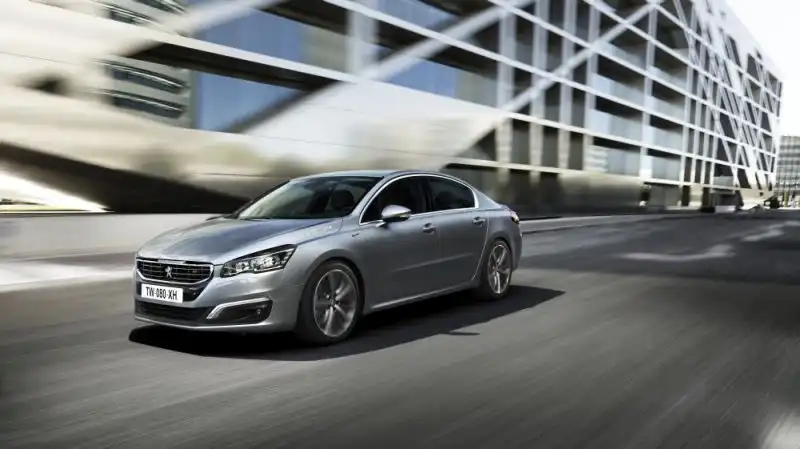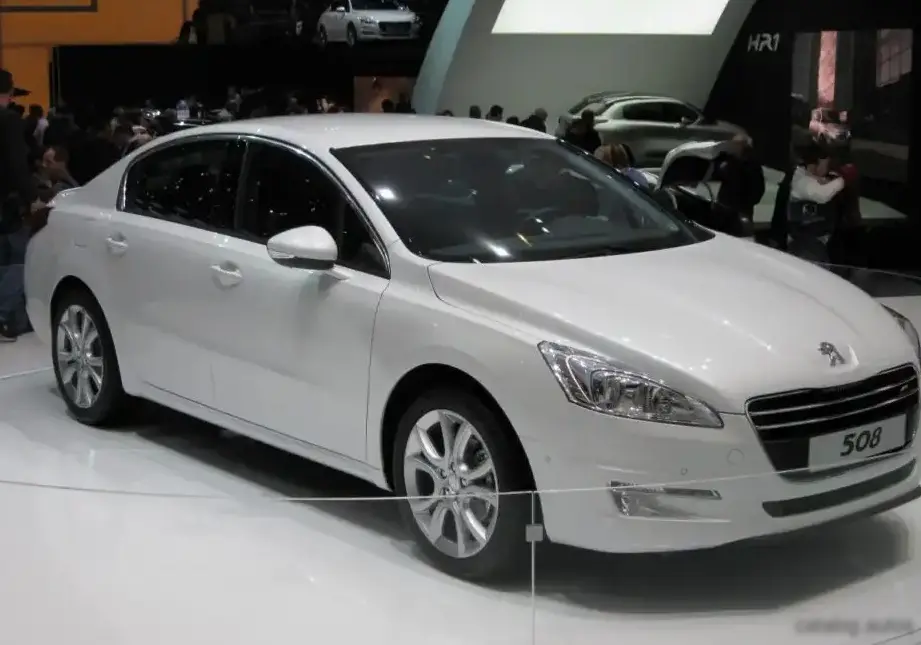
The Peugeot 508 1.6 e-HDI, produced between 2012 and 2014, represented a key entry point into the first generation (T8F) of Peugeot’s mid-size executive car. Positioned within the Phase I lifecycle of the 508, this variant aimed to balance fuel efficiency with reasonable performance, appealing to buyers prioritizing economy and lower running costs. It was a significant offering in the European market, where diesel engines and fuel economy were paramount concerns for many consumers. The 508 itself was designed as a replacement for both the Peugeot 407 and the coupe-like 407 Silhouette, offering a more modern and sophisticated package.
Technical Specifications
| Brand | Peugeot |
| Model | 508 |
| Generation | 508 I (Phase I, 2010) |
| Type (Engine) | 1.6 e-HDI (115 Hp) FAP |
| Start of production | 2012 |
| End of production | 2014 |
| Powertrain Architecture | Internal Combustion engine |
| Body type | Sedan |
| Seats | 5 |
| Doors | 4 |
| Fuel consumption (urban) | 5.1 l/100 km (46.1 US mpg, 55.4 UK mpg, 19.6 km/l) |
| Fuel consumption (extra urban) | 4 l/100 km (58.8 US mpg, 70.6 UK mpg, 25 km/l) |
| Fuel consumption (combined) | 4.4 l/100 km (53.5 US mpg, 64.2 UK mpg, 22.7 km/l) |
| Fuel Type | Diesel |
| Acceleration 0 – 100 km/h | 11.9 sec |
| Acceleration 0 – 62 mph | 11.9 sec |
| Acceleration 0 – 60 mph | 11.3 sec |
| Maximum speed | 197 km/h (122.41 mph) |
| Emission standard | Euro 5 |
| Weight-to-power ratio | 12.3 kg/Hp, 81.6 Hp/tonne |
| Weight-to-torque ratio | 5.2 kg/Nm, 191.5 Nm/tonne |
| Power | 115 Hp @ 3600 rpm |
| Power per litre | 73.7 Hp/l |
| Torque | 270-285 Nm @ 1750-2000 rpm (199.14 – 210.21 lb.-ft. @ 1750-2000 rpm) |
| Engine layout | Front, Transverse |
| Engine Model/Code | 9HD DV6CTED |
| Engine displacement | 1560 cm3 (95.2 cu. in.) |
| Number of cylinders | 4 |
| Engine configuration | Inline |
| Number of valves per cylinder | 2 |
| Fuel injection system | Diesel Commonrail |
| Engine aspiration | Turbocharger, Intercooler |
| Engine oil capacity | 3.75 l (3.96 US qt | 3.3 UK qt) |
| Coolant capacity | 6 l (6.34 US qt | 5.28 UK qt) |
| Kerb Weight | 1410 kg (3108.52 lbs.) |
| Max. weight | 2005 kg (4420.27 lbs.) |
| Max load | 595 kg (1311.75 lbs.) |
| Trunk (boot) space – minimum | 473 l (16.7 cu. ft.) |
| Trunk (boot) space – maximum | 515 l (18.19 cu. ft.) |
| Fuel tank capacity | 72 l (19.02 US gal | 15.84 UK gal) |
| Length | 4792 mm (188.66 in.) |
| Width | 1920 mm (75.59 in.) |
| Height | 1456 mm (57.32 in.) |
| Wheelbase | 2817 mm (110.91 in.) |
| Minimum turning circle | 11.9 m (39.04 ft.) |
| Drivetrain Architecture | Front wheel drive |
| Number of gears | 6 |
| Gearbox type | Manual transmission |
| Front suspension | Independent type McPherson |
| Rear suspension | Independent multi-link suspension |
| Front brakes | Ventilated discs |
| Rear brakes | Disc |
| Tire size | 215/60 R16; 215/55 R17 |
| Wheel rims size | 16; 17 |
Powertrain & Engine Architecture
The heart of the 508 1.6 e-HDI is the PSA Group’s DV6CTED engine, specifically the 9HD variant. This 1.6-liter, four-cylinder diesel engine utilizes a common-rail direct injection system, delivering fuel at extremely high pressure for optimized combustion. A turbocharger with an intercooler is employed to boost power output and improve torque across a wider rev range. The engine features two valves per cylinder and is transversely mounted in the engine bay. The ‘e-HDI’ designation signifies the inclusion of Stop & Start technology, designed to improve fuel economy by automatically shutting off the engine when the vehicle is stationary. The FAP (Filtre à Particules) or Diesel Particulate Filter, is a crucial component of the exhaust system, reducing harmful particulate emissions to meet Euro 5 standards. This engine is known for its relatively robust design, but the FAP system can require periodic maintenance or replacement.
The 508 1.6 e-HDI was exclusively offered with a six-speed manual transmission. This gearbox was chosen to maximize fuel efficiency and provide a reasonably engaging driving experience. The gear ratios were tuned for economy, with a relatively long final drive.
Driving Characteristics
The 115 horsepower and 270-285 Nm (199-210 lb-ft) of torque provided by the 1.6 e-HDI engine resulted in a comfortable, rather than exhilarating, driving experience. Acceleration from 0-60 mph took around 11.3 seconds, and top speed was approximately 122 mph. The engine’s torque peak, available from 1750-2000 rpm, provided adequate pulling power for everyday driving and overtaking maneuvers. However, it lacked the outright punch of the higher-powered 2.0-liter HDi variants. The manual transmission, while efficient, required frequent shifting to maintain momentum, especially when fully loaded or tackling inclines. Compared to the more powerful versions, the 1.6 e-HDI prioritized fuel economy over performance, making it ideal for long commutes and highway driving.
Equipment & Trim Levels
The 1.6 e-HDI typically represented the entry-level trim in the 508 range. Standard equipment generally included air conditioning, electric front windows, a basic audio system with USB connectivity, and stability control. Higher trim levels, such as Allure and GT, added features like dual-zone climate control, alloy wheels, rear parking sensors, and a more sophisticated infotainment system. Interior upholstery was typically cloth, with options for leather upgrades on higher trims. Optional extras included a panoramic sunroof, navigation system, and xenon headlights.
Chassis & Braking
The 508 featured independent suspension all around – a McPherson strut setup at the front and a multi-link arrangement at the rear. This provided a good balance between ride comfort and handling. The 1.6 e-HDI models typically used ventilated front discs and solid rear discs for braking. Anti-lock Braking System (ABS) and Electronic Stability Control (ESC) were standard safety features. The suspension was tuned for comfort, prioritizing a smooth ride over sporty handling. Stabilizer bars were fitted front and rear to reduce body roll during cornering.
Market Reception & Comparison
The Peugeot 508 1.6 e-HDI was well-received by critics for its fuel efficiency and low running costs. It was seen as a practical and sensible choice for buyers prioritizing economy. However, some reviewers noted that the engine lacked the refinement and performance of its competitors, particularly the German offerings. Compared to the 2.0-liter HDi variants, the 1.6 e-HDI offered significantly better fuel economy but at the expense of performance. The 2.0-liter models were favored by drivers who frequently undertook long journeys or required more power for towing. Reliability was generally good, although the FAP system required periodic attention.
Legacy
The 1.6 e-HDI engine proved to be a popular choice in the European market, known for its fuel efficiency and relatively low maintenance costs. However, the FAP system could be a source of issues if not properly maintained. On the used car market, the 508 1.6 e-HDI represents a relatively affordable entry point into the executive car segment. These models are generally well-equipped and offer a comfortable driving experience. Potential buyers should be aware of the FAP system and ensure it has been regularly serviced. The 508, in general, established Peugeot as a serious contender in the mid-size executive car class, offering a stylish and practical alternative to the established German brands.