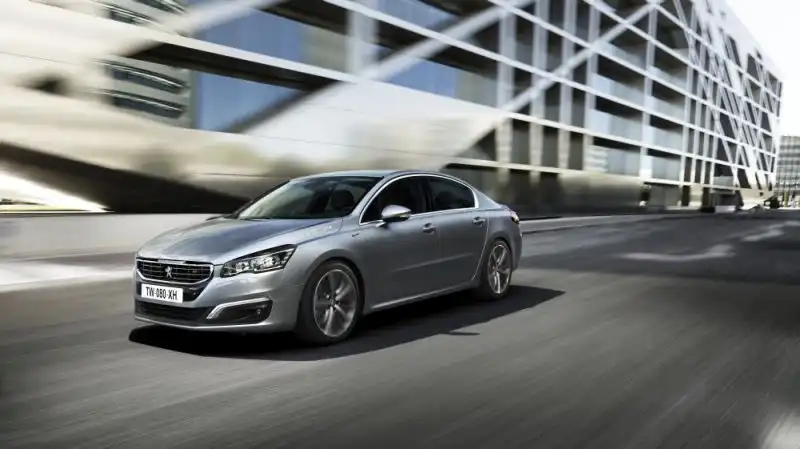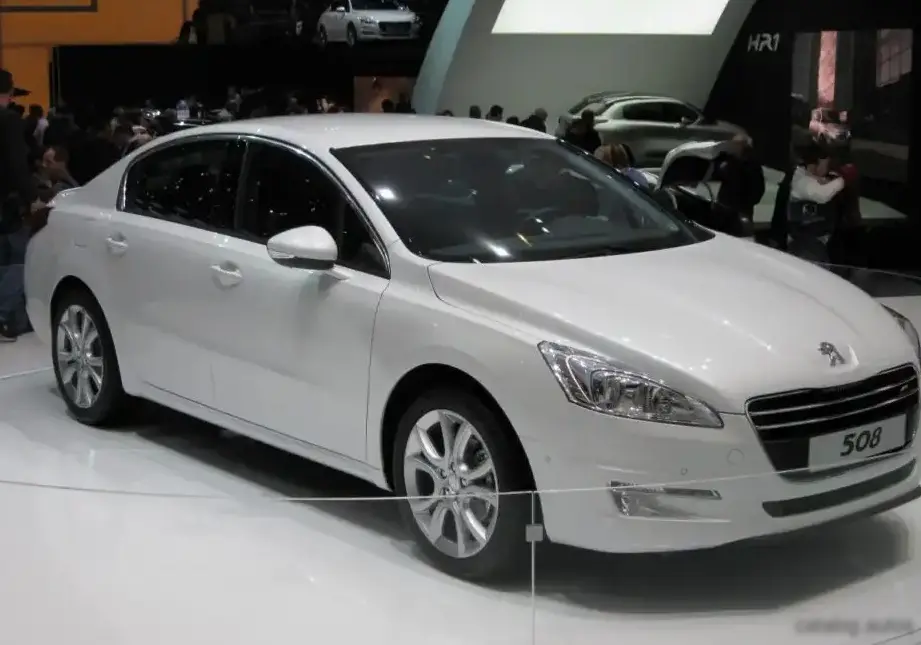
The Peugeot 508 1.6 HDI 112 hp, introduced in 2010 as part of the first generation (Phase I) of the 508, represented a key offering in Peugeot’s mid-size sedan lineup. Positioned as an efficient and economical option, this variant aimed to attract buyers prioritizing fuel economy and lower running costs. Production continued through 2014, and the 508, built on the Peugeot-Citroën PSA Group’s Platform 3, sought to replace the aging 407, offering a more modern and refined driving experience. This specific engine and transmission combination was a popular choice in European markets, where diesel engines held a significant share of the automotive landscape.
Technical Specifications
| Brand | Peugeot |
| Model | 508 |
| Generation | 508 I (Phase I, 2010) |
| Type (Engine) | 1.6 HDI (112 Hp) FAP |
| Start of production | 2010 |
| End of production | 2014 |
| Powertrain Architecture | Internal Combustion engine |
| Body type | Sedan |
| Seats | 5 |
| Doors | 4 |
| Fuel consumption (urban) | 5.9 l/100 km (39.9 US mpg, 47.9 UK mpg, 16.9 km/l) |
| Fuel consumption (extra urban) | 4.1 l/100 km (57.4 US mpg, 68.9 UK mpg, 24.4 km/l) |
| Fuel consumption (combined) | 4.7 l/100 km (50 US mpg, 60.1 UK mpg, 21.3 km/l) |
| Fuel Type | Diesel |
| Acceleration 0 – 100 km/h | 11.3 sec |
| Acceleration 0 – 62 mph | 11.3 sec |
| Acceleration 0 – 60 mph | 10.7 sec |
| Maximum speed | 190 km/h (118.06 mph) |
| Emission standard | Euro 5 |
| Weight-to-power ratio | 12.5 kg/Hp, 79.7 Hp/tonne |
| Weight-to-torque ratio | 5.2 kg/Nm, 192.2 Nm/tonne |
| Power | 112 Hp @ 3600 rpm |
| Power per litre | 71.8 Hp/l |
| Torque | 270 Nm @ 1750 rpm (199.14 lb.-ft. @ 1750 rpm) |
| Engine layout | Front, Transverse |
| Engine Model/Code | 9HR DV6C |
| Engine displacement | 1560 cm3 (95.2 cu. in.) |
| Number of cylinders | 4 |
| Engine configuration | Inline |
| Number of valves per cylinder | 2 |
| Fuel injection system | Diesel Commonrail |
| Engine aspiration | Turbocharger, Intercooler |
| Engine oil capacity | 3.75 l (3.96 US qt | 3.3 UK qt) |
| Coolant capacity | 6 l (6.34 US qt | 5.28 UK qt) |
| Kerb Weight | 1405 kg (3097.49 lbs.) |
| Max. weight | 1975 kg (4354.13 lbs.) |
| Max load | 570 kg (1256.63 lbs.) |
| Trunk (boot) space – minimum | 473 l (16.7 cu. ft.) |
| Trunk (boot) space – maximum | 515 l (18.19 cu. ft.) |
| Fuel tank capacity | 72 l (19.02 US gal | 15.84 UK gal) |
| Length | 4792 mm (188.66 in.) |
| Width | 1920 mm (75.59 in.) |
| Height | 1456 mm (57.32 in.) |
| Wheelbase | 2817 mm (110.91 in.) |
| Minimum turning circle | 11.9 m (39.04 ft.) |
| Drivetrain Architecture | Front wheel drive |
| Number of gears | 6 gears, manual transmission |
| Front suspension | Independent type McPherson |
| Rear suspension | Independent multi-link suspension |
| Front brakes | Ventilated discs |
| Rear brakes | Disc |
| Tire size | 215/60 R16; 215/55 R17 |
| Wheel rims size | 16; 17 |
Introduction
The Peugeot 508 1.6 HDI 112 hp, launched in 2010, was a crucial variant within the first generation 508 range (T8F). Designed to appeal to a broad audience, it offered a balance between performance, economy, and practicality. The 508 aimed to elevate Peugeot’s image in the competitive D-segment, challenging established rivals like the Ford Mondeo, Volkswagen Passat, and Opel/Vauxhall Insignia. This particular model, equipped with the 1.6-liter HDi diesel engine and a six-speed manual transmission, was positioned as the entry-level diesel option, offering a more affordable route into 508 ownership.
Powertrain & Engine Architecture
The heart of the 508 1.6 HDI is the PSA Group’s DV6C engine, specifically the 9HR variant. This 1560cc, four-cylinder diesel engine utilizes a common rail direct injection system, delivering fuel at extremely high pressure for optimized combustion. The engine features a single overhead camshaft (SOHC) operating two valves per cylinder. A turbocharger with an intercooler is employed to boost power and torque, mitigating the typical turbo lag associated with smaller displacement engines. The 112 hp output is achieved at 3600 rpm, while the peak torque of 270 Nm (199 lb-ft) is available from a low 1750 rpm, providing good responsiveness in everyday driving situations. The six-speed manual transmission was the standard offering for this variant, providing a good balance between fuel efficiency and driver control. The gear ratios were tuned to maximize fuel economy and provide adequate acceleration.
Driving Characteristics
The 508 1.6 HDI 112 hp offers a comfortable and refined driving experience, prioritizing fuel efficiency over outright performance. Acceleration from 0-60 mph takes around 10.7 seconds, which is adequate for most driving scenarios but doesn’t offer particularly brisk performance. The engine’s strong low-end torque makes it well-suited for overtaking and navigating urban environments. Compared to the more powerful 2.0 HDI variants, the 1.6 HDI feels less strained at higher speeds and during prolonged highway driving. The manual transmission is smooth and precise, enhancing the driving experience. While not a sports sedan, the 508 1.6 HDI provides a composed and stable ride, thanks to its well-tuned suspension.
Equipment & Trim Levels
The 508 1.6 HDI 112 hp typically came equipped with a reasonable level of standard equipment. This included air conditioning, electric front windows, a CD stereo system, and basic safety features like ABS, ESP (Electronic Stability Program), and multiple airbags. Higher trim levels, such as Allure or Feline, added features like alloy wheels, automatic climate control, a touchscreen infotainment system, rear parking sensors, and upgraded interior trim. Interior upholstery was typically cloth, with options for leather available on higher-spec models. The dashboard layout was modern and functional, with a focus on ergonomics.
Chassis & Braking
The 508 1.6 HDI utilizes an independent McPherson strut suspension at the front and an independent multi-link suspension at the rear, providing a comfortable and controlled ride. The front brakes are ventilated discs, while the rear brakes are solid discs. The steering is a rack and pinion system, offering precise and responsive handling. The 508’s chassis was designed to provide a good balance between comfort and handling, making it a pleasant car to drive on a variety of road surfaces. Stabilizer bars were fitted front and rear to reduce body roll during cornering.
Market Reception & Comparison
The Peugeot 508 1.6 HDI 112 hp was generally well-received by automotive critics, who praised its fuel efficiency, comfortable ride, and stylish design. However, some critics noted that the engine could feel underpowered when fully loaded or driving uphill. Compared to the 2.0 HDI variants, the 1.6 HDI offered significantly better fuel economy but at the expense of performance. The 1.6 HDI was also more affordable to purchase and insure, making it an attractive option for budget-conscious buyers. Its fuel economy figures of around 50 US mpg combined were highly competitive in its class.
Legacy
The 1.6 HDI engine proved to be a reliable and durable unit, although, like all diesel engines, it requires regular maintenance, including oil changes and filter replacements. The PSA DV6 engine family, in general, has a good reputation for longevity. In the used car market, the 508 1.6 HDI 112 hp remains a popular choice for those seeking an economical and practical family sedan. Its relatively low running costs and comfortable ride continue to appeal to buyers today. However, potential buyers should be aware of the potential for diesel particulate filter (DPF) issues, particularly if the vehicle has been primarily used for short journeys.