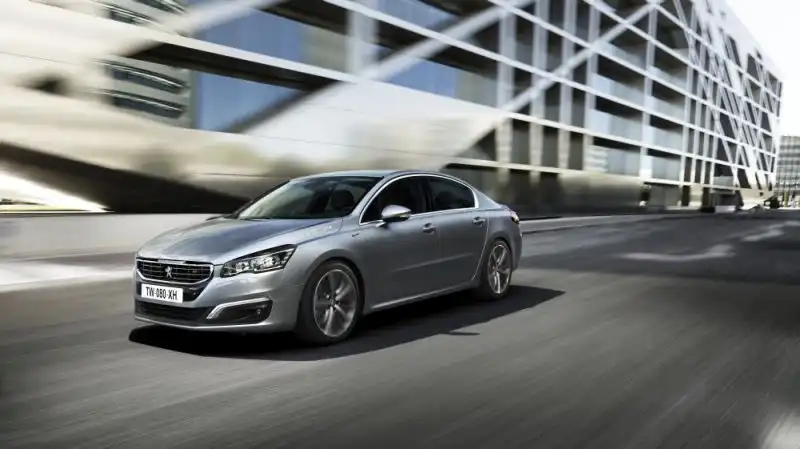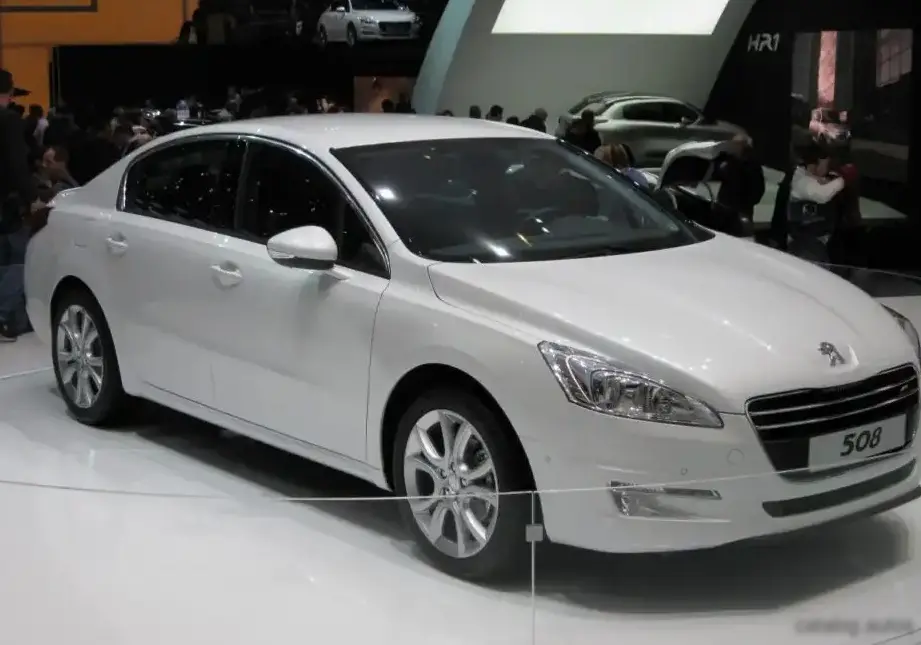
The Peugeot 508 1.6 VTi, introduced as part of the first generation (508 I, Phase I) launched in 2010, represented an entry point into the model range. Produced through 2014, this variant aimed to offer a balance of fuel efficiency and affordability within the mid-size sedan segment. Positioned below the more powerful 1.6 THP and 2.2 HDi models, the 1.6 VTi catered to buyers prioritizing economy over outright performance. It was a key offering in European markets, where fuel costs and emissions regulations heavily influenced consumer choices. The 508 itself was designed to replace the aging 407, offering a more modern and sophisticated package.
Technical Specifications
| Brand | Peugeot |
| Model | 508 |
| Generation | 508 I (Phase I, 2010) |
| Type (Engine) | 1.6 VTi (120 Hp) |
| Start of production | 2010 |
| End of production | 2014 |
| Powertrain Architecture | Internal Combustion engine |
| Body type | Sedan |
| Seats | 5 |
| Doors | 4 |
| Fuel consumption (urban) | 8.2 l/100 km (28.7 US mpg) |
| Fuel consumption (extra urban) | 5.1 l/100 km (46.1 US mpg) |
| Fuel consumption (combined) | 6.2 l/100 km (37.9 US mpg) |
| Fuel Type | Petrol (Gasoline) |
| Acceleration 0 – 100 km/h | 11.5 sec |
| Acceleration 0 – 62 mph | 11.5 sec |
| Acceleration 0 – 60 mph | 10.9 sec |
| Maximum speed | 203 km/h (126.14 mph) |
| Emission standard | Euro 5 |
| Weight-to-power ratio | 11.6 kg/Hp |
| Weight-to-torque ratio | 8.7 kg/Nm |
| Power | 120 Hp @ 6000 rpm |
| Torque | 160 Nm @ 4250 rpm (118.01 lb.-ft. @ 4250 rpm) |
| Engine layout | Front, Transverse |
| Engine Model/Code | 5FS EP6C |
| Engine displacement | 1598 cm3 (97.52 cu. in.) |
| Number of cylinders | 4 |
| Engine configuration | Inline |
| Number of valves per cylinder | 4 |
| Fuel injection system | Multi-port manifold injection |
| Engine aspiration | Naturally aspirated engine |
| Engine oil capacity | 4.25 l (4.49 US qt | 3.74 UK qt) |
| Coolant capacity | 6.4 l (6.76 US qt | 5.63 UK qt) |
| Kerb Weight | 1390 kg (3064.43 lbs.) |
| Max. weight | 1945 kg (4287.99 lbs.) |
| Max load | 555 kg (1223.57 lbs.) |
| Trunk (boot) space – minimum | 473 l (16.7 cu. ft.) |
| Trunk (boot) space – maximum | 515 l (18.19 cu. ft.) |
| Fuel tank capacity | 72 l (19.02 US gal | 15.84 UK gal) |
| Length | 4792 mm (188.66 in.) |
| Width | 1920 mm (75.59 in.) |
| Height | 1456 mm (57.32 in.) |
| Wheelbase | 2817 mm (110.91 in.) |
| Minimum turning circle | 11.9 m (39.04 ft.) |
| Drivetrain Architecture | Front wheel drive |
| Number of gears | 6 |
| Gearbox type | Manual transmission |
| Front suspension | Independent type McPherson |
| Rear suspension | Independent multi-link suspension |
| Front brakes | Ventilated discs |
| Rear brakes | Disc |
| Assisting systems | ABS (Anti-lock braking system) |
| Steering type | Steering rack and pinion |
| Tires size | 215/60 R16 |
| Wheel rims size | 16 |
Powertrain & Engine Architecture
The heart of the 508 1.6 VTi is the PSA-developed 5FS EP6C engine, a 1.6-liter naturally aspirated inline-four cylinder. This engine utilizes a multi-point fuel injection system and a double overhead camshaft (DOHC) valvetrain with four valves per cylinder. The engine’s design prioritized efficiency and smooth operation over high peak power. The 120 horsepower output at 6,000 rpm and 160 Nm (118 lb-ft) of torque at 4,250 rpm were typical for this class of naturally aspirated engine at the time. The engine’s relatively simple design contributed to its reliability, but also limited its performance potential compared to turbocharged alternatives. The engine is paired with a six-speed manual transmission, which was the standard offering for this variant. While an automatic transmission was available on other 508 models, it wasn’t offered with the 1.6 VTi engine.
Driving Characteristics
The 1.6 VTi-equipped 508 offered a comfortable, if not particularly exhilarating, driving experience. Acceleration from 0 to 60 mph took around 10.9 seconds, making it slower than the turbocharged 1.6 THP or diesel variants. The six-speed manual transmission was well-matched to the engine’s characteristics, allowing drivers to keep the engine in its optimal power band. Gear ratios were spaced to prioritize fuel economy, with a relatively long final drive. While adequate for everyday driving, overtaking maneuvers required careful planning. The steering was light and precise, providing good feedback, and the suspension offered a good balance between comfort and handling. Compared to the more powerful models, the 1.6 VTi felt less stressed during highway cruising, contributing to a quieter cabin experience.
Equipment & Trim Levels
The 1.6 VTi typically served as the entry-level trim in the 508 range. Standard equipment generally included air conditioning, power windows, central locking, a basic audio system with USB connectivity, and steel wheels with wheel covers. Safety features such as ABS, ESP (Electronic Stability Program), and multiple airbags were standard across the range. Higher trim levels, such as Allure and Feline, added features like alloy wheels, automatic climate control, a more advanced audio system, parking sensors, and leather upholstery. Optional extras included a panoramic sunroof, navigation system, and xenon headlights.
Chassis & Braking
The 508 featured a McPherson strut front suspension and a multi-link rear suspension, providing a comfortable and controlled ride. The front brakes were ventilated discs, while the rear brakes were solid discs. The suspension was tuned to prioritize comfort, but still offered decent handling characteristics. The 1.6 VTi models typically had a slightly softer suspension setup compared to the higher-powered variants to further enhance ride comfort. The steering utilized a rack and pinion system, providing precise and responsive steering feel.
Market Reception & Comparison
The Peugeot 508 1.6 VTi was generally well-received by critics as a practical and affordable mid-size sedan. However, its performance was often criticized as being underwhelming compared to its turbocharged rivals. Fuel economy was a strong point, with combined figures around 37.9 US mpg. Compared to the 1.6 THP, the VTi offered lower running costs but significantly less power. The diesel variants, such as the 2.0 HDi, provided even better fuel economy and more torque, but at a higher purchase price. The 1.6 VTi appealed to buyers who prioritized fuel efficiency and affordability over performance.
Legacy
The 508 1.6 VTi powertrain has proven to be relatively reliable in the long term. The naturally aspirated engine is less prone to issues associated with turbochargers, and the six-speed manual transmission is known for its durability. On the used car market, these models represent a good value proposition for buyers seeking a comfortable and economical mid-size sedan. While not the most exciting version of the 508, the 1.6 VTi offers a practical and dependable transportation solution. Common maintenance items include regular oil changes, timing belt replacement (typically around 100,000 miles), and inspection of the cooling system.