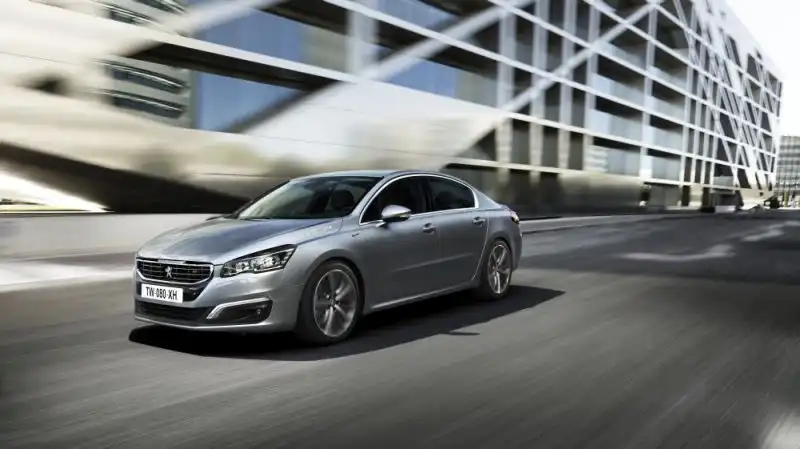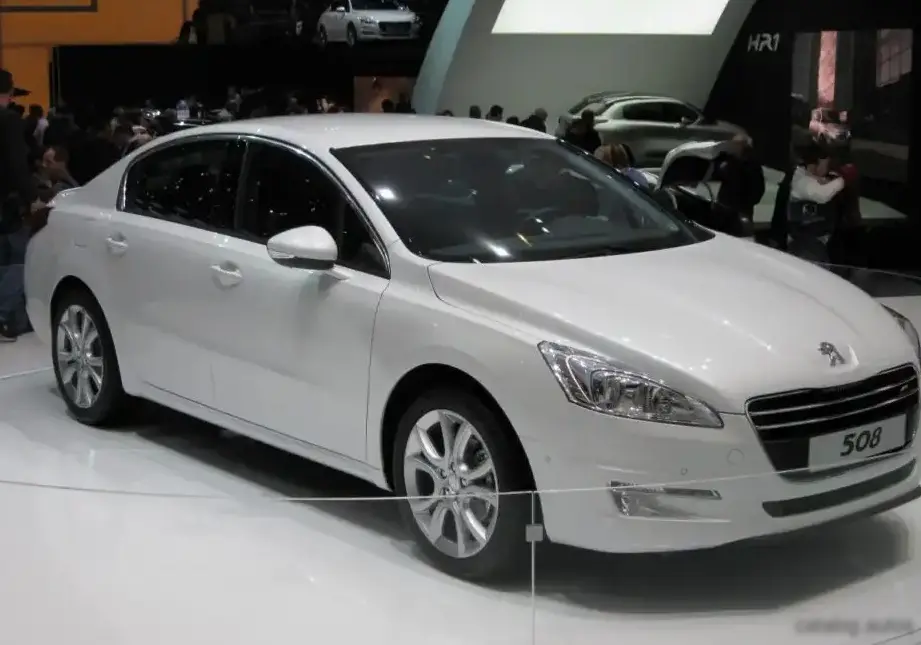
The Peugeot 508, launched in 2010, represented a significant step forward for the French automaker, aiming to compete directly with established players in the mid-size sedan segment like the Ford Mondeo, Volkswagen Passat, and Opel/Vauxhall Insignia. The first generation, designated the 508 I (Phase I), was produced from 2010 to 2014. Within the 508 range, the 2.0 HDI 140 horsepower variant with a manual transmission occupied a crucial mid-range position, offering a balance between fuel efficiency, performance, and affordability. This model was particularly popular in European markets where diesel engines held a dominant share of the automotive landscape.
Technical Specifications
| Brand | Peugeot |
| Model | 508 |
| Generation | 508 I (Phase I, 2010) |
| Type (Engine) | 2.0 HDI (140 Hp) FAP |
| Start of production | 2010 |
| End of production | 2014 |
| Powertrain Architecture | Internal Combustion engine |
| Body type | Sedan |
| Seats | 5 |
| Doors | 4 |
| Fuel consumption (urban) | 6.4 l/100 km (36.8 US mpg, 44.1 UK mpg, 15.6 km/l) |
| Fuel consumption (extra urban) | 3.9 l/100 km (60.3 US mpg, 72.4 UK mpg, 25.6 km/l) |
| Fuel consumption (combined) | 4.8 l/100 km (49 US mpg, 58.9 UK mpg, 20.8 km/l) |
| Fuel Type | Diesel |
| Acceleration 0 – 100 km/h | 9.8 sec |
| Acceleration 0 – 62 mph | 9.8 sec |
| Acceleration 0 – 60 mph | 9.3 sec |
| Maximum speed | 210 km/h (130.49 mph) |
| Emission standard | Euro 5 |
| Weight-to-power ratio | 10.2 kg/Hp, 97.9 Hp/tonne |
| Weight-to-torque ratio | 4.5 kg/Nm, 223.8 Nm/tonne |
| Power | 140 Hp @ 4000 rpm |
| Power per litre | 70.1 Hp/l |
| Torque | 320-340 Nm @ 2000 rpm (236.02 – 250.77 lb.-ft. @ 2000 rpm) |
| Engine layout | Front, Transverse |
| Engine Model/Code | RHF DW10BTED4 |
| Engine displacement | 1997 cm3 (121.86 cu. in.) |
| Number of cylinders | 4 |
| Engine configuration | Inline |
| Number of valves per cylinder | 4 |
| Fuel injection system | Diesel Commonrail |
| Engine aspiration | Turbocharger, Intercooler |
| Engine oil capacity | 5.25 l (5.55 US qt | 4.62 UK qt) |
| Coolant capacity | 10 l (10.57 US qt | 8.8 UK qt) |
| Kerb Weight | 1430 kg (3152.61 lbs.) |
| Max. weight | 2065 kg (4552.55 lbs.) |
| Max load | 635 kg (1399.94 lbs.) |
| Trunk (boot) space – minimum | 473 l (16.7 cu. ft.) |
| Trunk (boot) space – maximum | 515 l (18.19 cu. ft.) |
| Fuel tank capacity | 72 l (19.02 US gal | 15.84 UK gal) |
| Length | 4792 mm (188.66 in.) |
| Width | 1920 mm (75.59 in.) |
| Height | 1456 mm (57.32 in.) |
| Wheelbase | 2817 mm (110.91 in.) |
| Minimum turning circle | 11.9 m (39.04 ft.) |
| Drivetrain Architecture | Front wheel drive |
| Number of gears | 6 gears, manual transmission |
| Front suspension | Independent type McPherson |
| Rear suspension | Independent multi-link suspension |
| Front brakes | Ventilated discs |
| Rear brakes | Disc |
| Tires size | 215/55 R17; 235/45 R18 |
| Wheel rims size | 17; 18 |
Powertrain & Engine Architecture
The heart of the 508 2.0 HDI 140 was the DW10BTED4 engine, a member of Peugeot-Citroën’s DW10 family of diesel engines. This 1997cc, four-cylinder engine utilized a common rail direct injection system, delivering fuel at extremely high pressure for optimized combustion. The engine featured a single turbocharger with an intercooler to increase air density and improve power output. The RHF engine code specifically denotes a version compliant with Euro 5 emissions standards, incorporating a Diesel Particulate Filter (DPF) – the “FAP” in the model designation – to trap soot particles. The engine’s valvetrain employed four valves per cylinder, contributing to its relatively high specific output. The six-speed manual transmission was a Be4 type, known for its smooth shifting and durability.
Driving Characteristics
The 140 horsepower output, coupled with the 320-340 Nm (236-251 lb-ft) of torque, provided the 508 2.0 HDI with respectable, if not exhilarating, performance. Acceleration from 0 to 100 km/h (0-62 mph) took around 9.8 seconds, making it suitable for everyday driving and highway cruising. The engine’s torque peak, available from 2000 rpm, ensured good responsiveness in most driving situations. Compared to the more powerful 163 hp version of the 2.0 HDI, the 140 hp model offered slightly less outright performance but prioritized fuel economy. The manual transmission allowed for greater driver control compared to the optional automatic, and the gear ratios were well-suited to maximizing fuel efficiency while still providing adequate acceleration. It wasn’t a sports sedan, but it provided a comfortable and capable driving experience.
Equipment & Trim Levels
The 2.0 HDI 140 typically came equipped with a reasonable level of standard features. Base models included air conditioning, electric front windows, a CD stereo system, and basic safety equipment like ABS and airbags. Higher trim levels, such as Allure or Feline, added features like alloy wheels, automatic climate control, a touchscreen infotainment system, rear parking sensors, and cruise control. Interior upholstery was typically cloth, with leather options available on higher trims. Optional extras included a panoramic sunroof, navigation system, and premium audio systems.
Chassis & Braking
The 508 I utilized a McPherson strut front suspension and a multi-link rear suspension, providing a good balance between ride comfort and handling. The front brakes were ventilated discs, while the rear brakes were solid discs. ABS (Anti-lock Braking System) was standard. The suspension tuning was geared towards comfort, making it a pleasant cruiser, although it wasn’t as sporty as some of its rivals. Stabilizer bars were fitted front and rear to reduce body roll during cornering.
Market Reception & Comparison
The Peugeot 508 2.0 HDI 140 was generally well-received by automotive critics. It was praised for its fuel efficiency, comfortable ride, and spacious interior. However, some reviewers noted that the styling was somewhat conservative and that the driving experience lacked the engagement of some competitors. Compared to the petrol-powered versions, the 2.0 HDI offered significantly better fuel economy, making it a popular choice for drivers covering long distances. Against rivals like the Ford Mondeo and Volkswagen Passat, the 508 offered a distinctive French flair and a competitive price point. The 1.6 HDI engine was available as a more economical option, but the 2.0 HDI provided a better balance of performance and efficiency.
Legacy
The DW10BTED4 engine, found in the 508 2.0 HDI 140, proved to be a relatively reliable unit when properly maintained. The Diesel Particulate Filter (DPF) required periodic regeneration, and neglecting this could lead to costly repairs. However, with regular servicing and careful driving, these engines could accumulate high mileage. On the used car market, the 508 2.0 HDI 140 remains a popular choice for those seeking a comfortable, fuel-efficient, and reasonably priced mid-size sedan. Its blend of practicality and economy continues to appeal to buyers today, though potential buyers should be aware of the maintenance requirements associated with diesel engines and DPF systems.