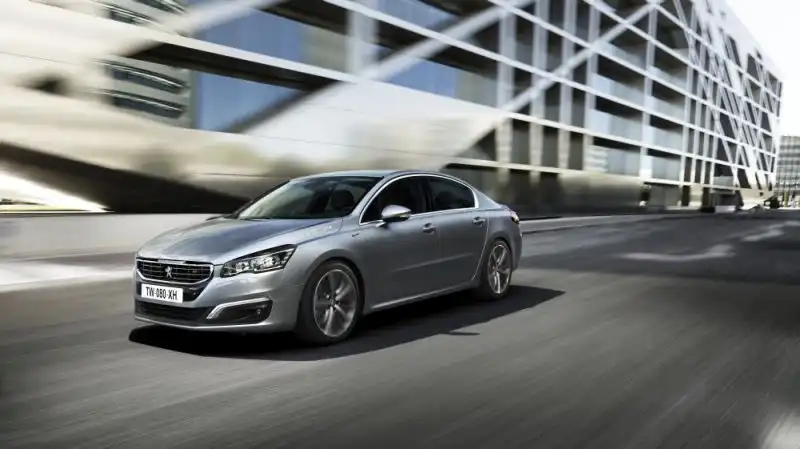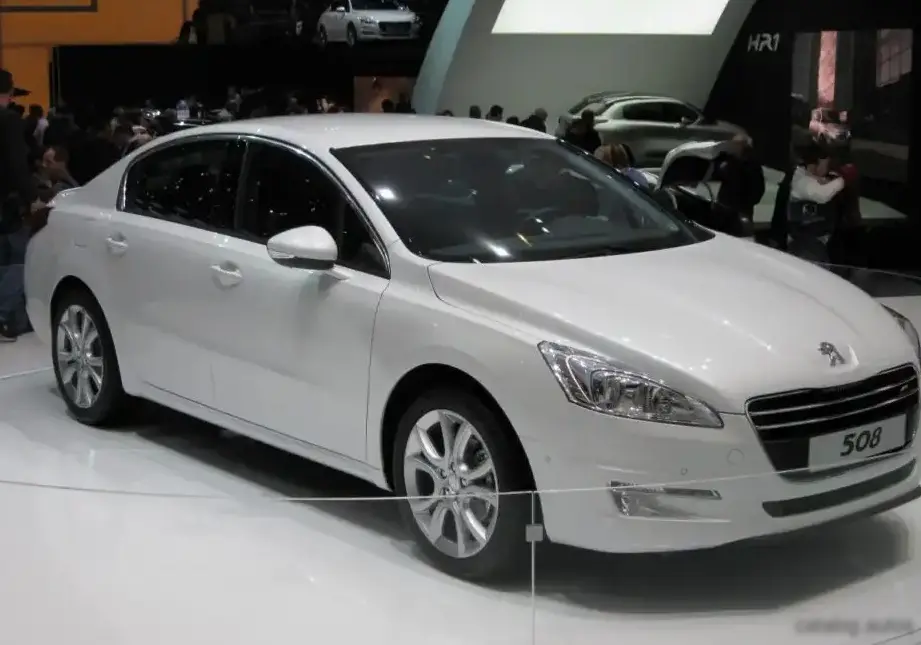
The Peugeot 508, launched in 2010, represented a significant step forward for the French automaker, aiming to compete directly with established players in the mid-size sedan segment like the Ford Mondeo, Volkswagen Passat, and Opel/Vauxhall Insignia. The first generation, designated the 508 I (Phase I), was produced from 2010 to 2014. Within this generation, the 2.0 HDI 163 horsepower variant with a Diesel Particulate Filter (FAP) was a popular choice, particularly in European markets, offering a balance of fuel efficiency, performance, and refinement. This model occupied a mid-range position in the 508 lineup, slotting between the lower-powered 1.6 HDI engines and the more potent 2.2 HDI options.
Technical Specifications
| Brand | Peugeot |
| Model | 508 |
| Generation | 508 I (Phase I, 2010) |
| Type (Engine) | 2.0 HDI (163 Hp) FAP |
| Start of production | 2010 |
| End of production | 2014 |
| Powertrain Architecture | Internal Combustion engine |
| Body type | Sedan |
| Seats | 5 |
| Doors | 4 |
| Fuel consumption (urban) | 6.7 l/100 km (35.1 US mpg, 42.2 UK mpg, 14.9 km/l) |
| Fuel consumption (extra urban) | 3.9 l/100 km (60.3 US mpg, 72.4 UK mpg, 25.6 km/l) |
| Fuel consumption (combined) | 4.9 l/100 km (48 US mpg, 57.6 UK mpg, 20.4 km/l) |
| Fuel Type | Diesel |
| Acceleration 0 – 100 km/h | 8.6 sec |
| Acceleration 0 – 62 mph | 8.6 sec |
| Acceleration 0 – 60 mph | 8.2 sec |
| Maximum speed | 225 km/h (139.81 mph) |
| Emission standard | Euro 5 |
| Weight-to-power ratio | 9.1 kg/Hp, 110.1 Hp/tonne |
| Weight-to-torque ratio | 4.4 kg/Nm, 229.7 Nm/tonne |
| Power | 163 Hp @ 3750 rpm |
| Power per litre | 81.6 Hp/l |
| Torque | 340 Nm @ 2000-3000 rpm (250.77 lb.-ft. @ 2000-3000 rpm) |
| Engine layout | Front, Transverse |
| Engine Model/Code | RHH DW10CTED4 |
| Engine displacement | 1997 cm3 (121.86 cu. in.) |
| Number of cylinders | 4 |
| Engine configuration | Inline |
| Number of valves per cylinder | 4 |
| Fuel injection system | Diesel Commonrail |
| Engine aspiration | Turbocharger, Intercooler |
| Engine oil capacity | 5 l (5.28 US qt | 4.4 UK qt) |
| Coolant capacity | 10 l (10.57 US qt | 8.8 UK qt) |
| Kerb Weight | 1480 kg (3262.84 lbs.) |
| Max. weight | 2075 kg (4574.59 lbs.) |
| Max load | 595 kg (1311.75 lbs.) |
| Trunk (boot) space – minimum | 473 l (16.7 cu. ft.) |
| Trunk (boot) space – maximum | 515 l (18.19 cu. ft.) |
| Fuel tank capacity | 72 l (19.02 US gal | 15.84 UK gal) |
| Length | 4792 mm (188.66 in.) |
| Width | 1920 mm (75.59 in.) |
| Height | 1456 mm (57.32 in.) |
| Wheelbase | 2817 mm (110.91 in.) |
| Minimum turning circle | 11.9 m (39.04 ft.) |
| Drivetrain Architecture | Front wheel drive |
| Number of gears | 6 gears, manual transmission |
| Front suspension | Independent type McPherson |
| Rear suspension | Independent multi-link suspension |
| Front brakes | Ventilated discs |
| Rear brakes | Disc |
| Assisting systems | ABS (Anti-lock braking system) |
| Steering type | Steering rack and pinion |
| Tires size | 215/55 R17; 235/45 R18 |
| Wheel rims size | 17; 18 |
Powertrain & Engine Architecture
The heart of the 508 2.0 HDI 163 was the DW10CTED4 engine, a 1997cc four-cylinder diesel. This engine was a mainstay of the PSA Group (Peugeot-Citroën) for many years, undergoing continuous refinement. The ‘CTED4’ designation indicates a common rail direct injection system with four valves per cylinder and a turbocharger with an intercooler. The common rail system, operating at very high pressures, allowed for precise fuel metering and optimized combustion, contributing to both power and efficiency. The turbocharger boosted power output, while the intercooler cooled the intake air, further enhancing performance. The engine featured a Diesel Particulate Filter (DPF), denoted by the ‘FAP’ in the model name, to reduce particulate emissions and comply with Euro 5 standards. The 6-speed manual transmission was the standard offering, chosen for its efficiency and driver engagement.
Driving Characteristics
The 2.0 HDI 163 offered a comfortable and refined driving experience. While not a sports sedan, it provided adequate performance for everyday driving and long-distance cruising. The 340 Nm (250.77 lb-ft) of torque, available from 2000-3000 rpm, provided strong pulling power, making overtaking maneuvers relatively effortless. The 6-speed manual transmission was well-matched to the engine, with gear ratios designed to maximize fuel economy and provide responsive acceleration. Compared to the lower-powered 1.6 HDI variants, the 2.0 HDI offered noticeably more punch, especially at higher speeds. However, it didn’t possess the outright performance of the 2.2 HDI models. The suspension setup prioritized comfort, absorbing bumps and imperfections in the road well, although it wasn’t as sporty or engaging as some of its rivals.
Equipment & Trim Levels
The 508 2.0 HDI 163 typically came equipped with a respectable level of standard features. These included air conditioning, power windows, central locking, a CD/MP3 stereo system, and alloy wheels. Higher trim levels, such as the Allure or Feline, added features like dual-zone climate control, a touchscreen infotainment system, parking sensors, and leather upholstery. Optional extras included a panoramic sunroof, navigation system, and advanced driver-assistance systems like adaptive cruise control. Interior upholstery was generally cloth on base models, with leather options available on higher trims. The dashboard layout was modern and functional, with a focus on ergonomics.
Chassis & Braking
The 508 I utilized a McPherson strut front suspension and a multi-link rear suspension, providing a good balance of ride comfort and handling. The front brakes were ventilated discs, offering good stopping power, while the rear brakes were solid discs. Anti-lock Braking System (ABS) was standard, enhancing safety. The steering was a rack and pinion system, providing precise and responsive control. Tire sizes varied depending on the trim level, with 215/55 R17 and 235/45 R18 being common options. The chassis was designed to provide a stable and predictable driving experience, prioritizing comfort over outright sportiness.
Market Reception & Comparison
The Peugeot 508 2.0 HDI 163 was generally well-received by automotive critics. It was praised for its fuel efficiency, comfortable ride, and refined engine. However, some critics noted that the interior styling, while modern, lacked the premium feel of some of its rivals. Compared to the 1.6 HDI, the 2.0 HDI offered a significant performance upgrade, making it a more appealing option for drivers who frequently traveled long distances or carried passengers. Against competitors like the Ford Mondeo and Volkswagen Passat, the 508 offered a distinctive French flair and a competitive price point. Fuel economy was a strong point, consistently achieving around 48 mpg on combined cycles.
Legacy
The DW10CTED4 engine, found in the 508 2.0 HDI 163, proved to be a relatively reliable unit when properly maintained. Common issues included DPF clogging (particularly with frequent short journeys) and occasional problems with the turbocharger. However, these were generally addressable with regular servicing and preventative maintenance. Today, the 508 2.0 HDI 163 represents a good value proposition in the used car market. It offers a comfortable, efficient, and well-equipped package at an affordable price. Its longevity and relatively low running costs make it a practical choice for buyers seeking a reliable mid-size sedan.