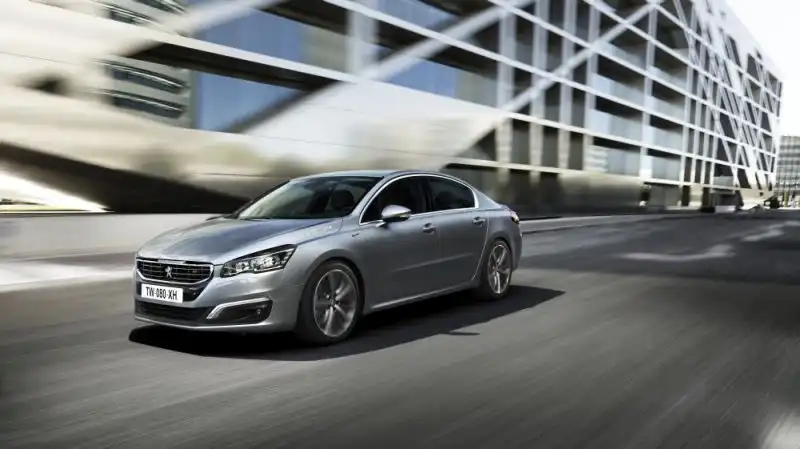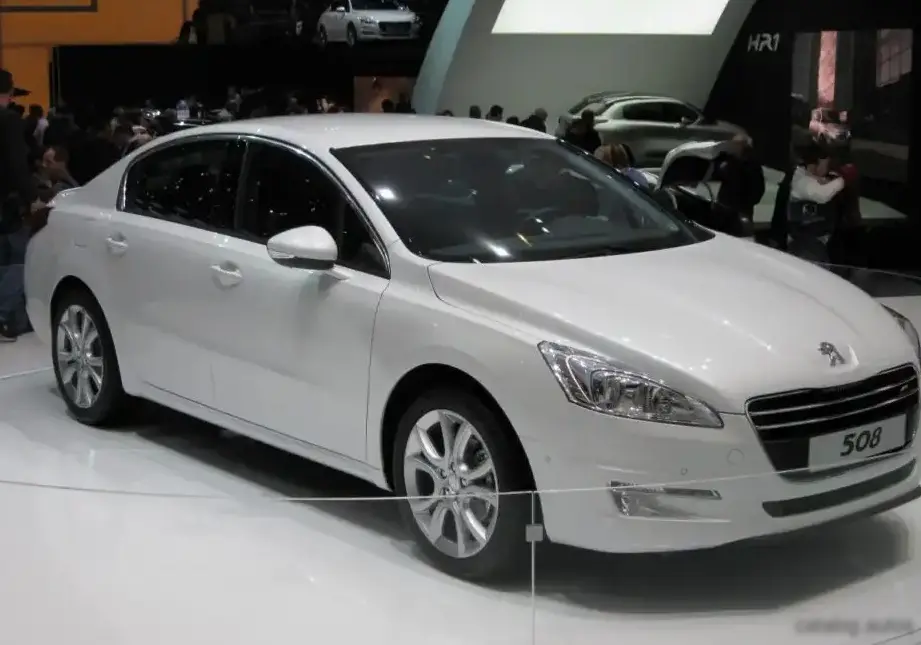
The Peugeot 508 2.0 HDI 163 Automatic, produced between 2010 and 2014, represents a significant offering within the first generation (Phase I) of Peugeot’s mid-size executive car. Positioned as a comfortable and efficient option, this variant aimed to appeal to drivers seeking a blend of performance and economy in a stylish package. It was a key component of Peugeot’s strategy to compete with established rivals like the Ford Mondeo, Vauxhall/Opel Insignia, and Volkswagen Passat in the European market. The 508, replacing the aging 407, sought to elevate Peugeot’s image with a more modern design and improved driving dynamics.
Technical Specifications
| Brand | Peugeot |
| Model | 508 |
| Generation | 508 I (Phase I, 2010) |
| Type (Engine) | 2.0 HDI (163 Hp) FAP Automatic |
| Start of production | 2010 |
| End of production | 2014 |
| Powertrain Architecture | Internal Combustion engine |
| Body type | Sedan |
| Seats | 5 |
| Doors | 4 |
| Fuel consumption (urban) | 7.8 l/100 km (30.2 US mpg, 36.2 UK mpg, 12.8 km/l) |
| Fuel consumption (extra urban) | 4.5 l/100 km (52.3 US mpg, 62.8 UK mpg, 22.2 km/l) |
| Fuel consumption (combined) | 5.7 l/100 km (41.3 US mpg, 49.6 UK mpg, 17.5 km/l) |
| Fuel Type | Diesel |
| Acceleration 0 – 100 km/h | 9.2 sec |
| Acceleration 0 – 62 mph | 9.2 sec |
| Acceleration 0 – 60 mph | 8.7 sec |
| Maximum speed | 225 km/h (139.81 mph) |
| Emission standard | Euro 5 |
| Weight-to-power ratio | 9.3 kg/Hp, 107.2 Hp/tonne |
| Weight-to-torque ratio | 4.5 kg/Nm, 223.7 Nm/tonne |
| Power | 163 Hp @ 3750 rpm |
| Power per litre | 81.6 Hp/l |
| Torque | 340 Nm @ 2000-3000 rpm (250.77 lb.-ft. @ 2000-3000 rpm) |
| Engine layout | Front, Transverse |
| Engine Model/Code | RHH DW10CTED4 |
| Engine displacement | 1997 cm3 (121.86 cu. in.) |
| Number of cylinders | 4 |
| Engine configuration | Inline |
| Number of valves per cylinder | 4 |
| Fuel injection system | Diesel Commonrail |
| Engine aspiration | Turbocharger, Intercooler |
| Engine oil capacity | 5 l (5.28 US qt | 4.4 UK qt) |
| Coolant capacity | 10 l (10.57 US qt | 8.8 UK qt) |
| Kerb Weight | 1520 kg (3351.03 lbs.) |
| Max. weight | 2105 kg (4640.73 lbs.) |
| Max load | 585 kg (1289.7 lbs.) |
| Trunk (boot) space – minimum | 473 l (16.7 cu. ft.) |
| Trunk (boot) space – maximum | 515 l (18.19 cu. ft.) |
| Fuel tank capacity | 72 l (19.02 US gal | 15.84 UK gal) |
| Length | 4792 mm (188.66 in.) |
| Width | 1920 mm (75.59 in.) |
| Height | 1456 mm (57.32 in.) |
| Wheelbase | 2817 mm (110.91 in.) |
| Minimum turning circle | 11.9 m (39.04 ft.) |
| Drivetrain Architecture | Front wheel drive |
| Number of gears | 6 |
| Gearbox type | Automatic transmission |
| Front suspension | Independent type McPherson |
| Rear suspension | Independent multi-link suspension |
| Front brakes | Ventilated discs |
| Rear brakes | Disc |
| Tire size | 215/55 R17; 235/45 R18 |
| Wheel rims size | 17; 18 |
INTRODUCTION
The Peugeot 508 2.0 HDI 163 Automatic, launched in 2010, was a core variant within the 508 range. Built on the PSA Group’s Platform 3, also known as the 1HX0/A3 platform, it aimed to provide a refined and practical option for buyers in the D-segment. This particular model combined a 2.0-liter turbocharged diesel engine with a six-speed automatic transmission, offering a balance between fuel efficiency and ease of driving. It sat in the mid-range of the 508 lineup, offering more performance and features than the entry-level petrol models, but remaining more accessible than the higher-powered diesel or flagship trims.
Powertrain & Engine Architecture
At the heart of the 508 2.0 HDI 163 Automatic lies the DW10CTED4 engine, a four-cylinder diesel powerplant. This engine utilizes a common rail direct injection system, delivering fuel at extremely high pressure for optimized combustion. The turbocharger, coupled with an intercooler, forces more air into the cylinders, boosting power output. The engine features four valves per cylinder and a double overhead camshaft (DOHC) configuration. The ‘163’ designation refers to the engine’s peak horsepower output. The automatic transmission is a six-speed torque converter unit, chosen for its smoothness and ease of use. This transmission was designed to work seamlessly with the engine’s torque curve, providing comfortable and efficient gear changes. The inclusion of a Diesel Particulate Filter (DPF), indicated by the ‘FAP’ in the model name, was crucial for meeting stringent Euro 5 emission standards.
Driving Characteristics
The 508 2.0 HDI 163 Automatic offered a composed and comfortable driving experience. While not overtly sporty, the engine delivered ample torque – 340 Nm (250.77 lb.-ft.) – from 2000 to 3000 rpm, providing strong acceleration for overtaking and merging. The automatic transmission, while smooth, wasn’t particularly quick to shift, and lacked the responsiveness of a manual gearbox. Acceleration from 0 to 60 mph took around 8.7 seconds, and the car had a top speed of 139.81 mph. Compared to the 1.6 HDI models, the 2.0 HDI offered noticeably more power and refinement. The higher-output 2.2 HDI versions provided even greater performance, but at the cost of increased fuel consumption and a higher price point. The automatic transmission, while convenient, did slightly diminish fuel economy compared to the manual versions.
Equipment & Trim Levels
The 508 2.0 HDI 163 Automatic typically came equipped with a respectable level of standard features. These included air conditioning, electric windows and mirrors, a CD stereo system, and alloy wheels. Higher trim levels, such as Allure or GT, added features like dual-zone climate control, a touchscreen infotainment system, parking sensors, and leather upholstery. Interior upholstery was generally cloth on the base models, with leather options available on higher trims. The dashboard layout was modern and functional, with a focus on ergonomics. Optional extras included a panoramic sunroof, navigation system, and advanced driver-assistance systems.
Chassis & Braking
The 508 featured a McPherson strut front suspension and a multi-link rear suspension, providing a good balance between ride comfort and handling. The suspension was tuned to prioritize comfort, resulting in a smooth ride over most road surfaces. Front brakes were ventilated discs, while rear brakes were solid discs. Anti-lock Braking System (ABS) was standard, enhancing safety. The steering was a rack and pinion system, providing precise and responsive control. Tire sizes varied depending on the trim level, with 215/55 R17 and 235/45 R18 being common options.
Market Reception & Comparison
The Peugeot 508 2.0 HDI 163 Automatic was generally well-received by automotive critics. It was praised for its stylish design, comfortable ride, and fuel efficiency. However, some critics noted that the automatic transmission could feel sluggish at times, and that the interior, while well-built, lacked the premium feel of some rivals. Fuel economy was a strong point, with combined figures around 41.3 US mpg. Reliability was generally good, although some owners reported issues with the DPF system, a common problem with modern diesel vehicles. Compared to the 1.6 HDI, the 2.0 HDI offered a significant performance upgrade, while remaining more affordable than the 2.2 HDI.
Legacy
The Peugeot 508 2.0 HDI 163 Automatic remains a popular choice in the used car market. The DW10CTED4 engine is known for its durability, provided it has been properly maintained. Regular servicing, including DPF regeneration, is crucial for long-term reliability. While the car is now aging, it still offers a comfortable and economical driving experience. The availability of spare parts is generally good, and the 508’s relatively simple mechanical design makes it relatively easy to maintain. It represents a solid and dependable option for buyers seeking a mid-size executive car with a focus on fuel efficiency and practicality.