Technical Specifications
| Brand | Peugeot |
| Model | 508 |
| Generation | 508 I (Phase I, 2010) |
| Type (Engine) | 2.0 HDi (200 Hp) Hybrid4 4×4 Automatic |
| Start of production | 2011 |
| End of production | 2014 |
| Powertrain Architecture | FHEV (Full Hybrid Electric Vehicle) |
| Body type | Sedan |
| Seats | 5 |
| Doors | 4 |
| CO2 emissions (WLTP) | 91 g/km |
| Fuel consumption (urban) | 3.5 l/100 km (67.2 US mpg, 80.7 UK mpg, 28.6 km/l) |
| Fuel consumption (extra urban) | 3.7 l/100 km (63.6 US mpg, 76.3 UK mpg, 27 km/l) |
| Fuel consumption (combined) | 3.6 l/100 km (65.3 US mpg, 78.5 UK mpg, 27.8 km/l) |
| Fuel Type | Diesel |
| Acceleration 0 – 100 km/h | 8.6 sec |
| Acceleration 0 – 62 mph | 8.6 sec |
| Acceleration 0 – 60 mph | 8.2 sec |
| Maximum speed | 210 km/h (130.49 mph) |
| Emission standard | Euro 5 |
| Weight-to-power ratio | 8.3 kg/Hp, 120.5 Hp/tonne |
| Weight-to-torque ratio | 3.7 kg/Nm, 271.1 Nm/tonne |
| Battery technology | Nickel-metal hydride (NiMH) |
| Electric motor power | 37 Hp |
| System power | 200 Hp @ 3750 rpm |
| System torque | 450 Nm @ 1750 rpm (331.9 lb.-ft. @ 1750 rpm) |
| Engine Power | 163 Hp @ 3750 rpm |
| Power per litre | 81.6 Hp/l |
| Engine Torque | 300 Nm @ 1750 rpm (221.27 lb.-ft. @ 1750 rpm) |
| Engine layout | Front, Transverse |
| Engine Model/Code | RHC DW10CTED4 |
| Engine displacement | 1997 cm3 (121.86 cu. in.) |
| Number of cylinders | 4 |
| Engine configuration | Inline |
| Number of valves per cylinder | 4 |
| Fuel injection system | Diesel Commonrail |
| Engine aspiration | Turbocharger, Intercooler |
| Engine oil capacity | 5 l (5.28 US qt | 4.4 UK qt) |
| Coolant capacity | 10 l (10.57 US qt | 8.8 UK qt) |
| Kerb Weight | 1660 kg (3659.67 lbs.) |
| Max. weight | 2265 kg (4993.47 lbs.) |
| Max load | 605 kg (1333.8 lbs.) |
| Trunk (boot) space – minimum | 339 l (11.97 cu. ft.) |
| Trunk (boot) space – maximum | 1205 l (42.55 cu. ft.) |
| Fuel tank capacity | 72 l (19.02 US gal | 15.84 UK gal) |
| Length | 4792 mm (188.66 in.) |
| Width | 1920 mm (75.59 in.) |
| Height | 1456 mm (57.32 in.) |
| Wheelbase | 2817 mm (110.91 in.) |
| Minimum turning circle | 10.9 m (35.76 ft.) |
| Drivetrain Architecture | ICE drives front wheels, electric motor drives rear wheels. Capable of full electric, ICE only, or mixed mode. |
| Drive wheel | All wheel drive (4×4) |
| Number of gears | 6 |
| Gearbox type | Automatic transmission |
| Front suspension | Independent type McPherson |
| Rear suspension | Independent multi-link suspension |
| Front brakes | Ventilated discs |
| Rear brakes | Disc |
| Assisting systems | ABS (Anti-lock braking system) |
| Steering type | Steering rack and pinion |
| Tires size | 215/55 R17 94W; 235/45 R18 98W |
| Wheel rims size | 17; 18 |
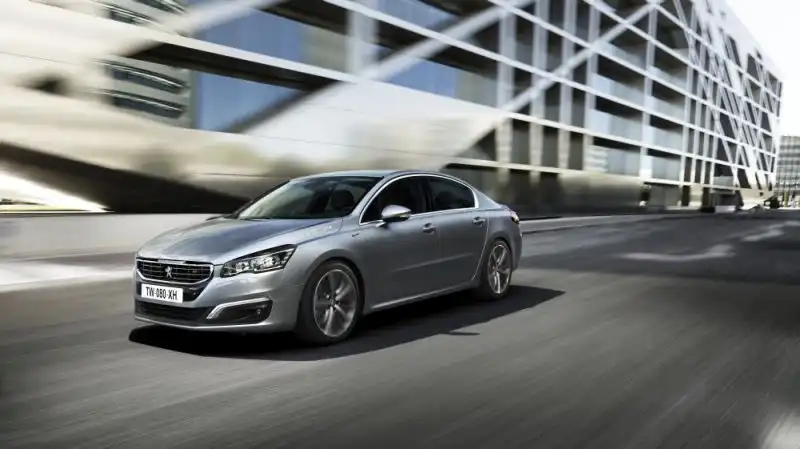
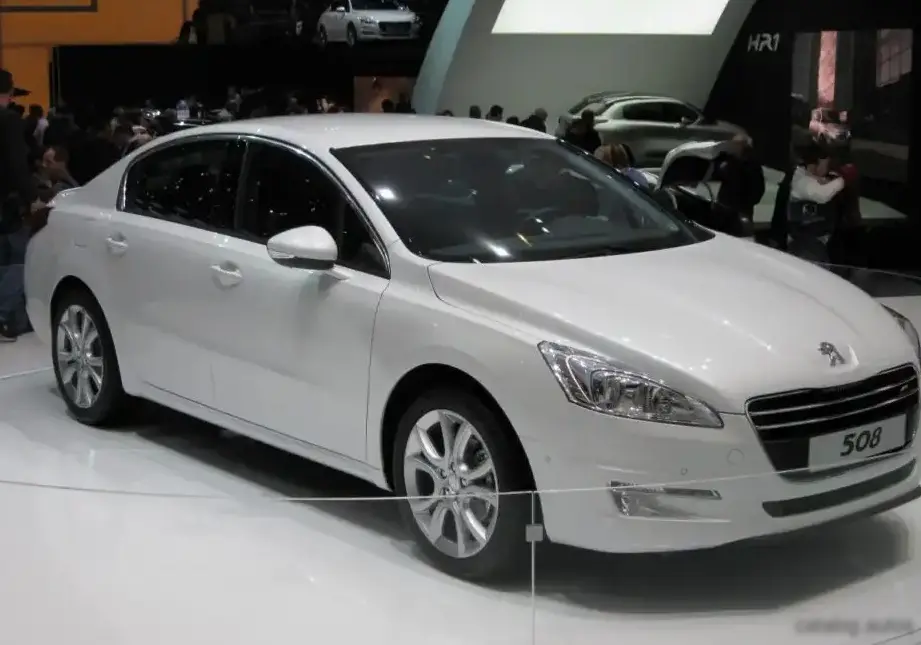
The Peugeot 508 I (Phase I) 2.0 HDi Hybrid4 4×4 Automatic, launched in 2011, was a flagship model within the 508 range. Built on the PSA Group’s Platform 3, also known as the 1HX0/A3 platform, it aimed to provide a premium driving experience with a focus on fuel efficiency and reduced emissions. The Hybrid4 system was Peugeot’s first foray into diesel-electric hybrid technology, and the 508 was the first vehicle to showcase it. This variant was marketed towards buyers seeking a sophisticated, technologically advanced, and environmentally responsible vehicle without compromising on performance or practicality.
Powertrain & Engine Architecture
At the heart of the 508 Hybrid4 lies the DW10CTED4 2.0-liter four-cylinder diesel engine, identified by the RHC engine code. This engine produces 163 horsepower at 3750 rpm and 300 Nm (221.27 lb.-ft.) of torque at 1750 rpm. It features a common rail direct injection system and a turbocharger with an intercooler, optimizing combustion and boosting power output. The engine is paired with a 37 horsepower electric motor, powered by a Nickel-metal hydride (NiMH) battery pack. The combined system output is 200 horsepower at 3750 rpm and a substantial 450 Nm (331.9 lb.-ft.) of torque at 1750 rpm. The six-speed automatic transmission manages power delivery to all four wheels. The front wheels are driven by the diesel engine, while the electric motor powers the rear wheels, creating an intelligent all-wheel-drive system. The Hybrid4 system allows for three driving modes: Zero Emission Vehicle (ZEV) mode for short-distance electric-only driving, automatic hybrid mode, and Sport mode for maximum performance.
Driving Characteristics
The 2.0 HDi Hybrid4 4×4 Automatic offered a unique driving experience. The electric motor provides instant torque, supplementing the diesel engine and resulting in brisk acceleration – 0-62 mph in 8.6 seconds. The all-wheel-drive system enhances traction, particularly in adverse weather conditions. While not as overtly sporty as some of its rivals, the 508 Hybrid4 delivers a refined and comfortable ride. The automatic transmission provides smooth gear changes, and the hybrid system seamlessly blends power from both sources. Compared to the standard 2.0 HDi models, the Hybrid4 offers improved acceleration and handling due to the added torque and all-wheel drive. However, the added weight of the hybrid components does slightly impact agility. Compared to the higher-output gasoline engines available in the 508 range, the Hybrid4 prioritized fuel efficiency over outright performance.
Equipment & Trim Levels
The 508 Hybrid4 4×4 Automatic typically came well-equipped, reflecting its position as the range-topping model. Standard features included automatic climate control, a touchscreen infotainment system, Bluetooth connectivity, and a comprehensive suite of safety features, including ABS, ESP, and multiple airbags. Interior upholstery was typically a high-quality cloth or leather, and the dashboard featured a modern and elegant design. Optional extras included a panoramic sunroof, navigation system, premium sound system, and parking sensors. The trim level often included unique badging and exterior styling cues to differentiate it from other 508 models.
Chassis & Braking
The 508 Hybrid4 utilizes an independent McPherson strut suspension at the front and an independent multi-link suspension at the rear, providing a comfortable and controlled ride. The suspension is tuned to balance handling and comfort, making it suitable for both city driving and long-distance journeys. The braking system consists of ventilated discs at the front and solid discs at the rear, providing ample stopping power. The ABS (Anti-lock braking system) and ESP (Electronic Stability Program) enhance safety by preventing wheel lock-up and maintaining vehicle stability during emergency braking or challenging driving conditions.
Market Reception & Comparison
The Peugeot 508 Hybrid4 4×4 Automatic was generally well-received by automotive critics. It was praised for its innovative hybrid technology, fuel efficiency, and comfortable ride. However, some reviewers noted the added weight of the hybrid system and the relatively high price compared to other 508 models. In terms of fuel economy, the Hybrid4 significantly outperformed traditional gasoline-powered rivals, achieving combined fuel consumption figures of around 3.6 l/100 km (65.3 US mpg). Reliability was generally good, although the complexity of the hybrid system meant that maintenance costs could be higher than those of conventional vehicles. Compared to the 2.0 HDi non-hybrid models, the Hybrid4 offered improved performance and all-wheel drive, but at a premium price.
Legacy
The Peugeot 508 I Hybrid4 4×4 Automatic was a pioneering vehicle that demonstrated Peugeot’s commitment to hybrid technology. While the first-generation Hybrid4 system was relatively complex, it paved the way for future hybrid and electric vehicles from the brand. Today, the 508 Hybrid4 is a relatively rare and sought-after vehicle among enthusiasts. Its long-term reliability is generally good, although regular maintenance is essential to ensure the proper functioning of the hybrid system. The used car market values these models for their unique technology, fuel efficiency, and distinctive styling. The 508 Hybrid4 remains a testament to Peugeot’s innovative spirit and its early efforts to embrace sustainable mobility.