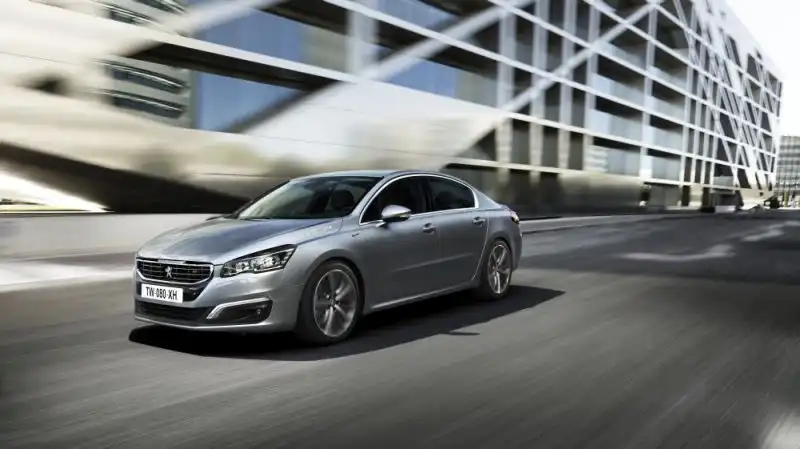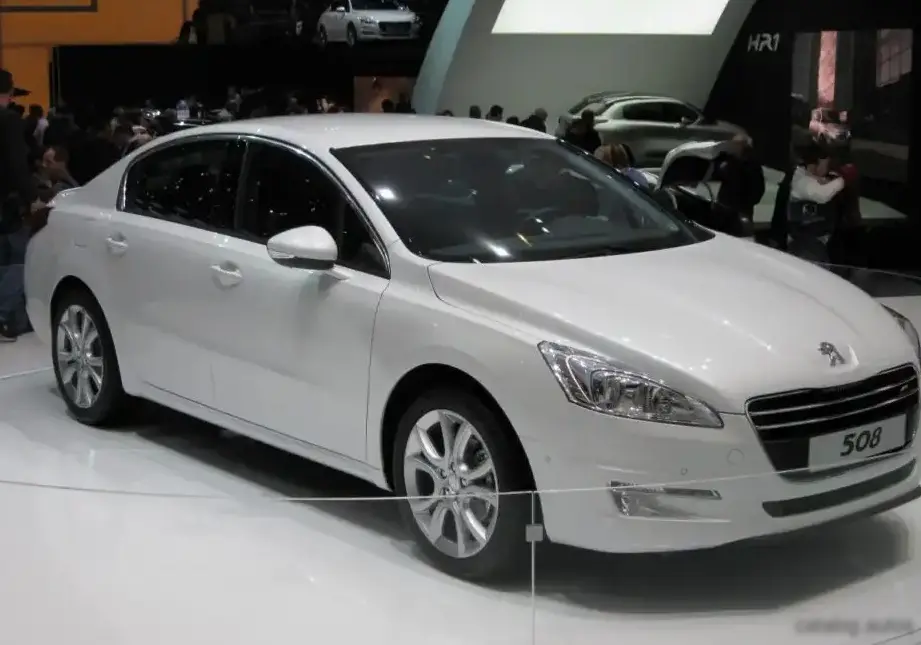
The Peugeot 508 2.2 HDI FAP Automatic, produced between 2010 and 2014, represented a significant offering in Peugeot’s mid-size sedan lineup. This variant, part of the first generation 508 (Phase I), aimed to provide a blend of performance, efficiency, and comfort, targeting buyers seeking a refined diesel experience. Positioned as a mid-to-upper trim level, it offered a step up from the lower-powered engine options while remaining more accessible than the flagship models. The 508 itself was designed to replace both the 407 and 607, consolidating Peugeot’s offerings in the D-segment and competing with vehicles like the Ford Mondeo, Volkswagen Passat, and Opel/Vauxhall Insignia.
Technical Specifications
| Brand | Peugeot |
| Model | 508 |
| Generation | 508 I (Phase I, 2010) |
| Type (Engine) | 2.2 HDI (204 Hp) FAP Automatic |
| Start of production | 2010 |
| End of production | 2014 |
| Powertrain Architecture | Internal Combustion engine |
| Body type | Sedan |
| Seats | 5 |
| Doors | 4 |
| Fuel consumption (urban) | 8 l/100 km (29.4 US mpg, 35.3 UK mpg, 12.5 km/l) |
| Fuel consumption (extra urban) | 4.4 l/100 km (53.5 US mpg, 64.2 UK mpg, 22.7 km/l) |
| Fuel consumption (combined) | 5.7 l/100 km (41.3 US mpg, 49.6 UK mpg, 17.5 km/l) |
| Fuel Type | Diesel |
| Acceleration 0 – 100 km/h | 8.2 sec |
| Acceleration 0 – 62 mph | 8.2 sec |
| Acceleration 0 – 60 mph | 7.8 sec |
| Maximum speed | 234 km/h (145.4 mph) |
| Emission standard | Euro 5 |
| Weight-to-power ratio | 7.5 kg/Hp, 132.5 Hp/tonne |
| Weight-to-torque ratio | 3.4 kg/Nm, 292.2 Nm/tonne |
| Power | 204 Hp @ 3500 rpm |
| Power per litre | 93.6 Hp/l |
| Torque | 450 Nm @ 2000-2750 rpm (331.9 lb.-ft. @ 2000-2750 rpm) |
| Engine layout | Front, Transverse |
| Engine Model/Code | 4HL DW12C |
| Engine displacement | 2179 cm3 (132.97 cu. in.) |
| Number of cylinders | 4 |
| Engine configuration | Inline |
| Number of valves per cylinder | 4 |
| Fuel injection system | Diesel Commonrail |
| Engine aspiration | Turbocharger, Intercooler |
| Engine oil capacity | 5.25 l (5.55 US qt | 4.62 UK qt) |
| Coolant capacity | 10 l (10.57 US qt | 8.8 UK qt) |
| Kerb Weight | 1540 kg (3395.12 lbs.) |
| Max. weight | 2155 kg (4750.96 lbs.) |
| Max load | 615 kg (1355.84 lbs.) |
| Trunk (boot) space – minimum | 473 l (16.7 cu. ft.) |
| Trunk (boot) space – maximum | 515 l (18.19 cu. ft.) |
| Fuel tank capacity | 72 l (19.02 US gal | 15.84 UK gal) |
| Length | 4792 mm (188.66 in.) |
| Width | 1920 mm (75.59 in.) |
| Height | 1456 mm (57.32 in.) |
| Wheelbase | 2817 mm (110.91 in.) |
| Minimum turning circle | 11.9 m (39.04 ft.) |
| Drivetrain Architecture | Front wheel drive |
| Number of gears | 6 |
| Gearbox type | Automatic transmission |
| Front suspension | Independent type McPherson |
| Rear suspension | Independent multi-link suspension |
| Front brakes | Ventilated discs |
| Rear brakes | Disc |
| Assisting systems | ABS (Anti-lock braking system) |
| Steering type | Steering rack and pinion |
| Tires size | 235/45 R18; 235/40 R19 |
| Wheel rims size | 18; 19 |
INTRODUCTION
The Peugeot 508 2.2 HDI FAP Automatic, launched in 2010, was a key variant within the first generation of the 508. Built on the PSA Group’s Platform 3, also known as the 1HX0/A3 platform, it aimed to offer a more premium and sophisticated experience than its predecessors. The 2.2-liter HDI engine, coupled with a six-speed automatic transmission, provided a balance between performance and fuel economy, making it a popular choice for drivers covering long distances. This model year marked a shift for Peugeot, emphasizing design and driving dynamics in the mid-size segment.
Powertrain & Engine Architecture
At the heart of the 508 2.2 HDI Automatic lies the DW12C engine, a 2.2-liter inline-four cylinder diesel engine. This engine utilizes a common rail direct injection system, delivering fuel at extremely high pressures for optimized combustion. The DW12C is equipped with a variable geometry turbocharger and an intercooler, enhancing both power and torque output. The engine’s code, 4HL, further identifies specific calibrations and equipment levels. The six-speed automatic transmission, sourced from Aisin, was chosen for its smoothness and efficiency. It features a torque converter and electronic control, adapting shift points based on driving conditions and throttle input. The inclusion of a Diesel Particulate Filter (FAP) was crucial for meeting stringent Euro 5 emission standards.
Driving Characteristics
The 204 horsepower and 450 Nm (331.9 lb-ft) of torque delivered by the 2.2 HDI engine provided brisk acceleration, with a 0-60 mph time of around 7.8 seconds. While not a sports sedan, the 508 2.2 HDI offered ample power for overtaking and highway cruising. The automatic transmission, while smooth, wasn’t particularly quick to respond to throttle inputs compared to some dual-clutch transmissions available in competing models. The gear ratios were tuned for fuel efficiency, prioritizing comfortable cruising over outright performance. Compared to the lower-powered 1.6 HDI versions, the 2.2 HDI offered a noticeably more refined and effortless driving experience. It also provided a more relaxed drive than the higher-performance petrol variants.
Equipment & Trim Levels
The 508 2.2 HDI Automatic typically came well-equipped, reflecting its position as a mid-to-upper trim level. Standard features often included dual-zone climate control, a touchscreen infotainment system with Bluetooth connectivity, and automatic headlights and wipers. Interior upholstery was typically cloth or a combination of cloth and leather. Higher trim levels offered full leather upholstery, heated front seats, and a panoramic sunroof. Optional extras included a navigation system, a premium sound system, and parking sensors. The dashboard layout was modern and driver-focused, with a high center console and intuitive controls.
Chassis & Braking
The 508 2.2 HDI Automatic featured an independent suspension setup at both the front (McPherson strut) and rear (multi-link). This configuration provided a comfortable ride quality and good handling characteristics. The front brakes were ventilated discs, while the rear brakes were solid discs. Anti-lock Braking System (ABS) was standard, enhancing safety and stability during emergency braking. The steering was a rack and pinion system, offering precise and responsive control. The 508’s chassis was designed to balance comfort and handling, providing a stable and predictable driving experience.
Market Reception & Comparison
The Peugeot 508 2.2 HDI Automatic received generally positive reviews from automotive critics. It was praised for its stylish design, comfortable ride, and refined engine. However, some critics noted that the automatic transmission could feel slightly sluggish at times. Fuel economy was a strong point, with the 508 achieving around 41.3 US mpg on the combined cycle. Compared to the 1.6 HDI versions, the 2.2 HDI offered significantly more power and refinement, justifying the higher price tag. Against competitors like the Ford Mondeo and Volkswagen Passat, the 508 offered a more distinctive design and a slightly more luxurious interior.
Legacy
The Peugeot 508 2.2 HDI Automatic has proven to be a relatively reliable vehicle, with the DW12C engine being known for its durability. However, like all diesel vehicles, it’s important to ensure regular maintenance, including timely replacement of the FAP. In the used car market, these models represent a good value proposition, offering a comfortable and efficient driving experience at an affordable price. While newer generations of the 508 have been introduced, the first generation remains a popular choice for those seeking a stylish and well-equipped mid-size sedan.