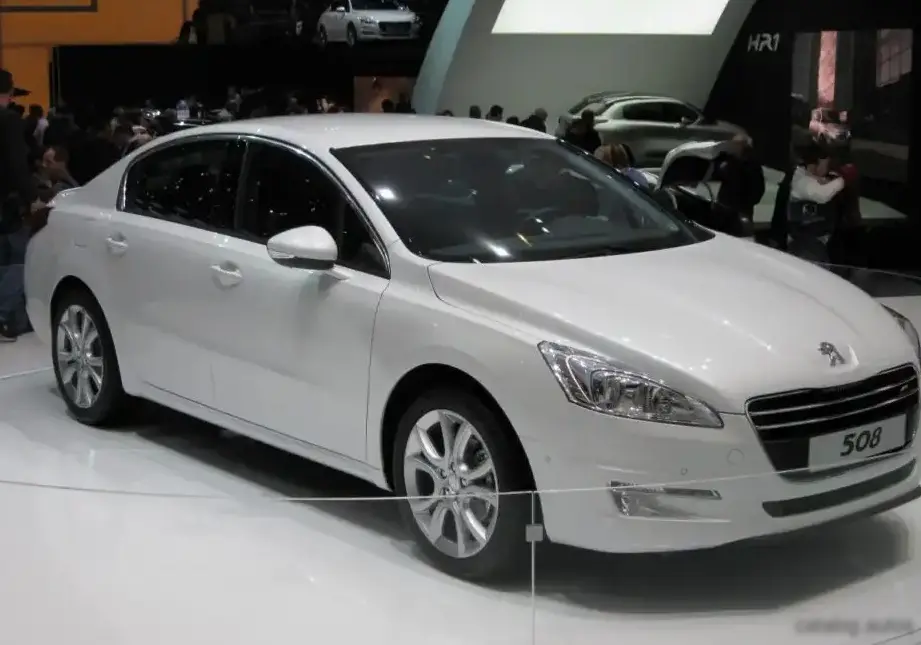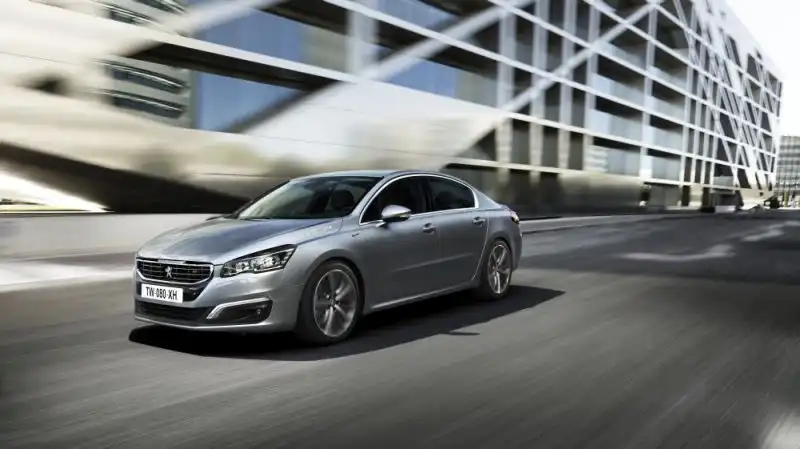
The Peugeot 508 I (Phase II), specifically the 1.6 BlueHDi variant producing 120 horsepower, was a key model in Peugeot’s lineup from 2015 to 2018. This iteration of the 508, a large family car, represented a mid-cycle refresh of the original 508 introduced in 2010. Positioned as an efficient and practical option, the 1.6 BlueHDi 120 hp model aimed to balance fuel economy with acceptable performance for everyday driving. It primarily served the European market, where diesel engines remained highly popular due to favorable taxation and fuel efficiency.
Technical Specifications
| Brand | Peugeot |
| Model | 508 |
| Generation | 508 I (Phase II, 2014) |
| Type (Engine) | 1.6 BlueHDI (120 Hp) |
| Start of production | 2015 |
| End of production | 2018 |
| Powertrain Architecture | Internal Combustion engine |
| Body type | Sedan |
| Seats | 5 |
| Doors | 4 |
| Fuel consumption (urban) | 4.7 l/100 km (50 US mpg, 60.1 UK mpg, 21.3 km/l) |
| Fuel consumption (extra urban) | 3.6 l/100 km (65.3 US mpg, 78.5 UK mpg, 27.8 km/l) |
| Fuel consumption (combined) | 4 l/100 km (58.8 US mpg, 70.6 UK mpg, 25 km/l) |
| CO2 emissions | 103 g/km |
| Fuel Type | Diesel |
| Acceleration 0 – 100 km/h | 11 sec |
| Acceleration 0 – 62 mph | 11 sec |
| Acceleration 0 – 60 mph | 10.5 sec |
| Maximum speed | 202 km/h (125.52 mph) |
| Emission standard | Euro 6 |
| Weight-to-power ratio | 13.5 kg/Hp, 74.1 Hp/tonne |
| Weight-to-torque ratio | 5.4 kg/Nm, 185.2 Nm/tonne |
| Power | 120 Hp @ 3500 rpm |
| Power per litre | 76.9 Hp/l |
| Torque | 300 Nm @ 1750 rpm (221.27 lb.-ft. @ 1750 rpm) |
| Engine layout | Front, Transverse |
| Engine Model/Code | BHZ DV6FC |
| Engine displacement | 1560 cm3 (95.2 cu. in.) |
| Engine configuration | Inline |
| Fuel injection system | Diesel Commonrail |
| Engine aspiration | Turbocharger, Intercooler |
| Engine oil capacity | 3.75 l (3.96 US qt, 3.3 UK qt) |
| Coolant capacity | 6 l (6.34 US qt, 5.28 UK qt) |
| Kerb Weight | 1620 kg (3571.49 lbs) |
| Max. weight | 2025 kg (4464.36 lbs) |
| Max load | 405 kg (892.87 lbs) |
| Trunk (boot) space – minimum | 515 l (18.19 cu. ft.) |
| Trunk (boot) space – maximum | 1183 l (41.78 cu. ft.) |
| Fuel tank capacity | 72 l (19.02 US gal, 15.84 UK gal) |
| Permitted trailer load with brakes (12%) | 1475 kg (3251.82 lbs) |
| Permitted trailer load without brakes | 740 kg (1631.42 lbs) |
| Length | 4830 mm (190.16 in) |
| Width | 1828 mm (71.97 in) |
| Width including mirrors | 2068 mm (81.42 in) |
| Height | 1456 mm (57.32 in) |
| Wheelbase | 2817 mm (110.91 in) |
| Front track | 1579 mm (62.17 in) |
| Rear track | 1552 mm (61.1 in) |
| Drivetrain Architecture | Front wheel drive |
| Number of gears | 6 |
| Gearbox type | Manual transmission |
| Front brakes | Ventilated discs |
| Rear brakes | Disc |
| Tires size | 215/60 R16 |
| Wheel rims size | 16 |
INTRODUCTION
The 508 Phase II, launched in 2014, represented a significant update to Peugeot’s flagship sedan and SW (station wagon) models. The 1.6 BlueHDi 120 hp variant was introduced as a more economical option within the range, appealing to buyers prioritizing fuel efficiency and lower running costs. This engine choice sat below the more powerful 2.0 BlueHDi options and the petrol-powered 1.6 THP, making it an entry-level diesel offering. The Phase II updates included revised styling, improved interior materials, and updated technology, aiming to enhance the 508’s appeal in a competitive segment.
Powertrain & Engine Architecture
The heart of this 508 variant is the PSA Group’s 1.6-liter BlueHDi engine, specifically the BHZ DV6FC code. This engine is a four-cylinder, inline diesel featuring a turbocharger with an intercooler. The BlueHDi technology incorporates a Selective Catalytic Reduction (SCR) system using AdBlue (Diesel Exhaust Fluid) to significantly reduce nitrogen oxide (NOx) emissions, ensuring compliance with stringent Euro 6 emission standards. The engine utilizes a common rail direct injection system, delivering fuel at high pressure for optimized combustion. The valvetrain features two overhead camshafts (DOHC) controlling four valves per cylinder. The 120 hp output is achieved at 3500 rpm, while the peak torque of 300 Nm (221 lb-ft) is available from just 1750 rpm, providing good low-end responsiveness. This engine was paired with a six-speed manual transmission, chosen for its efficiency and cost-effectiveness.
Driving Characteristics
The 1.6 BlueHDi 120 hp 508 offers a comfortable and refined driving experience, prioritizing fuel economy over outright performance. Acceleration from 0-60 mph takes around 10.5 seconds, and while not particularly quick, it’s adequate for most everyday driving situations. The engine’s strong low-end torque makes it easy to navigate city traffic and provides sufficient power for overtaking on highways. The six-speed manual transmission is well-matched to the engine, offering smooth gear changes. Compared to the more powerful 2.0 BlueHDi variants, the 1.6 feels less responsive, especially at higher speeds. However, the trade-off is significantly improved fuel economy. The gear ratios are tuned for efficiency, with a relatively long final drive contributing to lower engine speeds at cruising speeds.
Equipment & Trim Levels
The 1.6 BlueHDi 120 hp 508 typically came equipped with a reasonable level of standard features. These generally included air conditioning, electric front windows, a touchscreen infotainment system with Bluetooth connectivity, and alloy wheels. Higher trim levels, such as Allure or Feline, added features like dual-zone climate control, rear parking sensors, a panoramic sunroof, leather upholstery, and a more advanced infotainment system with navigation. Optional extras included a head-up display, adaptive cruise control, and a premium sound system. Interior upholstery was typically cloth on the base models, with leather options available on higher trims. The dashboard layout was generally clean and modern, with a focus on ergonomics.
Chassis & Braking
The 508 Phase II features a MacPherson strut front suspension and a multi-link rear suspension, providing a good balance between comfort and handling. The suspension setup is tuned for a comfortable ride, absorbing bumps and imperfections in the road effectively. The front brakes are ventilated discs, while the rear brakes are solid discs. Anti-lock Braking System (ABS) with Electronic Brakeforce Distribution (EBD) is standard. Electric power steering provides light and precise steering feel. The 1.6 BlueHDi models typically featured a smaller stabilizer bar compared to the higher-powered variants, contributing to a slightly softer ride but potentially less body control during cornering.
Market Reception & Comparison
The Peugeot 508 1.6 BlueHDi 120 hp was generally well-received by critics for its fuel efficiency and comfortable ride. However, some reviewers noted that the engine lacked the punch of the more powerful alternatives. Compared to the 2.0 BlueHDi models, the 1.6 offered significantly better fuel economy but at the expense of performance. Against competitors like the Ford Mondeo, Volkswagen Passat, and Opel/Vauxhall Insignia, the 508 offered a stylish alternative with a focus on comfort and refinement. The 1.6 BlueHDi’s fuel economy figures of around 4.0 l/100 km (58.8 US mpg) were competitive within its class.
Legacy
The 1.6 BlueHDi engine proved to be a reliable and durable powertrain when properly maintained. The SCR system, while effective at reducing emissions, requires regular AdBlue refills. In the used car market, the 508 1.6 BlueHDi 120 hp represents a good value proposition for buyers seeking an economical and comfortable family car. Common issues are relatively minor, often related to the diesel particulate filter (DPF) if the vehicle has been primarily used for short journeys. Overall, this variant of the 508 remains a practical and appealing option for those prioritizing fuel efficiency and low running costs.