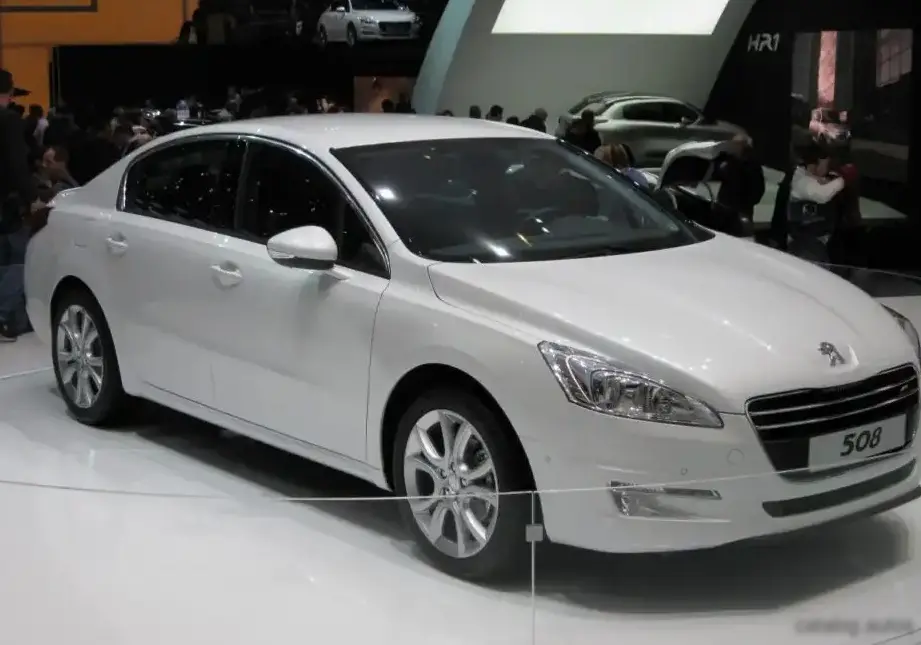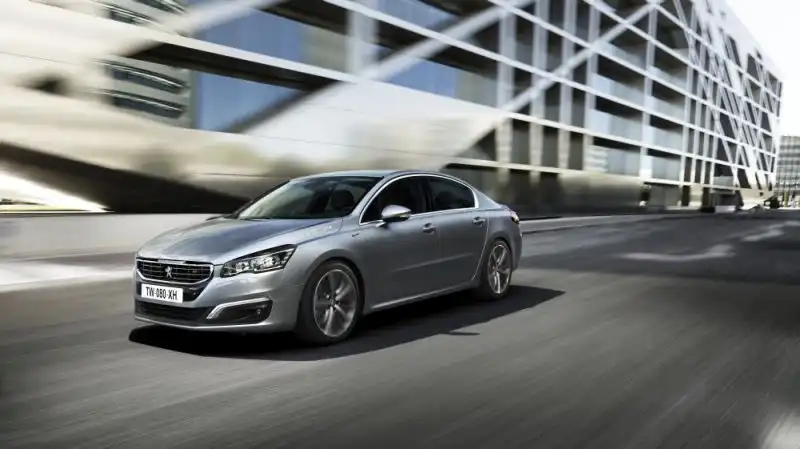
The Peugeot 508 I (Phase II), specifically the 1.6 THP 165 horsepower automatic variant, represents a significant refinement of Peugeot’s mid-size executive car. Introduced in 2014 as part of a mid-life facelift for the first-generation 508 (produced from 2010-2018), this model aimed to enhance the car’s appeal with a more efficient powertrain and updated technology. Positioned as a mid-range offering within the 508 lineup, it bridged the gap between the lower-powered diesel options and the more potent, though less fuel-efficient, petrol engines. This version was primarily marketed in Europe, where fuel economy and refinement were key purchasing considerations.
Technical Specifications
| Brand | Peugeot |
| Model | 508 |
| Generation | 508 I (Phase II, 2014) |
| Type (Engine) | 1.6 THP (165 Hp) Automatic |
| Start of production | 2014 |
| End of production | 2018 |
| Powertrain Architecture | Internal Combustion engine |
| Body type | Sedan |
| Seats | 5 |
| Doors | 4 |
| Fuel consumption (urban) | 7.5 l/100 km (31.4 US mpg) |
| Fuel consumption (extra urban) | 4.8 l/100 km (49 US mpg) |
| Fuel consumption (combined) | 5.8 l/100 km (40.6 US mpg) |
| CO2 emissions | 134 g/km |
| Fuel Type | Petrol (Gasoline) |
| Acceleration 0 – 100 km/h | 8.9 sec |
| Acceleration 0 – 62 mph | 8.9 sec |
| Acceleration 0 – 60 mph | 8.5 sec |
| Maximum speed | 210 km/h (130.49 mph) |
| Emission standard | Euro 6 |
| Weight-to-power ratio | 8.5 kg/Hp |
| Weight-to-torque ratio | 5.9 kg/Nm |
| Power | 165 Hp @ 6000 rpm |
| Torque | 240 Nm @ 1400 rpm (177.01 lb.-ft. @ 1400 rpm) |
| Engine layout | Front, Transverse |
| Engine Model/Code | 5GZ EP6FDT |
| Engine displacement | 1598 cm3 (97.52 cu. in.) |
| Number of cylinders | 4 |
| Engine configuration | Inline |
| Number of valves per cylinder | 4 |
| Fuel injection system | Direct injection |
| Engine aspiration | Turbocharger, Intercooler |
| Engine oil capacity | 4.25 l (4.49 US qt | 3.74 UK qt) |
| Kerb Weight | 1410 kg (3108.52 lbs.) |
| Max. weight | 2015 kg (4442.31 lbs.) |
| Max load | 605 kg (1333.8 lbs.) |
| Trunk (boot) space – minimum | 473 l (16.7 cu. ft.) |
| Fuel tank capacity | 72 l (19.02 US gal | 15.84 UK gal) |
| Length | 4830 mm (190.16 in.) |
| Width | 1828 mm (71.97 in.) |
| Height | 1456 mm (57.32 in.) |
| Wheelbase | 2817 mm (110.91 in.) |
| Front track | 1579 mm (62.17 in.) |
| Rear (Back) track | 1552 mm (61.1 in.) |
| Ride height (ground clearance) | 146 mm (5.75 in.) |
| Minimum turning circle | 12.2 m (40.03 ft.) |
| Drivetrain Architecture | Front wheel drive |
| Number of gears | 6 |
| Gearbox type | Automatic transmission |
| Front suspension | Independent, McPherson with coil spring and anti-roll bar |
| Rear suspension | Independent multi-link suspension |
| Front brakes | Ventilated discs |
| Rear brakes | Disc |
| Assisting systems | ABS (Anti-lock braking system) |
| Steering type | Steering rack and pinion |
| Tires size | 215/60 R16; 215/55 R17; 235/45 R18 |
| Wheel rims size | 16; 17; 18 |
Powertrain & Engine Architecture
The heart of this 508 variant is the 1.6 THP (Turbo High Pressure) engine, specifically the 5GZ EP6FDT code. This engine is a member of Peugeot-Citroën’s Prince engine family, developed in collaboration with BMW. It’s a 1.6-liter inline-four cylinder engine featuring direct fuel injection and a twin-scroll turbocharger. The direct injection system, coupled with the turbocharger, allows for a good balance of power and efficiency. The engine produces 165 horsepower at 6000 rpm and 240 Nm (177 lb-ft) of torque at a low 1400 rpm, providing a broad torque curve for responsive driving. The automatic transmission is a six-speed torque converter unit, chosen for its smoothness and refinement, although it doesn’t offer the same level of driver engagement as a manual gearbox.
Driving Characteristics
The 1.6 THP automatic 508 offers a comfortable and refined driving experience. While not overtly sporty, the engine provides adequate performance for everyday driving and highway cruising. Acceleration from 0-60 mph takes around 8.5 seconds, and the car feels reasonably responsive in most situations. The automatic transmission shifts smoothly, but can sometimes feel hesitant during quick overtaking maneuvers. Compared to the more powerful 2.0-liter petrol or diesel variants, this version lacks outright punch, but it compensates with better fuel economy and a more relaxed driving style. The gear ratios are tuned for efficiency, prioritizing fuel savings over aggressive acceleration.
Equipment & Trim Levels
The 1.6 THP automatic typically came equipped with a respectable level of standard features. These included air conditioning, a touchscreen infotainment system, Bluetooth connectivity, cruise control, and automatic headlights and wipers. Interior upholstery was generally cloth, with options for leather upgrades. Higher trim levels added features like a panoramic sunroof, navigation system, and parking sensors. The dashboard layout was typical of Peugeot at the time, with a focus on ergonomics and a driver-centric design.
Chassis & Braking
The 508 I utilizes a McPherson strut front suspension and a multi-link rear suspension, providing a good balance of ride comfort and handling. The front brakes are ventilated discs, while the rear brakes are solid discs. ABS (Anti-lock Braking System) is standard. The suspension tuning is geared towards comfort, absorbing bumps and imperfections in the road well. Stabilizer bars are fitted front and rear to reduce body roll during cornering. The steering is a rack and pinion system, providing precise and predictable handling.
Market Reception & Comparison
The 1.6 THP automatic 508 was generally well-received by critics as a sensible and practical choice. It offered a good compromise between performance, fuel economy, and comfort. Compared to the diesel variants, it was quieter and smoother, but less fuel-efficient. Compared to the more powerful petrol engines, it was more economical but lacked the same level of performance. Fuel economy figures of around 40.6 US mpg combined were competitive for its class. Reliability was generally good, although some early versions of the Prince engine were known to experience issues with carbon buildup, requiring regular maintenance.
Legacy
The 1.6 THP engine proved to be a popular choice in the Peugeot 508 and other PSA Group vehicles. While the first-generation 508 has been superseded by newer models, the 1.6 THP automatic variant remains a relatively common sight on used car lots. The engine, when properly maintained, is generally reliable, but potential buyers should be aware of the potential for carbon buildup and ensure that the car has a full service history. Today, it represents a good value proposition for those seeking a comfortable and economical mid-size executive car.