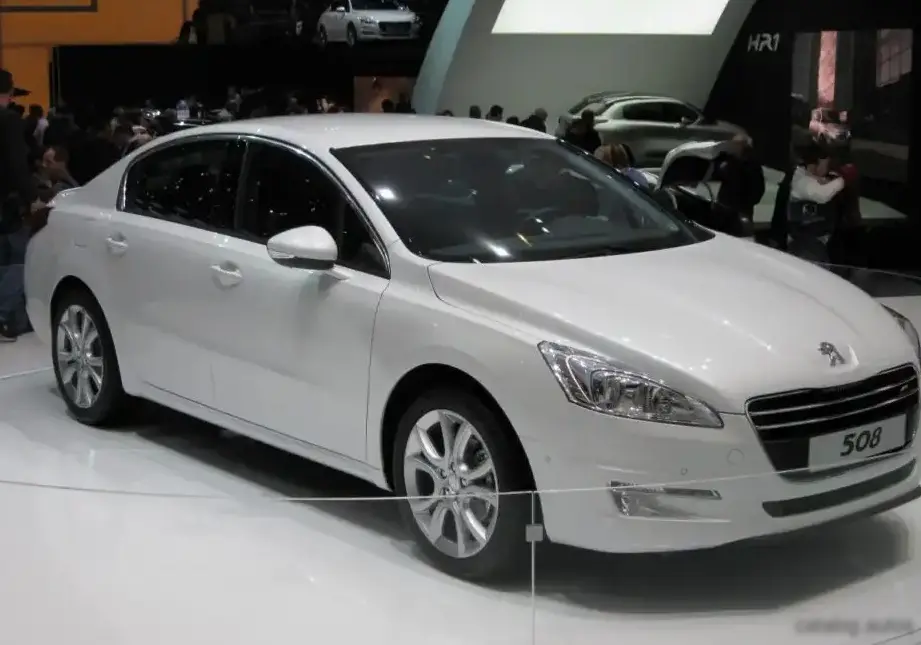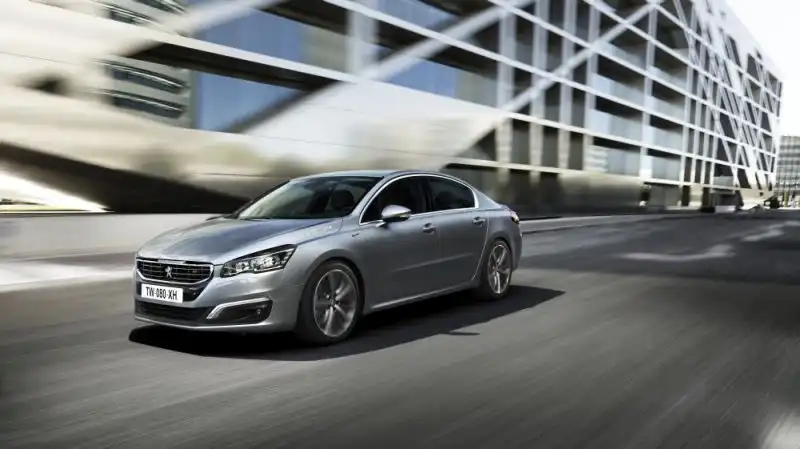
The Peugeot 508 I (Phase II), specifically the 2.0 HDi 163 horsepower variant with a Diesel Particulate Filter (FAP), was a key model in Peugeot’s lineup from 2014 to 2015. This iteration of the 508, a mid-size sedan, represented a refinement of the original 508 launched in 2010, offering a blend of style, comfort, and fuel efficiency aimed at the European market. Positioned as a mid-range offering, it slotted between the lower-powered diesel options and the more potent, though less fuel-efficient, gasoline engines. The Phase II updates brought styling revisions and improvements to the interior, enhancing the car’s overall appeal.
Technical Specifications
| Brand | Peugeot |
| Model | 508 |
| Generation | 508 I (Phase II, 2014) |
| Type (Engine) | 2.0 HDi (163 Hp) FAP |
| Start of production | 2014 |
| End of production | 2015 |
| Powertrain Architecture | Internal Combustion engine |
| Body type | Sedan |
| Seats | 5 |
| Doors | 4 |
| Fuel consumption (urban) | 6.7 l/100 km (35.1 US mpg, 42.2 UK mpg, 14.9 km/l) |
| Fuel consumption (extra urban) | 3.9 l/100 km (60.3 US mpg, 72.4 UK mpg, 25.6 km/l) |
| Fuel consumption (combined) | 4.9 l/100 km (48 US mpg, 57.6 UK mpg, 20.4 km/l) |
| CO2 emissions | 129 g/km |
| Fuel Type | Diesel |
| Acceleration 0 – 100 km/h | 8.6 sec |
| Acceleration 0 – 62 mph | 8.6 sec |
| Acceleration 0 – 60 mph | 8.2 sec |
| Maximum speed | 225 km/h (139.81 mph) |
| Emission standard | Euro 5 |
| Weight-to-power ratio | 9.2 kg/Hp, 108.7 Hp/tonne |
| Weight-to-torque ratio | 4.4 kg/Nm, 226.7 Nm/tonne |
| Power | 163 Hp @ 3750 rpm |
| Power per litre | 81.6 Hp/l |
| Torque | 340 Nm @ 2000-3000 rpm (250.77 lb.-ft. @ 2000-3000 rpm) |
| Engine layout | Front, Transverse |
| Engine Model/Code | RHH DW10CTED4 |
| Engine displacement | 1997 cm3 (121.86 cu. in.) |
| Number of cylinders | 4 |
| Engine configuration | Inline |
| Number of valves per cylinder | 4 |
| Fuel injection system | Diesel Commonrail |
| Engine aspiration | Turbocharger, Intercooler |
| Engine oil capacity | 5 l (5.28 US qt | 4.4 UK qt) |
| Coolant | 10 l (10.57 US qt | 8.8 UK qt) |
| Kerb Weight | 1500 kg (3306.93 lbs.) |
| Max. weight | 2075 kg (4574.59 lbs.) |
| Max load | 575 kg (1267.66 lbs.) |
| Trunk (boot) space – minimum | 473 l (16.7 cu. ft.) |
| Fuel tank capacity | 72 l (19.02 US gal | 15.84 UK gal) |
| Length | 4830 mm (190.16 in.) |
| Width | 1828 mm (71.97 in.) |
| Height | 1456 mm (57.32 in.) |
| Wheelbase | 2817 mm (110.91 in.) |
| Front track | 1579 mm (62.17 in.) |
| Rear (Back) track | 1552 mm (61.1 in.) |
| Ride height (ground clearance) | 146 mm (5.75 in.) |
| Minimum turning circle (turning diameter) | 12.2 m (40.03 ft.) |
| Drivetrain Architecture | The Internal combustion engine (ICE) drives the front wheels of the vehicle. |
| Drive wheel | Front wheel drive |
| Number of gears and type of gearbox | 6 gears, manual transmission |
| Front suspension | Independent, type McPherson with coil spring and anti-roll bar |
| Rear suspension | Independent multi-link suspension |
| Front brakes | Ventilated discs |
| Rear brakes | Disc |
| Assisting systems | ABS (Anti-lock braking system) |
| Steering type | Steering rack and pinion |
| Tires size | 215/55 R17; 235/45 R18 |
| Wheel rims size | 17; 18 |
Powertrain & Engine Architecture
The heart of this 508 variant is the DW10CTED4 engine, a 2.0-liter inline-four cylinder diesel. This engine, commonly found in various PSA Group vehicles (Peugeot, Citroën, and DS Automobiles), is characterized by its robust construction and efficient operation. The ‘RHH’ engine code specifically denotes a version tuned to produce 163 horsepower at 3750 rpm and 340 Nm (250.77 lb-ft) of torque between 2000 and 3000 rpm. It utilizes a common rail direct injection system, delivering fuel at extremely high pressure for optimized combustion. A turbocharger with an intercooler further enhances performance by forcing more air into the cylinders. The FAP (Filtre à Particules) or Diesel Particulate Filter, is a crucial component of the exhaust system, designed to trap soot particles and reduce harmful emissions, meeting Euro 5 standards. The engine is transversely mounted in the front of the vehicle. The 6-speed manual transmission was the standard offering for this trim, providing a balance between fuel economy and driver control.
Driving Characteristics
The 2.0 HDi 163 hp version of the 508 offered a comfortable and refined driving experience. While not overtly sporty, it provided adequate acceleration, achieving 0-100 km/h (0-62 mph) in approximately 8.6 seconds. The torque band was broad, making it easy to maintain speed on highways and execute overtaking maneuvers. Compared to the higher-output 180 hp version, this variant felt slightly less responsive, but the difference was not dramatic. The manual transmission, while precise, had relatively long throws. Fuel economy was a significant strength, with combined cycle figures around 4.9 l/100 km (48 US mpg), making it an attractive option for long-distance drivers. The gear ratios were tuned for efficiency rather than outright performance.
Equipment & Trim Levels
The 2.0 HDi 163 hp model typically came equipped with a reasonable level of standard features. These included air conditioning, a CD/MP3 stereo system, electric front and rear windows, power-adjustable mirrors, and ABS brakes. Higher trim levels, such as Allure or GT Line, added features like dual-zone climate control, a touchscreen infotainment system, alloy wheels, and parking sensors. Interior upholstery was generally cloth, with leather options available as an upgrade. The dashboard layout was functional and well-designed, though not particularly luxurious. Optional extras included a panoramic sunroof, navigation system, and xenon headlights.
Chassis & Braking
The 508 I featured a McPherson strut front suspension and a multi-link rear suspension, providing a good balance between ride comfort and handling. The suspension was tuned for a more comfortable ride than a sporty one. Front brakes were ventilated discs, while rear brakes were solid discs. ABS (Anti-lock Braking System) was standard. The steering was a rack and pinion system, offering reasonable precision. Stabilizer bars were fitted to both the front and rear axles to reduce body roll during cornering. Tire sizes varied depending on the trim level, with 215/55 R17 and 235/45 R18 being common options.
Market Reception & Comparison
The Peugeot 508 2.0 HDi 163 hp was generally well-received by automotive critics. It was praised for its fuel efficiency, comfortable ride, and stylish design. However, some critics noted that the interior quality wasn’t quite up to par with some of its German rivals. Compared to the 1.6 HDi models, the 2.0-liter offered significantly more performance, albeit at a slightly higher fuel consumption. Against gasoline-powered variants, the diesel provided superior fuel economy, making it a popular choice for drivers covering long distances. Reliability was generally good, though the FAP system required regular maintenance to prevent clogging.
Legacy
The 2.0 HDi engine proved to be a durable and reliable unit, and many examples are still on the road today. While the FAP system can be a potential source of issues if not properly maintained, the engine itself is generally robust. In the used car market, this variant of the 508 represents a good value proposition, offering a comfortable and economical driving experience. Its blend of practicality, efficiency, and style continues to appeal to buyers looking for a well-rounded mid-size sedan. The 508 I, and this variant in particular, helped solidify Peugeot’s reputation for building stylish and fuel-efficient vehicles.