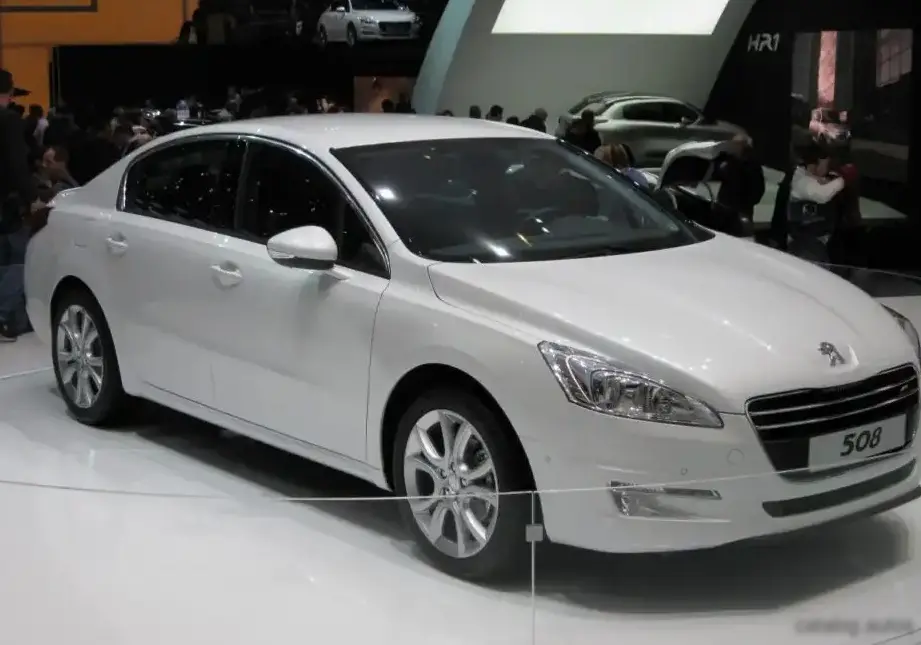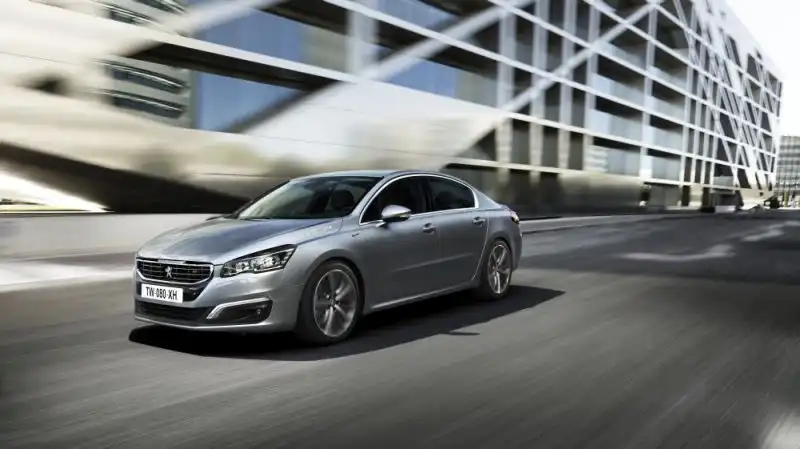
The Peugeot 508 I (Phase II), specifically the 2.0 HDi 163 horsepower variant with an automatic transmission, was a key model in Peugeot’s lineup from 2014 to 2015. This iteration of the 508, built on the 508 I platform, represented a mid-cycle refresh of the original model introduced in 2010. Positioned as a mid-range offering, it aimed to balance fuel efficiency, comfortable cruising, and a more accessible price point compared to the higher-specification trims. The 508 competed directly with other mid-size European sedans like the Ford Mondeo, Volkswagen Passat, and Opel/Vauxhall Insignia, offering a distinctly French take on the segment with its styling and driving characteristics.
Technical Specifications
| Brand | Peugeot |
| Model | 508 |
| Generation | 508 I (Phase II, 2014) |
| Type (Engine) | 2.0 HDi (163 Hp) FAP Automatic |
| Start of production | 2014 |
| End of production | 2015 |
| Powertrain Architecture | Internal Combustion engine |
| Body type | Sedan |
| Seats | 5 |
| Doors | 4 |
| Fuel consumption (urban) | 7.2 l/100 km (32.7 US mpg, 39.2 UK mpg, 13.9 km/l) |
| Fuel consumption (extra urban) | 4.3 l/100 km (54.7 US mpg, 65.7 UK mpg, 23.3 km/l) |
| Fuel consumption (combined) | 5.4 l/100 km (43.6 US mpg, 52.3 UK mpg, 18.5 km/l) |
| CO2 emissions | 140 g/km |
| Fuel Type | Diesel |
| Acceleration 0 – 100 km/h | 9.2 sec |
| Acceleration 0 – 62 mph | 9.2 sec |
| Acceleration 0 – 60 mph | 8.7 sec |
| Maximum speed | 225 km/h (139.81 mph) |
| Emission standard | Euro 5 |
| Weight-to-power ratio | 9.3 kg/Hp, 107.2 Hp/tonne |
| Weight-to-torque ratio | 4.5 kg/Nm, 223.7 Nm/tonne |
| Power | 163 Hp @ 3750 rpm |
| Power per litre | 81.6 Hp/l |
| Torque | 340 Nm @ 2000-3000 rpm (250.77 lb.-ft. @ 2000-3000 rpm) |
| Engine layout | Front, Transverse |
| Engine Model/Code | RHH DW10CTED4 |
| Engine displacement | 1997 cm3 (121.86 cu. in.) |
| Number of cylinders | 4 |
| Engine configuration | Inline |
| Number of valves per cylinder | 4 |
| Fuel injection system | Diesel Commonrail |
| Engine aspiration | Turbocharger, Intercooler |
| Engine oil capacity | 5 l (5.28 US qt | 4.4 UK qt) |
| Coolant | 10 l (10.57 US qt | 8.8 UK qt) |
| Kerb Weight | 1520 kg (3351.03 lbs.) |
| Max. weight | 2105 kg (4640.73 lbs.) |
| Max load | 585 kg (1289.7 lbs.) |
| Trunk (boot) space – minimum | 473 l (16.7 cu. ft.) |
| Fuel tank capacity | 72 l (19.02 US gal | 15.84 UK gal) |
| Length | 4830 mm (190.16 in.) |
| Width | 1828 mm (71.97 in.) |
| Height | 1456 mm (57.32 in.) |
| Wheelbase | 2817 mm (110.91 in.) |
| Front track | 1579 mm (62.17 in.) |
| Rear (Back) track | 1552 mm (61.1 in.) |
| Ride height (ground clearance) | 146 mm (5.75 in.) |
| Minimum turning circle (turning diameter) | 12.2 m (40.03 ft.) |
| Drivetrain Architecture | Front wheel drive |
| Number of gears and type of gearbox | 6 gears, automatic transmission |
| Front suspension | Independent, type McPherson with coil spring and anti-roll bar |
| Rear suspension | Independent multi-link suspension |
| Front brakes | Ventilated discs |
| Rear brakes | Disc |
| Tires size | 215/55 R17; 235/45 R18 |
| Wheel rims size | 17; 18 |
INTRODUCTION
The 2.0 HDi 163 Automatic variant of the Peugeot 508 I (Phase II) represented a sweet spot for buyers seeking a comfortable and economical long-distance cruiser. Introduced as part of the Phase II refresh in 2014, this model benefited from subtle styling updates and improvements to the interior. It was positioned within the 508 range as a practical alternative to the more powerful, and often more expensive, petrol and higher-output diesel options. The Phase II updates included a revised front grille, headlights, and interior trim, aiming to enhance the car’s appeal and modernity. This version of the 508 was primarily sold in Europe, where diesel engines remained dominant in the mid-size segment due to their fuel efficiency and lower running costs.
Powertrain & Engine Architecture
At the heart of this 508 variant lies the DW10CTED4 engine, a 2.0-liter four-cylinder diesel engine. This engine, commonly found in various PSA Group vehicles (Peugeot, Citroën, and DS Automobiles), is known for its robust construction and relatively straightforward maintenance. The ‘RHH’ engine code specifically denotes a version compliant with Euro 5 emissions standards. The engine utilizes a common rail direct injection system, delivering fuel at extremely high pressure for optimized combustion. A turbocharger with an intercooler further enhances performance by forcing more air into the cylinders. The 163 horsepower output is achieved at 3750 rpm, while the peak torque of 340 Nm (250.77 lb-ft) is available between 2000 and 3000 rpm. Paired with this engine is a six-speed automatic transmission, providing smooth gear changes and contributing to the car’s relaxed driving experience. This transmission isn’t known for being particularly sporty, prioritizing comfort and efficiency over rapid shifts.
Driving Characteristics
The 508 2.0 HDi 163 Automatic offers a comfortable and refined driving experience, prioritizing ease of use over outright performance. Acceleration from 0 to 100 km/h (0-62 mph) takes around 9.2 seconds, which is adequate for everyday driving but doesn’t offer particularly brisk performance. The automatic transmission is programmed for smooth shifts and fuel economy, sometimes feeling a bit hesitant when requesting rapid acceleration. Compared to the 1.6 HDi variants, the 2.0-liter engine provides noticeably more power and torque, making overtaking and highway cruising less strenuous. However, it doesn’t match the responsiveness of the higher-output 2.2 HDi models. The gear ratios are tuned for efficiency, with a relatively long final drive contributing to good fuel economy at cruising speeds. The steering is light and precise, but lacks significant feedback.
Equipment & Trim Levels
The 508 2.0 HDi 163 Automatic typically came equipped with a reasonable level of standard features. These included air conditioning, electric windows and mirrors, a CD/MP3 stereo system, and alloy wheels. Higher trim levels, such as Allure or Feline, added features like dual-zone climate control, a touchscreen infotainment system, parking sensors, and leather upholstery. Optional extras included a panoramic sunroof, navigation system, and advanced driver-assistance systems like adaptive cruise control. Interior upholstery was typically cloth on the base models, with leather options available on higher trims. The dashboard layout was functional and well-designed, with a focus on ergonomics.
Chassis & Braking
The 508 I features a McPherson strut front suspension and an independent multi-link rear suspension, providing a comfortable ride and decent handling. The suspension is tuned for comfort, absorbing bumps and imperfections in the road effectively. The front brakes are ventilated discs, while the rear brakes are solid discs, providing adequate stopping power for the car’s weight and performance. Anti-lock Braking System (ABS) and Electronic Stability Control (ESC) are standard safety features. The 508’s chassis is relatively lightweight, contributing to its fuel efficiency and handling agility. Stabilizer bars are fitted to both the front and rear axles to reduce body roll during cornering.
Market Reception & Comparison
The Peugeot 508 2.0 HDi 163 Automatic was generally well-received by automotive critics. It was praised for its comfortable ride, fuel efficiency, and spacious interior. However, some critics noted that the automatic transmission could feel sluggish at times, and the overall driving experience lacked the engagement of some of its rivals. Compared to the 1.6 HDi variants, the 2.0-liter engine offered a significant improvement in performance, making it a more suitable choice for drivers who frequently undertake long journeys or carry passengers. Fuel economy was a strong point, with combined figures of around 5.4 l/100 km (43.6 US mpg) being achievable in real-world driving. Reliability was generally good, although some owners reported issues with the diesel particulate filter (DPF) system, a common problem with modern diesel engines.
Legacy
The Peugeot 508 I (Phase II) 2.0 HDi 163 Automatic remains a relatively affordable and practical used car option. The DW10CTED4 engine is known for its durability, and with regular maintenance, it can provide many years of reliable service. However, potential buyers should be aware of the potential for DPF issues and ensure that the car has been properly maintained. The 508’s comfortable ride and spacious interior continue to appeal to buyers seeking a refined and economical mid-size sedan. While it may not be the most exciting car to drive, it offers a compelling combination of practicality, comfort, and fuel efficiency.