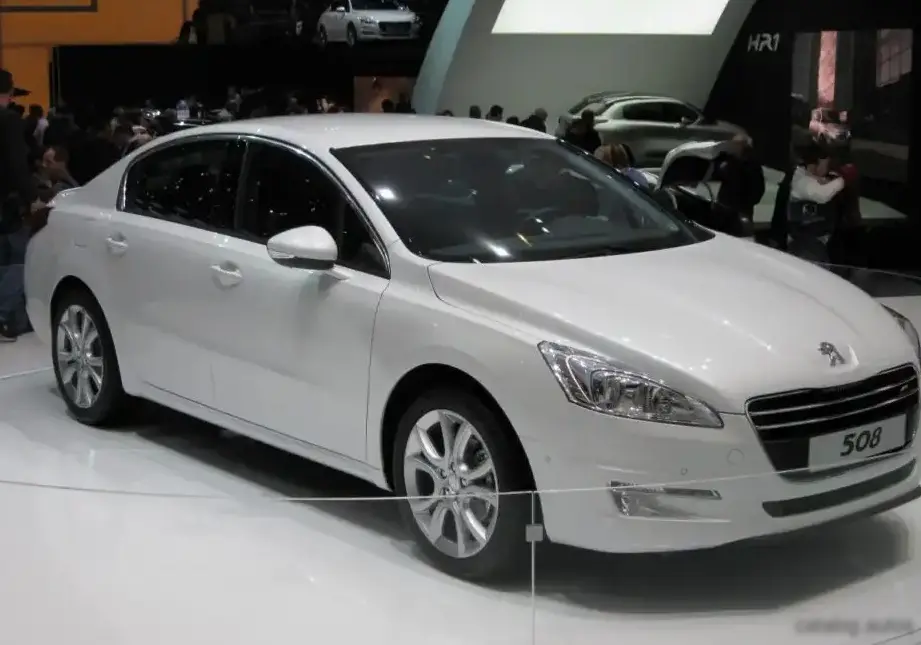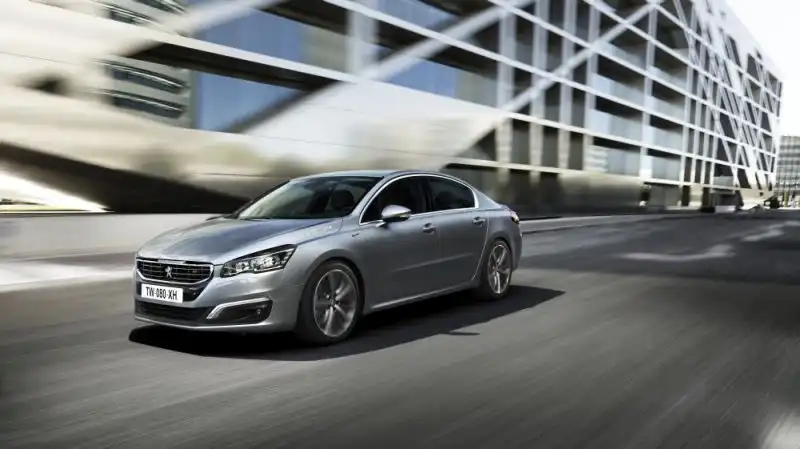
The Peugeot 508 I (Phase II), specifically the 2.0 HDi 200 Hp Hybrid 4×4 ETG6 variant, represents a significant step in Peugeot’s ambition to blend diesel efficiency with hybrid technology. Produced from 2014 to 2015, this model was positioned as a premium offering within the 508 range, appealing to buyers seeking reduced emissions and improved fuel economy without sacrificing performance. It falls within the first generation of the 508 (T8F), a mid-size car designed to replace both the 407 and 607, aiming for a more modern and sophisticated presence in the D-segment. This particular hybrid powertrain was a key feature in Peugeot’s strategy to meet increasingly stringent European emission standards.
Technical Specifications
| Brand | Peugeot |
| Model | 508 |
| Generation | 508 I (Phase II, 2014) |
| Type (Engine) | 2.0 HDi (200 Hp) Hybrid 4×4 ETG6 |
| Start of production | 2014 |
| End of production | 2015 |
| Powertrain Architecture | FHEV (Full Hybrid Electric Vehicle) |
| Body type | Sedan |
| Seats | 5 |
| Doors | 4 |
| Fuel consumption (urban) | 3.8 l/100 km (61.9 US mpg, 74.3 UK mpg, 26.3 km/l) |
| Fuel consumption (extra urban) | 3 l/100 km (78.4 US mpg, 94.2 UK mpg, 33.3 km/l) |
| Fuel consumption (combined) | 3.3 l/100 km (71.3 US mpg, 85.6 UK mpg, 30.3 km/l) |
| CO2 emissions | 85 g/km |
| Fuel Type | Diesel |
| Acceleration 0 – 100 km/h | 8.6 sec |
| Acceleration 0 – 62 mph | 8.6 sec |
| Acceleration 0 – 60 mph | 8.2 sec |
| Maximum speed | 210 km/h (130.49 mph) |
| Emission standard | Euro 5 |
| Weight-to-power ratio | 8.3 kg/Hp, 120.5 Hp/tonne |
| Weight-to-torque ratio | 3.7 kg/Nm, 271.1 Nm/tonne |
| Gross battery capacity | 1.1 kWh |
| Battery voltage | 200 V |
| Battery technology | Nickel-metal hydride (NiMH) |
| Battery location | Under the trunk |
| All-electric range | 1.2 km (0.75 mi) |
| Max speed (electric) | 85 km/h (52.82 mph) |
| Electric motor power | 37 Hp @ 2000-7500 rpm (200 Nm @ 800-1290 rpm / 147.51 lb.-ft. @ 800-1290 rpm) |
| Electric motor location | Rear axle, Transverse |
| Electric motor type | Synchronous |
| System power | 200 Hp @ 3750 rpm (450 Nm @ 1750 rpm / 331.9 lb.-ft. @ 1750 rpm) |
| Internal combustion engine Power | 163 Hp |
| Power per litre | 81.6 Hp/l |
| Engine layout | Front, Transverse |
| Engine Model/Code | RHC DW10CTED4 |
| Engine displacement | 1997 cm3 (121.86 cu. in.) |
| Number of cylinders | 4 |
| Engine configuration | Inline |
| Cylinder Bore | 85 mm (3.35 in.) |
| Piston Stroke | 88 mm (3.46 in.) |
| Number of valves per cylinder | 4 |
| Fuel injection system | Diesel Commonrail |
| Engine aspiration | Turbocharger, Intercooler |
| Engine oil capacity | 5 l (5.28 US qt | 4.4 UK qt) |
| Coolant | 10 l (10.57 US qt | 8.8 UK qt) |
| Kerb Weight | 1660 kg (3659.67 lbs.) |
| Max. weight | 2325 kg (5125.75 lbs.) |
| Max load | 665 kg (1466.07 lbs.) |
| Permitted trailer load with brakes (12%) | 800 kg (1763.7 lbs.) |
| Permitted trailer load without brakes | 750 kg (1653.47 lbs.) |
| Permitted towbar download | 75 kg (165.35 lbs.) |
| Length | 4828 mm (190.08 in.) |
| Width | 1864 mm (73.39 in.) |
| Width including mirrors | 2068 mm (81.42 in.) |
| Height | 1525 mm (60.04 in.) |
| Wheelbase | 2817 mm (110.91 in.) |
| Front track | 1592 mm (62.68 in.) |
| Rear track | 1564 mm (61.57 in.) |
| Front overhang | 992 mm (39.06 in.) |
| Rear overhang | 1019 mm (40.12 in.) |
| Ride height (ground clearance) | 184 mm (7.24 in.) |
| Drivetrain Architecture | The Internal combustion engine (ICE) permanently drives the front wheels of the vehicle, the electric motor drives the rear wheels of the vehicle, capable of running in full electric mode, only by the Internal combustion engine (ICE) or in mixed mode. |
| Drive wheel | All wheel drive (4×4) |
| Number of gears and type of gearbox | 6 gears, automatic transmission ETG |
| Front suspension | Independent, type McPherson with coil spring and anti-roll bar |
| Rear suspension | Independent multi-link suspension |
| Front brakes | Ventilated discs |
| Rear brakes | Disc |
| Assisting systems | ABS (Anti-lock braking system) |
| Steering type | Steering rack and pinion |
| Power steering | Electric Steering |
| Tires size | 205/60 R16 |
| Wheel rims size | 16 |
INTRODUCTION
The Peugeot 508 I Phase II 2.0 HDi Hybrid 4×4 ETG6, launched in 2014, was a flagship model demonstrating Peugeot’s commitment to hybrid technology within its mainstream lineup. This variant combined a 2.0-liter HDi diesel engine with an electric motor, offering all-wheel drive capability and a focus on fuel efficiency. Positioned as a premium trim, it sat above the standard diesel models and offered a more technologically advanced and environmentally conscious alternative. The ‘ETG6’ designation refers to the six-speed automated manual transmission, a key component of the hybrid system’s operation. This model was primarily aimed at the European market, where diesel engines and hybrid technology were gaining significant traction due to favorable tax incentives and growing environmental awareness.
Powertrain & Engine Architecture
At the heart of the 508 Hybrid 4×4 lies the DW10CTED4 engine, a 2.0-liter four-cylinder diesel engine producing 163 horsepower. This engine utilizes a common rail direct injection system and a turbocharger with an intercooler to optimize power and efficiency. The engine code ‘RHC’ is also commonly associated with this unit. The hybrid system adds a 37 horsepower electric motor driving the rear wheels, resulting in a combined system output of 200 horsepower and 450 Nm (331.9 lb-ft) of torque. The electric motor is a synchronous type, powered by a 1.1 kWh nickel-metal hydride (NiMH) battery pack located under the trunk floor. The ETG6 transmission is a six-speed automated manual gearbox, essentially a conventional manual transmission with robotic actuators controlling the clutch and gear changes. This transmission was chosen for its efficiency and ability to seamlessly integrate with the electric motor. The hybrid system allows for limited all-electric driving (up to 1.2 km / 0.75 miles) at speeds up to 85 km/h (52.82 mph).
Driving Characteristics
The 508 2.0 HDi Hybrid 4×4 ETG6 offers a unique driving experience. The combination of the diesel engine and electric motor provides strong acceleration, with a 0-100 km/h (0-62 mph) time of 8.6 seconds. The ETG6 transmission, while efficient, can sometimes exhibit slightly jerky shifts compared to a traditional automatic transmission, particularly at lower speeds. The all-wheel drive system enhances traction and stability, especially in adverse weather conditions. In hybrid mode, the system intelligently manages the power delivery between the diesel engine and electric motor, prioritizing fuel efficiency. The electric motor provides instant torque, filling in gaps in the diesel engine’s power delivery and contributing to a smoother overall driving experience. Compared to the standard 1.6 HDi or 2.2 HDi models, the Hybrid 4×4 offers significantly improved fuel economy and lower emissions, but at a higher initial cost.
Equipment & Trim Levels
The 508 Hybrid 4×4 was typically equipped with a high level of standard features. These included automatic climate control, a touchscreen infotainment system, Bluetooth connectivity, and a comprehensive suite of safety features such as ABS, ESP, and multiple airbags. Interior upholstery was typically a combination of cloth and leather, with premium trim levels offering full leather seats. Optional extras included a panoramic sunroof, navigation system, and advanced driver-assistance systems such as adaptive cruise control and lane departure warning. The dashboard layout was modern and ergonomically designed, with a focus on providing a comfortable and user-friendly experience.
Chassis & Braking
The 508 Hybrid 4×4 utilizes an independent suspension system on both the front and rear axles. The front suspension features McPherson struts with a coil spring and anti-roll bar, while the rear suspension employs a multi-link setup. This configuration provides a good balance between ride comfort and handling. The braking system consists of ventilated discs on the front wheels and solid discs on the rear wheels. ABS (Anti-lock Braking System) is standard, ensuring safe and controlled braking in all conditions. The all-wheel drive system contributes to enhanced stability and braking performance, particularly on slippery surfaces.
Market Reception & Comparison
The Peugeot 508 Hybrid 4×4 was generally well-received by automotive critics, who praised its fuel efficiency, low emissions, and innovative hybrid technology. However, some reviewers noted the slightly hesitant behavior of the ETG6 transmission and the limited all-electric range. Compared to other hybrid options available at the time, such as the Toyota Prius, the 508 Hybrid 4×4 offered a more conventional driving experience and a more premium interior. Against other 508 variants, the Hybrid 4×4 commanded a higher price tag, but offered a compelling combination of performance, efficiency, and all-wheel drive capability. Fuel economy figures of 3.3 l/100 km (71.3 US mpg) were significantly better than those achieved by the standard diesel models.
Legacy
The Peugeot 508 I Hybrid 4×4 represents an important milestone in Peugeot’s development of hybrid technology. While the ETG6 transmission has been superseded by more sophisticated automatic transmissions in later models, the underlying hybrid powertrain architecture paved the way for Peugeot’s current range of plug-in hybrid vehicles. On the used car market, these models are sought after by buyers looking for a fuel-efficient and environmentally friendly vehicle with a touch of premium sophistication. The DW10CTED4 diesel engine is known for its reliability, although regular maintenance is essential to ensure long-term durability. The hybrid system components, particularly the battery pack, have proven to be relatively robust, but may require eventual replacement depending on usage and age.