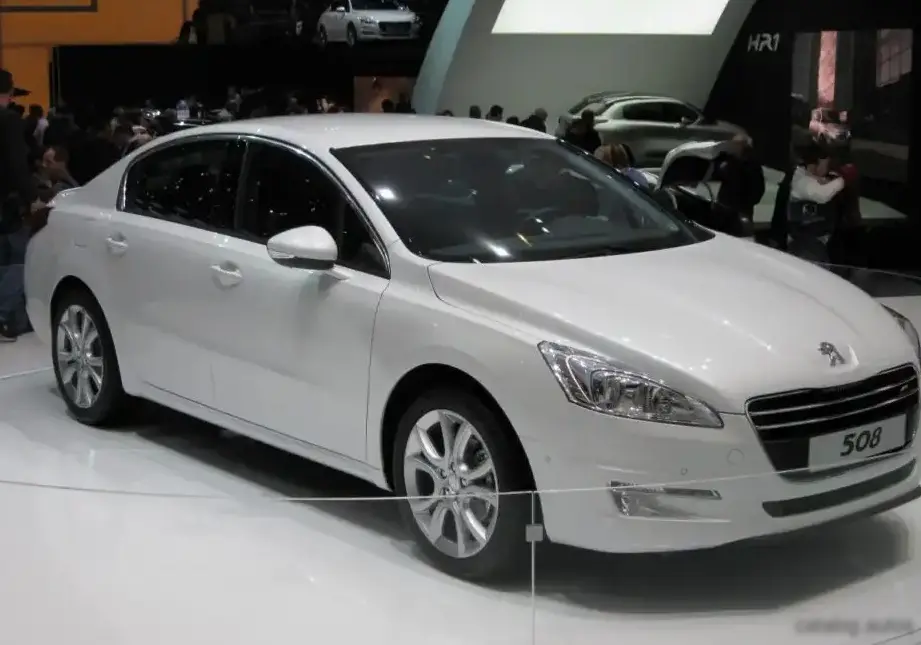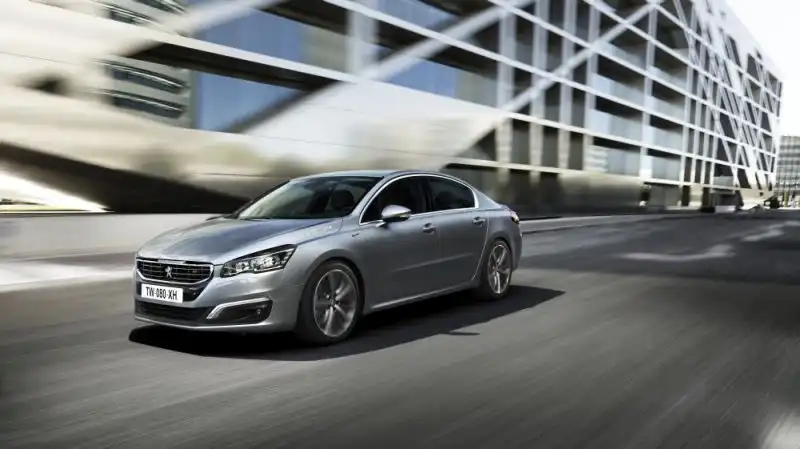
The Peugeot 508 I (Phase II), specifically the 2.2 HDi 204 horsepower variant with an automatic transmission, was produced from 2014 to 2015. This model represented a mid-cycle refresh of the first-generation 508, designated internally as the 8D platform. Positioned as a mid-to-upper trim level, it aimed to offer a balance of performance, fuel efficiency, and refinement within the 508 range, competing with vehicles like the Ford Mondeo, Volkswagen Passat, and Opel Insignia in the European market. The Phase II updates included styling revisions, improved interior materials, and advancements in infotainment technology.
Technical Specifications
| Brand | Peugeot |
| Model | 508 |
| Generation | 508 I (Phase II, 2014) |
| Type (Engine) | 2.2 HDi (204 Hp) FAP Automatic |
| Start of production | 2014 |
| End of production | 2015 |
| Powertrain Architecture | Internal Combustion engine |
| Body type | Sedan |
| Seats | 5 |
| Doors | 4 |
| Fuel consumption (urban) | 7 l/100 km (33.6 US mpg, 40.4 UK mpg, 14.3 km/l) |
| Fuel consumption (extra urban) | 4.4 l/100 km (53.5 US mpg, 64.2 UK mpg, 22.7 km/l) |
| Fuel consumption (combined) | 5.3 l/100 km (44.4 US mpg, 53.3 UK mpg, 18.9 km/l) |
| CO2 emissions | 140 g/km |
| Fuel Type | Diesel |
| Acceleration 0 – 100 km/h | 8.2 sec |
| Acceleration 0 – 62 mph | 8.2 sec |
| Acceleration 0 – 60 mph | 7.8 sec |
| Maximum speed | 234 km/h (145.4 mph) |
| Emission standard | Euro 5 |
| Weight-to-power ratio | 7.5 kg/Hp, 132.5 Hp/tonne |
| Weight-to-torque ratio | 3.4 kg/Nm, 292.2 Nm/tonne |
| Power | 204 Hp @ 3500 rpm |
| Torque | 450 Nm @ 2000-2750 rpm (331.9 lb.-ft. @ 2000-2750 rpm) |
| Engine layout | Front, Transverse |
| Engine Model/Code | 4HL DW12C |
| Engine displacement | 2179 cm3 (132.97 cu. in.) |
| Number of cylinders | 4 |
| Engine configuration | Inline |
| Number of valves per cylinder | 4 |
| Fuel injection system | Diesel Commonrail |
| Engine aspiration | Turbocharger, Intercooler |
| Engine oil capacity | 5.25 l (5.55 US qt | 4.62 UK qt) |
| Coolant capacity | 10 l (10.57 US qt | 8.8 UK qt) |
| Kerb Weight | 1540 kg (3395.12 lbs.) |
| Max. weight | 2155 kg (4750.96 lbs.) |
| Max load | 615 kg (1355.84 lbs.) |
| Trunk (boot) space – minimum | 473 l (16.7 cu. ft.) |
| Fuel tank capacity | 72 l (19.02 US gal | 15.84 UK gal) |
| Length | 4830 mm (190.16 in.) |
| Width | 1828 mm (71.97 in.) |
| Height | 1456 mm (57.32 in.) |
| Wheelbase | 2817 mm (110.91 in.) |
| Front track | 1579 mm (62.17 in.) |
| Rear (Back) track | 1552 mm (61.1 in.) |
| Ride height (ground clearance) | 146 mm (5.75 in.) |
| Minimum turning circle | 12.2 m (40.03 ft.) |
| Drivetrain Architecture | Front wheel drive |
| Number of gears | 6 |
| Gearbox type | Automatic transmission |
| Front suspension | Independent, type McPherson with coil spring and anti-roll bar |
| Rear suspension | Independent multi-link suspension |
| Front brakes | Ventilated discs |
| Rear brakes | Disc |
| Assisting systems | ABS (Anti-lock braking system) |
| Steering type | Steering rack and pinion |
| Tires size | 235/45 R18; 235/40 R19 |
| Wheel rims size | 18; 19 |
Powertrain & Engine Architecture
The heart of this 508 variant is the DW12C engine, a 2.2-liter inline-four cylinder diesel. This engine utilizes a common rail direct injection system, delivering fuel at extremely high pressures for optimized combustion. A variable geometry turbocharger with an intercooler is employed to boost power and torque across a broad rev range. The engine produces 204 horsepower at 3500 rpm and a substantial 450 Nm (331.9 lb-ft) of torque between 2000 and 2750 rpm. The DW12C engine is known for its robust construction and relatively straightforward maintenance, although the diesel particulate filter (FAP) requires periodic regeneration. The FAP, a key component in meeting Euro 5 emissions standards, can sometimes cause issues if the vehicle is primarily used for short trips, preventing it from reaching the temperatures needed for effective regeneration. The engine is transversely mounted in the front of the vehicle.
The automatic transmission is a six-speed unit, designed to provide smooth and efficient gear changes. While not offering the outright sportiness of a manual transmission, it is well-suited to everyday driving and long-distance cruising. The transmission’s programming prioritizes fuel economy, with relatively tall gear ratios.
Driving Characteristics
The 2.2 HDi automatic 508 offers a comfortable and refined driving experience. The engine delivers strong acceleration, with the 450 Nm of torque providing ample pulling power for overtaking and highway cruising. The automatic transmission shifts smoothly, although it can sometimes feel hesitant during quick downshifts. Compared to the lower-powered 1.6 HDi variants, the 2.2 HDi offers significantly more performance. However, it doesn’t match the responsiveness of the petrol-powered GT models. The steering is precise and well-weighted, providing good feedback to the driver. The suspension is tuned for comfort, absorbing bumps and imperfections in the road surface effectively.
Equipment & Trim Levels
The 2.2 HDi automatic trim typically included features such as dual-zone climate control, a touchscreen infotainment system with navigation, Bluetooth connectivity, and rear parking sensors. Higher trim levels added features like leather upholstery, heated front seats, a panoramic sunroof, and advanced driver-assistance systems such as adaptive cruise control and lane departure warning. Interior materials were generally of good quality, with a focus on creating a comfortable and upscale cabin environment.
Chassis & Braking
The 508 utilizes an independent suspension setup at all four corners, with McPherson struts at the front and a multi-link system at the rear. This configuration provides a good balance of ride comfort and handling. The front brakes are ventilated discs, while the rear brakes are solid discs. Anti-lock braking system (ABS) is standard, along with electronic brakeforce distribution (EBD). The chassis is relatively lightweight, contributing to the car’s agility and responsiveness.
Market Reception & Comparison
The Peugeot 508 2.2 HDi automatic was generally well-received by automotive critics. It was praised for its comfortable ride, refined engine, and spacious interior. Fuel economy was also a strong point, with the 5.3 l/100 km combined fuel consumption figure being competitive for its class. Compared to the 1.6 HDi variants, the 2.2 HDi offered a noticeable performance improvement, making it a more appealing option for drivers who frequently travel long distances or carry passengers. However, some critics noted that the automatic transmission could be slow to respond at times. Reliability was generally good, although the FAP system required careful maintenance.
Legacy
The Peugeot 508 I 2.2 HDi automatic has proven to be a relatively reliable vehicle in the used car market. The DW12C engine is known for its durability, and the automatic transmission is generally dependable. However, potential buyers should be aware of the need to maintain the FAP system properly. These vehicles represent a good value proposition for those seeking a comfortable, fuel-efficient, and well-equipped mid-size sedan. The 508, in general, helped Peugeot regain some market share in the competitive European D-segment, and the 2.2 HDi variant remains a popular choice among used car buyers looking for a capable and refined diesel-powered vehicle.