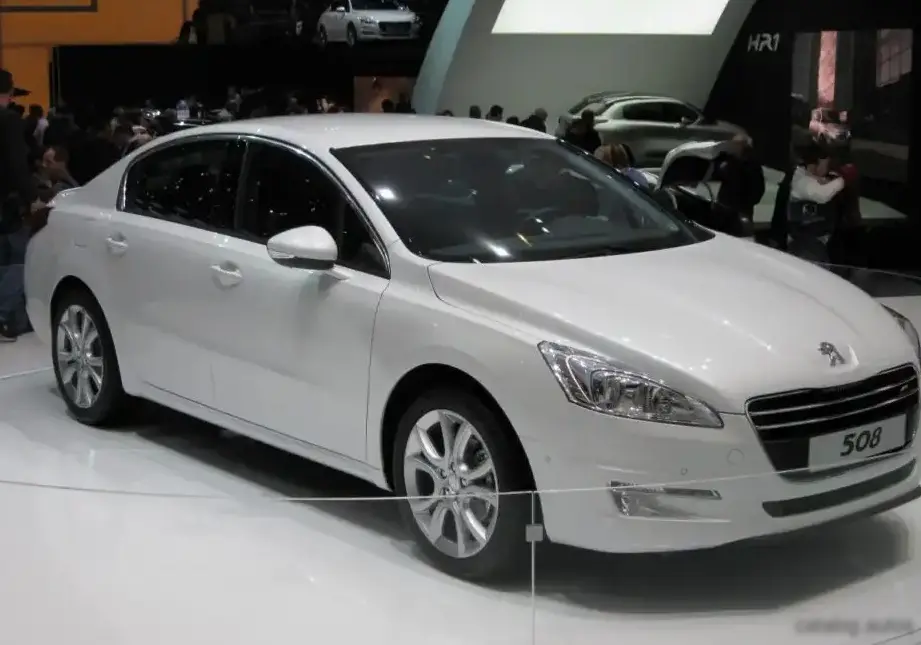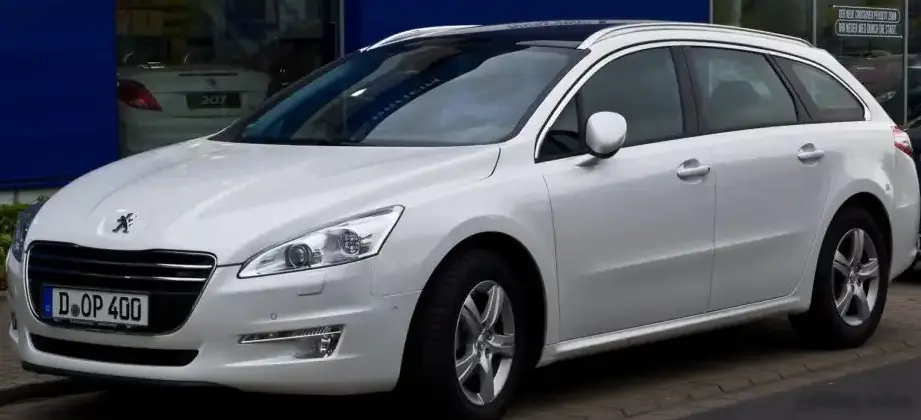
The Peugeot 508 I SW 1.6 e-HDI, produced between 2012 and 2014, represents a key variant within the first generation (T8F) of Peugeot’s mid-size family car. This station wagon (estate) model, part of the Phase I facelift of the 508 range, was designed to offer a blend of practicality, fuel efficiency, and reasonable performance for the European market. It occupied a mid-range position in the 508 SW lineup, positioned as a more economical alternative to the higher-powered gasoline and diesel options. The “e-HDI” designation signified Peugeot’s efforts to improve fuel economy and reduce emissions through advanced diesel technology.
Technical Specifications
| Brand | Peugeot |
| Model | 508 |
| Generation | 508 I SW (Phase I, 2010) |
| Type (Engine) | 1.6 e-HDI (115 Hp) FAP |
| Start of production | 2012 |
| End of production | 2014 |
| Powertrain Architecture | Internal Combustion engine |
| Body type | Station wagon (estate) |
| Seats | 5 |
| Doors | 5 |
| Fuel consumption (urban) | 5.1 l/100 km (46.1 US mpg, 55.4 UK mpg, 19.6 km/l) |
| Fuel consumption (extra urban) | 4.1 l/100 km (57.4 US mpg, 68.9 UK mpg, 24.4 km/l) |
| Fuel consumption (combined) | 4.5 l/100 km (52.3 US mpg, 62.8 UK mpg, 22.2 km/l) |
| Fuel Type | Diesel |
| Acceleration 0 – 100 km/h | 12.3 sec |
| Acceleration 0 – 62 mph | 12.3 sec |
| Acceleration 0 – 60 mph | 11.7 sec |
| Maximum speed | 194 km/h (120.55 mph) |
| Emission standard | Euro 5 |
| Weight-to-power ratio | 12.4 kg/Hp, 80.4 Hp/tonne |
| Weight-to-torque ratio | 5.3 kg/Nm, 188.8 Nm/tonne |
| Power | 115 Hp @ 3600 rpm |
| Power per litre | 73.7 Hp/l |
| Torque | 270-285 Nm @ 1750-2000 rpm (199.14 – 210.21 lb.-ft. @ 1750-2000 rpm) |
| Engine layout | Front, Transverse |
| Engine Model/Code | 9HD DV6CTED |
| Engine displacement | 1560 cm3 (95.2 cu. in.) |
| Number of cylinders | 4 |
| Engine configuration | Inline |
| Number of valves per cylinder | 2 |
| Fuel injection system | Diesel Commonrail |
| Engine aspiration | Turbocharger, Intercooler |
| Engine oil capacity | 3.75 l (3.96 US qt | 3.3 UK qt) |
| Coolant capacity | 6 l (6.34 US qt | 5.28 UK qt) |
| Kerb Weight | 1430 kg (3152.61 lbs.) |
| Max. weight | 2100 kg (4629.71 lbs.) |
| Max load | 670 kg (1477.1 lbs.) |
| Trunk (boot) space – maximum | 560 l (19.78 cu. ft.) |
| Fuel tank capacity | 72 l (19.02 US gal | 15.84 UK gal) |
| Length | 4813 mm (189.49 in.) |
| Width | 1920 mm (75.59 in.) |
| Height | 1476 mm (58.11 in.) |
| Wheelbase | 2817 mm (110.91 in.) |
| Minimum turning circle | 10.9 m (35.76 ft.) |
| Drivetrain Architecture | Front wheel drive |
| Number of gears | 6 |
| Gearbox type | Manual transmission |
| Front suspension | Independent type McPherson |
| Rear suspension | Independent multi-link suspension |
| Front brakes | Ventilated discs |
| Rear brakes | Disc |
| Assisting systems | ABS (Anti-lock braking system) |
| Steering type | Steering rack and pinion |
| Tires size | 215/60 R16; 215/55 R17 |
| Wheel rims size | 16; 17 |
Powertrain & Engine Architecture
The 508 SW 1.6 e-HDI utilizes the PSA Group’s DV6CTED engine, specifically the 9HD variant. This is a 1.6-liter, four-cylinder diesel engine featuring a turbocharger with an intercooler. The “e-HDI” designation indicates the inclusion of Stop & Start technology, designed to improve fuel economy by automatically shutting off the engine when the vehicle is stationary. The engine employs a common rail direct injection system, delivering fuel at high pressure for optimized combustion. The DV6 engine is known for its relatively simple valvetrain, utilizing two valves per cylinder. The six-speed manual transmission was the standard offering for this variant, providing a balance between fuel efficiency and driver control. The gearbox ratios were tuned to maximize the engine’s torque output at lower RPMs, contributing to the car’s usable performance.
Driving Characteristics
The 115 horsepower output and 270-285 Nm (199-210 lb-ft) of torque delivered by the 1.6 e-HDI engine provided adequate, though not exhilarating, performance for the 508 SW. Acceleration from 0 to 100 km/h (0-62 mph) took around 12.3 seconds. In real-world driving, the engine felt most comfortable in the mid-range, offering sufficient power for overtaking and highway cruising. Compared to the more powerful 2.0-liter HDi variants, the 1.6 e-HDI felt noticeably less responsive, particularly when fully loaded. However, the manual transmission allowed drivers to maintain optimal engine speed for efficient driving. The gear ratios were well-matched to the engine’s torque curve, making it easy to maintain momentum without frequent downshifts.
Equipment & Trim Levels
The 1.6 e-HDI SW typically came equipped with a reasonable level of standard features. These included air conditioning, electric front windows, a basic audio system with USB connectivity, and ABS brakes. Interior upholstery was generally cloth, with a functional, if not luxurious, design. Higher trim levels, such as Allure or Feline, offered additional features like alloy wheels, automatic climate control, a more advanced audio system, and parking sensors. Optional extras included a panoramic sunroof, leather upholstery, and a navigation system.
Chassis & Braking
The 508 SW featured independent suspension on both the front and rear axles. The front suspension utilized a McPherson strut design, while the rear employed a multi-link setup. This configuration provided a good balance between ride comfort and handling. The braking system consisted of ventilated discs on the front wheels and solid discs on the rear. ABS (Anti-lock Braking System) was standard. The suspension tuning was geared towards comfort, making the 508 SW a pleasant long-distance cruiser. Stabilizer bars were fitted to both axles to reduce body roll during cornering.
Market Reception & Comparison
The Peugeot 508 SW 1.6 e-HDI was generally well-received by automotive critics as a practical and fuel-efficient family car. Its low running costs and spacious interior were particularly praised. However, some reviewers noted that the engine lacked the refinement and performance of its competitors, such as the Volkswagen Passat Variant or Ford Mondeo Estate. Compared to the higher-powered 2.0-liter HDi versions of the 508 SW, the 1.6 e-HDI offered significantly better fuel economy but at the expense of performance. The 1.6 e-HDI appealed to buyers prioritizing economy and practicality over outright driving excitement.
Legacy
The 1.6 e-HDI engine, and the DV6 family as a whole, proved to be relatively reliable, although some owners have reported issues with the diesel particulate filter (DPF), particularly on vehicles used primarily for short journeys. The 508 SW 1.6 e-HDI remains a popular choice on the used car market, offering a good balance of value, practicality, and fuel efficiency. Its relatively simple mechanical design makes it a potentially affordable option for those seeking a reliable and economical estate car. However, prospective buyers should be aware of the potential for DPF-related issues and ensure the vehicle has been properly maintained.