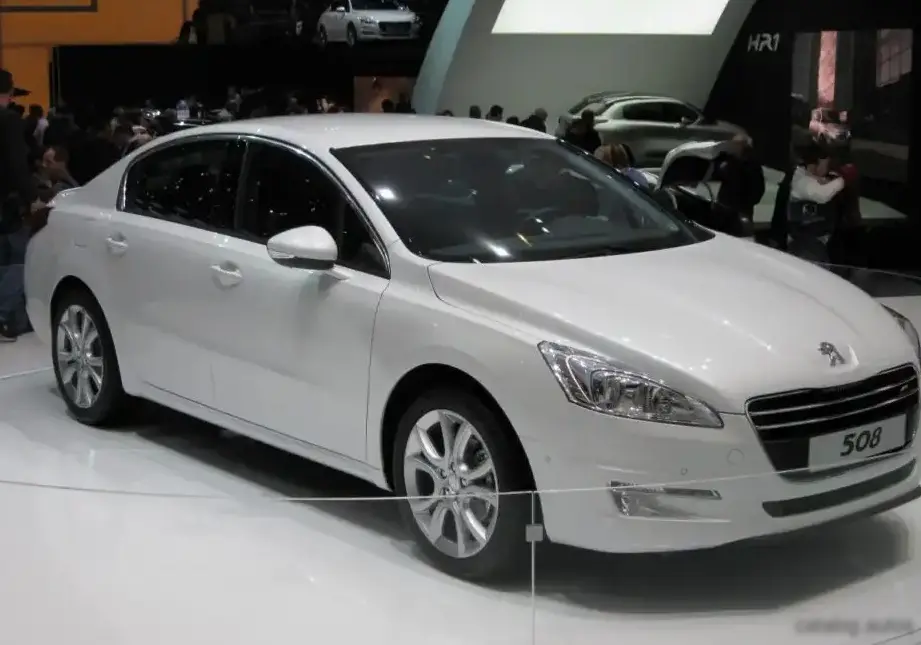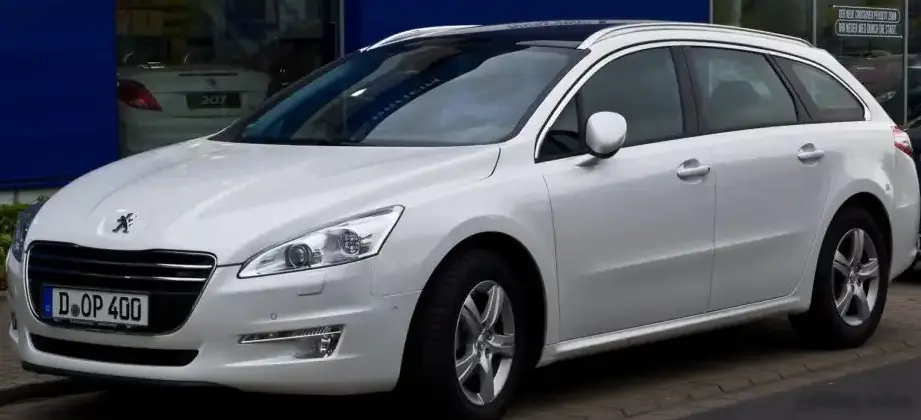
The Peugeot 508 I SW (Phase I), produced from 2010 to 2014, represented Peugeot’s entry into the competitive mid-size station wagon segment. This variant, equipped with the 1.6 HDI 112 horsepower diesel engine and a six-speed manual transmission, was positioned as a fuel-efficient and practical option within the 508 SW lineup. It aimed to appeal to buyers prioritizing economy and space over outright performance, offering a balance between running costs and family usability. The 508 SW itself was a significant model for Peugeot, intended to replace the aging 407 SW and compete with established rivals like the Ford Mondeo Estate and Volkswagen Passat Variant.
Technical Specifications
| Brand | Peugeot |
| Model | 508 |
| Generation | 508 I SW (Phase I, 2010) |
| Type (Engine) | 1.6 HDI (112 Hp) FAP |
| Start of production | 2010 |
| End of production | 2014 |
| Powertrain Architecture | Internal Combustion engine |
| Body type | Station wagon (estate) |
| Seats | 5 |
| Doors | 5 |
| Fuel consumption (urban) | 5.7 l/100 km (41.3 US mpg, 49.6 UK mpg, 17.5 km/l) |
| Fuel consumption (extra urban) | 4.0 l/100 km (58.8 US mpg, 70.6 UK mpg, 25 km/l) |
| Fuel consumption (combined) | 4.6 l/100 km (51.1 US mpg, 61.4 UK mpg, 21.7 km/l) |
| CO2 emissions | 120 g/km |
| Fuel Type | Diesel |
| Acceleration 0 – 100 km/h | 11.6 sec |
| Acceleration 0 – 62 mph | 11.6 sec |
| Acceleration 0 – 60 mph | 11 sec |
| Maximum speed | 188 km/h (116.82 mph) |
| Emission standard | Euro 5 |
| Weight-to-power ratio | 12.7 kg/Hp, 78.6 Hp/tonne |
| Weight-to-torque ratio | 5.3 kg/Nm, 189.5 Nm/tonne |
| Power | 112 Hp @ 3600 rpm |
| Power per litre | 71.8 Hp/l |
| Torque | 270 Nm @ 1750 rpm (199.14 lb.-ft. @ 1750 rpm) |
| Engine layout | Front, Transverse |
| Engine Model/Code | 9HR DV6C |
| Engine displacement | 1560 cm3 (95.2 cu. in.) |
| Number of cylinders | 4 |
| Engine configuration | Inline |
| Number of valves per cylinder | 2 |
| Fuel injection system | Diesel Commonrail |
| Engine aspiration | Turbocharger, Intercooler |
| Engine oil capacity | 3.75 l (3.96 US qt | 3.3 UK qt) |
| Coolant capacity | 6 l (6.34 US qt | 5.28 UK qt) |
| Kerb Weight | 1425 kg (3141.59 lbs.) |
| Max. weight | 2080 kg (4585.62 lbs.) |
| Max load | 655 kg (1444.03 lbs.) |
| Trunk (boot) space – maximum | 560 l (19.78 cu. ft.) |
| Fuel tank capacity | 72 l (19.02 US gal | 15.84 UK gal) |
| Length | 4813 mm (189.49 in.) |
| Width | 1920 mm (75.59 in.) |
| Height | 1476 mm (58.11 in.) |
| Wheelbase | 2817 mm (110.91 in.) |
| Minimum turning circle | 10.9 m (35.76 ft.) |
| Drivetrain Architecture | Front wheel drive |
| Number of gears | 6 gears, manual transmission |
| Front suspension | Independent type McPherson |
| Rear suspension | Independent multi-link suspension |
| Front brakes | Ventilated discs |
| Rear brakes | Disc |
| Tire size | 215/60 R16; 215/55 R17 |
| Wheel rims size | 16; 17 |
Powertrain & Engine Architecture
The heart of this 508 SW variant is the PSA Group’s 1.6-liter DV6C turbo-diesel engine, specifically the 9HR variant. This engine is a four-cylinder, inline configuration with two valves per cylinder. It utilizes a common rail direct injection system, delivering fuel at extremely high pressure for optimized combustion. A turbocharger with an intercooler is employed to increase power output and improve efficiency. The DV6 engine family is known for its relatively robust design, but the early versions, including the 9HR, were sometimes prone to issues with the diesel particulate filter (DPF) and turbocharger. The 112 horsepower output is achieved at 3600 rpm, while the peak torque of 270 Nm (199 lb-ft) is available from just 1750 rpm, providing good low-end grunt for everyday driving. The six-speed manual transmission offers a good spread of ratios, allowing the engine to operate efficiently at highway speeds while still providing adequate acceleration.
Driving Characteristics
The 1.6 HDI 112 hp version of the 508 SW delivers a comfortable, rather than sporty, driving experience. Acceleration is adequate for most situations, with the 0-60 mph sprint taking around 11 seconds. The engine’s strong low-end torque makes it easy to navigate city traffic and provides sufficient power for overtaking maneuvers on the highway. Compared to the more powerful 2.0-liter HDI variants, this engine feels less strained when fully loaded, but it lacks the outright punch for more enthusiastic driving. The manual transmission is generally smooth and precise, although the shift linkage can feel a little vague. The 508 SW’s suspension provides a good balance between comfort and handling, absorbing bumps and imperfections in the road well while still offering a reasonably controlled ride.
Equipment & Trim Levels
The 1.6 HDI 112 hp variant typically came with a reasonable level of standard equipment. This usually included air conditioning, electric front windows, a CD stereo system, and alloy wheels. Higher trim levels, such as Allure or Feline, added features like automatic climate control, a touchscreen infotainment system, rear parking sensors, and upgraded interior trim. Interior upholstery was typically cloth, although leather options were available. Safety features included ABS brakes, electronic stability control, and multiple airbags.
Chassis & Braking
The 508 SW utilizes a McPherson strut front suspension and a multi-link rear suspension, providing a comfortable and controlled ride. The front brakes are ventilated discs, while the rear brakes are solid discs. The steering is a rack and pinion system, offering reasonable precision and feedback. The 508 SW’s chassis is well-balanced, contributing to its stable handling characteristics. The standard tire size was 215/60 R16 or 215/55 R17, depending on the trim level.
Market Reception & Comparison
The 1.6 HDI 112 hp 508 SW was generally well-received by critics for its fuel efficiency and practicality. It offered a compelling alternative to more expensive and less economical rivals. However, some reviewers noted that the engine could feel underpowered when the car was fully loaded or when driving uphill. Compared to the 2.0-liter HDI variants, the 1.6 HDI offered significantly better fuel economy but at the expense of performance. The 1.6 HDI also tended to be more reliable than some of the earlier 2.0-liter HDI engines, particularly regarding DPF issues.
Legacy
The 1.6 HDI engine, while not without its quirks, proved to be a relatively durable and economical powerplant. The 508 SW 1.6 HDI remains a popular choice on the used car market, particularly for buyers seeking a spacious and fuel-efficient family vehicle. Regular maintenance, including timely DPF regeneration and oil changes, is crucial for ensuring the long-term reliability of this powertrain. While the 9HR engine code is known to have some potential issues, many examples are still on the road today, testament to the overall robustness of the design. The 508 SW, in general, helped to solidify Peugeot’s reputation for building stylish and practical station wagons.