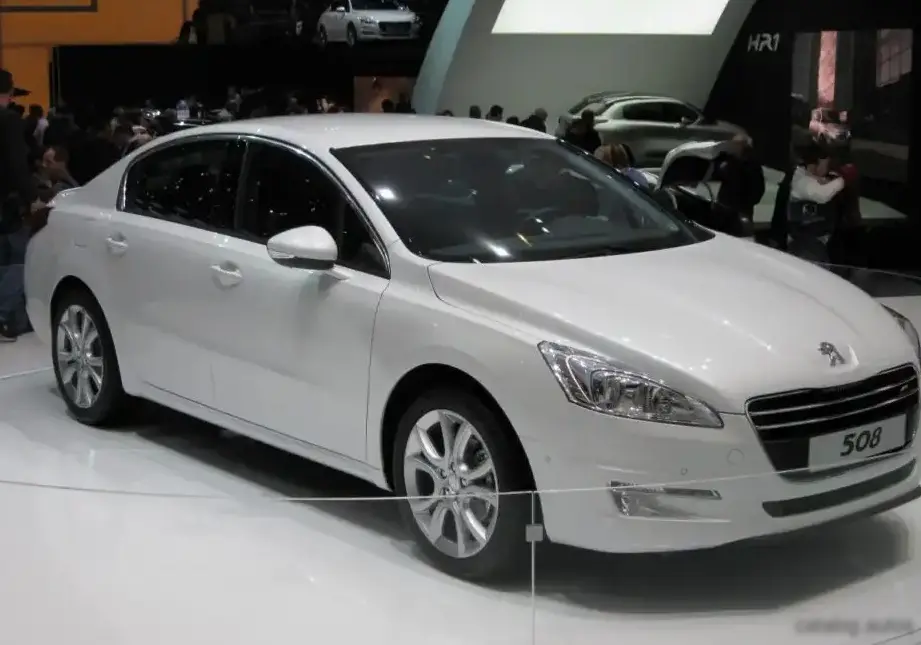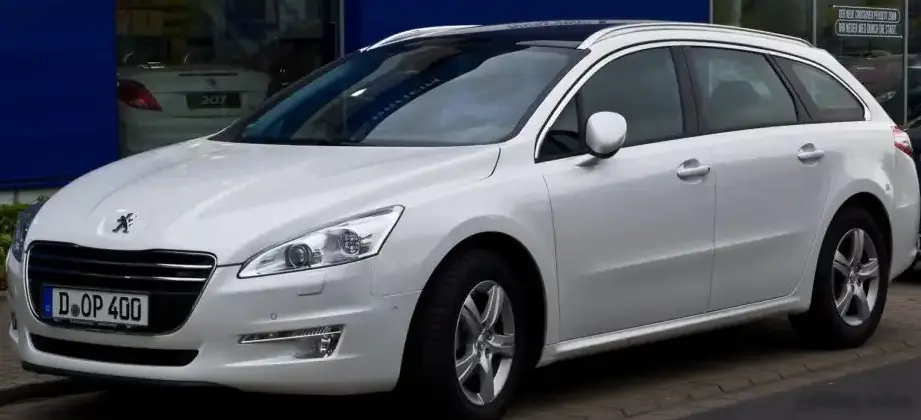
The Peugeot 508 I SW 1.6 VTi, produced between 2010 and 2014, represents a key variant within the first generation of Peugeot’s mid-size family car. Positioned as an entry-level engine option for the SW (Station Wagon) body style, it aimed to provide a balance of fuel efficiency and practicality for European buyers. This model falls within the Phase I production run of the 508, which utilized the PSA Group’s Platform 3, also known as the 1HX0/A3 platform, shared with other Peugeot and Citroën vehicles. The 1.6 VTi engine, paired with a six-speed manual transmission, offered a more affordable alternative to the more powerful and often diesel-powered versions of the 508 SW.
Technical Specifications
| Brand | Peugeot |
| Model | 508 |
| Generation | 508 I SW (Phase I, 2010) |
| Type (Engine) | 1.6 VTi (120 Hp) |
| Start of production | 2010 |
| End of production | 2014 |
| Powertrain Architecture | Internal Combustion engine |
| Body type | Station wagon (estate) |
| Seats | 5 |
| Doors | 5 |
| Fuel consumption (urban) | 8.2 l/100 km (28.7 US mpg, 34.4 UK mpg, 12.2 km/l) |
| Fuel consumption (extra urban) | 5.2 l/100 km (45.2 US mpg, 54.3 UK mpg, 19.2 km/l) |
| Fuel consumption (combined) | 6.3 l/100 km (37.3 US mpg, 44.8 UK mpg, 15.9 km/l) |
| Fuel Type | Petrol (Gasoline) |
| Acceleration 0 – 100 km/h | 11.8 sec |
| Acceleration 0 – 62 mph | 11.8 sec |
| Acceleration 0 – 60 mph | 11.2 sec |
| Maximum speed | 203 km/h (126.14 mph) |
| Emission standard | Euro 5 |
| Weight-to-power ratio | 11.8 kg/Hp, 85.1 Hp/tonne |
| Weight-to-torque ratio | 8.8 kg/Nm, 113.5 Nm/tonne |
| Power | 120 Hp @ 6000 rpm |
| Power per litre | 75.1 Hp/l |
| Torque | 160 Nm @ 4250 rpm (118.01 lb.-ft. @ 4250 rpm) |
| Engine layout | Front, Transverse |
| Engine Model/Code | 5FS EP6C |
| Engine displacement | 1598 cm3 (97.52 cu. in.) |
| Number of cylinders | 4 |
| Engine configuration | Inline |
| Number of valves per cylinder | 4 |
| Fuel injection system | Multi-port manifold injection |
| Engine aspiration | Naturally aspirated engine |
| Engine oil capacity | 4.25 l (4.49 US qt | 3.74 UK qt) |
| Coolant capacity | 6.4 l (6.76 US qt | 5.63 UK qt) |
| Kerb Weight | 1410 kg (3108.52 lbs.) |
| Max. weight | 2055 kg (4530.5 lbs.) |
| Max load | 645 kg (1421.98 lbs.) |
| Trunk (boot) space – maximum | 560 l (19.78 cu. ft.) |
| Fuel tank capacity | 72 l (19.02 US gal | 15.84 UK gal) |
| Length | 4813 mm (189.49 in.) |
| Width | 1920 mm (75.59 in.) |
| Height | 1476 mm (58.11 in.) |
| Wheelbase | 2817 mm (110.91 in.) |
| Minimum turning circle | 10.9 m (35.76 ft.) |
| Drivetrain Architecture | Front wheel drive |
| Number of gears | 6 |
| Gearbox type | Manual transmission |
| Front suspension | Independent type McPherson |
| Rear suspension | Independent multi-link suspension |
| Front brakes | Ventilated discs |
| Rear brakes | Disc |
| Assisting systems | ABS (Anti-lock braking system) |
| Steering type | Steering rack and pinion |
| Tires size | 215/60 R16 |
| Wheel rims size | 16 |
INTRODUCTION
The Peugeot 508 I SW 1.6 VTi, launched in 2010, was a crucial component of Peugeot’s strategy to compete in the competitive D-segment (mid-size) market. The SW designation indicates the station wagon body style, offering increased cargo capacity compared to the sedan version. This particular variant, powered by the 1.6-liter VTi engine, was designed to appeal to buyers prioritizing fuel economy and lower running costs. It served as the entry point into the 508 SW range, sitting below the more powerful 2.0-liter petrol and HDi diesel options. The Phase I models, produced until 2014, established the 508’s design language and technological features, setting the stage for subsequent updates.
Powertrain & Engine Architecture
The heart of the 508 I SW 1.6 VTi is the 5FS EP6C engine, a 1.6-liter (1598 cc) inline-four cylinder petrol engine. This engine is part of Peugeot’s Prince engine family, developed in collaboration with BMW. It features a naturally aspirated configuration, meaning it doesn’t utilize a turbocharger or supercharger. The engine employs multi-point fuel injection, delivering fuel directly into the intake ports. The valvetrain consists of four valves per cylinder (16 valves total), operated by a double overhead camshaft (DOHC). This configuration contributes to improved breathing and overall engine efficiency. The engine produces 120 horsepower (89 kW) at 6000 rpm and 160 Nm (118 lb-ft) of torque at 4250 rpm. The engine is mated to a six-speed manual transmission, providing a balance between fuel economy and driver control. The transmission’s gear ratios are tuned for efficient cruising and reasonable acceleration.
Driving Characteristics
The 1.6 VTi engine, while not exceptionally powerful, provides adequate performance for everyday driving. Acceleration from 0 to 100 km/h (0-62 mph) takes approximately 11.8 seconds, and the top speed is around 203 km/h (126 mph). Compared to the higher-output 2.0-liter petrol or the diesel variants, the 1.6 VTi feels less responsive, particularly during overtaking maneuvers. However, the engine is relatively smooth and refined, offering a pleasant driving experience. The six-speed manual transmission allows drivers to maintain optimal engine speed for fuel efficiency or performance. The gear ratios are well-spaced, providing sufficient torque in each gear. The SW body style adds weight compared to the sedan, slightly impacting acceleration and handling, but the independent suspension setup helps to maintain a comfortable ride quality.
Equipment & Trim Levels
The 508 I SW 1.6 VTi typically came equipped with a reasonable level of standard features. These included air conditioning, electric front windows, a CD stereo system, and ABS brakes. Interior upholstery was generally cloth, with a functional and durable design. Higher trim levels, available as options, added features such as alloy wheels, rear parking sensors, a touchscreen infotainment system, and automatic climate control. Optional extras also included a panoramic sunroof, leather upholstery, and a navigation system. The dashboard layout was typically straightforward and driver-focused, with clear instrumentation and logically placed controls.
Chassis & Braking
The 508 I SW features an independent suspension system on both the front and rear axles. The front suspension utilizes a McPherson strut design, while the rear employs a multi-link setup. This configuration provides a good balance between ride comfort and handling. The front brakes are ventilated discs, offering good stopping power, while the rear brakes are solid discs. ABS (Anti-lock Braking System) is standard, enhancing safety during emergency braking situations. The steering is a rack and pinion system, providing precise and responsive steering feel. The standard tire size is 215/60 R16, mounted on 16-inch alloy wheels (depending on the trim level).
Market Reception & Comparison
The Peugeot 508 I SW 1.6 VTi was generally well-received by automotive critics as a practical and fuel-efficient family car. However, some reviewers noted that the engine lacked the punch of the more powerful alternatives. Fuel economy was a strong point, with combined fuel consumption figures around 6.3 l/100 km (37.3 US mpg). Compared to the 2.0-liter petrol and HDi diesel versions, the 1.6 VTi offered lower running costs but compromised on performance. The diesel models, in particular, provided significantly better fuel economy and torque. The 1.6 VTi appealed to buyers who prioritized affordability and fuel efficiency over outright performance.
Legacy
The 5FS EP6C 1.6 VTi engine, while not known for exceptional reliability issues, requires regular maintenance to ensure longevity. Common issues include occasional oil leaks and potential problems with the ignition coils. The six-speed manual transmission is generally robust and reliable. In the used car market, the 508 I SW 1.6 VTi represents a relatively affordable option for buyers seeking a practical and spacious station wagon. Its fuel efficiency and reasonable running costs make it an attractive choice for those on a budget. However, potential buyers should be aware of the engine’s limitations in terms of performance and ensure that the vehicle has been properly maintained.